


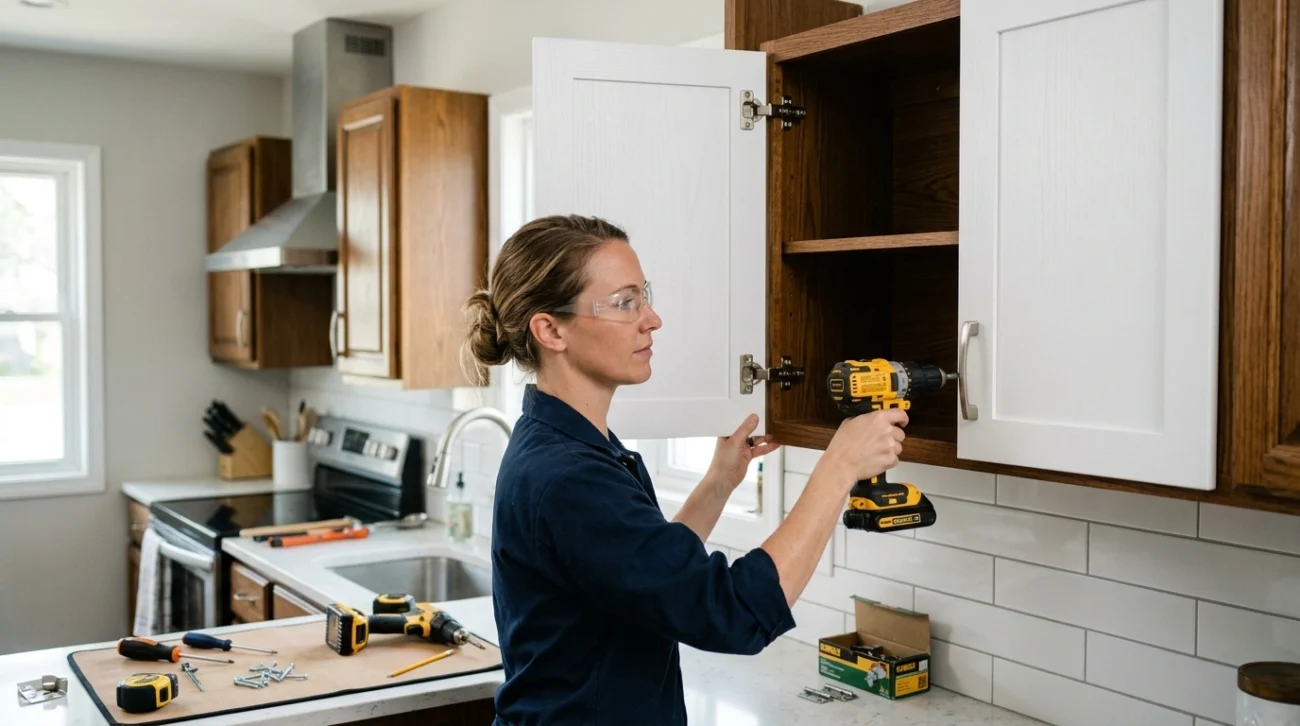
Replacing kitchen cabinet doors is one of the smartest ways to refresh a kitchen without the disruption and cost of a full renovation. The cabinet boxes stay, the layout stays, the plumbing and appliances stay. What changes is the most visible element of the entire room, and when that change is executed well, the result looks like far more work was done than actually was.
The problem is that most people approach the replacement process the wrong way, and the mistakes they make are consistent enough to be predictable. Understanding what goes wrong and why is the fastest way to make sure it does not happen to you.
Measuring Once and Ordering Regret
The single most common and most costly mistake in cabinet door replacement is inaccurate measurement. Cabinet doors are custom manufactured to specific dimensions, and a door that is even a quarter inch off in either direction creates a visible problem once it is hung. Too small and there is a gap that draws the eye immediately. Too large and the door will not close properly or will overlap adjacent doors in a way that looks wrong from across the room.
Measuring cabinet doors correctly requires understanding a few concepts that most homeowners have not encountered before, including overlay, reveal, and the difference between the door size and the opening size. The overlay refers to how much the door extends beyond the face frame of the cabinet box on each side. The reveal is the gap between adjacent doors. Getting these right is what produces a finished installation that looks precise rather than approximate.
Most reputable door manufacturers provide detailed measuring guides that walk through exactly what to capture and how to account for these variables. Reading the guide before you measure, rather than assuming the process is self-explanatory, is the single most effective way to avoid the expense of reordering doors that do not fit.
Choosing Style Without Considering the Whole Room
Cabinet door style selection is where most homeowners focus their attention, and it is also where many make decisions they later regret. The mistake is choosing a door style in isolation rather than in the context of the kitchen around it.
A door style that looks beautiful in a showroom or in a photo from a design publication can feel completely wrong in the actual kitchen it is installed in if the other elements of the room are not accounted for. The countertop material, the backsplash, the flooring, the hardware, the lighting, and the overall architectural character of the space all influence whether a specific door style feels intentional or incongruous.
Cabinet Doors offers custom kitchen cabinet door replacement across more than 22 material options and a full range of styles including Shaker, Raised Panel, Slab, Arched, Mitered, and Glass-Ready configurations, giving homeowners the breadth of choice needed to find the combination that works for the specific kitchen rather than settling for whatever happens to be most popular at the moment. Their factory direct model also means custom doors are priced significantly below what most retail suppliers charge for comparable quality, which makes getting the style right more important than getting it close enough.
Treating Wood Species as an Afterthought
The wood species decision tends to get less attention than the style decision, and that is a mistake. The species affects the door in ways that are visible every day, including how evenly it accepts stain or paint, how the grain reads across the surface, how the door responds to humidity changes over time, and how it holds up to the daily contact of a working kitchen.
For painted doors, maple is the practical first choice because its tight, consistent grain produces a smooth, even surface under paint without the grain pattern showing through the finish. For stained doors, the grain character becomes part of the visual result, and the choice becomes more personal. White oak’s straight grain and warm tone have made it the dominant choice in contemporary kitchens right now, while red oak’s more pronounced grain suits traditional and transitional spaces where texture and character are welcome. Alder offers a middle path, warmer and more characterful than maple but more refined than the pronounced grain of oak species.
Making the species decision alongside the style and finish decision rather than after it produces more coherent results than treating it as a secondary detail.
Ignoring Hardware Until the Doors Are Already Installed
Hardware is the finishing detail that connects the door to the hand, and it affects the look of the kitchen at least as much as the door style itself. Choosing hardware after the doors are installed, as most people do, means making that decision under pressure with the rest of the kitchen already committed and the hardware needing to work with choices that cannot easily be changed.
The better approach is to choose hardware alongside the door style and species, treating all three as a coordinated system rather than sequential decisions. The profile, finish, and scale of the hardware should complement the door style rather than competing with it. Slim bar pulls reinforce the clean lines of a shaker or slab door. More ornate knobs or pulls with decorative detail work better with raised panel and traditional door styles. Getting this relationship right before anything is ordered produces a more resolved result than retrofitting hardware choices onto a door decision that was made without them.
Skipping the Sample
Ordering a sample door before committing to the full order is a step that most homeowners skip because it feels like an unnecessary delay. It is actually the most cost-effective decision in the entire process.
A sample door lets you see the exact material, finish, and construction quality in the actual light conditions of your kitchen rather than under the controlled lighting of a showroom or in a product photograph. It lets you hold the door against your countertop, your backsplash, and your flooring to assess whether the combination works. It lets you assess the weight and the feel of the door before multiplying that door across every cabinet in the kitchen.
The cost of a sample is a small fraction of the cost of reordering an entire set of doors in a different species or finish because the first choice looked different in the kitchen than it did in the photograph. For a decision of this size and visibility, the sample is not a delay. It is due diligence.
