


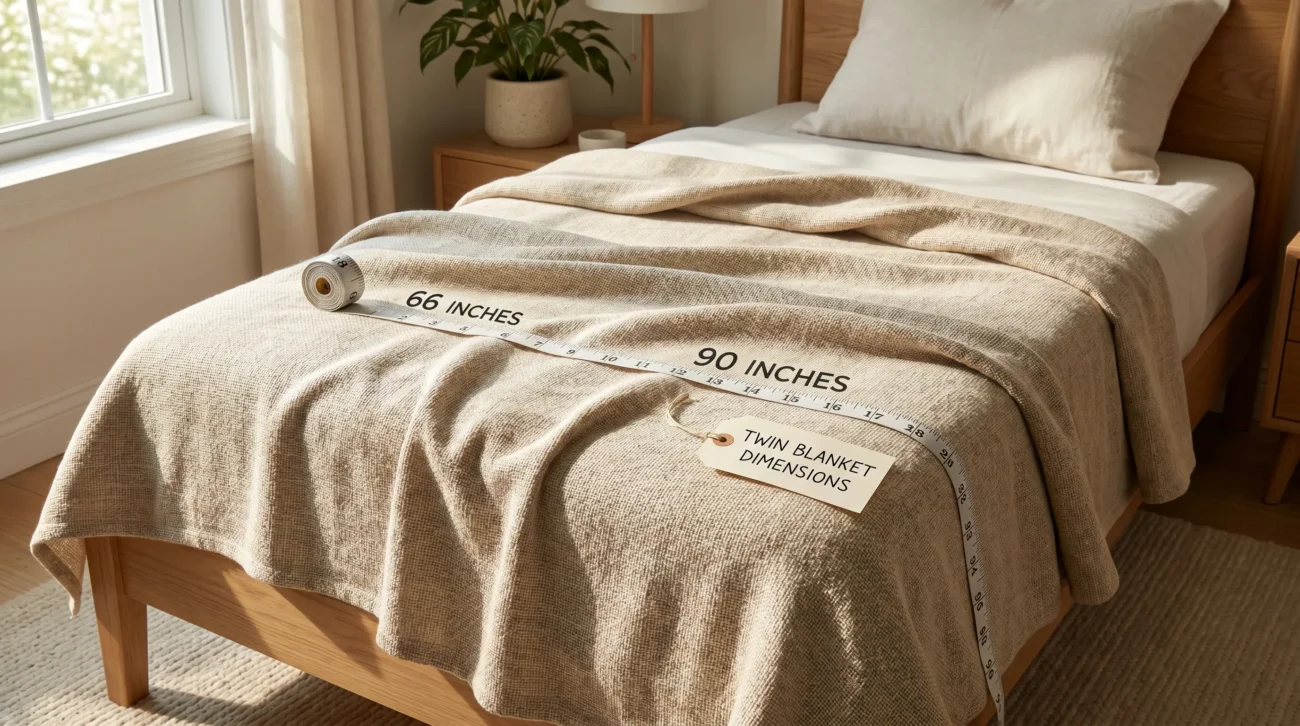
What are the dimensions of a twin blanket? A standard twin blanket is usually about 66 inches wide by 90 inches long, although many brands list twin blanket dimensions within a range of 65–70 inches wide by 90 inches long. In centimeters, that is roughly 168 cm x 229 cm, depending on the exact product and manufacturer.
This size is designed to fit a regular twin bed, which usually has a mattress around 38 inches x 75 inches. The blanket is larger than the mattress because it needs enough extra fabric for side overhang, bottom coverage, warmth, and comfort. That extra width and length help the blanket drape naturally over the edges of the bed instead of sitting flat on top of the mattress.
Choosing the right twin blanket size matters whether you are shopping for a child’s room, a bunk bed, a guest room, a dorm bed, or an adult twin-size bed. The right blanket should feel comfortable, cover the sleeper properly, and look balanced on the bed.
Quick Answer: What Are the Dimensions of a Twin Blanket?
The standard twin blanket size is usually 66″ x 90″. Some brands may list a twin blanket as 65″ x 90″, 65–70″ x 90″, or even slightly larger if it is marketed as an oversized twin or Twin/Twin XL blanket.
| Measurement Type | Standard Twin Blanket Size |
| Inches | 66″ x 90″ |
| Common Range | 65–70″ x 90″ |
| Centimeters | About 168 cm x 229 cm |
| Feet | About 5.5 ft x 7.5 ft |
| Best For | Twin beds, bunk beds, kids’ rooms, guest rooms |
A 66″ x 90″ twin blanket works well for most standard twin beds because it provides enough room to cover the mattress and hang over the sides. It is also long enough to cover the sleeper from shoulders to feet while leaving some extra length for tucking near the bottom of the bed.
However, exact blanket dimensions can vary by brand, material, and bedding type. A cotton blanket, fleece blanket, wool blanket, quilt, comforter, or weighted blanket may not always follow the exact same sizing rules. That is why it is always smart to check the product description before buying.
Twin Blanket Size Chart: Inches, Feet, and Centimeters
A clear blanket size chart makes it easier to understand how twin blanket measurements compare in different units. This is especially helpful if you are buying bedding online or comparing products from international brands.
| Blanket Type | Inches | Approx. Feet | Approx. Centimeters |
| Smaller Twin Blanket | 65″ x 90″ | 5.4 ft x 7.5 ft | 165 cm x 229 cm |
| Standard Twin Blanket | 66″ x 90″ | 5.5 ft x 7.5 ft | 168 cm x 229 cm |
| Oversized Twin Blanket | 70″ x 90″ | 5.8 ft x 7.5 ft | 178 cm x 229 cm |
| Twin/Twin XL Blanket | Around 70″ x 90″ | 5.8 ft x 7.5 ft | 178 cm x 229 cm |
The most useful number to remember is 66″ x 90″. That is the common standard twin blanket size used by many bedding brands. But if you prefer a looser fit, more side coverage, or extra fabric for tucking, a blanket closer to 70″ x 90″ may feel better.
For international readers, the closest metric size is about 168 cm x 229 cm. Some size charts may round this slightly, so you may see similar measurements such as 165 cm x 229 cm.
Twin Blanket vs Twin Mattress Size
A common mistake is assuming a twin blanket should be the same size as a twin mattress. It should not. A blanket needs to be larger than the mattress so it can cover the sleeper and drape over the bed.
| Item | Standard Size | Purpose |
| Twin Mattress | 38″ x 75″ | Sleeping surface |
| Twin Blanket | 66″ x 90″ | Covers sleeper and mattress |
| Extra Width | About 28 inches | Helps create side overhang |
| Extra Length | About 15 inches | Helps cover feet and tuck in |
A standard twin mattress is usually 38 inches wide and 75 inches long, while a standard twin blanket is about 66 inches wide and 90 inches long. That extra fabric is what makes the blanket useful.
Without extra width, the blanket would barely cover the top of the mattress. Without extra length, it might leave the sleeper’s feet uncovered or make the bed look unfinished. The larger blanket size creates better mattress coverage, better warmth, and a more comfortable sleeping experience.
This is also why blankets designed to fit mattress sizes are always larger than the mattress itself.
How Much Should a Twin Blanket Hang Over the Bed?
A twin blanket should usually hang over the sides of the bed enough to provide comfortable coverage without dragging on the floor. With a 66-inch-wide blanket on a 38-inch-wide twin mattress, there are about 28 extra inches of width. In theory, that gives around 14 inches of extra fabric on each side before mattress height is considered.
In real use, the visible side overhang depends on the mattress thickness. A thin twin mattress may show more drape, while a thicker mattress or a bed with a box spring may make the blanket look shorter on the sides.
For most twin beds, a 66″ x 90″ blanket gives a neat, practical fit. It covers the sleeper well and gives the bed a clean look. But if you want a more generous, hotel-style drape, you may prefer an oversized twin blanket, a Twin/Twin XL blanket, or even a full-size blanket.
A simple rule is this: choose a standard twin blanket for a clean fit, and size up if you want more overhang, more warmth, or more room to tuck the blanket in.
Twin Blanket vs Twin XL Blanket: Which One Do You Need?
A regular twin blanket and a Twin XL blanket are similar, but they are not always the best fit for the same bed. This difference matters most for college dorm bedding, taller sleepers, and extra-long mattresses.
A standard twin mattress is usually 38″ x 75″, while a Twin XL mattress is usually 38″ x 80″. That extra 5 inches of mattress length can make a regular twin blanket feel slightly short, especially for taller people.
| Bed Type | Mattress Size | Recommended Blanket |
| Twin Bed | 38″ x 75″ | 66″ x 90″ twin blanket |
| Twin XL Bed | 38″ x 80″ | Twin XL or oversized twin blanket |
| College Dorm Bed | Often Twin XL | Longer blanket preferred |
A standard twin blanket may still work on a Twin XL bed, especially if the sleeper does not need much tucking at the bottom. But for full coverage, a Twin XL blanket size or oversized twin blanket is usually safer.
This is especially important during back-to-school shopping. Many dorm beds use Twin XL mattresses, so students and parents should check the mattress size before buying bedding. A regular twin blanket may cover the bed, but a longer blanket often feels more comfortable.
Twin Blanket vs Throw Blanket: Is a Throw Big Enough?
A throw blanket is usually not big enough to fully cover a twin bed. Most standard throw blankets measure around 50″ x 60″, while a twin blanket is usually around 66″ x 90″.
| Blanket Type | Common Size | Best Use |
| Throw Blanket | 50″ x 60″ | Sofa, chair, lap, decor |
| Oversized Throw Blanket | 50″ x 70″ | Lounging or decorative layer |
| Twin Blanket | 66″ x 90″ | Full twin bed coverage |
A throw blanket can be great for a couch, chair, loveseat, reading corner, or decorative layer at the foot of a bed. But it is usually too narrow and too short to work as the main blanket on a twin-size bed.
This is one of the most common twin blanket sizing mistakes. A shopper may see a cozy throw blanket and assume it will work on a twin bed, only to find that it does not cover the mattress properly. If the goal is full sleeping coverage, choose a real twin bed blanket size, not a throw.
An oversized throw, such as 50″ x 70″, gives more coverage than a standard throw but is still smaller than a true twin blanket.
Twin Blanket vs Comforter, Quilt, Duvet, and Bedspread
A twin blanket is not exactly the same as a twin comforter, quilt, duvet, or bedspread. These bedding pieces can all fit a twin bed, but they serve different purposes and may have different dimensions.
| Bedding Type | Main Purpose | Twin-Size Fit Note |
| Blanket | Warmth and layering | Often around 66″ x 90″ |
| Comforter | Thick top bedding with filling | May be around 68″ x 88″ |
| Quilt | Layered stitched bedding | Size varies by brand |
| Duvet | Insert used with duvet cover | Usually sized for mattress |
| Bedspread | Decorative full-bed cover | Often larger for more drape |
| Coverlet | Lightweight decorative layer | May be smaller than bedspread |
A blanket is usually a single layer or lighter layer of fabric used for warmth. A comforter is thicker and often filled with down, down alternative, cotton, wool, or synthetic materials. A common twin comforter may measure around 68″ x 88″, which is close to but not identical to a twin blanket.
A quilt is usually made of stitched layers and can be both decorative and warm. A duvet includes an insert and a removable duvet cover. A bedspread or coverlet is often used for style and may be designed to hang lower over the sides of the bed.
So when comparing bedding, always look at exact blanket dimensions, not just the word “twin.”
Standard Blanket Sizes Compared
Understanding standard blanket sizes helps you see where a twin blanket fits among other bedding sizes. It also helps you decide whether to stay with a twin size or size up.
| Blanket Size | Common Dimensions |
| Throw Blanket | 50″ x 60″ |
| Twin Blanket | 66″ x 90″ |
| Full/Double Blanket | 80–85″ x 90″ |
| Queen Blanket | 90″ x 90–100″ |
| King Blanket | 108″ x 90–100″ |
| California King Blanket | 104″ x 108″ |
| Crib Blanket | 45″ x 60″ |
A full/double blanket is usually the next size up from twin. It can be a good choice if you want extra width on a twin bed. A queen blanket or king blanket will usually be too large for a standard twin bed unless you intentionally want a very oversized look.
For a child’s room, bunk bed, or compact guest room, the standard 66″ x 90″ twin blanket is usually enough. For a taller adult, thick mattress, or decorative daybed, a larger blanket may look and feel better.
Should You Size Up From a Twin Blanket?
You should size up from a twin blanket if you want more coverage, more overhang, or a more luxurious look. A standard twin blanket size works for most people, but it is not the only option.
Sizing up may be a good idea if the mattress is thick, the bed has a box spring, the sleeper is tall, or the blanket will be washed often and may shrink slightly. It can also help if you like to tuck the blanket deeply under the mattress.
A full blanket can work on a twin bed when you want extra side coverage. Since full/double blankets are often around 80–85″ x 90″, they provide more width than a standard twin blanket. This can be useful for adults, guest rooms, or anyone who dislikes a narrow blanket.
However, bigger is not always better. On a bunk bed, a larger blanket may create too much extra fabric. For kids, a standard twin blanket is usually easier to manage. For a clean, tidy bed, standard twin sizing often looks best.
Best Twin Blanket Size by Use Case
The best twin blanket dimensions depend on how the bed is used. A child’s bed, dorm bed, guest bed, and adult twin bed may all need slightly different coverage.
| Use Case | Best Blanket Size Recommendation |
| Kids’ twin bed | Standard 66″ x 90″ twin blanket |
| Adult twin bed | Standard or oversized twin |
| Bunk bed | Standard twin blanket |
| Daybed | Twin blanket or full blanket for styling |
| Guest room | Standard twin or oversized twin |
| College dorm | Twin XL or oversized twin |
| Tall sleeper | Twin XL or full blanket |
| Hot sleeper | Lightweight breathable twin blanket |
| Cold sleeper | Larger warm blanket |
For children, a standard twin blanket is usually the best choice because it is large enough for warmth but not too bulky. For adults, especially taller adults, an oversized twin or Twin XL blanket may feel more comfortable.
For a bunk bed, standard twin sizing is usually best because too much fabric can hang awkwardly from the top bunk. For a daybed, you may want a twin blanket for sleeping and a full blanket, quilt, or coverlet for decoration.
For a college dorm bed, check whether the mattress is Twin XL. If it is, choose a longer blanket when possible.
How Material and Washing Can Affect Twin Blanket Fit
Blanket material can affect both comfort and long-term fit. A twin blanket may start at the right size, but poor washing or drying can make it shrink, stretch, or lose its shape.
Cotton, organic cotton, and wool blankets can be soft, breathable, and comfortable, but they may shrink if washed in hot water or dried on high heat. Microfiber, fleece, and other synthetic materials may hold their size better, but they can feel warmer or less breathable depending on the weave.
Always check the care label before washing a twin blanket. If the blanket is machine washable, use the recommended water temperature and drying method. For natural fibers, low heat or air drying may help reduce shrinkage.
This matters because even a small amount of shrinkage can affect how the blanket fits the bed. A blanket that was once wide enough may start to feel short on the sides after repeated washing.
If you are buying a cotton twin blanket, wool blanket, or other natural-fiber bedding, choosing a slightly larger size can be a smart decision.
Common Twin Blanket Sizing Mistakes to Avoid
Many people buy the wrong blanket size because bedding terms can be confusing. A few simple checks can help you avoid the most common mistakes.
One common mistake is buying a throw blanket instead of a twin blanket. A 50″ x 60″ throw may look large in a product photo, but it is much smaller than a 66″ x 90″ twin blanket.
Another mistake is assuming the blanket should match the mattress size exactly. A twin mattress is about 38″ x 75″, but the blanket needs to be larger for overhang, coverage, and comfort.
Some shoppers also forget about mattress thickness. A thick mattress, mattress topper, or box spring can make a standard blanket look shorter on the sides. Others forget that many dorm beds are Twin XL, not regular twin.
Before buying online, always check the exact product dimensions. Do not rely only on labels like “twin,” “single,” or “Twin/Twin XL,” because sizes can vary by manufacturer.
How to Choose the Right Twin Blanket Size Before Buying
To choose the right twin blanket size, start with the bed and sleeper. A standard twin bed usually works well with a 66″ x 90″ blanket, but the best choice depends on comfort, style, and use.
First, check the mattress size. If it is a regular twin mattress, standard twin blanket dimensions should be enough. If it is a Twin XL mattress, choose a longer blanket or an oversized twin.
Next, think about mattress height. A thicker mattress needs more fabric for side drape. If you want the blanket to hang lower or tuck under the mattress, consider sizing up.
Material also matters. A lightweight cotton blanket or breathable waffle blanket may be better for hot sleepers and summer use. A heavier wool, fleece, quilted, or down alternative blanket may be better for cold nights and winter bedding.
Here is a simple buying checklist:
| Buying Factor | Best Choice |
| Standard twin bed | 66″ x 90″ |
| Twin XL dorm bed | Twin XL or oversized twin |
| Thick mattress | Oversized twin or full blanket |
| Bunk bed | Standard twin blanket |
| Hot sleeper | Lightweight, breathable fabric |
| Cold sleeper | Warmer, heavier blanket |
| Natural fibers | Check shrinkage and care label |
A good rule is to buy the size that matches your mattress, then size up only if you want more coverage.
Twin Blanket Size FAQ
What is the standard size of a twin blanket?
The standard size of a twin blanket is usually 66″ x 90″. Some brands list twin blanket dimensions as 65″ x 90″ or within a range of 65–70″ x 90″.
What is a twin blanket size in centimeters?
A standard twin blanket is approximately 168 cm x 229 cm. Some brands may round this to about 165 cm x 229 cm, depending on the exact inch measurement.
Is a twin blanket the same size as a twin comforter?
No, not always. A twin blanket is often around 66″ x 90″, while a twin comforter may be around 68″ x 88″. The exact size depends on the brand and bedding type.
Will a twin blanket fit a Twin XL bed?
A twin blanket may fit a Twin XL bed, but it can feel slightly short because a Twin XL mattress is usually 38″ x 80″. For college dorm beds or taller sleepers, a Twin XL or oversized twin blanket is usually better.
Is a throw blanket big enough for a twin bed?
A throw blanket is usually not big enough for full twin bed coverage. A standard throw is commonly 50″ x 60″, while a twin blanket is usually 66″ x 90″.
Should I buy a twin or full blanket for a twin bed?
Buy a twin blanket if you want a neat standard fit. Buy a full blanket if you want extra width, more overhang, or a more generous feel.
What size blanket is best for a bunk bed?
A standard 66″ x 90″ twin blanket is usually best for a bunk bed. Oversized blankets can create too much hanging fabric, especially on the top bunk.
Can a twin blanket shrink after washing?
Yes, some twin blankets can shrink, especially cotton and wool blankets if washed in hot water or dried on high heat. Always follow the care label to protect the size and shape.
Conclusion
The standard answer to what are the dimensions of a twin blanket is simple: most twin blankets measure about 66″ x 90″, with many brands using a range of 65–70″ x 90″. That size is larger than a standard 38″ x 75″ twin mattress because the blanket needs extra fabric for comfort, overhang, warmth, and tucking.
For most twin beds, bunk beds, kids’ rooms, and guest rooms, a standard twin blanket works well. For Twin XL dorm beds, taller sleepers, thick mattresses, or anyone who wants extra coverage, an oversized twin, Twin XL, or full blanket may be a better choice. Always check exact product dimensions before buying so your blanket fits the bed, the sleeper, and the room style comfortably.
