


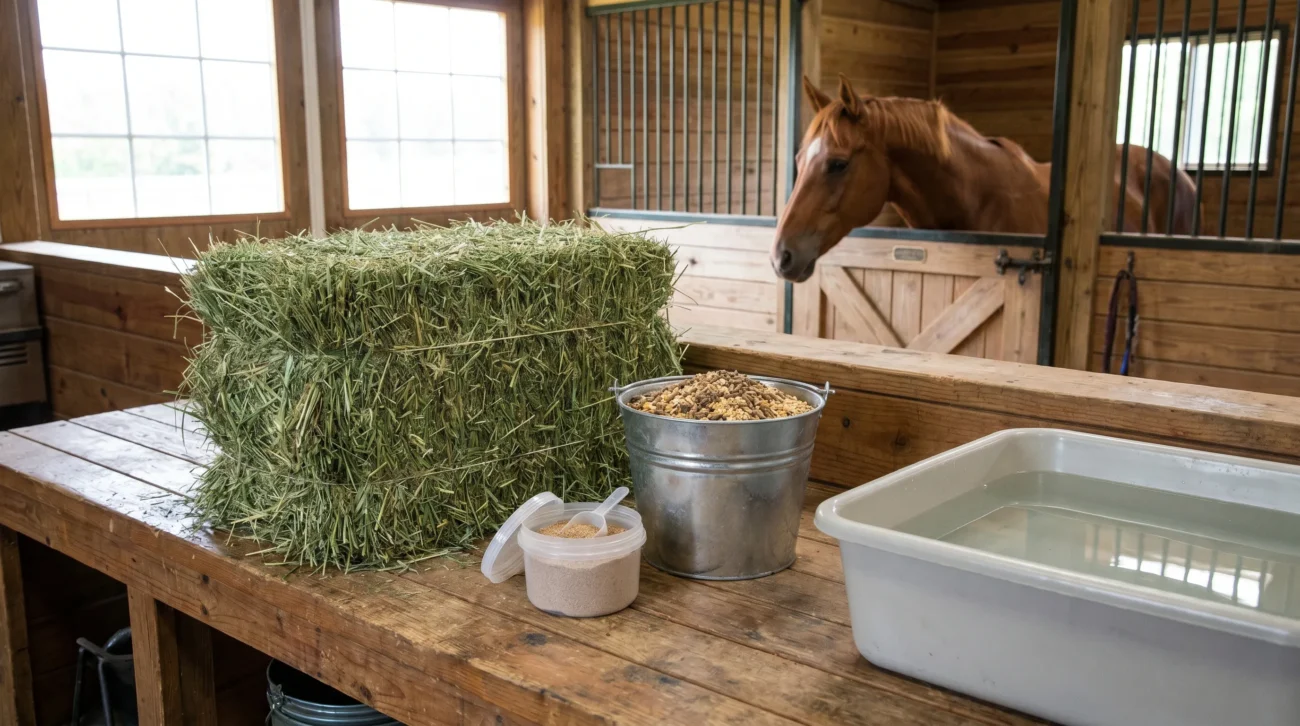
What are the four groups of feed for horses? The four practical groups of feed for horses are forage or roughage, concentrates, supplements, and water. These four groups work together to support a horse’s digestion, energy, hydration, body condition, growth, performance, and overall health.
Horse feeding can feel confusing at first because people use many different terms: hay, pasture, grain, pellets, sweet feed, ration balancers, complete feeds, vitamins, minerals, electrolytes, treats, roughage, and concentrates. But once you understand the main horse feed categories, the whole topic becomes much easier.
The most important thing to remember is simple: forage and water are the foundation of a healthy horse diet. Concentrates and supplements may be useful, but not every horse needs them in large amounts. A balanced horse diet depends on the horse’s age, workload, body weight, body condition, health, pasture quality, and forage quality.
Quick Answer: The Four Main Groups of Horse Feed
The four main groups of feed for horses can be explained in a simple table:
| Feed Group | Common Examples | Main Purpose | Does Every Horse Need It? |
| Forage / Roughage | Hay, pasture, grass, haylage, hay cubes, hay pellets | Fiber, chewing, gut health, natural grazing behavior | Yes |
| Concentrates | Grain, oats, corn, barley, sweet feed, pellets, complete feed | Extra calories, energy, protein, and nutrients | Not always |
| Supplements | Salt, minerals, vitamins, ration balancers, electrolytes, amino acids | Fill nutritional gaps | Sometimes |
| Water | Fresh clean water | Hydration, digestion, body temperature, nutrient transport | Yes |
Some sources list treats as one of the four horse food categories. Treats can be part of horse care, but they are not essential for nutrition. From a health-first feeding perspective, water is much more important than treats because no horse can digest feed, regulate body temperature, or stay healthy without proper hydration.
So, if you are building a practical horse feeding program, the best framework is:
Forage first, water always, concentrates when needed, and supplements only for specific gaps.
Why Forage or Roughage Is the Foundation of a Horse’s Diet
Forage, also called roughage, is the most important feed group for most horses. It includes high-fiber feeds such as hay, pasture, grass, haylage, hay cubes, hay pellets, and chaff. In many horse diets, forage provides the bulk of daily nutrition.
Horses are natural grazers. Their digestive system is designed to process small amounts of high-fiber feed throughout the day. This is why fiber for horses is so important. Forage supports the hindgut, encourages saliva production, helps maintain gut motility, and gives horses the chewing time they naturally need.
A horse that does not receive enough forage may become bored, stressed, or more likely to develop digestive problems. Too little roughage can also contribute to poor body condition, gastric irritation, or unwanted behaviors such as cribbing and windsucking.
What Counts as Forage?
The main forage sources for horses include:
| Forage Type | Best Use |
| Pasture | Natural grazing, fresh grass, daily turnout |
| Hay | Main forage when pasture is limited |
| Haylage | Preserved forage, often higher moisture than hay |
| Hay cubes | Useful when long-stem hay is hard to manage |
| Hay pellets | Helpful for some senior horses or horses with dental issues |
| Chaff | Chopped forage often mixed with other feeds |
| Beet pulp | High-fiber feed often used for weight support or extra digestible fiber |
Many horses need about 1.5–2% of their body weight in forage per day. For example, a 1,000-pound horse may need roughly 15–20 pounds of hay per day, depending on pasture access, workload, metabolism, and body condition.
Forage quality also matters. Good hay should smell fresh, be free from mold, dust, debris, and poisonous plants, and match the horse’s needs. An easy keeper or metabolic horse may need lower-sugar hay, while a hard keeper, lactating mare, or growing horse may need more nutrient-dense forage.
Concentrates: The Energy-Dense Feed Group
Concentrates for horses are feeds that provide more energy, calories, protein, or nutrients in a smaller amount than forage. This group includes grain, oats, corn, barley, wheat, rice, sweet feed, textured feed, pelleted feed, extruded feed, and commercial horse feed.
Concentrates can be helpful, but they are not automatically required for every horse. Many mature horses in light work can maintain good condition on good-quality forage, clean fresh water, salt, and appropriate minerals. Other horses may need concentrates because forage alone does not meet their energy or nutrient needs.
When Horses May Need Concentrates
Concentrates may be useful for:
- Performance horses in moderate, heavy, or intense work
- Hard keepers that struggle to maintain weight
- Growing horses and foals
- Pregnant mares and lactating mares
- Senior horses that cannot chew hay well
- Horses recovering from illness, weight loss, or poor condition
- Horses with limited access to high-quality pasture or hay
Concentrates often contain starch, sugar, fat, protein, vitamins, and minerals. Some commercial feeds are designed for specific needs, such as senior horse feed, low NSC feed, low-carb grain, or complete feeds for horses with dental problems.
When Horses May Not Need Concentrates
Not all horses need grain. In fact, giving too much grain to an easy keeper or overweight horse can increase the risk of obesity, laminitis, insulin resistance, equine metabolic syndrome, and digestive upset.
If a horse is already maintaining a healthy weight on forage, extra grain may add unnecessary calories. This is why horse feed should be matched to body condition, workload, life stage, and health status instead of being fed out of habit.
A practical rule is to keep grain meals small and avoid large concentrate meals. When a horse needs more concentrate, it is usually safer to split feed into small frequent meals rather than feeding a large amount at once.
Supplements and Ration Balancers: Filling Nutritional Gaps
Supplements for horses are products added to the diet to support specific nutritional needs. They may include salt, mineral supplements, vitamin supplements, electrolytes, amino acids, protein supplements, and ration balancers.
This feed group can be useful, but supplements should not be used randomly. More supplements do not always mean better nutrition. A good supplement plan should fill a real gap in the horse’s diet.
Common Types of Horse Supplements
| Supplement Type | Main Purpose |
| Salt | Supports sodium intake and encourages drinking |
| Minerals | Helps balance calcium, phosphorus, selenium, copper, zinc, and other minerals |
| Vitamins | Supports nutritional balance when forage quality is limited |
| Electrolytes | Useful for sweating horses or hot weather |
| Amino acids | Supports muscle, growth, repair, and topline development |
| Ration balancers | Provides concentrated vitamins, minerals, and protein without many calories |
A ration balancer is especially useful for horses that do not need much grain but still need essential vitamins, minerals, and amino acids. For example, an easy keeper on hay may not need a high-calorie concentrate, but may still benefit from a balancer if the forage lacks certain nutrients.
Supplements may also be helpful for performance horses, horses on poor-quality forage, senior horses, growing horses, and horses with special health needs. However, the best approach is to check the base diet first. If possible, use forage testing, hay analysis, feed label information, and professional advice before adding multiple products.
Water: The Feed Group Many Beginners Forget
Water for horses is sometimes described as an essential nutrient rather than a feed, but it belongs in any practical list of horse feed groups because it is critical to survival and health.
A horse needs fresh clean water to support digestion, hydration, body temperature, circulation, nutrient transport, and waste removal. Without enough water, the digestive system cannot function properly, and the risk of problems such as dehydration and impaction colic can increase.
Water intake can change with weather, workload, sweat loss, feed type, and pasture moisture. Horses eating dry hay often need more drinking water than horses grazing fresh pasture. In winter, frozen water can reduce intake. In hot weather, horses may need more water and sometimes electrolytes, especially if they are sweating during work or travel.
A simple feeding rule is this: clean water should be available at all times. Buckets and troughs should be checked daily, cleaned regularly, and kept free from ice, algae, dirt, and manure.
Water is not optional. Even the best hay, grain, or supplement program will fail if the horse does not have reliable access to clean drinking water.
What About Treats? Are They One of the Four Feed Groups?
Some beginner guides classify horse food into forage, concentrates, supplements, and treats. This is not wrong if the article is simply describing things horses may eat. Treats can include carrots, apples, commercial horse treats, peppermints, or small safe snacks.
However, treats are not a required nutrition group. A horse can live a healthy life without treats, but cannot live without water. That is why a nutrition-focused guide should treat water as one of the four key groups.
Treats should be occasional, safe, and fed in small amounts. Too many sugary treats can add unnecessary calories, especially for overweight horses, easy keepers, metabolic horses, or horses prone to laminitis. Some foods are also unsafe for horses, so owners should be careful before offering random fruits, garden plants, or human snacks.
The simplest way to think about it is this:
Treats are optional. Water is essential.
How the Four Feed Groups Work Together in a Balanced Horse Diet
A balanced horse diet is not about feeding every product on the market. It is about using the right feed group for the right purpose.
The best starting point is always forage. Good-quality hay or pasture should provide most of the horse’s daily chewing time and fiber intake. Then, water must be available at all times to support digestion and hydration. After that, concentrates may be added if the horse needs extra calories, energy, or nutrients. Finally, supplements or ration balancers can be used to fill specific gaps.
| Horse Need | Feed Group That Helps Most |
| Digestion and chewing | Forage / roughage |
| Extra energy and calories | Concentrates |
| Vitamins, minerals, amino acids | Supplements / ration balancers |
| Hydration and body function | Water |
For example, a mature horse in light work may do well with pasture, hay, water, salt, and a mineral supplement. A performance horse may need forage plus a commercial concentrate and electrolytes. A senior horse with poor teeth may need hay pellets, soaked cubes, or a complete feed. A metabolic horse may need carefully selected low-sugar forage and a low-NSC feeding plan.
The point is not to copy one feeding program for every horse. The goal is to understand what each feed group does and then match the diet to the individual horse.
How Much Should a Horse Eat? Basic Feeding Amounts
Horse feeding amounts should be based on body weight, not guesswork. A common starting point is that many horses need around 1.5–2% of body weight in forage daily.
For a 1,000-pound horse, this often equals about 15–20 pounds of hay per day. Some horses may need more, especially if they are in work, losing weight, growing, lactating, or exposed to cold weather. Others may need carefully controlled forage if they are overweight or prone to laminitis.
Why Feed Should Be Weighed, Not Guessed by Scoop
A common beginner mistake is feeding by scoop only. A scoop measures volume, not weight. One scoop of oats may weigh differently from one scoop of pellets, beet pulp, or textured feed.
This matters because feed labels, ration balancers, and commercial horse feeds are usually designed around weight-based feeding rates. If you guess by scoop, you may underfeed important nutrients or overfeed calories.
A simple feeding scale can make a horse feeding program much more accurate. Weigh hay, grain, pellets, and supplements when setting up the diet. After you know the weight, you can mark a scoop or container for daily use.
Body condition should also be monitored. If a horse is gaining too much weight, losing weight, becoming dull, changing behavior, or having loose manure, the feeding program may need adjustment.
Do All Horses Need the Same Four Feed Groups?
All horses need forage and water, but not all horses need the same amount of concentrates or supplements. Horse nutrition depends on the individual animal.
Horses That May Need More Than Forage
Some horses have higher nutrient or calorie needs. These may include:
- Foals and growing horses
- Pregnant mares
- Lactating mares
- Performance horses
- Racehorses, eventers, and polo ponies
- Hard keepers
- Senior horses
- Horses recovering from weight loss or illness
These horses may need carefully selected concentrates, complete feeds, ration balancers, protein sources, amino acids, electrolytes, or extra calories.
Horses That May Need Less Concentrate
Other horses may need limited concentrates, especially if they gain weight easily. These include:
- Easy keepers
- Overweight horses
- Metabolic horses
- Horses with insulin resistance
- Horses prone to laminitis
- Mature horses in light work
- Horses on rich pasture
For these horses, the focus is usually on forage quality, controlled calories, low sugar and starch, minerals, clean water, and body condition scoring.
This is why the question is not simply, “What feed is best?” A better question is, “What does this horse need based on body condition, workload, age, health, and forage?”
Common Mistakes to Avoid With Horse Feed Groups
Understanding the four groups of feed for horses also helps prevent common feeding mistakes.
Feeding Too Little Forage
A horse needs enough roughage to support chewing, gut health, and natural behavior. Too little forage can lead to stress, boredom, poor digestion, and increased risk of gastric problems.
Feeding Too Much Grain
Too much grain or concentrate can overload the diet with starch and sugar. This may contribute to colic, diarrhea, obesity, laminitis, insulin resistance, and excitable behavior in some horses.
Adding Supplements Without a Clear Need
Supplements should solve a problem or fill a gap. Randomly adding vitamins, minerals, protein, or herbal products can be expensive and may create imbalances.
Changing Feed Too Quickly
Sudden diet changes can upset the horse’s digestive system. When possible, new feeds should be introduced gradually, often over 10–14 days. This gives the gut’s microbial population time to adjust.
Ignoring Water Access
Dirty, frozen, or empty water buckets are serious feeding problems. Water affects every part of horse nutrition, from chewing and digestion to temperature control and waste removal.
Feeding by Habit Instead of Body Condition
Some horses are overfed because owners feed the same amount year-round. Others are underfed because forage quality changes. A good feeding plan should adjust with season, pasture growth, workload, body weight, and health status.
Beginner Horse Feeding Checklist
A simple horse feeding checklist can help new owners stay on track:
| Feeding Step | Why It Matters |
| Start with good-quality forage | Supports digestion, chewing, and gut health |
| Provide fresh clean water | Essential for hydration and digestion |
| Feed by body weight | More accurate than guessing |
| Use concentrates only when needed | Prevents unnecessary calories and starch |
| Add supplements for specific gaps | Avoids random over-supplementing |
| Read the feed label | Helps follow correct feeding rates |
| Make feed changes gradually | Reduces digestive upset risk |
| Monitor body condition | Shows whether the diet is working |
| Ask for professional advice | Useful for health issues or special needs |
A good horse feeding plan should feel practical, not complicated. For many horses, the daily foundation is simple: hay or pasture, clean water, salt, and balanced minerals. Concentrates and supplements are added only when the horse’s needs require them.
When to Ask a Vet or Equine Nutritionist
Horse feeding is usually manageable with good information, but some situations need professional help. Ask a veterinarian or equine nutritionist if your horse has sudden weight loss, sudden weight gain, repeated colic, laminitis, equine metabolic syndrome, insulin resistance, gastric ulcers, chronic diarrhea, poor appetite, or dental problems.
Professional advice is also useful for pregnant mares, lactating mares, growing foals, senior horses, performance horses, hard keepers, and horses recovering from illness. These horses may need a more precise feeding program.
You should also ask for help before switching to a complete feed, adding multiple supplements, managing a metabolic horse, or feeding a horse with poor teeth. A vet or nutritionist can help review the horse’s forage, feed label, workload, body condition score, and health history.
As the common feeding principle goes: “Feed the horse in front of you.” That means the best diet is based on the individual horse, not just the bag of feed that looks popular.
Frequently Asked Questions About Horse Feed Groups
What are the four groups of feed for horses?
The four groups of feed for horses are forage or roughage, concentrates, supplements, and water. Forage provides fiber and supports digestion. Concentrates provide extra energy and calories when needed. Supplements fill vitamin, mineral, salt, electrolyte, or amino acid gaps. Water supports hydration and every major body function.
Is forage the same as roughage?
Yes, in most horse feeding discussions, forage and roughage refer to high-fiber feeds such as hay, pasture, grass, haylage, hay cubes, and hay pellets. Roughage is essential because horses are designed to graze and digest fiber throughout the day.
Do all horses need grain?
No, not all horses need grain. Many mature horses in light work can maintain a healthy body condition with good forage, water, salt, and minerals. Grain or concentrates are more useful for horses that need extra calories, such as hard keepers, growing horses, lactating mares, or performance horses.
Do horses need supplements?
Some horses need supplements, but not all. Supplements are useful when the base diet does not meet the horse’s nutritional needs. Common examples include salt, minerals, vitamins, electrolytes, amino acids, and ration balancers. It is better to supplement based on need, not guesswork.
Is water really a feed group for horses?
Water is often called an essential nutrient rather than a feed, but it should be included in a practical horse nutrition framework. Horses need water for digestion, hydration, body temperature, circulation, and waste removal. Without clean water, no feeding program is safe.
Are treats part of a horse’s normal diet?
Treats can be given occasionally, but they are not required. Safe treats may include small amounts of carrots, apples, or commercial horse treats. However, treats should not replace forage, concentrates, supplements, or water.
How much hay should a horse eat daily?
Many horses need about 1.5–2% of their body weight in forage daily. A 1,000-pound horse may need around 15–20 pounds of hay per day, depending on pasture, workload, metabolism, and body condition.
What is the safest way to change horse feed?
The safest way to change horse feed is gradually. When possible, introduce new feed over 10–14 days. Sudden changes can upset the digestive system and may increase the risk of colic or diarrhea.
Conclusion: The Four Feed Groups Make Horse Nutrition Easier to Understand
Now that you know what are the four groups of feed for horses, horse nutrition becomes much easier to understand. The four practical feed groups are forage or roughage, concentrates, supplements, and water.
For most horses, forage and water are the daily foundation. Concentrates are added when a horse needs extra energy, calories, or nutrients. Supplements and ration balancers are used to fill specific gaps in the diet.
A safe feeding program should be based on body weight, body condition, workload, life stage, health, forage quality, and gradual feed changes. When in doubt, start with forage, provide clean water, feed by weight, avoid sudden changes, and ask a veterinarian or equine nutritionist for guidance.
Disclaimer:
This article is for general informational and horse-care guidance purposes only. Horse feeding needs, forage quality, water intake, supplement use, and concentrate requirements may vary based on age, weight, workload, health condition, metabolism, pasture access, and individual nutritional needs. Always consult a qualified veterinarian or equine nutritionist before making major changes to a horse’s feeding program.
