


Table Of Contents
- Why A Clean Home Can Still Feel Dusty
- Common Causes Of Recurring Indoor Dust
- Start With The Air Filter
- Signs That Ductwork May Be Part Of The Problem
- When Air Duct Cleaning May Make Sense
- Why Duct Leaks Affect Comfort And Energy Use
- A Simple Home Dust Troubleshooting Checklist
- When To Call For A Professional Inspection
- Common Questions About Dust And HVAC Systems
- A Cleaner Home Starts With The Right Source
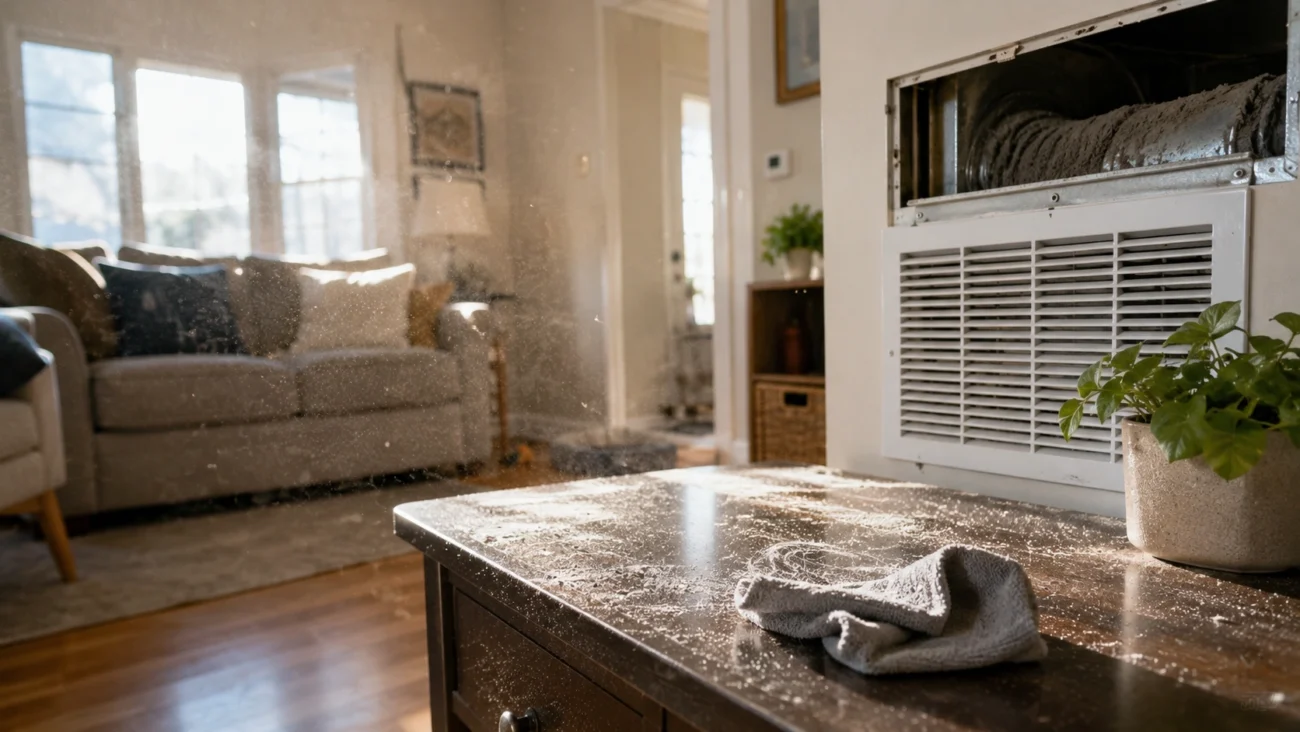
If you wipe down furniture on Saturday and see a fresh layer of dust by Monday, the problem may be bigger than your cleaning routine. Dust comes from many sources, including people, pets, fabric, outdoor air, cooking, and materials already in your home. In some situations, air duct cleaning services in St George Utah, may be worth considering, but ducts are only one part of the picture.
Your HVAC system continuously moves air through supply vents and return grilles, so it can also move particles that are already in the home. The goal is not to assume the ducts are dirty. It is to identify patterns, correct the source of dust, and improve airflow without paying for products or services that do not solve the actual problem.
Why A Clean Home Can Still Feel Dusty
Cleaning removes settled particles, but it does not stop new particles from entering or forming. Every time people walk across carpet, sit on upholstered furniture, make a bed, open a door, cook, or let a pet indoors, small particles can become airborne again. Once the heating or cooling system starts, normal air circulation can carry those particles through the home before they settle on shelves, floors, and furniture.
A dusty house is not automatically evidence of a dirty HVAC system. It may simply mean the home has active dust sources, an overdue filter change, leaky openings, or rooms with weak airflow. Looking at where and when dust appears is more useful than jumping to one explanation.
Common Causes Of Recurring Indoor Dust
Most homes have several sources of dust at once. Pet hair and dander, pollen, soil tracked in on shoes, carpet fibers, bedding, rugs, and fabric furniture all contribute. Cooking can release fine particles and residue, while sprays, candles, and some cleaning products can add material to indoor air.
Outdoor air matters too. Open doors, drafty windows, gaps around plumbing or electrical penetrations, and poorly sealed attic or crawl-space connections can allow dust to enter. Remodeling work is another common cause, especially when drywall sanding, flooring removal, or insulation work occurred recently. High humidity and poor ventilation can also make a home feel stale or musty, which is a different issue from ordinary dust but can occur alongside it.
Start With The Air Filter
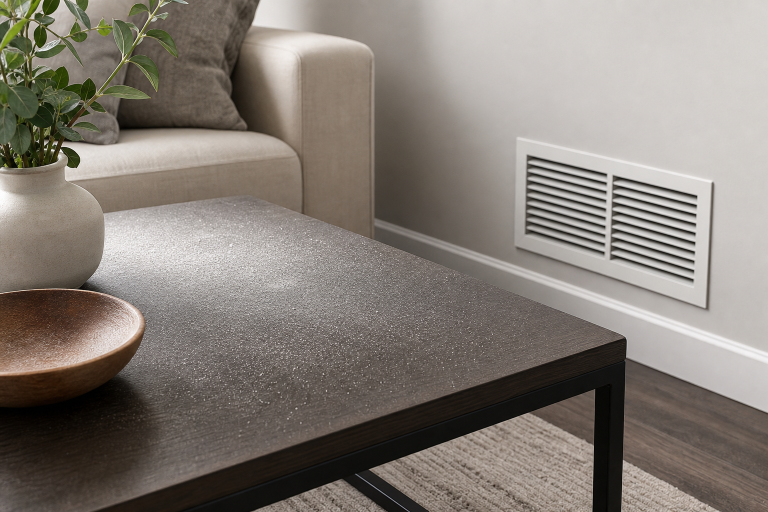
The HVAC filter protects equipment by catching particles before they reach sensitive components and can also reduce airborne dust. Check it regularly for a gray, packed surface, damage, bending, gaps around the frame, or an incorrect size. A clogged filter may contribute to weaker airflow, longer run times, and more noticeable dust circulation.
There is no single replacement schedule for every household. Homes with pets, allergy concerns, frequent system use, renovations, or several occupants may need more frequent checks. Before choosing a stronger filter, confirm the size, fit, and filter rating recommended for your equipment. A highly restrictive filter can create airflow problems if the system is not designed for it.
Signs That Ductwork May Be Part Of The Problem
Ductwork warrants closer attention when dust patterns indicate an airflow issue. Watch for dust collecting around supply vents or return grilles, one room becoming noticeably dustier than others, uneven temperatures, stale odors at system startup, or whistling and rattling sounds. A filter that becomes dirty unusually fast can also suggest that return-side leaks are pulling unfiltered air from an attic, garage, crawl space, or wall cavity.
Accessible vent openings may reveal useful clues, such as visible debris, moisture stains, evidence of pests, or particles blowing from registers. These signs do not prove the entire duct system needs cleaning, but they do justify a closer inspection.
When Air Duct Cleaning May Make Sense
Routine duct cleaning is not automatically necessary for every home. It can make sense when there is substantial debris, pest contamination, moisture-related damage, confirmed visible mold, or particles actively released from supply registers. Before approving work, ask the provider to show clear evidence and explain which part of the system is affected.
The underlying cause should be corrected first. Otherwise, a cleaned system can become contaminated again. For example, a return leak, water intrusion, or an unresolved pest problem can continue to add particles after the service is complete. Homeowners can review situations involving visible mold, pest activity, or debris blowing from registers before deciding whether to clean. Be cautious of promises that cleaning alone will guarantee better health or dramatic energy savings.
Why Duct Leaks Affect Comfort And Energy Use
Duct leakage means conditioned air escapes through gaps, disconnected joints, or poorly sealed connections before reaching the room. Leaks can send cooled or heated air into attics, crawl spaces, wall cavities, or garages. They can also pull dusty, unconditioned air into return ducts.
Cleaning removes debris. Sealing closes air leaks. A bedroom that remains warm even when the thermostat is set correctly may have a supply problem, a return-air issue, an insulation concern, or an airflow imbalance. Because properly sealed ducts can reduce heating and cooling waste, the steps that improve home comfort and energy performance should be evaluated alongside the duct layout and equipment condition.
A Simple Home Dust Troubleshooting Checklist
- Inspect the HVAC filter for dirt, damage, loose fit, and correct sizing.
- Keep furniture, curtains, and stored items clear of vents and return grilles.
- Look for dust rings, staining, moisture, or debris around vent covers.
- Track which rooms collect the most dust and whether they feel stuffy or unevenly heated.
- Note new odors, airflow changes, rattling, or whistling noises.
- Consider recent remodeling, moving, water damage, or pest activity.
- Use a damp cloth and a properly filtered vacuum to remove settled dust.
- Address humidity concerns if the home feels damp, stale, or musty.
When To Call For A Professional Inspection
Call for help when basic maintenance does not improve the problem or when you suspect mold, pests, moisture damage, damaged insulation, disconnected ducts, or inaccessible contamination. A thorough inspection may include the filter, blower area, return connections, accessible ductwork, vents, airflow, and temperature differences between rooms.
Ask what will be inspected before work begins. Request photos, measurements, and a written explanation of the findings. Persistent dust often has multiple causes, so a useful recommendation should distinguish cleaning needs from those requiring sealing, repair, moisture control, or filtration.
Common Questions About Dust And HVAC Systems
Can Dirty Air Ducts Make A Home Dusty?
They can contribute in some cases, particularly when debris is excessive or particles are released from registers. However, everyday household activity and outdoor dust are often larger contributors.
How Often Should An HVAC Filter Be Replaced?
Check it regularly and replace it based on its condition, your system’s guidance, household occupancy, pets, allergies, renovation activity, and HVAC run time.
Can Duct Cleaning Fix Uneven Temperatures?
Not usually by itself. Uneven temperatures can result from leaks, poor duct design, blocked vents, insulation gaps, equipment problems, or airflow balancing needs.
What Is The Difference Between Duct Cleaning And Duct Sealing?
Cleaning removes accumulated debris. Sealing addresses gaps and loose connections that allow air to escape or unwanted air to enter.
A Cleaner Home Starts With The Right Source
Recurring dust is a clue, not a diagnosis. Start with the filter, airflow, vents, humidity, and common household sources. Then investigate the ductwork when the evidence points there. A targeted approach can help create a cleaner, more comfortable home without treating duct cleaning as the answer to every dust problem.
