


Table Of Contents
- Flooring Starts With Room Use
- A Quick Guide To Common Materials
- Entryways, Kitchens, And Open Spaces
- Bedrooms And Quiet Spaces
- Bathrooms, Laundry Rooms, And Basements
- Homes With Children Or Pets
- Style, Color, And Layout
- Installation, Maintenance, And Final Checklist
Choosing new flooring is easier when the decision starts with real life rather than a showroom display. A household with pets, children, frequent guests, wet shoes, or a busy kitchen needs materials that can handle daily wear and tear while still supporting the home’s look. Homeowners comparing options through artisanflooringofnc.com or other local resources can benefit from thinking room by room before narrowing down colors and finishes.
The most successful flooring plan balances moisture exposure, traffic, comfort, cleaning habits, noise, and budget. Instead of expecting a single surface to meet every need throughout the house, divide the home into performance zones. That approach makes it easier to create connected spaces without forcing a delicate material into a demanding room.
Flooring Starts With Room Use
A beautiful floor can still be the wrong choice if it does not suit the room. Start by listing what happens in each area: how often people walk through it, whether spills are likely to occur, how much direct sunlight it receives, and how often it will be cleaned. An entryway has different demands from a bedroom, while a laundry room needs a different strategy from a living room.
Open-concept layouts can still feel cohesive when practical materials change between zones. Similar undertones, coordinating trim, and thoughtful transitions can visually link rooms while allowing a water-tolerant surface near the door or kitchen.
A Quick Guide To Common Flooring Materials
Match The Material To The Demands
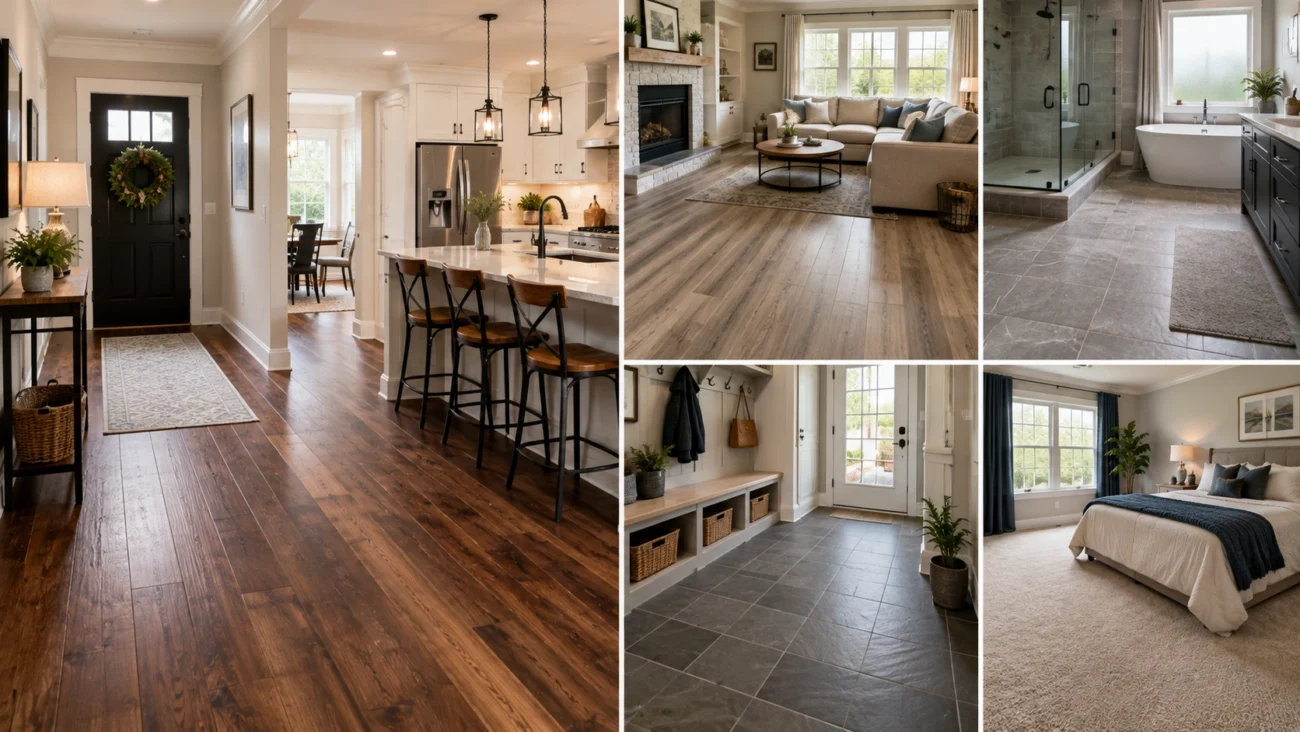
- Hardwood: Warm, classic, and often repairable. It works well in many dry living areas but needs prompt attention after spills.
- Engineered wood: A layered wood product that can offer greater dimensional stability when indoor conditions fluctuate.
- Luxury vinyl: Often selected for easy cleaning, water resistance, and wood or stone-inspired visuals.
- Laminate: Available in many styles and price ranges, making it practical for dry rooms when its water limitations are understood.
- Tile: A strong choice for wet areas, although it can feel hard and cool without rugs or radiant heat.
- Carpet: Soft and quiet underfoot, especially in bedrooms, but it requires consistent vacuuming and stain care.
Material labels alone do not tell the whole story. Flooring test findings on scratch resistance, stains, and wear reinforce why performance can vary within the same broad product category. Review the specific product’s care guidance, warranty, and approved installation locations before committing.
Entryways, Kitchens, And Open Spaces
Entryways And Hallways
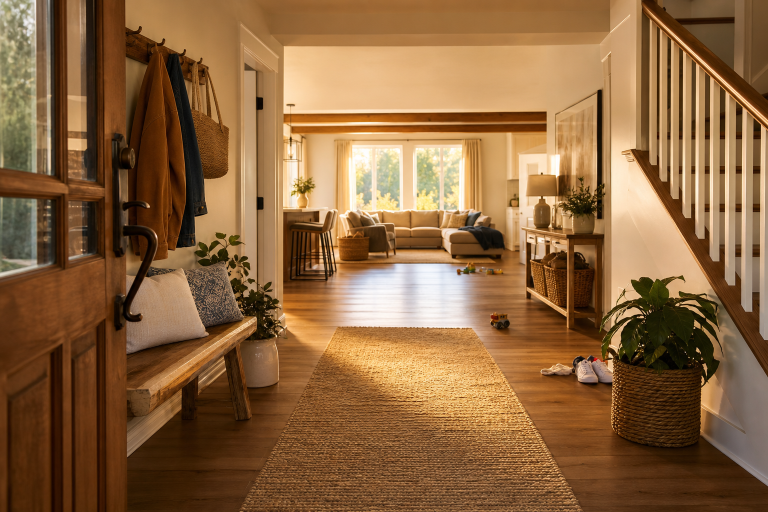
These areas collect grit, moisture, and debris first. Choose a surface that is easy to sweep and spot-clean, and consider a textured pattern or medium tone that does not reveal every speck of dirt. Quality mats, shoe storage, and regular sweeping reduce abrasive grit that can dull many finishes. Plan durable transition strips where the entry meets a hallway or adjoining room.
Kitchens And Dining Areas
Kitchens face spills, dropped dishes, chair movement, food stains, and repeated cleaning. Water-resistant surfaces offer useful breathing room, but any spill should still be wiped up quickly. In a compact kitchen, plank width, tile size, and pattern scale can make the floor feel calmer or busier. Check the manufacturer’s instructions before using a steam mop or strong cleaner, since the wrong method can damage finishes or seams.
Living Rooms And Open Spaces
Living rooms need a balance of appearance, comfort, durability, and sound control. Floor samples should be viewed beside paint, cabinets, furniture, and rugs in morning and evening light. Current design direction favors warmer palettes, natural texture, matte-to-satin finishes, and purposeful patterns, with patterned hardwoods and toasty palettes appearing in more personalized interiors. A bold floor can make a statement, but it should complement the room rather than compete with everything in it.
Bedrooms And Quiet Spaces
Bedrooms allow more freedom because moisture and traffic are usually lower. Carpet provides softness and helps reduce footfall noise, while hard-surface floors create clean lines and pair well with washable area rugs. For allergy-conscious households, focus on a cleaning routine that suits the material rather than expecting any single floor to solve every indoor air concern. Rugs, felt furniture pads, and suitable underlayment can all make a room quieter and more comfortable.
Bathrooms, Laundry Rooms, And Basements
Moisture management should drive every decision in bathrooms, laundry rooms, and below-grade spaces. The subfloor, seams, edges, and transitions matter as much as the visible finish. “Waterproof” and “water-resistant” are not interchangeable terms, so confirm exactly what the manufacturer permits for the intended room. Good ventilation, leak awareness, and prompt cleanup remain important even with a moisture-friendly floor.
Homes With Children Or Pets
Busy households should expect scratches, muddy paws, rolling toys, spills, and frequent cleaning. Lower-sheen finishes often disguise scuffs and dust better than glossy surfaces. Washable runners help protect high-traffic paths, while pads beneath pet bowls can limit repeated exposure to water. Before buying, read warranty exclusions carefully, especially those related to standing water, surface scratching, and pet accidents.
Style, Color, And Layout Choices
Lighter floors can make rooms feel more open, while deeper tones add contrast and visual weight. Look beyond whether a color is light or dark by comparing its undertones with those of cabinets, trim, and wall paint. Plank direction can guide the eye through a hallway or toward a focal point. Test samples in natural and artificial light, since a floor that looks neutral at noon may appear noticeably warmer or cooler at night.
Installation, Maintenance, And Final Checklist
- Inspect the existing floor: Identify dips, loose boards, damage, and moisture concerns.
- Confirm room conditions: Consider humidity, sunlight, temperature, and water exposure.
- Follow product requirements: Respect acclimation, underlayment, adhesive, and subfloor guidance.
- Plan transitions: Measure doorways and changes in floor height before installation begins.
- Order extra material: Keep a reasonable amount for future repairs if the product is discontinued.
- Build a realistic care routine: Use cleaning tools and products approved for the specific floor.
A Simple Final Checklist
- Does the material fit the room’s moisture level and traffic?
- Will the required cleaning routine work for the household?
- Does the color look right in both daylight and artificial light?
- Are the subfloor, transitions, installation needs, and repair options clear?
- Does the budget protect essential performance, not just appearance?
The right flooring plan recognizes that every room works differently. When performance, comfort, maintenance, style, and installation are considered together, a busy home can have floors that look polished and withstand everyday life.
