


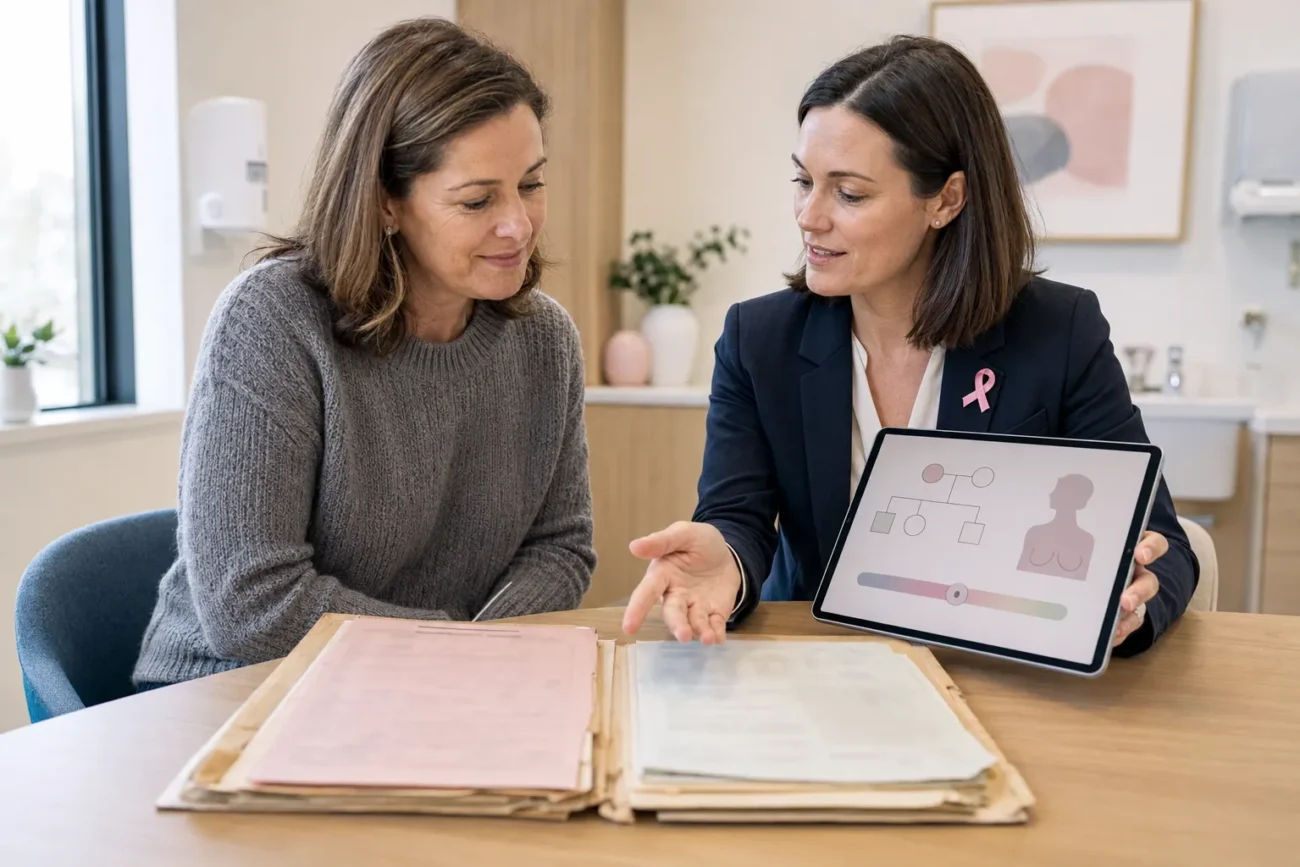
If you’ve come across the term “FRABOC” — in an old medical letter, a clinic handout, a forum post, or a search result — and you’re not sure what it means, you’re not alone. It’s not a disease, a company, or a product. It’s the name of a discontinued Australian clinical tool, and understanding what it was (and what replaced it) can clear up a lot of confusion if you’re trying to make sense of an older document.
What FRABOC actually was
FRABOC — more precisely written as FRA-BOC — stood for Familial Risk Assessment – Breast and Ovarian Cancer. It was developed by Cancer Australia as a free, evidence-based online tool for health professionals: general practitioners, practice nurses, and other clinicians, not patients using it to self-diagnose.
Its job was narrow and specific: help a clinician turn a patient’s family history into a structured risk category, so they could decide whether that person needed routine care or a referral to a family cancer clinic for further assessment.
How it worked
A clinician using FRA-BOC would typically gather a structured family history, ideally covering three generations:
- Close relatives — parents, siblings, children
- Extended relatives — grandparents, aunts, uncles, cousins
That information was assessed for patterns rather than single events — because breast cancer is common enough that one relative with a late-life diagnosis doesn’t necessarily point to inherited risk. What mattered more were clusters: multiple relatives on the same side of the family, cancer diagnosed at a younger age than typical, ovarian cancer in the family, breast cancer in a male relative, or a known inherited gene mutation.
Based on this pattern, FRA-BOC placed the patient into a broad risk category — generally described as average risk, moderately increased risk, or potentially high risk — which then guided next steps, such as routine screening versus referral for genetic counseling.
Is FRABOC still available?
No. Cancer Australia’s own site confirms the original FRA-BOC tool is no longer hosted or available. If you’re looking at an older PDF, referral letter, or webpage that references it, treat that reference as outdated rather than a live tool you can go use today.
What replaced it
Cancer Australia’s tool was succeeded by iPrevent, a more comprehensive risk assessment and decision-support tool that factors in lifestyle elements alongside family history, rather than family history alone. iPrevent is the tool currently referenced by NSW Health and other Australian state health services for breast cancer risk and prevention discussions.
Outside of Australia, or alongside iPrevent, clinicians commonly use a few other validated models:
- The Gail Model — the U.S. National Cancer Institute’s Breast Cancer Risk Assessment Tool, which estimates five-year and lifetime risk based on personal and family history factors.
- The Tyrer-Cuzick Model (IBIS) — a more detailed model that incorporates hormonal, reproductive, and genetic factors alongside family history.
- BOADICEA — a model focused specifically on families where a hereditary gene mutation (like BRCA1 or BRCA2) may be involved.
None of these are designed for self-diagnosis either — they’re all meant to be used or interpreted by a healthcare professional as part of a broader conversation about your individual risk.
If you found “FRABOC” in an old document
This is genuinely the most common reason people search the term. If a past referral letter, GP note, or old printout mentions FRA-BOC and a risk category, it reflects an assessment made with the tools available at the time — not necessarily your risk today. Because the underlying models have been updated, it’s reasonable to ask your current GP whether it’s worth revisiting your risk assessment with a current tool, especially if:
- Your family history has changed since that assessment (new diagnoses, or diagnoses in younger relatives)
- You’ve never discussed genetic counseling or testing
- You’re unsure what category you were placed in, or what it meant for your screening schedule
When family history is worth raising with a doctor
Family history alone rarely means a guaranteed outcome — most people with a relative who had breast cancer will never develop it themselves. That said, it’s worth a conversation with your GP if your family history includes:
- Breast or ovarian cancer in multiple close relatives, especially on the same side of the family
- A diagnosis before age 50
- Breast cancer in a male relative
- Both breast and ovarian cancer in the same person or family
- A known BRCA1, BRCA2, or other hereditary cancer gene mutation in the family
None of these guarantee elevated risk on their own, but they’re the kinds of patterns that a structured risk assessment — with iPrevent or another current tool — is actually designed to evaluate.
Frequently asked questions
Is FRABOC a diagnostic test?
No. It was never a diagnostic tool or a genetic test. It was a structured way to estimate risk category based on family history, used to guide referral decisions — not to detect or confirm cancer.
Can I do a FRABOC assessment myself?
The original tool was intended for use by health professionals, not for patient self-assessment, and it’s no longer available regardless. If you want a current risk estimate, ask your GP about iPrevent or another current risk model — they’re designed to be used with clinical guidance, not as a standalone home test.
Why does FRABOC still show up in search results if it’s discontinued?
Because the term persists in older medical records, referral documents, training materials, and archived webpages that were never updated. Search engines still index that older content, even though the tool itself is gone.
What should I do if my family has a history of breast or ovarian cancer?
Talk to your GP. They can review your family history, use a current risk assessment tool if appropriate, and refer you to a family cancer clinic or genetic counselor if your history suggests it’s worthwhile.
Bottom line
FRABOC (FRA-BOC) was a real, useful tool in its time — a way for Australian clinicians to translate family history into a clear risk category. It’s since been retired and replaced by iPrevent and other current risk models that do the same job with more complete information. If the term brought you here from an old document, the most useful next step isn’t chasing down the original tool — it’s asking your GP whether your family history is worth reassessing with what’s available now.
Disclaimer:
This article is for general information only and does not constitute medical advice. It is not a substitute for consultation with your GP, specialist, or genetic counselor. Individual risk assessment and screening decisions should always be made with a qualified healthcare professional.
