


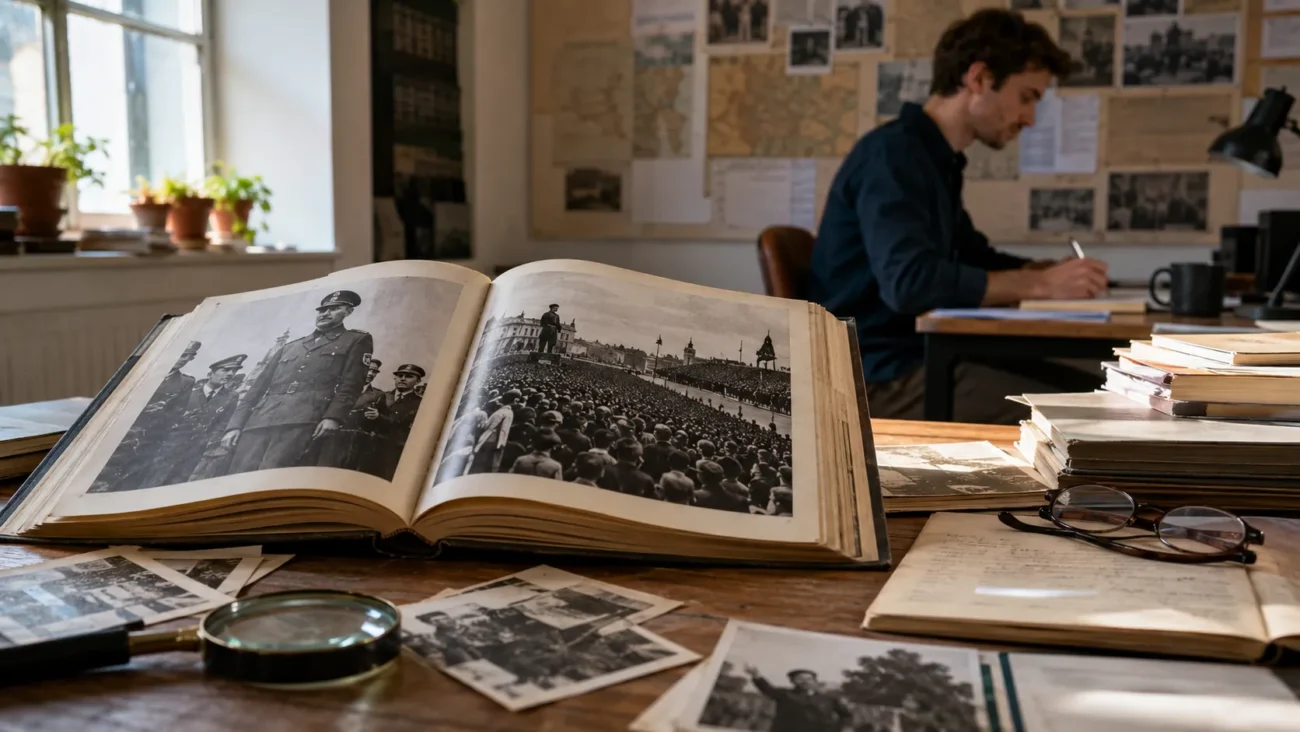
fascisterne is a Danish word that means “the fascists”, usually referring to people, groups, or movements connected to fascism, an authoritarian political ideology built around extreme nationalism, strong leader rule, state control, and opposition to liberal democracy. The term may appear in history books, school assignments, political discussions, Danish media, and online debates, but it is often misunderstood because people use it in different ways.
At its most basic level, fascisterne refers to supporters of fascist ideology. Historically, this connects most strongly to Benito Mussolini’s Italy, the rise of fascism in post-World War I Europe, and the broader climate that helped authoritarian movements grow during the 1920s and 1930s. It is also often discussed beside Nazism, Nazi Germany, Adolf Hitler, World War II, and the occupation of countries such as Denmark.
Understanding fascisterne meaning is important because the word is not only a historical label. It is also used today in discussions about political extremism, democratic values, human rights, and the dangers of authoritarian politics.
What Does Fascisterne Mean?
Fascisterne means “the fascists” in English. It is the definite plural form of the Danish word fascist. In simple grammar terms, fascist means one fascist, fascister means fascists, and fascisterne means the fascists.
So, when someone asks, “what does fascisterne mean?”, the short answer is:
Fascisterne means “the fascists,” or the people who support fascism.
The word comes from the broader concept of fascisme, which is Danish for fascism. This difference matters. Fascisme refers to the ideology, while fascisterne refers to the people connected to that ideology. In other words, fascisme is the belief system, and fascisterne are the people who follow or represent it.
In a sentence, you might say: “Fascisterne støttede en stærk stat og en autoritær leder,” meaning “The fascists supported a strong state and an authoritarian leader.”
Because the term is linked to European history, World War II, and extremist politics, it carries strong negative meaning. It is not a neutral word in most contexts. It often signals ideas such as authoritarian rule, suppression of opposition, nationalist politics, and rejection of democratic institutions.
Fascisterne in Simple Words
In simple words, fascisterne were people who believed society should be controlled by a powerful state, usually led by a strong leader. They often believed that the nation was more important than the individual and that citizens should show loyalty, obedience, and sacrifice for national unity.
A simple definition of fascism for students is this:
Fascism is an authoritarian political ideology that promotes extreme nationalism, strong central power, and limited individual freedom.
Fascists usually supported centralized power, militarism, propaganda, and strict control over political life. They often opposed liberal democracy, socialism, communism, and political pluralism. Instead of allowing many parties and free debate, fascist movements often pushed for one-party rule, leader worship, and the silencing of critics.
This is why fascist regimes vs democratic societies is such an important comparison. A democracy protects free elections, civil liberties, independent media, and the rule of law. Fascist systems usually weaken or remove those protections.
The main ideas of fascism can be summarized as follows:
| Fascist Idea | Simple Meaning |
| Extreme nationalism | The nation is treated as more important than individual rights. |
| Strong leader | A single leader is seen as the voice of the nation. |
| State control | The government controls politics, media, and public life. |
| Propaganda | Information is shaped to support the regime. |
| Opposition to democracy | Free debate and political competition are restricted. |
The Origins and History of Fascisterne
The history of fascisterne begins with the wider origins of fascism in early 20th-century Europe. Fascism developed after World War I, when many countries faced political instability, economic crisis, unemployment, social unrest, and fear of revolution. In this environment, some people became attracted to movements promising order, strength, national pride, and restoration of former glory.
The most important figure in the rise of fascism was Benito Mussolini. In Italy, Mussolini built a movement that later became known as Italian fascism. The word fascism is connected to the Italian word fascio, meaning a bundle or group, and the older Latin fascis, symbolizing unity and authority. This idea of strength through unity became central to fascist messaging.
After World War I ended in 1918, Italy faced frustration, economic hardship, and political division. Mussolini and his supporters used this instability to present fascism as a solution. They promised national renewal, strong leadership, and protection from socialism and communism. Their movement used paramilitary groups, intimidation, and violence against political opponents.
A key event was the March on Rome in 1922, when Mussolini’s fascist movement pressured the Italian government and helped him rise to power. From 1922 to 1943, Mussolini led Italy under a fascist regime that promoted authoritarian control, censorship, nationalism, and the power of the state over the individual.
This historical background explains why fascisterne is not just a dictionary term. It is tied to real political movements that reshaped Europe and contributed to the destructive conflicts of the 20th century.
Key Characteristics of Fascist Ideology
Fascist ideology is not always identical in every country, but most fascist movements share several core features. These include extreme nationalism, authoritarianism, militarism, propaganda, and a belief that the state should dominate individual life.
One major feature is ultranationalism. Fascists often claim that the nation is under threat from enemies, outsiders, minorities, or political opponents. This creates an “us versus them” mentality, where loyalty to the nation is treated as the highest duty.
Another feature is the belief in a strong leader. Fascist regimes often build a cult of personality, presenting one leader as heroic, powerful, and almost above criticism. This weakens democratic accountability because people are encouraged to obey rather than question.
Fascist movements also rely heavily on propaganda. Controlled media, emotional speeches, symbols, public ceremonies, and slogans are used to shape public opinion. In many fascist regimes, media censorship and suppression of dissent prevent citizens from hearing opposing views.
Political violence is another common feature. Historically, fascist movements used violence and intimidation to silence political opponents, unions, socialists, communists, journalists, and minority groups. This is why fascism is strongly associated with oppression, tyranny, and the destruction of civil freedom.
A clear way to understand fascist ideology is to compare what it supports and opposes:
| Fascism Often Supports | Fascism Often Opposes |
| Centralized government | Liberal democracy |
| Strong leader rule | Political pluralism |
| National unity | Individual rights over state power |
| Militarism | Pacifism and dissent |
| Propaganda | Free press and open criticism |
| State supremacy | Checks and balances |
In short, fascists reject the idea that power should be limited by democratic institutions. They usually believe the state, nation, or leader should stand above individual freedoms.
Fascisterne and World War II
The connection between fascisterne and World War II is one of the main reasons the word carries such weight today. Fascist and fascist-aligned regimes helped shape the political climate of Europe during the 1930s and 1940s.
Italy under Benito Mussolini became one of the most famous examples of a fascist state. Nazi Germany, led by Adolf Hitler, shared many authoritarian and nationalist features with fascism, though Nazism also placed racial ideology and antisemitism at its center. Together, Italy and Germany became part of the Axis powers, which fought against the Allied powers during World War II.
Fascist rule during this era was connected with censorship, militarization, expansionism, occupation, and political repression. In many occupied countries, including Denmark, people faced the difficult realities of occupation, collaboration, and resistance.
The defeat of the Axis powers in 1945 marked the collapse of major fascist regimes in Europe. But the ideas did not disappear completely. After World War II, fascism became both a historical warning and a political term used to describe extreme authoritarian and nationalist movements.
This is why World War II and the defeat of fascism remains a key part of any serious explanation of fascisterne.
Fascism vs Nazism: Are They the Same?
Many people ask whether fascism vs Nazism means the same thing. The answer is: they are related, but they are not exactly identical.
Fascism began most clearly in Italy under Mussolini. It emphasized extreme nationalism, state power, authoritarian rule, militarism, and opposition to democracy and socialism. Nazism, or National Socialism, developed in Germany under Adolf Hitler and the Nazi Party. It shared many fascist features, but it placed race ideology, antisemitism, and the idea of racial hierarchy at the center of its worldview.
| Topic | Fascism | Nazism |
| Main example | Mussolini’s Italy | Hitler’s Germany |
| Main focus | Nation, state, leader, unity | Race, nation, leader, antisemitism |
| Political style | Authoritarian and nationalist | Totalitarian, racist, and nationalist |
| View of democracy | Rejected liberal democracy | Rejected liberal democracy |
| Historical crimes | Repression, violence, war | Holocaust, genocide, war, occupation |
The two are often confused because Nazi Germany shared similar features with fascist regimes: dictatorship, propaganda, militarism, censorship, and political violence. However, Nazism’s racial ideology made it distinct and especially central to the Holocaust.
So, while Nazism can be understood as a form of fascist or fascist-like extremism, not every fascist movement was identical to Nazism.
Fascisterne in Denmark and Scandinavia
The word fascisterne has special relevance in a Danish and Scandinavian context because it is a Danish-language form. People may search fascisterne in Danish because they have seen the word in a school text, article, dictionary, political comment, or historical discussion.
Denmark’s history during World War II makes this topic especially meaningful. Denmark was occupied by Nazi Germany between 1940 and 1945. The occupation began on April 9, 1940, and Denmark’s liberation is commonly associated with May 5, 1945. During this period, Danish society faced occupation, censorship, collaboration, and resistance.
The Danish resistance movement became an important symbol of opposition to Nazi control. At the same time, there were also collaborators and far-right groups. One important historical entity is DNSAP, short for Danmarks Nationalsocialistiske Arbejderparti, a Danish Nazi party associated with Frits Clausen. Including this Danish context gives the article stronger topical authority because it connects the word fascisterne to both language and history.
Scandinavia also has related historical examples. In Norway, Vidkun Quisling became infamous for collaboration with Nazi Germany, and the word “Quisling” later became a general term for a traitor or collaborator. These examples show how fascism, Nazism, occupation, and collaboration shaped the political memory of Northern Europe.
Fascist Regimes vs Democratic Societies
A helpful way to understand fascisterne is to compare fascist regimes vs democratic societies. Fascist systems usually concentrate power in one leader, one party, or one state structure. Democratic societies try to divide power so that no single leader or group can control everything.
In a democracy, citizens should have free elections, independent courts, civil liberties, press freedom, and the ability to criticize leaders. These protections are part of the rule of law, which means political power must follow legal limits.
Fascist regimes weaken or destroy these limits. They often attack independent journalism, restrict political opposition, control education, use propaganda, and present critics as enemies of the nation. This is why fascism is considered deeply anti-democratic.
Democratic societies are not perfect, but they include mechanisms for correction. People can vote, protest, publish criticism, challenge government actions in court, and defend minority rights. Fascist systems usually remove or weaken these safeguards.
This comparison matters because it shows why democratic values, human rights, and accountable leadership are not abstract ideas. They are protections against authoritarian abuse.
How Fascisterne Is Used in Modern Political Discourse
Today, fascisterne and related words like fascist or fascism are often used in modern political discourse. Sometimes the word is used accurately to describe movements with authoritarian, ultranationalist, anti-democratic, and violent features. Other times, people use it loosely as a political insult.
This is why careful language matters. Calling someone a fascist is a serious claim. Historically, fascism involved organized ideology, state control, political violence, propaganda, and the rejection of liberal democracy. Not every strict policy, conservative opinion, nationalist argument, or authoritarian behavior is automatically fascism.
At the same time, fascism is not only a topic from the past. Scholars and journalists sometimes discuss neo-fascism, far-right movements, political extremism, social media radicalization, and democratic backsliding when analyzing modern politics. These discussions often focus on warning signs such as dehumanization, scapegoating, attacks on free media, and the glorification of violence.
The best approach is to use the word with historical accuracy. Instead of using fascisterne only as an insult, readers should ask: Does the movement reject democracy? Does it use political violence? Does it promote extreme nationalism? Does it attack civil liberties? Does it rely on propaganda and leader worship?
Those questions help separate emotional rhetoric from serious historical analysis.
Warning Signs and Lessons from Fascism
The history of fascism offers important lessons. One lesson is that authoritarian movements often grow during periods of fear, crisis, and uncertainty. Economic instability, political chaos, unemployment, and social unrest can make simple, aggressive promises sound attractive.
Another lesson is that propaganda can reshape public opinion. Fascist movements often present themselves as defenders of the nation while blaming problems on outsiders, minorities, political opponents, or democratic institutions. This process can lead to scapegoating, dehumanization, and minority persecution.
Warning signs of authoritarian politics may include attacks on independent media, rejection of election results, glorification of violence, attempts to control courts, censorship, and treating political opponents as enemies rather than citizens.
Democracies resist these dangers through civic education, critical thinking, human rights education, strong institutions, civil society, and public commitment to the rule of law. These protections do not work automatically. They require citizens to understand history and recognize how extremist ideologies gain power.
That is why learning about fascisterne is not only about memorizing the past. It is also about understanding how societies protect freedom, dignity, and democratic resilience.
Common Misconceptions About Fascisterne
One common misconception is that fascism and Nazism are always exactly the same. They overlap historically and ideologically, but Nazism has a specific racial ideology centered on antisemitism and racial hierarchy.
Another misconception is that every dictatorship is fascist. A dictatorship may be authoritarian without being fascist. Fascism has specific traits, including extreme nationalism, mass mobilization, propaganda, and the idea of national rebirth under a powerful leader.
A third misconception is that fascist is only a modern insult. While the word is often misused in political arguments, it has a real historical meaning connected to Mussolini, interwar Europe, World War II, and authoritarian movements.
A fourth misconception is that fascism belongs only to the past. The original fascist regimes were defeated, but some ideas connected to neo-fascism, political extremism, and anti-democratic nationalism still appear in modern debates.
Understanding these distinctions helps readers use the term fascisterne more accurately and responsibly.
Quick Timeline of Fascism and Fascisterne
| Year / Period | Key Event |
| 1915 | Fascist-related terminology begins appearing in early political use. |
| 1918 | World War I ends, leaving instability across Europe. |
| 1919 | Mussolini’s fascist movement develops in Italy. |
| 1922 | The March on Rome helps Mussolini rise to power. |
| 1922–1943 | Mussolini leads fascist Italy. |
| 1930s | Fascist and authoritarian movements expand in Europe. |
| 1940–1945 | Denmark is occupied by Nazi Germany. |
| 1945 | World War II ends and major fascist regimes are defeated. |
| Post-1945 | Fascism becomes a historical warning and political term. |
| Modern era | The word appears in debates about extremism, democracy, and authoritarianism. |
This timeline shows how fascisterne connects language, history, ideology, and political memory.
Frequently Asked Questions
What does fascisterne mean?
Fascisterne means “the fascists” in Danish. It refers to people who support or represent fascism.
Is fascisterne a Danish word?
Yes. Fascisterne is a Danish definite plural form. It is related to fascist, fascister, and fascisme.
What is the difference between fascisterne and fascisme?
Fascisterne means the fascists, or the people. Fascisme means fascism, or the ideology.
Who were famous fascist leaders?
The most famous fascist leader was Benito Mussolini in Italy. Other authoritarian or fascist-aligned figures often discussed in this context include Adolf Hitler in Germany and Francisco Franco in Spain.
Is fascism the same as Nazism?
Not exactly. Nazism shared many fascist features but placed race ideology, antisemitism, and racial hierarchy at the center of its worldview.
Why did fascism grow after World War I?
Fascism grew because many societies faced economic crisis, political instability, fear of communism, social unrest, and anger after World War I.
Were there fascists in Denmark?
Yes, Denmark had far-right and Nazi-aligned groups, including DNSAP, but Danish history also includes strong resistance to Nazi occupation.
Is the word fascist still used today?
Yes. It is used in history, political science, journalism, education, and public debate. However, it should be used carefully because it has a serious historical meaning.
Conclusion:
Fascisterne is more than a foreign word or a historical label. It means “the fascists”, but it also opens the door to understanding fascism, authoritarian rule, World War II, Danish history, and the long struggle between extremist politics and democratic values.
The history of fascism shows how fear, instability, propaganda, nationalism, and political violence can damage societies. It also shows why human rights, free media, rule of law, civil liberties, and democratic institutions matter.
To understand fascisterne responsibly, readers should look at both the word and the history behind it. The term should not be used casually as a simple insult. It should be understood as a serious concept connected to real movements, real regimes, and real consequences.
Learning about fascism helps people recognize the value of democracy, question extremist narratives, and protect the freedoms that authoritarian ideologies often try to destroy.
Disclaimer
This article is for general informational purposes only. It is intended to provide a broad educational overview, and individual interpretations, preferences, historical perspectives, and situations may vary. Readers should use the information as a starting point for further learning and critical thinking.
