


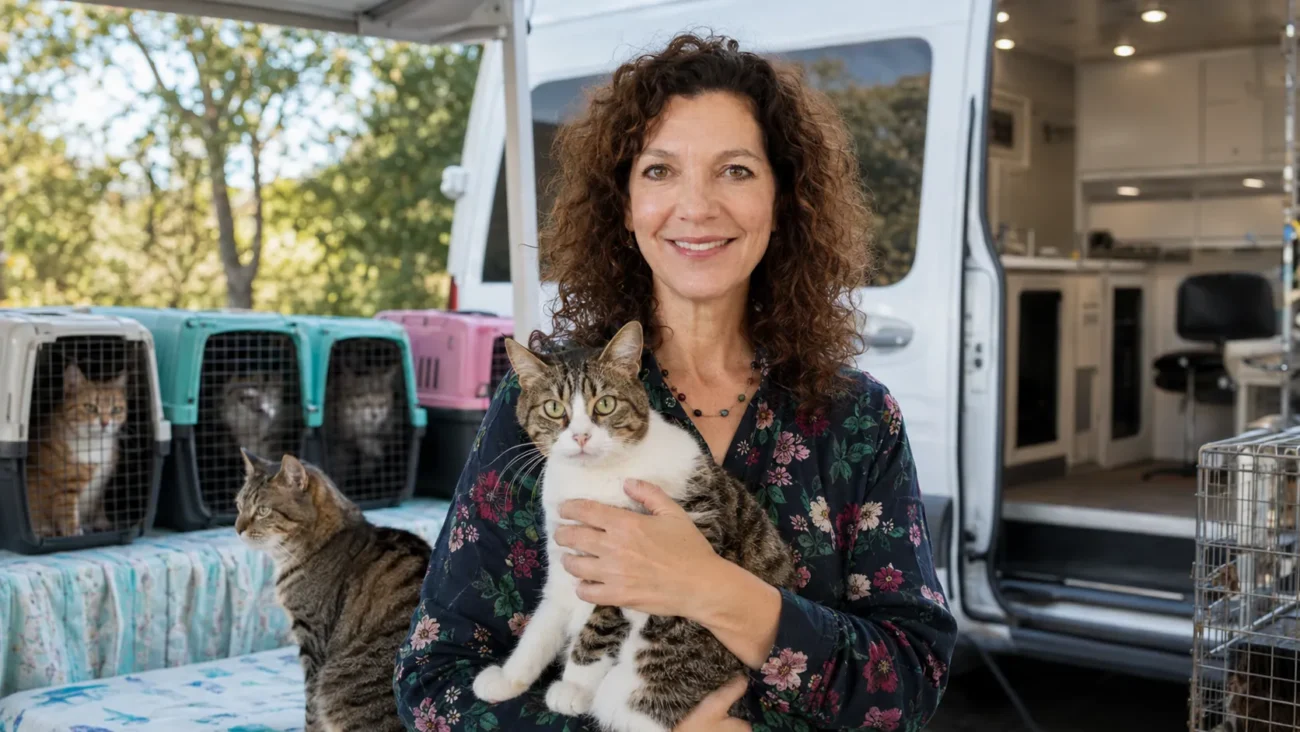
Donna Sicuranza is a Connecticut nonprofit executive best known for her long-standing leadership of Tait’s Every Animal Matters, commonly called TEAM, and its mobile feline spay, neuter and vaccination clinic. The organization’s current staff page identifies her as Donna Sicuranza Marconi, Executive Director, while older TEAM materials use the names Donna Sicuranza and Donna J. Sicuranza.
Her public profile is connected primarily to animal welfare, feline overpopulation prevention and affordable access to veterinary services across Connecticut. TEAM says its veterinarians have sterilized and vaccinated more than 225,000 cats since 1997, making the organization’s measurable impact a central part of the Donna Sicuranza biography.
There is also another person named Donna Marie Sicuranza whose 2017 obituary appears in search results. She was a New York banking professional and should not be confused with Donna Sicuranza Marconi of TEAM.
Quick Facts About Donna Sicuranza
| Fact | Verified information |
| Full public name | Donna Sicuranza Marconi |
| Other published names | Donna Sicuranza and Donna J. Sicuranza |
| Current public role | Executive Director |
| Organization | Tait’s Every Animal Matters |
| Common organization name | TEAM |
| Headquarters | Westbrook, Connecticut |
| Main program | Mobile Feline Spay/Neuter Clinic |
| Clinic launch | March 1, 1997 |
| Reported impact | More than 225,000 cats sterilized and vaccinated |
| Professional field | Nonprofit leadership and animal welfare |
These facts are supported by TEAM’s current staff, history and service pages.
Who Is Donna Sicuranza?
Donna Sicuranza Marconi is the Executive Director of TEAM, a nonprofit charity headquartered in Westbrook, Connecticut. The organization operates a mobile clinic that travels to communities across the state to provide feline sterilization, vaccination and related preventive care.
She is known for helping develop and sustain a prevention-focused approach to Connecticut animal welfare. Rather than dealing only with cats after they enter shelters or become part of unmanaged outdoor colonies, TEAM aims to prevent unwanted litters by making spaying and neutering easier to access.
Donna Sicuranza is an administrator and nonprofit leader, not a veterinarian. TEAM lists her under its administrative staff. The organization separately identifies Art Heller, DVM, as Medical Director and names its veterinary technicians under the clinical team.
This distinction matters because her contribution is rooted in organizational leadership, program development, communication, fundraising and service continuity. The surgeries and medical decisions are handled by licensed veterinary professionals, while the Executive Director helps maintain the wider structure that enables those professionals to serve Connecticut cats.
Donna Sicuranza, Donna Sicuranza Marconi and Donna Marie Sicuranza Explained
Search results can make Donna Sicuranza’s identity appear more complicated than it is.
TEAM’s current staff page uses the name Donna Sicuranza Marconi. Its 2019 newsletter identifies its Executive Director as both Donna Sicuranza and Donna J. Sicuranza. Taken together, these official TEAM sources indicate that the three name forms refer to the same animal-welfare executive.
However, Donna Marie Sicuranza was a different person. According to her obituary, she was born on March 24, 1942, lived in the New York area and worked for the Bank of New York in Bronxville for more than 20 years. She retired as an Assistant Manager in 2007 and died on March 10, 2017.
The following comparison resolves the confusion:
| Detail | Donna Sicuranza Marconi | Donna Marie Sicuranza |
| Field | Nonprofit animal welfare | Banking |
| Main organization | Tait’s Every Animal Matters | Bank of New York |
| Primary location | Connecticut | New York |
| Public role | Executive Director | Assistant Manager before retirement |
| Current status | Listed by TEAM as Executive Director | Died in 2017 |
Family information from the New York obituary—including a husband named Angelo, three daughters and ten grandchildren—belongs to Donna Marie Sicuranza, not the TEAM Executive Director.
Education, Communications Background and Early Career
Several third-party biographies describe Donna Sicuranza as having a background in writing, editing and public relations. Some also associate her with Trinity College and English Language and Literature studies.
However, the official TEAM pages reviewed for this article do not provide a detailed educational history, a degree, graduation dates or a complete list of earlier employers. TEAM’s public materials are focused on her organizational role and the mobile clinic rather than on a conventional personal biography.
Her reported communications experience is plausible in the context of her work. An Executive Director may oversee or support donor communication, newsletters, fundraising materials, public education, community partnerships and organizational messaging. Nevertheless, those responsibilities should not be treated as confirmed details of Donna Sicuranza’s personal résumé unless supported by a reliable first-party record.
A responsible biography should therefore separate what is documented from what is merely repeated by secondary websites.
How Donna Sicuranza Helped Develop TEAM’s Mobile Clinic
The strongest documented chapter in Donna Sicuranza’s career is the creation of the TEAM Mobile Feline Spay/Neuter Clinic.
TEAM’s history says planning began in 1996 under the direction of Donna Sicuranza and John A. Caltabiano, DVM, an Old Lyme veterinarian who was then the organization’s president. Their objective was to make sterilization and vaccination more accessible to cat owners and people caring for homeless cats.
Before mobile and reduced-cost services were widely available, people with limited incomes, transportation difficulties or feral-cat colonies had fewer practical options. TEAM connected those access problems with wider consequences such as unwanted kittens, abandonment, illness and crowded shelters.
The clinic began operating on March 1, 1997. TEAM’s detailed historical page says it sterilized and vaccinated 10 cats on its first day. A later newsletter appears to give a different initial figure, creating a minor inconsistency in the organization’s historical reporting. The safest figure to use is the 10-cat total stated on TEAM’s dedicated history page, while acknowledging that another publication may differ.
Case Study: From 10 Cats to 8,000 in One Year
The clinic’s early growth demonstrates how strongly Connecticut communities needed affordable feline care.
TEAM reports that it had spayed or neutered 5,000 cats within six months of launching. By its first anniversary, that figure had reached 8,000 cats. Demand became large enough that TEAM needed a bigger vehicle only one year after putting its original clinic on the road.
That expansion also answered early skepticism about whether surgery could be performed safely and efficiently in a mobile setting. The program continued, acquired additional mobile clinics and was later used as a model by animal-welfare professionals in other states.
This growth is central to understanding what Donna Sicuranza is known for: helping turn a relatively small mobile initiative into a long-running statewide feline-welfare program.
Her Role as Executive Director of Tait’s Every Animal Matters
As Executive Director, Donna Sicuranza’s work is broader than any single appointment, surgery or fundraising campaign. Her position represents the administrative leadership behind a mobile operation that must coordinate staff, vehicles, equipment, changing service locations, appointments, donors and public communication.
TEAM’s current staff structure includes a Program Coordinator, Medical Director, Senior Veterinary Technician and Veterinary Technician in addition to its Executive Director. This structure shows that its impact comes from cooperation between administrative and medical professionals.
An organization providing mobile veterinary care also needs consistency. Cats must be registered, screened and transported safely. Medical teams need appropriate equipment and supplies. Clients need accurate preparation and aftercare instructions. Clinic locations and schedules must be communicated to residents throughout the state.
Donna Sicuranza’s leadership should therefore be understood as mission-driven nonprofit management. Her role connects veterinary work with fundraising, planning, community outreach and the long-term goal of reducing feline overpopulation.
It would be inaccurate to credit every TEAM procedure solely to one person. TEAM’s achievements belong collectively to its veterinarians, veterinary technicians, program staff, office workers, donors, volunteers and the caretakers who bring cats to the clinic. Donna Sicuranza’s documented contribution is helping lead and sustain that system.
How the TEAM Mobile Clinic Works Today
TEAM describes itself as Connecticut’s mobile spay, neuter and vaccination clinic for cats. It is a specialized preventive-care program, not a replacement for a full-service veterinary hospital.
As of July 2026, TEAM’s website lists a $245 spay or neuter package. The package includes vaccinations for rabies, distemper and upper or lower respiratory infection, along with a nail trim and ear-mite treatment when needed. Cats must generally be at least five months old, and both cats and their caretakers must be Connecticut residents. Additional restrictions or charges may apply based on age or health.
Prices and eligibility requirements can change, so readers should confirm current information directly with TEAM before making plans.
The organization welcomes domestic and feral cats and travels to multiple Connecticut communities. TEAM summarizes its purpose by saying that these services should be “affordable and accessible to Connecticut residents.”
Preparation is an important part of the process. Current instructions say that cats should not be given food after 10 p.m. on the night before surgery, although water is allowed. Domestic cats must arrive in a secure carrier, while feral cats should be transported in a humane trap. Check-in is generally between 9 and 10 a.m., with same-day pickup between 3 and 4 p.m. or at the time assigned by staff.
After surgery, TEAM advises keeping domestic cats indoors for at least three days, providing a quiet place for the first 24 hours and limiting excessive handling for several days. Feral cats may generally be released the afternoon after surgery when they are awake and alert.
Why Donna Sicuranza’s Animal-Welfare Work Matters
The significance of Donna Sicuranza’s work is best understood through the problem TEAM is designed to address: feline overpopulation.
One unsterilized cat can contribute to repeated litters. When many cats reproduce without consistent human care, communities can face larger feral colonies, greater shelter intake, disease risks and increased pressure on volunteers and rescue organizations.
Spaying and neutering address the issue before those kittens are born. Vaccination also supports individual feline health and reduces the risk of preventable disease. TEAM’s stated goal is to sterilize as many cats as possible before they reproduce.
Access is equally important. A veterinary service may technically exist but remain unreachable when a caretaker cannot afford it, cannot transport a cat over a long distance or cannot safely handle a feral animal. A mobile clinic reduces some of those barriers by travelling to communities around Connecticut.
This prevention-first model also helps people who have taken in a stray cat, are living on a fixed income or are managing an outdoor colony. TEAM’s history says that many clients sought quality care that would not create an unaffordable financial burden.
Donna Sicuranza’s contribution is therefore connected not only to animal care but also to community access, responsible pet ownership and the sustainability of local rescue efforts.
Feral Cats, TNR and the TEAM Incentive Program
Feral cats require a different approach from socialized household pets. They may avoid human contact, resist handling and live in outdoor family groups known as colonies.
TEAM advocates trap-neuter-return, commonly shortened to TNR. Under this approach, an adult community cat is captured in a humane trap, sterilized and returned to its familiar outdoor environment. Young kittens may sometimes be socialized and placed in homes when circumstances allow.
TEAM welcomes feral cats aboard its mobile clinic and has humane traps available for a refundable deposit. Caretakers bringing a feral cat for surgery may also qualify for a rebate through the TEAM Incentive Program, or TIP.
TNR is not simply a matter of releasing a cat and walking away. Colony caretakers remain important because outdoor cats still need an appropriate habitat, food, observation and shelter where possible.
Postoperative handling also requires care. TEAM advises keeping a feral cat safely confined for at least 24 hours after surgery, then releasing it when it is awake and alert enough to return safely to its environment.
By including feral cats in its service model, TEAM addresses a part of feline overpopulation that conventional pet appointments may not fully reach.
TEAM’s Measurable Reach and Impact
TEAM’s latest public figure states that its veterinarians have sterilized and vaccinated more than 225,000 cats since 1997. The organization also says many staff members have been connected to the program for more than 25 years.
Older TEAM publications contain lower totals because they were published earlier. A 2021 history page reported more than 206,000 domestic and feral cats, while a 2019 newsletter celebrated the program’s 200,000th sterilization surgery. These figures show a timeline of continued activity rather than a factual contradiction.
The numbers matter, but they do not tell the entire story. The clinic has also brought preventive veterinary services closer to people who might otherwise delay or avoid care. Its influence includes the unwanted litters prevented, the community caretakers supported and the pressure reduced on shelters and rescue groups.
TEAM’s history also says that veterinarians connected to its mobile clinic later established similar programs in states including California, Colorado, Florida, Massachusetts, New York, North Carolina, Pennsylvania and Rhode Island.
TEAM Within Connecticut’s Wider Spay-and-Neuter System
TEAM operates within a broader Connecticut effort to reduce pet and feral-cat overpopulation.
The Connecticut Department of Agriculture administers the Animal Population Control Program, or APCP. Its Feral Cat Grant Program assists eligible nonprofit rescue organizations with sterilizing and vaccinating feral cats through participating Connecticut veterinarians.
The state reports that, since 2007, the program has averaged a 98% compliance rate for benefits issued through Connecticut nonprofit organizations. Under its published benefit structure, vouchers have provided $80 toward sterilizing a male feral cat, $120 for a female and up to $30 for two vaccinations performed at the same time.
TEAM and the APCP should not be treated as the same program. TEAM is an independent nonprofit mobile-clinic organization, while the APCP is a state-administered assistance program. Together, however, they illustrate how mobile services, nonprofit rescue groups, participating veterinarians and public programs can address different barriers to feline care.
Current Role and Professional Reputation
As of July 2026, TEAM continues to list Donna Sicuranza Marconi as Executive Director. Her public reputation is based on service continuity, nonprofit leadership and the long-term development of affordable feline care rather than entertainment, politics or celebrity culture.
No reliable first-party evidence reviewed for this article establishes that she has retired or left the organization. Likewise, the official sources do not document major public controversies or nationally recognized personal awards.
Her most defensible legacy is connected to TEAM itself: a program that started with a small mobile clinic in 1997 and grew into a statewide service reporting more than 225,000 cats sterilized and vaccinated.
What Is Known About Donna Sicuranza’s Age, Family and Net Worth?
Searchers frequently ask, “How old is Donna Sicuranza?”, “Is Donna Sicuranza married?” and “What is Donna Sicuranza’s net worth?”
Reliable answers are not publicly available in the official sources reviewed for this article. TEAM does not publish her birth date, exact age, spouse, children, salary, personal assets or net worth on its staff and organizational pages.
The surname Marconi should not, by itself, be used as proof of a marriage or the identity of a spouse. Similarly, estimated net-worth websites should not be treated as evidence unless their numbers are supported by transparent financial records.
The 1942 birth date, husband, three daughters and ten grandchildren found in the Pelham obituary refer to Donna Marie Sicuranza, the unrelated banking professional. They must not be added to Donna Sicuranza Marconi’s biography.
How to Contact, Use or Support TEAM
People looking for the current TEAM mobile clinic schedule, clinic locations or appointment information should use the organization’s official contact details.
TEAM currently lists 1-888-FOR-TEAM, or 888-367-8326, and 860-399-5569 for scheduling and information. Its locations are subject to change, so clients should confirm where the clinic will operate before travelling.
Tait’s Every Animal Matters is a 501(c)(3) nonprofit charity. TEAM states that donations are tax-deductible and that gift certificates or vouchers can be used to sponsor services for homeless or feral cats.
Frequently Asked Questions
Who is Donna Sicuranza?
Donna Sicuranza, publicly listed as Donna Sicuranza Marconi, is the Executive Director of Tait’s Every Animal Matters. She is known for her leadership of a Connecticut nonprofit operating a mobile feline spay, neuter and vaccination clinic.
What is Donna Sicuranza known for?
She is known for helping develop and sustain TEAM’s mobile clinic and for supporting accessible sterilization and vaccination services for Connecticut cats. The clinic began operating in 1997.
Is Donna Sicuranza a veterinarian?
No official TEAM source identifies her as a veterinarian. She is listed as Executive Director under administrative staff, while Art Heller, DVM, is listed as Medical Director.
What is Tait’s Every Animal Matters?
Tait’s Every Animal Matters, or TEAM, is a nonprofit charity headquartered in Westbrook, Connecticut. Its main project is a mobile feline spay, neuter and vaccination clinic serving domestic and feral cats from across the state.
When did TEAM’s mobile clinic begin?
Planning took shape in 1996, and the clinic began operating on March 1, 1997. TEAM credits Donna Sicuranza and veterinarian John A. Caltabiano with directing its development.
How many cats has TEAM helped?
TEAM currently reports that its veterinarians have sterilized and vaccinated more than 225,000 cats since 1997.
Does TEAM accept feral cats?
Yes. TEAM welcomes feral cats aboard its mobile clinic, advocates TNR and may provide eligible caretakers with a rebate through the TEAM Incentive Program. Humane traps are also available for a refundable deposit.
Is Donna Sicuranza Marconi the same person as Donna Marie Sicuranza?
No. Donna Sicuranza Marconi is the Connecticut nonprofit executive associated with TEAM. Donna Marie Sicuranza was a New York banking professional who died in 2017.
How old is Donna Sicuranza?
Her exact age and birth date are not confirmed by the official TEAM sources reviewed for this article. The 1942 birth date seen in some search results belongs to Donna Marie Sicuranza, not the TEAM Executive Director.
What is Donna Sicuranza’s net worth?
There is no reliable public record establishing Donna Sicuranza Marconi’s personal net worth. Any unsupported estimate should be treated as speculation rather than biographical fact.
Conclusion
Donna Sicuranza Marconi is best understood as a long-serving Connecticut animal-welfare and nonprofit leader. Her documented career is closely tied to the planning, growth and continued operation of the TEAM Mobile Feline Spay/Neuter Clinic.
From 10 cats on its first operating day in 1997 to more than 225,000 cats sterilized and vaccinated, TEAM’s history demonstrates the potential of accessible, prevention-focused veterinary care.
That impact is a collective achievement involving administrators, veterinarians, veterinary technicians, donors, volunteers and community-cat caretakers. Donna Sicuranza’s role has been helping lead the organization that brings those people together around one sustained objective: reducing feline overpopulation throughout Connecticut.
Disclaimer:
This article is provided for general informational purposes only. Individual circumstances, preferences, and outcomes may vary, so readers should verify details from relevant official sources when needed.
