


Introduction
Soapstone is famous for being nearly indestructible — it’s heat-proof, chemically inert, and resistant to permanent staining. But plenty of soapstone owners have had a moment of panic after wiping down their counters, only to discover a strange discolored patch where none existed before. In most cases, nothing is actually damaged. What’s happened is something specific to how soapstone works, and once you understand it, cleaning your countertops becomes much less stressful.
This guide covers how to clean soapstone safely, why certain everyday products can cause temporary discoloration, and how to fix it if it happens.
Understanding Soapstone Before You Clean It
Before diving into cleaning steps, it helps to understand what makes soapstone behave differently from other countertop materials.
Soapstone Is Non-Porous and Chemically Inert
Unlike granite or marble, soapstone doesn’t have pores that liquids can seep into. This makes it genuinely resistant to permanent staining from things like wine, oil, or acidic foods. It’s also unaffected by household chemicals, acids, and heat, which is part of why it’s such a popular choice for kitchens.
The Patina: Why Soapstone Changes Color Over Time
Freshly quarried soapstone is a light gray color. Over time, exposure to water, oils, and grease causes the stone to darken through a natural process of oxidation, developing what’s known as a patina. This is a cosmetic change, not damage, and many soapstone owners consider the darkened, richer color part of the material’s appeal.
Why This Matters for Cleaning
Because the patina is essentially a thin layer of oil sitting on the surface of the stone, certain cleaning products, particularly dish detergents, can strip that oil away. This doesn’t damage the stone itself, but it can leave a noticeably lighter patch where the patina has been removed, which is often mistaken for a stain or discoloration.
Understanding this distinction changes how you approach both routine cleaning and dealing with any spots you might find.
Daily/Regular Cleaning: The Basic Method
For everyday cleaning, soapstone doesn’t require anything special. Here’s the simplest, safest approach:
Step 1: Wipe with Warm Water
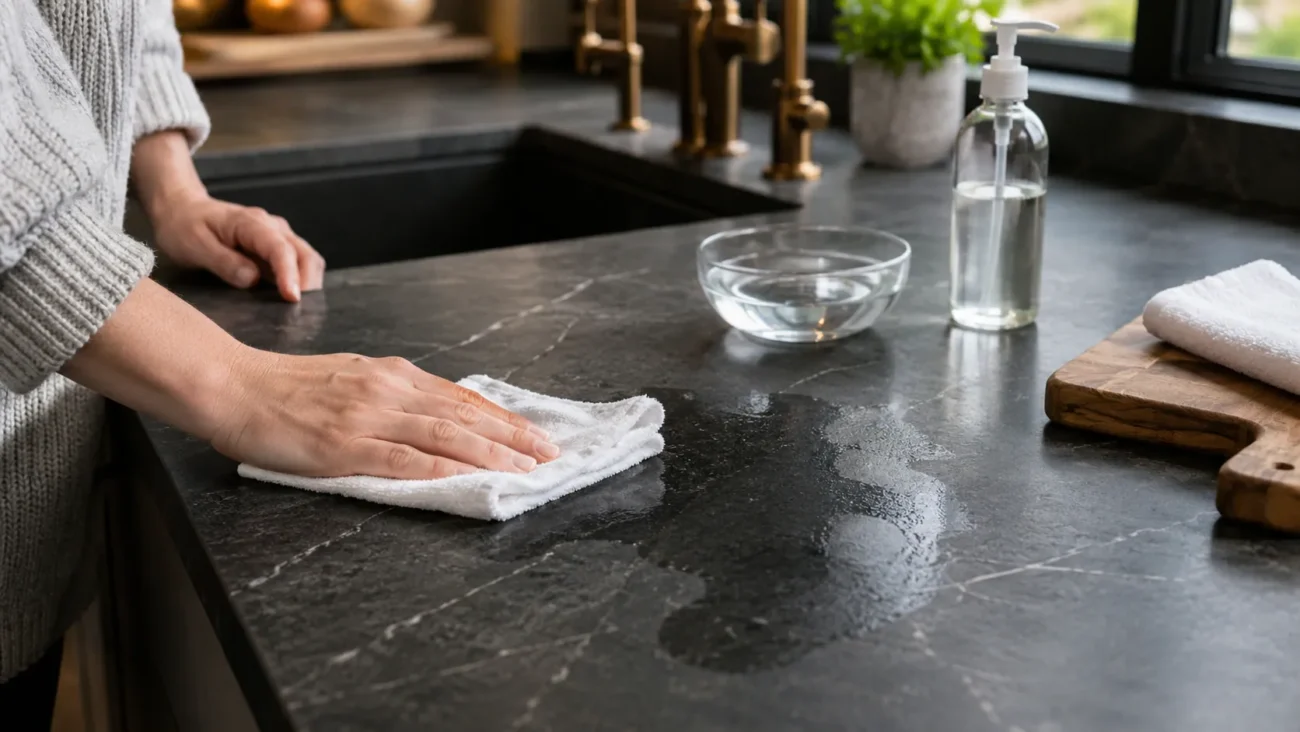
For most everyday messes, a damp cloth or sponge with warm water is enough to clean the surface.
Step 2: Use a Mild Soap If Needed
For anything that needs a bit more cleaning power, a mild soap, such as Castile soap, is a safer choice than standard dish detergents. Castile soap is gentler and less likely to strip the surface’s oil patina compared to detergents formulated with stronger degreasing agents.
Step 3: Dry the Surface
Wipe the countertop dry with a clean cloth after cleaning. This isn’t strictly necessary for the stone itself, but it helps prevent water spots, which can temporarily show up as slightly darker marks until they evaporate.
A Note on Sinks
Soapstone sinks can generally handle any mild cleaner, including household products like Ajax or Comet, since sinks see much heavier daily use and are less of a concern for cosmetic patina preservation than open countertop surfaces.
Why Dish Soap (Like Dawn) Can Cause Discoloration
This is one of the most common sources of confusion for new soapstone owners, and it’s worth explaining clearly.
Popular dish soaps like Dawn are technically detergents, not true soaps. Despite their reputation for being gentle, detergents are specifically formulated to cut through grease and oil, which is exactly what gives soapstone its darkened patina. When a detergent like this comes into contact with the surface, even briefly, it can strip away the oil layer in that specific spot, leaving behind a noticeably lighter patch that stands out against the surrounding, darker stone.
This Is Not Damage
It’s important to understand that this isn’t staining, etching, or any kind of permanent harm to the stone. The underlying soapstone is completely unaffected. What’s happened is simply a cosmetic, localized removal of the oil patina, and it’s fully reversible.
Why It Can Look Alarming
Because the color difference can be dramatic, especially on a well-oiled, deeply patinated countertop, it’s easy to assume something has gone wrong. In reality, this is one of the most common and well-understood quirks of owning soapstone, and it’s simple to fix, covered in the next section.
How to Restore Discoloration or Water Spots
If you’ve noticed a lighter patch from soap, water spots, or general fading, the fix is straightforward: reapplying mineral oil.
What You’ll Need
- Food-grade mineral oil
- A few clean, dry rags or paper towels
Step 1: Clean the Area
Make sure the surface is clean and dry before applying oil.
Step 2: Apply the Oil
Pour a small amount of mineral oil directly onto the affected area, or the entire countertop if you’re doing a full re-oiling. Rub it in using a clean rag, working it evenly across the surface.
Step 3: Let It Sit
Allow the oil to sit for about 30 minutes, giving it time to darken the stone evenly.
Step 4: Wipe Off the Excess
Using a fresh, dry rag, wipe away any oil that hasn’t absorbed into the surface. The stone doesn’t fully absorb the oil the way wood does, so some excess is normal.
A Word of Caution
Never place a rag that’s been soaked in mineral oil into a clothes dryer. Oil-soaked fabric can pose a fire risk under heat. Instead, let oil-soaked rags air dry fully, or store them in a sealed container like a Ziploc bag if you plan to reuse them.
Blending a Spot Into the Rest of the Countertop
If you’re only treating one discolored patch, feather the oil slightly beyond the edges of the spot so it blends smoothly with the surrounding patina, rather than leaving a sharp, visible edge.
Deep Cleaning and Stain Removal
For heavier buildup, stubborn marks, or scratches that don’t respond to basic cleaning, a few additional techniques can help.
Baking Soda Paste
For grime or heavier soiling, mix baking soda with a small amount of water to create a paste. Gently rub it onto the affected area with a soft cloth or sponge, then rinse and dry. This works well for general buildup without being abrasive enough to damage the surface.
Fine Abrasive Pads for Stubborn Marks
For heavier, stuck-on residue, a very fine grade Scotch-Brite pad can help lift debris without significantly scratching the stone. Always test on a small, inconspicuous area first.
Sanding for Deeper Scratches or Marks
Because soapstone is a relatively soft stone, it can be worked with basic woodworking tools. For deeper scratches, dents, or stubborn marks that won’t lift with cleaning, fine-grit sandpaper (often starting around 220 grit and working up to 600 grit) can smooth out the area. After sanding, the area will need to be re-oiled to blend it back into the surrounding patina, since sanding removes the oxidized layer along with the mark.
When to Consider Professional Help
For extensive damage, large cracks, or if you’re uncomfortable sanding the stone yourself, contacting the original installer or a stone care professional is a safer option than attempting a large-scale repair on your own.
Common Mistakes to Avoid
A few common missteps can create unnecessary headaches when caring for soapstone.
Using Wax-Based Sealers Without Research
Some products marketed as soapstone treatments contain beeswax. While they can look good initially, wax sits on top of the surface rather than blending with it, and tends to attract and trap grime over time. Removing built-up wax often requires solvent cleaning, creating more work than it saves. Stick with mineral oil unless you’ve thoroughly researched a specific alternative product.
Drying Oil-Soaked Rags in a Dryer
As mentioned earlier, this is a genuine fire hazard due to the heat causing the oil to oxidize rapidly. Always air-dry oil-soaked rags, or store them safely until they can be laundered separately.
Placing Hot Cookware or Small Appliances Directly on the Surface Without Consideration
While soapstone is heat-resistant and won’t be damaged by hot pans, appliances with hard feet or edges (like stand mixers or waffle irons) can occasionally leave faint impression marks over time with repeated placement in the same spot. Using a trivet or towel underneath, especially for daily-use appliances, can help prevent this.
Assuming All Discoloration Is Permanent Staining
As covered earlier, most discoloration on soapstone is simply displaced oil, not a true stain. Jumping straight to sanding or aggressive treatment for a spot that mineral oil alone would fix can create more work than necessary.
Skipping a Test Spot Before Trying New Products
Whether it’s a new cleaner, an abrasive pad, or a sealer, always test on a small, inconspicuous area first, since results can vary depending on your specific stone and existing patina.
Oiling Frequency: How Often Should You Oil Soapstone?
One of the most common questions soapstone owners have is how often they actually need to oil their countertops. The honest answer is: it depends on personal preference, not necessity.
Oiling Is Cosmetic, Not Required Maintenance
Unlike butcher block, which needs regular oiling to stay protected, soapstone doesn’t require oil to remain functional or durable. Oiling purely speeds up and evens out the natural darkening process. Some owners prefer to skip it entirely and let the stone darken naturally and unevenly over time, which creates a more varied, natural-looking patina.
A General Timeline for Those Who Do Oil
For those who want an even, consistently dark look from the start, a common approach is oiling roughly once a month for the first year after installation. After that, reapplication becomes far less frequent, often only needed when water begins leaving noticeable dark spots that don’t fade on their own, a sign the existing oil layer has thinned.
There’s No Wrong Answer
Whether you oil monthly, occasionally, or not at all, the countertop will function exactly the same. This comes down entirely to the aesthetic you prefer, light and naturally varied, or dark and evenly patinated.
Frequently Asked Questions
Can soapstone be permanently stained?
It’s extremely rare. Soapstone is non-porous and chemically inert, so most discoloration is actually displaced oil patina rather than a true stain, and it can be fixed with mineral oil.
Does soapstone need to be oiled?
No. Oiling is purely cosmetic and speeds up the natural darkening process. Soapstone functions perfectly well unoiled, though it will develop a lighter, more uneven patina naturally over time.
Can I use vinegar or bleach on soapstone?
Yes, soapstone is chemically inert and won’t be etched or damaged by acids or bleach, unlike marble or granite. However, strong cleaners can still strip the oil patina, so expect possible temporary lightening in the area used.
How do I remove scratches from soapstone?
Minor scratches often disappear simply by rubbing the area with your thumb or reapplying a small amount of mineral oil, since many surface marks are just displaced oil rather than true scratches. Deeper marks may require light sanding.
Why does my soapstone look lighter in one spot after cleaning?
This is almost always the result of a cleaning product, often a dish detergent, stripping the oil patina in that specific area. It’s not damage and can be fixed by reapplying mineral oil to the spot.
Is soapstone hard to maintain?
No. Soapstone is one of the lowest-maintenance countertop materials available. Basic cleaning requires only mild soap and water, and any cosmetic touch-ups are as simple as applying mineral oil.
Conclusion
Soapstone is one of the most forgiving and low-maintenance countertop materials available, but its unique relationship with oil and patina can catch new owners off guard. The good news is that almost anything that looks like damage, whether it’s a lighter patch from dish soap or a faded spot from water, is easily fixed with a bit of mineral oil.
Once you understand that soapstone’s color changes are cosmetic rather than structural, cleaning and caring for it becomes refreshingly simple. Whether you choose to oil regularly for an even, dark finish or let the stone age naturally, your countertop will remain just as durable and functional either way.
