


Introduction
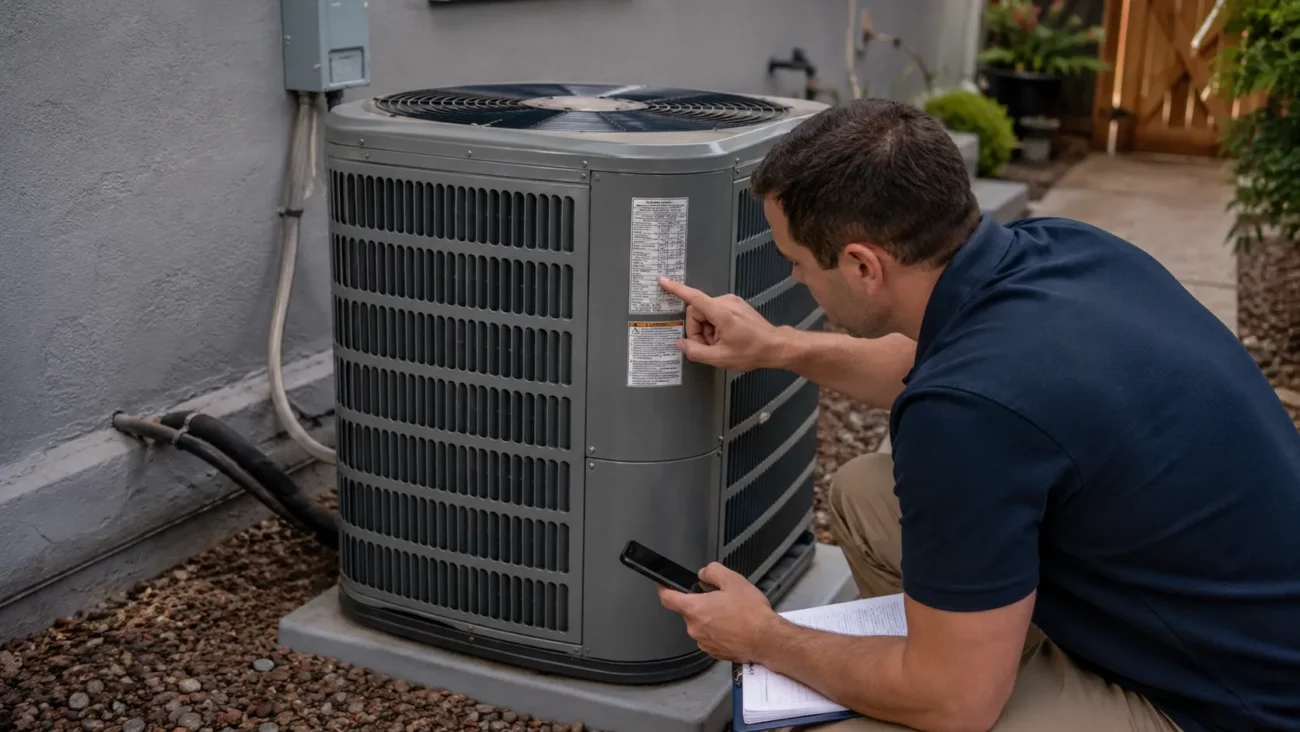
How to determine what refrigerant is in AC starts with one simple step: check the refrigerant label or AC nameplate on the unit. Most air conditioners have a manufacturer data plate that lists the AC refrigerant type, model number, serial number, electrical details, and factory refrigerant charge. You usually do not need to open the sealed AC system or handle any refrigerant to find this information.
In many residential systems, the label may show refrigerants such as R-22, R-410A, R-32, R-454B, or, in some specific room air conditioner products, R-290. These names are not just technical codes. They tell an HVAC professional what kind of air conditioner refrigerant the system was designed to use, what pressure range it may operate under, and what service procedures are safe for that equipment.
For homeowners, renters, and property buyers, the safest approach is to inspect the refrigerant label, check the owner’s manual, or look up the model number through the manufacturer. You should not connect gauges, release refrigerant, open refrigerant lines, or attempt an AC recharge unless you are properly trained and certified. Refrigerants can be under high pressure, and using the wrong method can damage the unit, create safety risks, or violate environmental rules.
Knowing the correct home AC gas type matters because different refrigerants are not interchangeable. The right refrigerant helps ensure proper cooling, safe pressure handling, accurate repairs, and long-term compressor protection. Whether you are trying to understand an older AC system, prepare for a repair visit, or check the details of a home you are buying, proper HVAC refrigerant identification begins with the information already printed on the unit—not guesswork.
The Quickest Way to Find Your AC Refrigerant Type
The quickest way to find your AC refrigerant type is to check the manufacturer data plate on the air conditioner. This label is usually found on the outdoor condenser, but some systems may also have important information on the indoor air handler, furnace cabinet, mini-split unit, or owner’s manual.
Look closely at the AC unit label for words such as “Refrigerant,” “Factory Charge,” “Charge,” “R-410A,” “R-22,” “R-32,” or “R-454B.” This section tells you what refrigerant the system was designed to use. In many cases, the refrigerant nameplate will also list the factory-filled amount, usually shown in pounds and ounces or kilograms and grams.
It is important not to confuse the refrigerant type with the refrigerant amount. For example, a label may say the system uses R-410A and has a factory charge of a certain number of pounds. The first part tells you the refrigerant type, while the second part tells you how much refrigerant was installed under factory conditions.
Do not rely only on guesses, online comments, cap colors, pressure charts, or the age of the unit. Age can sometimes give a clue, especially with older systems, but it is not always accurate. Previous repairs, equipment changes, or model differences can make assumptions risky. The HVAC data plate is a much better source because it comes directly from the manufacturer.
A simple safe check looks like this: label → manual → model number lookup → HVAC technician. Start with the refrigerant charge label, then check the owner’s manual or installation guide. If the label is faded or missing, use the model number to search the manufacturer’s specifications. If you still cannot confirm the refrigerant, call a qualified HVAC technician instead of opening the system yourself.
Where to Look for the Refrigerant Label on Different AC Systems
The exact location of the refrigerant label depends on the type of air conditioner you have. Most systems include an HVAC unit sticker or manufacturer data plate somewhere on the equipment, but it may not always be in the first place you check.
For a central AC system, start with the outdoor condenser. The outdoor condenser label is often placed on the side panel of the unit, near the electrical information, or close to the service access panel. On some models, the label may be inside the electrical panel cover or behind a removable access panel. If you remove a panel only to view the label, make sure the power is off and avoid touching wires, refrigerant lines, or internal components.
For a heat pump, check the outdoor unit first. Heat pumps look similar to central AC condensers, but they use refrigerant for both cooling and heating, so the label is especially important for proper service. The data plate may list the heat pump refrigerant, factory charge, model number, serial number, and pressure ratings.
For a mini-split AC, the best place to look is usually the outdoor unit data plate. The mini split refrigerant type may also appear on the indoor head, installation manual, or manufacturer specifications. Since mini-splits often have different refrigerant charge requirements based on line-set length, the label may show the factory charge and explain that additional charge depends on installation details.
For a window AC, check the side, back, bottom, or area behind the front grille. The window AC refrigerant label may be small, so you may need a flashlight to read it clearly. Some window units also list the refrigerant type in the user manual or product specification sheet.
For a portable AC, look at the rear panel, side panel, bottom sticker, or owner’s manual. The portable AC refrigerant type is often listed near the electrical rating information. Some newer compact units may use different refrigerants than larger central AC systems, so the label is more reliable than guessing by size or age.
Keep in mind that refrigerant labels can become faded, dirty, sun-damaged, painted over, scratched, or hidden behind panels. If the label is hard to read, do not scrape it aggressively or use harsh cleaners. Gently wipe the area with a dry cloth, take a clear photo, and zoom in if needed. If you still cannot read the refrigerant information, check the manual, search the model number, or ask an HVAC technician to confirm it safely.
How to Read the AC Nameplate Without Getting Confused
The AC nameplate can look technical at first, but you only need to understand a few key fields to identify the refrigerant correctly. This label is usually a small metal plate or sticker placed on the outdoor condenser, indoor unit, or equipment cabinet. It may include several details that help with service, repairs, and manufacturer lookup.
Common fields on an AC nameplate include:
| Nameplate Field | What It Means |
| Model number | Identifies the exact AC model and helps you find the manufacturer’s specifications. |
| Serial number | Helps confirm the production batch, warranty status, and sometimes the manufacturing date. |
| Refrigerant type | Shows the refrigerant the system was designed to use, such as R-410A, R-22, R-32, or R-454B. |
| Factory charge | Shows the amount of refrigerant installed at the factory. |
| Voltage | Lists the electrical power requirements for the unit. |
| Maximum pressure | Shows pressure limits for the system, often listed for the high side and low side. |
| Manufacturing date or date code | May show the year of production directly or through the serial number. |
The most important thing is to understand refrigerant charge vs refrigerant type. The refrigerant type tells you what kind of refrigerant the AC uses. The factory refrigerant charge tells you how much refrigerant was installed by the manufacturer. These are not the same thing.
For example, a label may say “Refrigerant: R-410A” and “Factory Charge: 6 lb 4 oz.” In that case, R-410A is the refrigerant type, while 6 lb 4 oz is the amount of refrigerant the system was originally charged with under factory conditions.
The word “charge” can confuse many homeowners because it sounds like an electrical term. On an AC label, however, charge means the quantity of refrigerant in the system, not the refrigerant type and not the electrical power. This is why it is important to read the full line instead of focusing on one word.
Some labels may also use a chemical family name or code. For example, HFC-32 may refer to R-32, while other labels may include terms such as HFC, HFO blend, or refrigerant safety classifications. If you see an unfamiliar HFC refrigerant code, write it down exactly as shown and check the owner’s manual or manufacturer specifications.
Do not use pressure numbers alone to identify the refrigerant. The nameplate may list maximum pressure ratings, but those numbers do not prove what refrigerant is inside the system. Pressure can change based on temperature, system design, operating conditions, and service history. The safest way to confirm the refrigerant is still the refrigerant line on the nameplate, the manual, the model serial number AC lookup, or a qualified HVAC technician.
Common AC Refrigerants and What They Mean
When you read an AC label, the refrigerant name may look like a short code, such as R-22 or R-410A. These codes tell you the specific AC Freon type or refrigerant the system was designed to use. They are not interchangeable, so it is important to understand what each one means before making repair or replacement decisions.
R-22 refrigerant is an older AC refrigerant used in many residential air conditioners installed before the major industry transition away from ozone-depleting refrigerants. Many homeowners still call it “Freon,” although that term is often used loosely. In the United States, new production and import of R-22 have been phased out, but some older systems may still operate using recovered, recycled, or reclaimed supply. If your AC uses R-22, repairs may be more expensive, and a technician may discuss whether repair or replacement makes more sense.
R-410A refrigerant became common in many residential central AC systems and heat pumps after the move away from R-22. It does not deplete the ozone layer like R-22, but it still has a high global warming potential compared with newer options. Many modern systems still use R-410A, so seeing it on your AC nameplate is not unusual. However, it should only be used in equipment designed specifically for R-410A because it operates at different pressures than R-22.
R-32 refrigerant is a lower-GWP refrigerant used in many newer air conditioners and room AC products. ENERGY STAR lists R-32, also called HFC-32, among lower global warming potential refrigerants for room air conditioners. This means it may have a lower climate impact if released compared with some older high-GWP refrigerants, but it still requires proper handling and equipment designed for that refrigerant.
R-454B refrigerant is another newer low GWP refrigerant being adopted by HVAC manufacturers as the industry moves away from higher-GWP options. You may see R-454B on newer residential AC systems and heat pumps. Like R-32, it is not a drop-in replacement for older refrigerants. The equipment must be designed for it, and technicians need the right tools, training, and safety practices.
R-290 refrigerant is propane used as a refrigerant in some small appliances and certain room air conditioner products. ENERGY STAR also lists R-290 among lower-GWP refrigerants for room air conditioners. Because it is flammable, homeowners should not try to handle, recharge, or repair a sealed system that uses it. The safe role for a homeowner is to read the label, confirm the refrigerant type, and call a qualified technician if service is needed.
The main takeaway is simple: the refrigerant code on your AC nameplate tells you what the system was built to use. Whether the label says R-22, R-410A, R-32, R-454B, or R-290, do not mix refrigerants or guess based on age alone. Use the label, manual, model number, or an HVAC professional to confirm the correct refrigerant before any service work is done.
Can the Age of the AC Help Identify the Refrigerant?
The age of your air conditioner can sometimes give you a useful clue about the AC age refrigerant type, but it should never be treated as final proof. The most reliable source is still the manufacturer label, owner’s manual, model number specifications, or a qualified HVAC technician’s service record.
Many older systems installed before 2010 may use R-22 refrigerant, often called old air conditioner Freon by homeowners. R-22 was common in residential AC systems for many years, so if your unit is older, it may be a possibility. However, age alone does not confirm it. Some older units may have had major repairs, replacements, or changes that make simple assumptions unreliable.
Many systems installed after the R-22 transition commonly use R-410A refrigerant. This is why people often compare R22 vs R410A by year when trying to understand their AC. In general, if a system was manufactured or installed after the industry moved away from R-22, R-410A becomes more likely. Still, the label should always be checked because different brands, models, and markets did not all change at the exact same time.
Newer systems may use R-32 or R-454B, depending on the brand, model, country, manufacturing year, and local refrigerant rules. These newer refrigerants are part of the move toward lower-GWP options, but they are only used in systems designed for them. A newer-looking unit does not automatically mean it uses one specific new AC refrigerant.
It is also important to remember that service history can change what you think you know about the unit. Replacement parts, retrofit attempts, compressor changes, condenser swaps, or previous HVAC work can make age-based guesses less accurate. A home may also have an outdoor condenser from one year and an indoor coil from another, which is why matching equipment details matter.
The safest approach is to use age only as a clue, not a conclusion. Write down the model number and serial number, check the manufacturer’s specifications, review old technician records, and confirm the refrigerant listed on the nameplate. If the information is missing or confusing, call an HVAC technician before anyone attempts service or recharge work.
What to Do If the Refrigerant Label Is Missing or Faded
A missing AC refrigerant label can make identification harder, but it does not mean you should guess. Labels can fade from sunlight, weather, dust, paint, rust, or years of outdoor exposure. If the refrigerant information is hard to read, start with safe, simple steps before calling for help.
First, clean the area gently with a dry cloth. If the label is dirty, wipe it carefully and try using a flashlight or taking a clear photo with your phone. Zooming in on a photo can sometimes make faded text easier to read. Avoid scraping the label, using harsh chemicals, or rubbing too hard because that can remove the remaining print from a faded HVAC label.
Next, check the owner’s manual or installation guide. Many manuals list the refrigerant type in the product specifications section. If you do not have the printed manual, look for the model number on the AC cabinet and search it online through the manufacturer’s official website. An AC model number lookup can often lead you to a specification sheet, product manual, or installation document that lists the correct refrigerant.
Old HVAC service records can also help. Look through past repair invoices, home inspection reports, warranty paperwork, or maintenance receipts. A technician may have written down the refrigerant type, such as R-22, R-410A, R-32, or R-454B, along with the amount added or recovered during service. This can be especially useful if you recently bought the home and do not know the full AC history.
If you still cannot identify refrigerant without label information, contact the manufacturer or an authorized dealer. Provide the model number and serial number if you can find them. These details help them confirm the original equipment design and the correct refrigerant listed in the manufacturer specifications.
When no documentation is available, the safest option is to call a certified HVAC technician. A trained technician can inspect the system, check equipment compatibility, and use proper service procedures if the refrigerant type is uncertain. In some cases, technicians may need to use professional tools, recovery equipment, and safe handling methods before making a final decision.
The most important point is to avoid guessing. A missing or unreadable label is frustrating, but using the wrong refrigerant can damage the compressor, reduce cooling performance, and create safety issues. Work through the safe steps first: clean the label gently, check the manual, search the model number, review service records, contact the manufacturer, and then bring in an HVAC professional if the answer is still unclear.
Can You Tell Refrigerant Type by Service Port Caps, Gauges, or Pipe Size?
Some people try to identify refrigerant by looking at AC service port cap color, service fitting size, gauge readings, or copper pipe size. These details may sometimes give a clue, but they are not reliable enough to confirm the refrigerant type. The safest answer is simple: do not use shortcuts when identifying refrigerant.
Service port caps, for example, may have different colors on some systems, but cap color is not a universal standard. A cap may have been replaced during a past repair, lost, swapped, or installed incorrectly. Because of that, AC service port cap color should never be used as the final answer for refrigerant identification.
The same caution applies to R22 vs R410A ports. Some systems may have different service fitting styles, but homeowners should not rely on port size alone. Equipment can be modified, adapters may be present, and previous service work can make visual clues misleading. What looks like one refrigerant setup may not tell the full history of the system.
A refrigerant pressure reading can also be misunderstood. Different refrigerants operate at different pressures, but pressure changes with outdoor temperature, indoor load, airflow, system condition, and whether the unit is running properly. For this reason, refrigerant identification by pressure is not a safe DIY method. Pressure numbers can support a professional diagnosis, but they should not replace the nameplate, manual, or manufacturer specifications.
Homeowners should also avoid connecting HVAC gauges just to “check what refrigerant is inside.” Attaching gauges can release refrigerant, introduce contamination, or create an unsafe pressure situation if done incorrectly. In many places, handling or releasing refrigerant may also require proper certification. Even a small mistake can affect cooling performance, harm the compressor, or create safety risks.
Different refrigerants are designed for different pressures, oils, components, and safety requirements. Using the wrong method to identify or service the system can damage the AC and may put the person working on it at risk. This is especially important with newer refrigerants, older R-22 systems, and equipment that may have had past repairs.
The expert-backed recommendation is to use the AC label, owner’s manual, model-number documentation, service records, or a certified HVAC technician. Those sources are far more reliable than guesswork. When it comes to AC safety, the goal is not just to identify the refrigerant quickly—it is to identify it correctly and without opening or disturbing the sealed system.
Why You Should Never Mix or Guess AC Refrigerant
Refrigerants are not interchangeable. Each air conditioner is designed to use a specific refrigerant, and that refrigerant must match the system’s compressor, coil, oil type, pressure range, metering device, and safety requirements. Guessing the refrigerant or adding a different one can turn a simple service issue into a much more expensive repair.
One of the biggest risks is putting the wrong refrigerant in AC equipment. If the system was designed for R-22, it should not be treated like an R-410A system. If it was designed for R-32 or R-454B, it must be serviced according to that refrigerant’s specific requirements. These refrigerants operate differently and may require different tools, oils, recovery methods, and technician training.
Many homeowners ask, can you mix AC refrigerants if the unit is low? The safe answer is no. Mixing refrigerants can cause poor cooling, unstable pressure, compressor strain, and system contamination. In serious cases, it can lead to AC compressor damage, which is one of the most expensive AC repairs. Once refrigerants are mixed, a technician may need to recover the contaminated refrigerant and correct the system before it can run safely again.
It is also important to understand that “topping off” an AC without finding the problem is not a real repair. A residential air conditioner is a sealed system. Under normal conditions, it should not need refrigerant every year. If the system is low, there is usually a refrigerant leak somewhere in the coils, valves, line set, or connections. Adding more refrigerant without repairing the leak may only provide temporary cooling while the same problem continues.
A rushed AC recharge mistake can also create pressure problems. Too little refrigerant can reduce cooling and cause the system to work harder. Too much refrigerant can also harm performance and put stress on the compressor. This is why proper refrigerant service requires accurate diagnosis, correct tools, and safe handling practices.
Refrigerant release is also an environmental and regulatory concern. Refrigerants should not be vented into the air, and service work must follow proper recovery and handling rules. For homeowners, the safest role is to identify the refrigerant from the label, manual, or service records—not to open the system or add refrigerant.
The best rule for HVAC refrigerant safety is simple: never mix, guess, or “top off” without diagnosis. If your AC is low on refrigerant, not cooling well, freezing up, or making unusual sounds, call a qualified HVAC technician. The technician can confirm the refrigerant type, check for leaks, recover refrigerant properly if needed, and repair the system the right way.
When You Should Call a Certified HVAC Technician
You should call a certified HVAC technician any time refrigerant identification moves beyond reading a label, checking a manual, or looking up a model number. Homeowners can safely inspect visible information, but refrigerant handling, leak testing, recovery, and charging require the right tools and training.
Call a technician if the label is unreadable or missing and you cannot confirm the refrigerant through the manual, manufacturer website, or service records. A technician can inspect the equipment, verify the system design, and help prevent mistakes that could happen from guessing the refrigerant type.
You should also schedule AC refrigerant service if the AC is not cooling properly. Poor cooling can happen for many reasons, including dirty coils, airflow problems, electrical issues, a failing capacitor, or low refrigerant from a leak. Adding refrigerant without diagnosing the cause may hide the problem for a short time but will not fix the system.
A frozen refrigerant line is another warning sign. Ice on the copper line, indoor coil, or outdoor unit may point to restricted airflow, low refrigerant, or other mechanical problems. Do not keep running the system for long periods if it is freezing. Turn it off and let a technician inspect it before the compressor is damaged.
You should call for help if you hear hissing or bubbling near the refrigerant lines, coil, or outdoor unit. These sounds may suggest a refrigerant leak, although a technician still needs to confirm the source. Proper refrigerant leak repair may involve leak detection, pressure testing, recovery, repair, evacuation, and correct recharging.
Professional help is also important if someone may have added the wrong refrigerant to the system. Mixed or incorrect refrigerant can create pressure problems, poor cooling, contamination, and compressor damage. In that situation, a technician may need to recover the refrigerant safely and inspect the system before it is used again.
An HVAC inspection is also smart when you are buying a used home with an older AC. The technician can check the age of the unit, refrigerant type, visible condition, cooling performance, service history, and whether the system is using an older refrigerant such as R-22. This can help you understand future repair costs before you buy the property.
In the United States, technicians who service regulated refrigerants are required to earn EPA Section 608 certification by passing an EPA-approved test for the type of equipment they work on. The EPA notes that these certification tests are specific to the equipment category, and Section 608 credentials do not expire.
A qualified technician can do more than identify the refrigerant. They can verify the correct refrigerant type, check for leaks, recover refrigerant properly, measure system performance, confirm whether the equipment is safe to run, and explain whether repair or replacement makes more sense. That expert guidance is especially useful for older systems, leaking systems, and units using refrigerants that are becoming more expensive or less common.
How Refrigerant Type Affects Repair Cost, Replacement, and Home Value
The refrigerant in your AC can affect more than cooling performance. It can also influence AC refrigerant repair cost, future parts availability, replacement decisions, and even what a homebuyer may think during a home inspection HVAC review. This is especially true for older systems that use refrigerants no longer used in new equipment.
An AC system that uses R-22 can still run if it is in good condition, but repairs may be more expensive. New production and import of R-22 have ended in the U.S., so technicians must rely on recovered, recycled, or reclaimed supply. That does not mean every R-22 system must be replaced immediately, but it does mean a major leak, compressor failure, or repeated refrigerant issue may make R22 replacement a more practical long-term choice than another costly repair.
Systems that use R-410A are still common in many homes. For years, R-410A was the standard replacement for R-22 in many residential air conditioners and heat pumps. However, the industry is now moving toward new HVAC refrigerants with lower global warming potential. Because of the broader R410A phase down, homeowners buying a new system may see more equipment designed for refrigerants such as R-32 or R-454B.
Newer refrigerants like R-32 and R-454B may matter when you are replacing an AC or comparing quotes. These refrigerants are part of the newer transition in HVAC equipment, so the system, tools, service procedures, and technician training must match the refrigerant. A new unit should always be installed and serviced according to the manufacturer’s specifications, not treated like an older R-22 or R-410A system.
When deciding between AC repair and replacement, refrigerant type is only one part of the decision. A technician will usually look at the age of the system, the size and location of the leak, the condition of the compressor, the availability and cost of the refrigerant, the warranty status, and the unit’s energy efficiency. A small repair on a newer system may make sense, while a major refrigerant leak in an older, inefficient unit may point toward replacement.
Refrigerant type can also matter when buying a home. Before closing, ask about the HVAC age, refrigerant type, maintenance history, and recent service invoices. If the system is older, find out whether it uses R-22, whether it has had leak repairs, and whether the seller has records from a licensed HVAC company. This information can help you understand possible future costs instead of being surprised after moving in.
The best AC replacement decision is not based on refrigerant alone. It should include the system’s age, repair history, comfort performance, efficiency, and the cost of keeping it running safely. Still, knowing the refrigerant type gives homeowners and buyers a clearer picture of what they own, what repairs may cost, and whether replacement may be the smarter long-term option.
Simple Checklist: How to Determine What Refrigerant Is in AC Safely
Use this AC refrigerant checklist when you want a safe, simple way to confirm the refrigerant type without opening the system or handling refrigerant yourself.
- Turn off the AC if you need to inspect panels safely.
If the label is behind an access panel, turn off the system first and avoid touching wiring, refrigerant lines, or internal parts. - Check the outdoor condenser label.
Start with the outdoor unit because this is where the main HVAC data plate is often located. Look on the side panel, back panel, or near the electrical service area. - Check the indoor unit or air handler label.
Some systems may also have useful information on the indoor air handler, furnace cabinet, evaporator coil case, or mini-split indoor head. - Look for “Refrigerant” or “Factory Charge.”
The label may list terms such as Refrigerant, Factory Charge, Charge, R-22, R-410A, R-32, or R-454B. This is the key part of the HVAC label checklist. - Write down the model and serial number.
If the refrigerant line on the label is hard to read, the model and serial number can help with an AC model lookup through the manufacturer. - Search the manufacturer’s manual or spec sheet.
Use the model number to find the official owner’s manual, installation guide, or product specification sheet. These documents often list the correct refrigerant type. - Review past HVAC service records.
Old repair invoices, home inspection reports, warranty papers, or maintenance documents may show the refrigerant type and any past refrigerant service. - Do not open refrigerant lines or attach gauges.
To identify AC refrigerant safely, do not connect gauges, loosen fittings, release refrigerant, or try to recharge the unit. These steps can create safety, equipment, and environmental problems. - Call a certified HVAC technician if the label is missing or the system has problems.
If you cannot confirm the refrigerant type, or if the AC is not cooling, freezing, leaking, or making unusual sounds, contact a qualified technician.
This simple refrigerant type guide keeps the process safe: check the label, confirm with documents, review service records, and call a professional when the information is missing or the AC needs service.
FAQs About How to Determine What Refrigerant Is in AC
How do I know if my AC uses R-22 or R-410A?
The best way to know if your AC uses R-22 or R-410A is to check the data plate on the outdoor unit. Look for a line that says “Refrigerant,” “Factory Charge,” or “Charge.” The label may clearly list R-22, R-410A, or another refrigerant type.
The age of the system can sometimes provide a clue, but it is not proof. Many older systems used R-22, while many systems made after the industry transition used R-410A. Still, previous repairs, equipment changes, or regional differences can make age-based guesses unreliable. The label, manual, model number, or technician record is more accurate.
Is Freon the same as refrigerant?
Not exactly. Freon is often used casually when people talk about air conditioner refrigerant, but it is not the name of every refrigerant. Many homeowners use “Freon” to mean any AC gas, but actual refrigerants have specific names such as R-22, R-410A, R-32, R-454B, or R-290.
A simple way to understand Freon vs refrigerant is this: refrigerant is the general category, while Freon is a brand-related term that people often use informally. When identifying your AC, always look for the actual refrigerant code on the label.
Can I check AC refrigerant myself?
You can safely check the refrigerant label, owner’s manual, model number, and service records yourself. These steps do not require opening the sealed system or handling refrigerant.
However, you should not connect gauges, loosen fittings, release refrigerant, or attempt to recharge the AC yourself unless you are properly trained and certified. Refrigerant can be under high pressure, and improper handling can damage the system or create safety risks. For a safe AC refrigerant FAQ answer: homeowners can identify visible information, but refrigerant service should be left to qualified HVAC professionals.
What happens if the wrong refrigerant is added to my AC?
If the wrong refrigerant is added to your AC, the system may cool poorly, run at unsafe pressures, or suffer serious compressor damage. Different refrigerants require different oils, pressures, parts, and service procedures. They are not designed to be mixed or swapped casually.
In many cases, a technician may need to recover the incorrect or contaminated refrigerant, inspect the system, repair any damage, evacuate the system, and recharge it with the correct refrigerant. This can become expensive, which is why it is important to confirm the refrigerant type before any service work is done.
Does my AC need refrigerant every year?
No, a properly sealed AC system should not need refrigerant every year. Refrigerant does not get “used up” like fuel. If the system is low, it usually means there is a refrigerant leak or another service issue that needs diagnosis.
Common AC low refrigerant signs may include weak cooling, longer run times, frozen refrigerant lines, ice on the indoor coil, hissing sounds, or higher energy bills. These signs do not prove low refrigerant by themselves, but they are good reasons to call a technician for inspection.
Can a technician convert R-22 to R-410A?
Usually, converting R-22 to R-410A is not a simple refrigerant swap. The system design, compressor, coils, metering device, oil type, pressure ratings, and line set condition all matter. R-410A operates at different pressures than R-22, so an older R-22 system cannot usually be treated as though it were built for R-410A.
In many cases, replacing the system or major components may make more sense than attempting a conversion. A qualified HVAC technician can inspect the equipment and explain whether repair, retrofit, or replacement is the safest and most cost-effective option.
Are R-32 and R-454B safe?
R-32 and R-454B are used in newer AC systems that are specifically designed for them. They are part of the newer refrigerant transition toward lower-GWP options, but they still require the correct equipment, installation practices, and trained handling.
For homeowners, the safe approach is the same: read the label, confirm the refrigerant type, and avoid opening the sealed system. If your AC uses R-32 or R-454B, make sure any service is done by a technician who understands that refrigerant and follows the manufacturer’s safety requirements.
Conclusion
Knowing how to determine what refrigerant is in AC starts with the safest sources: the unit’s nameplate, owner’s manual, model number, or official manufacturer specifications. These details are usually enough to confirm the refrigerant type without opening the system or handling refrigerant.
The most important rule is simple: refrigerant type should never be guessed. Similar-looking AC units can use different refrigerants, and older systems may have service histories that make age-based assumptions unreliable. A proper safe AC refrigerant check should follow this path: label → manual → model lookup → service records → certified technician.
Taking time to determine AC refrigerant type correctly can help prevent expensive mistakes. It supports safer repairs, accurate certified AC service, better replacement decisions, and stronger homeowner AC maintenance. It can also help you understand whether your system uses an older refrigerant, a common refrigerant, or one of the newer options found in modern HVAC equipment.
For homeowners, the practical takeaway is clear: you can safely identify the refrigerant by checking labels and documents, but refrigerant handling should be left to trained professionals. A careful, label-first approach is the best way to use this HVAC refrigerant guide without risking damage, safety issues, or costly service errors.
Disclaimer: This article is for general informational purposes only and is not a substitute for professional HVAC advice, inspection, or service. Refrigerant systems can involve high pressure, electrical components, and environmental regulations. Individual AC systems, refrigerant types, local rules, and service needs may vary. Always consult a certified HVAC technician before handling, repairing, recovering, or recharging any air conditioning refrigerant.
