


Table of Contents
- Start With Your Real Needs
- Choose the Right Truck Size
- Understand Towing and Payload
- Compare Gas, Diesel, Hybrid, and Electric Powertrains
- Pick the Right Cab and Bed
- Review Comfort and Safety
- Calculate Total Ownership Costs
- Inspect a Used Pickup
- Take a Smart Test Drive
- Avoid Common Buying Mistakes
- Final Buying Checklist
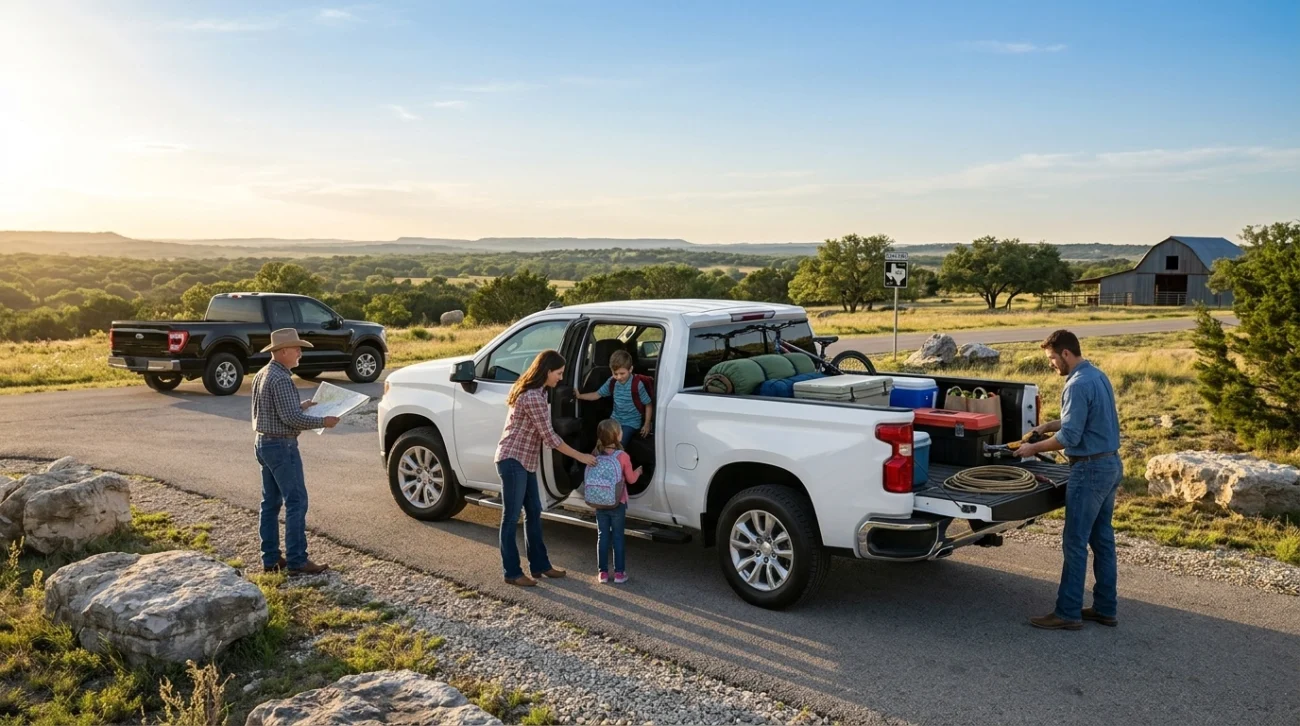
Texas pickup buyers often need one vehicle to cover several jobs at once: weekday commuting through Dallas-Fort Worth traffic, hauling supplies across Houston, carrying family around Austin, and heading toward the Hill Country, ranch land, lakes, or the Gulf Coast on weekends. The best choice is rarely the largest truck on the lot. It is the one that handles the loads, passengers, roads, and weather conditions that shape everyday Texas life.
When comparing truck cars, start by thinking beyond trim names, horsepower claims, and oversized wheels. A practical truck should fit where you park, provide enough payload for people and gear, tow confidently when necessary, and remain comfortable during long drives on Interstate 35, I-45, or rural Texas highways.
Start With Your Real Needs
Write down what the truck must do in a normal week. That might include transporting construction equipment, carrying sports gear, towing a boat to Lake Travis, driving children to school, or traveling between job sites in the Houston metro area. Be honest about how often you will tow, how many people ride inside, and whether your driveway or garage can accommodate a long truck.
- Typical daily mileage and commute time
- Passengers who need regular rear-seat space
- Tools, materials, livestock supplies, or recreational cargo
- Loaded trailer weight, not just the empty trailer weight
- Parking conditions at home, work, and local stores
- Exposure to Texas heat, heavy rain, mud, gravel, or coastal humidity
Choose the Right Truck Size
Compact and Midsize Pickups
Compact and midsize trucks can be a strong match for Austin streets, suburban parking garages, light work, home projects, and occasional trailer use. They are usually easier to maneuver and may use less fuel, which matters for drivers who cover many miles each week. A midsize model can also offer useful off-road capability for ranch roads or weekend camping trips without the full footprint of a heavy-duty truck.
Full-Size and Heavy-Duty Pickups
Full-size light-duty trucks make more sense for buyers who regularly haul substantial cargo, carry a full family, or tow larger travel trailers and boats. Heavy-duty trucks are designed for frequent equipment hauling and serious towing, but their bigger dimensions, firmer ride, higher tire costs, and fuel expenses can be difficult to justify for an occasional weekend task.
Understand Towing and Payload
Towing capacity is the maximum trailer weight a properly equipped truck can pull. Payload is different. It includes everything carried by the truck, including passengers, bed cargo, accessories, and the trailer tongue weight pressing down on the hitch. For Texas buyers hauling work equipment or loaded campers, payload is often the limit reached first.
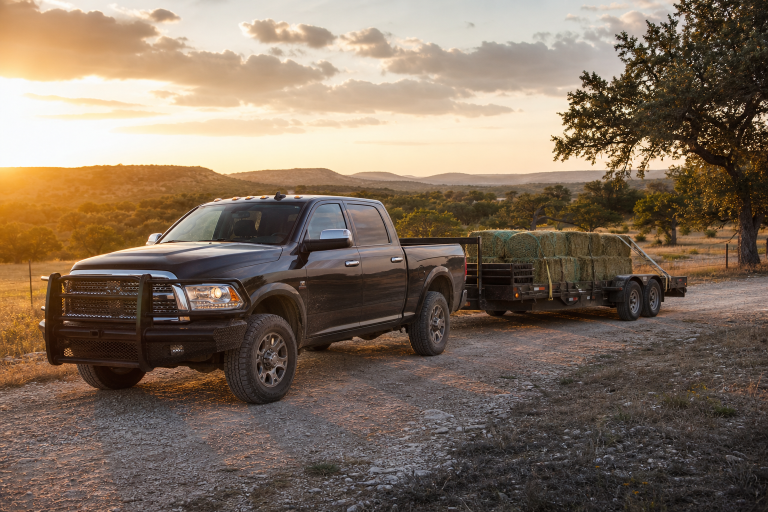
Check the exact door-jamb label and manufacturer information for the truck you are considering. Cab style, bed length, drivetrain, engine, axle ratio, and options can change the rating significantly. The specific configuration matters when comparing towing and payload, rather than assuming every truck with the same badge has identical capability.
- Estimate the trailer’s fully loaded weight.
- Add the weight of passengers, coolers, tools, and bed cargo.
- Include trailer tongue weight in the payload calculation.
- Leave room below the truck’s maximum ratings for a more comfortable margin.
Compare Gas, Diesel, Hybrid, and Electric Powertrains
Gasoline trucks work well for mixed commuting, light-to-moderate towing, and buyers who want straightforward fueling across the state. Diesel power can be valuable for frequent heavy trailer duty because of its low-speed pulling strength, although the purchase price and repair costs may be higher. Hybrid trucks can reduce fuel use during stop-and-go city driving, especially for owners who use their truck as a daily family vehicle.
Electric pickups deliver quick acceleration and quiet operation, but Texas shoppers should consider charging access, route planning, summer heat, and range reductions caused by towing. An electric truck may be excellent for predictable local driving, while a gas, hybrid, or diesel truck may be more convenient for long-distance towing across less populated parts of the state.
Pick the Right Cab and Bed
A crew cab is usually best for families, work crews, and anyone who carries adult passengers regularly. Extended cabs can provide storage or occasional rear seating, while regular cabs prioritize bed space and work-focused simplicity. Choose bed length based on the cargo you actually carry. A short bed is easier to park, a standard bed balances versatility, and a long bed helps with lumber, equipment, and bulky supplies.
Before committing, measure your garage, driveway, work parking space, and trailer clearance. A truck that barely fits at home can become frustrating during daily life, particularly in denser neighborhoods around Dallas, Houston, and Austin.
Review Comfort and Safety
Long Texas drives make comfort important. Look for supportive seats, effective air conditioning, rear-seat vents, useful storage, clear outward visibility, and controls that are easy to operate while wearing work gloves. Trailer camera views, parking sensors, and a 360-degree camera can also make a large truck less stressful in crowded parking lots.
Prioritize automatic emergency braking, blind-spot monitoring, rear cross-traffic alert, adaptive cruise control, and trailer sway support where available. Before purchase, use federal vehicle safety ratings to review crash information, then check for open recalls by the vehicle identification number.
Calculate Total Ownership Costs
A monthly payment does not show the full cost of truck ownership. Include the purchase price, taxes, financing, insurance, fuel or electricity, tires, brakes, scheduled maintenance, towing equipment, and expected resale value. Large wheels, lift kits, aggressive tires, and luxury packages may look appealing, but they can increase costs and sometimes reduce ride quality or available payload.
Inspect a Used Pickup
For a used truck, review the vehicle history report and service records, inspect the frame and bed for rust or repair evidence, and look closely at tire wear. Test four-wheel drive, listen for drivetrain noise, inspect the hitch and trailer wiring, and arrange an independent pre-purchase inspection. A higher-mileage truck with consistent maintenance can be a safer choice than a newer truck with an unclear history.
Take a Smart Test Drive
Drive the truck on city streets and highways, not just around the block. Practice parking, check rear-seat access, adjust the mirrors, evaluate braking feel, and listen for wind, tire, or suspension noise. Confirm that you can comfortably reach the bed, operate the tailgate, and see clearly around the truck. If towing is central to your decision, ask how the vehicle is equipped for the trailer you plan to use.
Avoid Common Buying Mistakes
- Buying solely for maximum towing capacity
- Ignoring payload limits after passengers and accessories are added
- Choosing a bed too short for regular work materials
- Focusing only on the monthly payment
- Skipping an independent inspection on a used truck
- Paying for specialized features that will rarely be used
- Forgetting long-term tire, insurance, and fuel costs
Final Buying Checklist
The right Texas pickup should fit your workload, your passengers, your parking space, and your budget. Confirm that it has adequate payload, enough towing capacity with room to spare, a cab and bed that match your routine, and ownership costs you can manage. A careful comparison now can help you choose a truck that works just as well in weekday traffic as it does on a job site or weekend getaway.
