


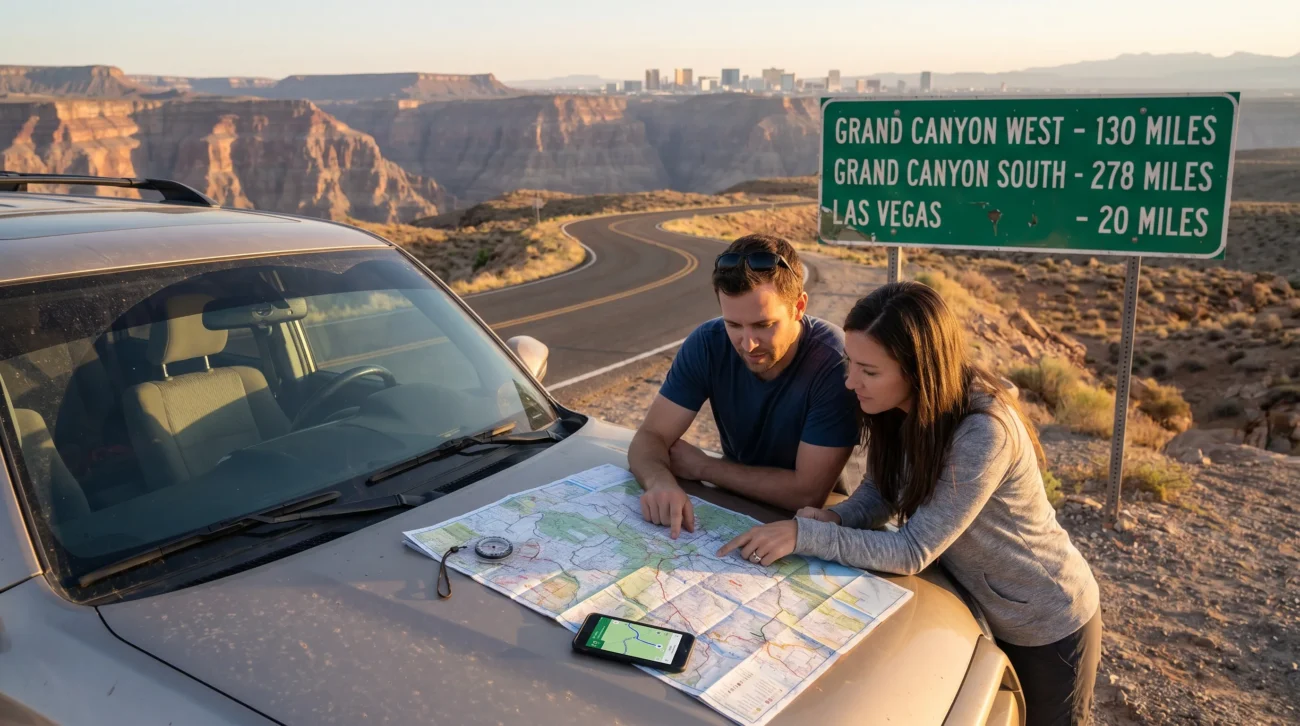
How far is the Grand Canyon from Las Vegas depends on which rim you want to visit, and that is the most important detail many travelers miss. If you mean Grand Canyon West, the distance is about 130 miles and the drive is usually around 2 to 2.5 hours. If you mean the South Rim, the distance is about 278–280 miles and the drive is about 4.5 hours. The North Rim is also roughly 270 miles away, but it is more seasonal and less practical for most Las Vegas visitors.
That simple mileage difference changes everything about your trip. It affects whether you can do a day trip, whether you should book an overnight stay, whether a self-drive makes sense, and whether you would be happier with a bus, helicopter, or airplane tour. Many people search for las vegas to grand canyon thinking there is one single answer, but in reality the right answer depends on your time, budget, and the kind of canyon experience you want.
In this guide, you will get a clear answer to the distance question, understand the difference between the West Rim, South Rim, and North Rim, and learn how to choose the best option for your trip from the Las Vegas Strip.
Quick Answer: Which Grand Canyon Is Closest to Las Vegas?
The West Rim is the closest part of the Grand Canyon to Las Vegas. That is why so many grand canyon tours from las vegas focus on it. It is the fastest canyon experience from the city and the easiest to fit into a tighter vacation schedule.
But closest does not always mean best for every traveler. The South Rim is farther away, yet it is the part most people picture when they imagine the Grand Canyon. It is part of Grand Canyon National Park, offers more classic overlooks like Mather Point, and attracts the vast majority of Grand Canyon visitors. By contrast, Grand Canyon West is operated by the Hualapai Tribe and is known for the Skywalk and easier access from Las Vegas.
So, if your main question is which part of the grand canyon is closest to las vegas, the answer is West Rim. If your real question is which rim gives the most iconic first-time experience, the answer is often South Rim.
Las Vegas to Grand Canyon Distance by Rim
The easiest way to understand distance from las vegas to grand canyon is to break it down by rim. That gives a much more accurate answer than treating the Grand Canyon as one single destination.
Grand Canyon West Rim
The distance to Grand Canyon West Rim from Las Vegas is about 128 to 130 miles, depending on your starting point and route. Most travelers can expect a drive of around 2 to 2.5 hours. That makes it the best choice for people looking for a day trip to grand canyon from las vegas without spending most of the day in the car.
This is also where you will find the famous Grand Canyon Skywalk, Eagle Point, and cultural experiences connected to the Hualapai Tribe. If convenience matters most, this is usually the winning choice.
Grand Canyon South Rim
The distance from las vegas to grand canyon south rim is about 278 to 280 miles, and the drive is typically about 4.5 hours each way. The National Park Service lists the South Rim at roughly 278 miles from Las Vegas, which makes it much farther than the West Rim but still realistic for travelers willing to make a long day of it.
This is the classic national park experience. You get the best-known overlooks, more developed visitor services, and trails like Bright Angel Trail. For many travelers, this is the most rewarding version of the canyon, even though it takes more effort to reach.
Grand Canyon North Rim
The distance from las vegas to grand canyon north rim is around 270 miles, with a drive of roughly 4.5 hours under normal conditions. On paper, that can sound similar to the South Rim, but in practice the North Rim is more limited because of its shorter season and fewer services. The National Park Service says the 2026 North Rim summer season begins May 15, 2026, which is an important detail for anyone planning a spring trip.
Straight-Line Distance vs Road Distance
Some pages mention straight-line vs road distance las vegas to grand canyon, and that can be confusing. Straight-line distance only tells you how far apart two points are “as the crow flies.” It does not tell you what your drive will actually look like. For real trip planning, the only number that matters is the road distance and the actual driving time comparison.
Here is a simple summary:
| Rim | Approx. Distance from Las Vegas | Approx. Drive Time | Best For |
| West Rim | 128–130 miles | 2–2.5 hours | Fastest day trip, Skywalk, convenience |
| South Rim | 278–280 miles | 4.5 hours | Classic views, national park feel |
| North Rim | ~270 miles | ~4.5 hours | Quieter trips, seasonal travel |
How Long Does It Take to Drive From Las Vegas to the Grand Canyon?
For many readers, how long does it take to get to the grand canyon from las vegas matters more than mileage. A two and a half hour drive feels very different from a four and a half hour drive, especially if you plan to return to Vegas the same day.
Driving to the West Rim is usually the easiest option. You can leave in the morning, spend a few hours exploring, and return without feeling like the entire day disappeared into the road. That is why grand canyon west rim tour from las vegas and self-drive itineraries are so popular.
The South Rim takes longer, and this is where people often underestimate the trip. A 4.5-hour drive each way can easily turn into a full-day outing once you add meal breaks, traffic leaving Las Vegas, photo stops, and time inside the park. If you want to see the canyon without rushing, many travelers find that an overnight stay is a smarter choice.
Road conditions can also affect timing. Some routes involve 2-lane roads, slower speed zones, and stretches where services are limited. So when planning a drive to the grand canyon, always leave a little extra time in your schedule.
West Rim vs South Rim From Las Vegas: Which One Is Better?
This is really the heart of the topic. People search how far is the grand canyon from las vegas, but what they often mean is: Which rim should I choose?
The West Rim is better if you want the closest, easiest option. It works well for short Vegas vacations, families with limited time, and travelers who want a mix of canyon views and memorable attractions like the glass-bottomed bridge known as the Skywalk. It also fits people who prefer organized tours or want to avoid a very long self-drive.
The South Rim is better if you want the most classic and dramatic canyon experience. It gives you famous viewpoints, a stronger Grand Canyon National Park atmosphere, and more opportunities for hiking, photography, and scenic overlooks. If someone asks me for the best rim for first-time visitors from las vegas, I would usually say South Rim if they can handle the longer journey, and West Rim if convenience is the priority.
A helpful way to think about west rim vs south rim from las vegas is this:
- Choose West Rim for speed, ease, and the Skywalk
- Choose South Rim for iconic scenery, national park atmosphere, and the more traditional Grand Canyon experience
That one decision will shape your whole trip.
Can You Do the Grand Canyon as a Day Trip From Las Vegas?
Yes, the grand canyon is a day trip from las vegas, but whether it is a good day trip depends on which rim you visit.
A day trip to the grand canyon from las vegas works best for the West Rim. The shorter drive makes it realistic to enjoy the canyon without feeling rushed. You can visit Eagle Point, see the Skywalk, enjoy canyon views, and still return to Las Vegas at a reasonable hour.
A South Rim day trip is possible, but it is long. By the time you add 4.5 hours there, 4.5 hours back, and a few hours at the canyon, you are looking at a very full schedule. Some travelers love it. Others end up wishing they had booked one night near the canyon instead.
A good rule is simple. If you want a comfortable same-day trip, go West Rim. If the canyon itself is the main event and you want the more famous views, consider South Rim and think seriously about making it an overnight stay.
Best Ways to Get From Las Vegas to the Grand Canyon
There is no single best way for everyone. The right option depends on your budget, your time, and how much freedom you want.
Driving Yourself
Self-driving is the best fit for travelers who want flexibility. You can leave early, stop where you want, add scenic detours, and move at your own pace. It is often the most cost-effective choice for couples, families, or small groups.
Bus Tours From Las Vegas
Bus tours from las vegas are popular for people who do not want to think about directions, parking, or timing. They are especially attractive if you are staying on the Las Vegas Strip and want a straightforward pickup-and-drop-off experience. This is one of the easiest ways to do las vegas to grand canyon without a car.
Helicopter and Airplane Tours
Helicopter and airplane tours from las vegas to the grand canyon are the fastest and most scenic option, but also the most expensive. Some tour pages position these flights as lasting roughly 35–70 minutes depending on the route and package. That can save major travel time and give you unforgettable aerial views of the canyon, Lake Mead, and Hoover Dam.
Combination Packages
Some travelers love packages that combine ground access with extras like a pontoon ride, guided stops, or premium viewpoints. These can work well for people who want a memorable day without planning every detail themselves.
Best Driving Route From Las Vegas to the Grand Canyon
If you are heading to the South Rim, the most practical route is typically Las Vegas → Kingman → Williams → Highway 64 → South Rim. The National Park Service directions for the South Rim support this general routing pattern and confirm the overall distance from Las Vegas at around 278 miles.
This route matters because it adds planning confidence. Instead of just knowing the distance from las vegas to grand canyon, you know what the trip will actually feel like. You will pass through parts of Arizona, see changing desert scenery, and have clearer opportunities for fuel and rest stops.
For the West Rim, the drive is shorter and usually more direct from Las Vegas, which is one reason it dominates the closest rim conversation. It is still smart to plan ahead, keep water in the car, and be ready for more remote stretches than you would get on a typical city day trip.
What to See at Each Rim
The distance question becomes much easier once you understand what each rim offers.
At the West Rim, the headline attraction is the Grand Canyon Skywalk, a dramatic structure that extends about 70 feet past the edge. You also have Eagle Point and cultural features tied to the Hualapai Tribe. This rim feels more curated and excursion-friendly, which explains why it works so well for travelers arriving from Las Vegas.
At the South Rim, the focus is on classic overlooks and a deeper national park atmosphere. Mather Point, the Visitor Center, and Bright Angel Trail are major highlights. This area feels more like the Grand Canyon many people have seen in photos, documentaries, and travel guides.
At the North Rim, the appeal is quieter scenery, cooler elevation, and fewer crowds. It is a wonderful option for some travelers, but because of seasonal access, it is not usually the first recommendation for a short Vegas-based itinerary.
Best Time to Visit the Grand Canyon From Las Vegas
The best time of year to visit the grand canyon from las vegas is usually spring or fall. These seasons often bring more comfortable temperatures and a better balance between weather, crowds, and visibility. Pages from tour providers commonly highlight March to May and September to November as especially appealing windows.
Summer is busy and popular, but it also brings serious heat. The National Park Service warns that temperatures below the rim can exceed 110°F (43°C), which makes strenuous activity much harder and riskier.
Winter can be beautiful, especially for photography, but it may also mean snow, ice, and slower driving conditions depending on the rim and route. The North Rim is the most season-sensitive option, so always verify current access if that is the area you want to see.
Cost Comparison: West Rim vs South Rim vs Tours
Costs are another major part of the decision.
The South Rim has the familiar national park fee structure, with the National Park Service listing $35 per vehicle for a private car at Grand Canyon National Park. Some West Rim pages discuss per-person pricing around $51, while helicopter and premium air-tour options commonly appear in ranges such as $375–$550, depending on the package.
So what is cheaper? If you already have a rental car and do not mind a long day, self-driving can be the most budget-friendly route. If you do not want to manage logistics, a bus tour may be worth the added cost. If time matters more than money, then flights to the grand canyon from las vegas or helicopter tours become much more appealing.
A Simple Planning Example
Imagine two travelers visiting Las Vegas for three days.
The first traveler wants one memorable excursion without sacrificing too much time on the Strip. For that person, Grand Canyon West makes a lot of sense. The drive is shorter, the schedule is easier, and the experience feels built for a same-day outing.
The second traveler has always dreamed of seeing the “real” Grand Canyon from iconic viewpoints. For that person, the longer South Rim drive may absolutely be worth it. In fact, that traveler might be happier spending one night nearby rather than forcing everything into a single day.
That is why the best answer is not just mileage. It is matching the right rim to the right traveler.
Practical Tips Before You Go
Before you leave, bring water, wear sturdy shoes, and pack sun protection. Even simple sightseeing days can feel more tiring in the desert than expected. For spring and fall, layered clothing is smart because mornings and evenings can feel very different from midday.
If you are driving, fuel up early and do not assume every stretch will have convenient services. If you are heading to the South Rim, check for park updates and any operational notices before leaving. The National Park Service has ongoing infrastructure work related to the 12.5-mile Transcanyon Waterline, part of a major $208 million rehabilitation project extending into 2027, so it is wise to review current alerts before your trip.
For families, the best choice often comes down to energy. If you are traveling with kids, the West Rim is usually easier. If your family enjoys longer scenic drives and the canyon is the main purpose of the trip, the South Rim can still be a great fit.
Final Thoughts
So, how far is the grand canyon from las vegas? The short answer is about 130 miles to the West Rim and about 278–280 miles to the South Rim. The better answer is that the Grand Canyon is close enough to visit from Las Vegas, but the right experience depends on what kind of trip you want.
If you want the fastest and easiest option, go for Grand Canyon West. If you want the most iconic national park experience, aim for the South Rim. If you want fewer crowds and are traveling in the right season, the North Rim can also be special. Once you know that, planning the rest becomes much easier.
FAQ
How far is the Grand Canyon West Rim from Las Vegas?
It is about 128–130 miles, and the drive is usually about 2 to 2.5 hours.
How far is the South Rim from Las Vegas?
It is about 278–280 miles, with a drive time of about 4.5 hours.
Can you visit Hoover Dam and the Grand Canyon in one day?
Yes, especially on a West Rim itinerary, but it makes for a fuller schedule. Many tours and self-drive plans treat Hoover Dam as a logical add-on stop.
Is Grand Canyon West part of Grand Canyon National Park?
No. Grand Canyon West is separate from Grand Canyon National Park and is operated by the Hualapai Tribe.
Which rim is best for first-time visitors from Las Vegas?
For convenience, West Rim. For the most classic and iconic Grand Canyon experience, South Rim.
Is a helicopter tour worth it from Las Vegas?
For travelers with limited time who want dramatic views, it can be worth it. Helicopter and air tours are more expensive, but they save time and offer spectacular scenery.
Disclaimer:
This article is for general informational and travel planning purposes only. Driving times, distances, tour availability, entrance fees, weather, road conditions, park access, and visitor experiences may vary by season, route, traffic, tour provider, and current local updates. Always check official Grand Canyon, Grand Canyon West, and transportation sources before planning your trip from Las Vegas.
