


Key Takeaways
- A short coloring routine can create a useful pause from screens, noise, and racing thoughts.
- Starting with 10 to 20 minutes makes the habit easier to repeat.
- A comfortable setup and an easy-to-reach supply kit remove unnecessary friction.
- Page style, color choices, sound, and timing can change how each session feels.
- Coloring can support everyday relaxation, but it is not a replacement for professional mental health care.
When the day feels crowded, a simple creative task can be more restorative than opening another app. Coloring gives your hands something steady to do, gives your eyes a break from notifications, and asks very little in return. Printable designs, books, and themed collections from Penny Dell Puzzles can make it easier to keep a few ready-to-use pages nearby.
The appeal is not about producing gallery-worthy art. It is about creating a small pocket of attention for yourself. Instead of spending 15 minutes scrolling after work, you can sit down with a page, choose a few colors, and focus on one section at a time. No drawing experience is required, and an unfinished page still counts as time well spent.
Why Coloring Fits Modern Daily Life
Many people want low-cost ways to unwind that do not add more digital input to the day. Coloring is portable, quiet, and flexible enough to fit into a lunch break, a slow morning, or the space between dinner and bedtime. Because the task is structured, it can feel more approachable than staring at a blank sketchbook and wondering where to begin.
It also creates a gentle kind of focus. Selecting a color, filling a shape, and moving to the next small area can direct attention away from a long mental to-do list. The goal is not to eliminate every thought. It is simply to give your mind a calmer place to rest for a few minutes.
What Current Research Says
Research on coloring is promising, but it deserves a measured interpretation. A 2026 review of 17 studies involving 987 hospitalized adults found that mandala coloring was associated with lower anxiety and stress, as well as improvements in certain well-being measures. However, the researchers rated the overall certainty of the evidence as low, so the findings should not be treated as proof that coloring works the same way for everyone. Readers who want the details can review the analysis of mandala coloring in hospitalized adults.
For everyday life, the practical takeaway is modest and useful: coloring may be a supportive wellness activity that helps some people feel more settled in the moment. It is not a medical treatment, and it should not replace therapy, prescribed care, or help for persistent anxiety, depression, trauma, or severe stress.
Choose a Routine That Feels Easy
A successful routine should reduce friction, not become another obligation. Begin with 10 to 20 minutes and adjust after a week or two. Short sessions are often easier to protect on a busy day, and you can always continue if you feel engaged.
- Pick one regular time, such as after lunch or before bed.
- Keep your pages and tools together in one visible place.
- Choose a page before the session begins.
- Set a gentle timer if you need a clear stopping point.
- Stop while the activity still feels pleasant.
Set Up a Comfortable Coloring Space
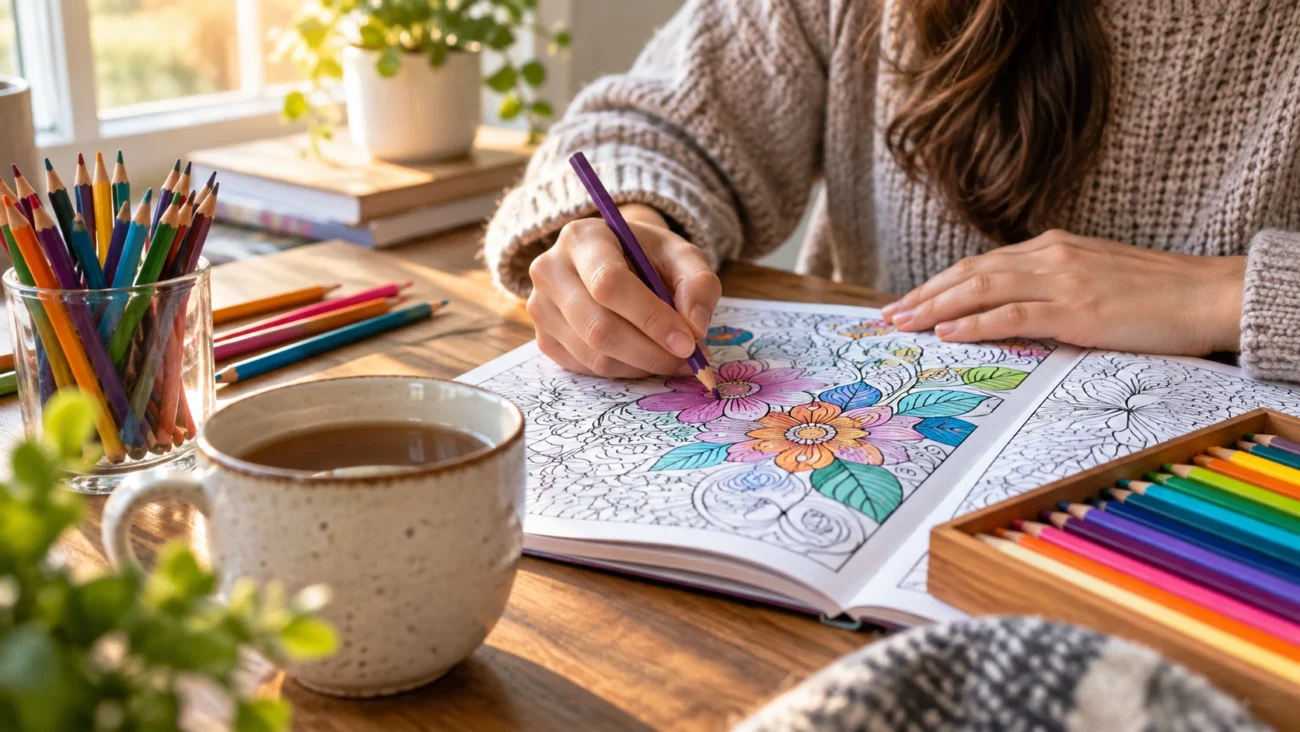
You do not need a dedicated studio. A supportive chair, a firm surface, and enough light can make a major difference. Keep pencils, crayons, or markers within easy reach, place a drink nearby, and clear away items that compete for your attention. Warm or natural light may also make close-up work more comfortable for your eyes.
Pick Pages That Match Your Mood
The right page depends on the kind of pause you need. On a mentally busy day, repeated shapes and symmetrical designs can offer a steady rhythm. When energy is low, choose larger sections and fewer details. Nature scenes, animals, geometric patterns, and playful illustrations each offer distinct entry points.
- For a busy mind: Try a repeated or symmetrical pattern.
- For low energy: Choose broad areas that fill quickly.
- For playful creativity: Use bold images and unexpected colors.
- For quiet reflection: Select gentle scenes with space for softer shades.
Build a Simple 20-Minute Session
- Minutes 1 to 2: Sit comfortably and take a few unhurried breaths.
- Minutes 3 to 5: Select three to five colors without overplanning.
- Minutes 6 to 16: Color at a steady pace and release the need for perfection.
- Minutes 17 to 19: Add details or revisit any area that interests you.
- Minute 20: Pause and notice whether you feel calmer, energized, or unchanged.
Use Color Choices With Intention
Color psychology is not a fixed set of rules. Personal preference, memory, and culture shape how colors feel to each person. You might reach for warm colors when you want energy, cooler colors when you want a quieter mood, or neutral shades when you want balance. Try a limited palette one day, a single-color page the next, and a full range of colors when you feel more playful.
Add Sound, Silence, or a Social Element
Silence can make coloring feel meditative, while soft instrumental music, nature sounds, or an audiobook may make it easier to settle in. Test each option rather than assuming one approach will work best. If you enjoy company, invite a friend or family member to color with you. Conversation can happen before or after the session, leaving the middle portion free for focus.
Paper Coloring Compared With Digital Coloring
Paper is often the better choice when your goal is a true screen-free reset, especially if you silence your phone and leave it in another room. Digital coloring can still be useful during travel or when storage space is limited. Research comparing digital and paper-based mandala coloring suggests that both formats can be worth considering. Choose the version that helps you stay present rather than the one that feels most polished.
Know When to Adjust the Plan
A routine should feel supportive, not demanding. Shorten the session, switch to simpler pages, change your seating position, or use larger tools if your hand, wrist, or eyes become uncomfortable. If boredom appears, choose a new theme or reserve coloring for only a few days each week.
Common Questions About a Coloring Routine
How Long Should a Coloring Session Last?
There is no single ideal length. Start with 10 to 20 minutes, as it is manageable; then continue longer only when it feels natural.
Does Coloring Need to Look Perfect?
No. Leave areas unfinished, color outside a line, or use an unusual combination if you want to. The value is in the experience, not in judging the result.
Can Coloring Replace Therapy?
No. Coloring may complement healthy routines, but anyone facing ongoing distress or major disruption in daily life should speak with a qualified professional.
Final Steps for Starting This Week
- Choose one quiet time already available in your schedule.
- Gather one page and a small set of tools.
- Set aside 10 to 20 minutes and silence unnecessary alerts.
- Color without evaluating the page as you go.
- Repeat the routine two or three times, then adjust the timing, tools, or page style.
Conclusion
A calming coloring routine does not need to be elaborate. A comfortable seat, a few colors, and a short block of protected time can create a meaningful pause in a busy day. Keep expectations low, pay attention to the process, and build the version that feels easiest to return to.
