


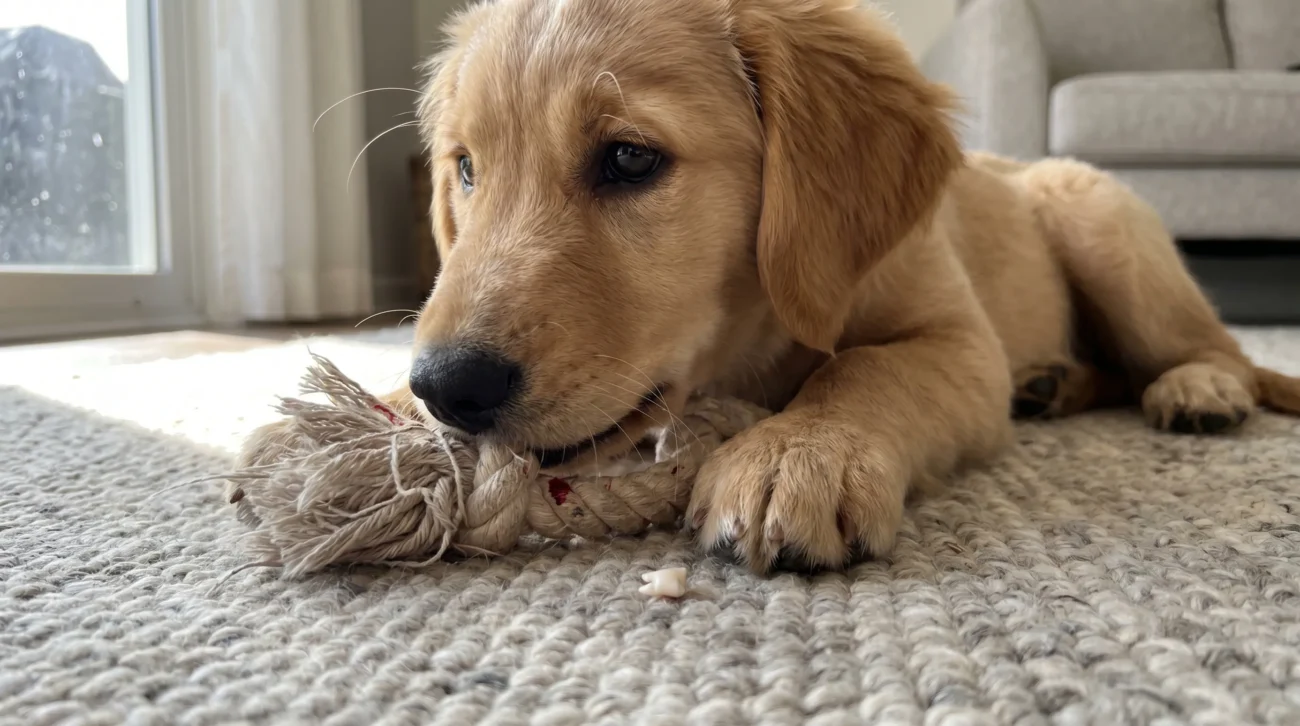
When do dogs lose their baby teeth is one of the first questions many new puppy owners ask when they notice tiny teeth on the floor, blood on a chew toy, or sudden extra chewing. Most puppies start losing their baby teeth around 12–16 weeks old, or about 3–4 months of age. By around 6 months old, many puppies have most or all of their adult teeth, although some dogs may continue teething until about 7 or 8 months.
This process is called puppy teething, and it is usually a normal part of puppy dental development. Puppies have 28 baby teeth, also called deciduous teeth, and adult dogs usually have 42 adult teeth. During this stage, your puppy may chew more, bite more, drool, or have slightly sore gums.
The key is knowing what is normal, what needs simple home support, and when a veterinarian should check your puppy’s mouth.
When Do Dogs Lose Their Baby Teeth?
Dogs usually begin losing their baby teeth at around 12 weeks old, though some puppies may start a little earlier or later. The main teething period often happens between 3–6 months, when the puppy teeth fall out and permanent adult teeth begin to replace them.
For many puppies, the first signs are subtle. You may notice more chewing, a tiny tooth stuck in a toy, or a small spot of blood on a blanket. Some owners never find any fallen teeth because puppies often swallow them while eating or chewing. In most cases, this is not dangerous.
The full puppy teething timeline is not exactly the same for every dog. Breed size, jaw shape, and individual growth can affect timing. However, if your puppy still has obvious baby teeth after the adult teeth come in, or if you see two teeth in one spot, that may be a sign of retained puppy teeth.
Puppy Teething Timeline by Age
A clear puppy teething timeline helps you understand what is happening in your puppy’s mouth at each stage. The timing can vary, but most puppies follow a fairly predictable pattern.
| Puppy Age | What Usually Happens |
| 2–4 weeks | Baby teeth begin erupting through the gums. |
| 5–6 weeks | More puppy teeth appear as puppies begin weaning. |
| 6–8 weeks | Most puppies have their full set of 28 baby teeth. |
| 12–16 weeks | Baby teeth start falling out and adult teeth begin emerging. |
| 4–5 months | Incisors and canines are often being replaced. |
| 5–6 months | Premolars and molars continue developing. |
| 6–8 months | Most dogs have their full set of 42 adult teeth. |
At 2–4 weeks, puppies are still very young. Their deciduous puppy teeth begin to erupt, which helps them transition from nursing to soft puppy food. By 6–8 weeks, most puppies have sharp little baby teeth. These are the “razor sharp teeth” many owners notice during early play and socialization.
Around 12–16 weeks, the real teething stage begins. The roots of the baby teeth weaken, the teeth loosen, and the adult teeth replace puppy teeth. By 6 months, many puppies are close to finishing teething, though some may not be completely done until 7 or 8 months of age.
Baby Teeth vs Adult Teeth: How Many Teeth Do Dogs Have?
Puppies usually have 28 baby teeth. These temporary teeth are called deciduous teeth because they are designed to fall out. They include incisors, canines, and premolars, but puppies do not have the same full molar set as adult dogs.
Adult dogs usually have 42 adult teeth. These include incisors for nibbling, canines for gripping, premolars for tearing and shearing, and molars for grinding. Adult teeth are larger, stronger, and meant to last for life with proper dog dental health care.
This difference matters because your puppy’s mouth is changing quickly. The puppy’s baby teeth are small and sharp, while the permanent teeth are larger and need enough space to erupt correctly. If a baby tooth stays in place while an adult tooth grows beside it, the mouth can become crowded. That crowding may trap food particles, increase tartar buildup, and raise the risk of gingivitis or periodontal disease later.
What Order Do Puppy Teeth Fall Out?
Puppy teeth usually fall out in stages, not all at once. The first incisors often loosen and fall out first. These are the small front teeth your puppy uses for nibbling. After that, the canine teeth and premolars are usually replaced.
The general order looks like this:
- Incisors fall out first.
- Canines loosen and are replaced.
- Premolars fall out as adult premolars emerge.
- Molars come in at the back of the mouth.
This order can vary slightly, so do not panic if your puppy’s timeline is not perfectly neat. A puppy may lose several teeth quickly, then seem to pause for a short time. What matters most is that the adult teeth emerge properly and that no baby teeth remain tightly in place beside them.
If your puppy has a retained canine tooth, or you see an adult tooth growing behind a baby tooth, schedule a puppy dental exam. This is especially important for small breeds and toy breeds.
Signs Your Puppy Is Teething
The most common puppy teething symptoms are chewing, mouthing, drooling, and mild gum discomfort. A teething puppy may seem extra interested in toys, shoes, chair legs, blankets, or even your hands.
Common signs include chewing more than usual, puppy biting, sore gums, drooling, missing baby teeth, and small spots of mild bleeding on chew toys. Some puppies also show less interest in hard kibble because their mouth feels tender.
This does not mean your puppy is being “bad.” Teething creates pressure and irritation in the gums. Chewing helps relieve that discomfort. However, your puppy still needs gentle training and redirection. If your puppy bites your hands, calmly offer a puppy-safe chew toy instead. Reward the puppy when they chew the right object.
A simple example: if a 4-month-old puppy suddenly starts chewing table legs, the issue may not be stubbornness. It may be gum discomfort mixed with normal curiosity. Giving a safe rubber chew, supervising play, and puppy-proofing the room can solve the problem faster than scolding.
Is Bleeding, Missing Teeth, or Swallowing Baby Teeth Normal?
A little bleeding can be normal when puppy teeth are falling out. You might notice a red spot on a toy, a small smear on a blanket, or a tiny amount of blood around the gums. This usually stops quickly.
Missing teeth are also normal during the teething stage. Your puppy may look like they have gaps in the front of the mouth for a short time. Adult teeth usually come in soon after.
Many owners ask, do puppies swallow their baby teeth? Yes, they often do. A tiny puppy tooth may fall out while your puppy is eating or chewing, and the puppy may swallow it without you noticing. In most cases, this is harmless.
However, not all bleeding is normal. Call your veterinarian if your puppy has excessive bleeding, swollen gums, pus, a bad smell, obvious pain, or bleeding that continues beyond 24–48 hours. Also get help if your puppy refuses food, cries when chewing, or has a broken tooth.
How to Help a Teething Puppy
The best way to help a teething puppy is to give safe chewing options, reduce mouth discomfort, and redirect unwanted biting. Puppies need to chew, so the goal is not to stop chewing completely. The goal is to teach your puppy what they can chew.
Offer safe chew toys made for puppies. Soft rubber toys, puppy teething rings, and flexible chew toys are often better than very hard items. A toy should not be so hard that it could cause a fractured tooth. If you cannot slightly dent it with pressure, it may be too hard for a young puppy.
Cold items can also help. A chilled puppy chew or a damp frozen washcloth can soothe sore gums, but always supervise your puppy so they do not shred and swallow fabric. Short 10-minute chew sessions or 15-minute supervised chewing periods can give relief without creating risk.
Avoid very hard bones, antlers, stones, and unsafe rawhide. Ice cubes can also be risky for aggressive chewers because they may crack teeth. When in doubt, ask your vet about age-appropriate dental treats or products accepted by organizations such as the Veterinary Oral Health Council.
Puppy Biting During Teething
Puppy biting during teething is common because the mouth feels uncomfortable and chewing gives relief. Puppies also explore the world with their mouths, so teething can make normal mouthing feel more intense.
If your puppy bites hands, clothes, or furniture, redirect the behavior calmly. Give a safe toy, praise the puppy when they chew it, and remove access to tempting objects. This is where positive reinforcement, bite inhibition, and puppy-proofing work together.
For example, if your puppy grabs your sleeve, avoid turning it into a tug game. Pause, offer a chew toy, and reward the puppy when they switch. Over time, your puppy learns that toys are for chewing, not hands.
Teething may explain the behavior, but it should not be used as a reason to ignore training. Gentle consistency now helps prevent destructive chewing later.
Retained Baby Teeth: What If Your Puppy Has Two Teeth in One Spot?
Retained baby teeth happen when a baby tooth does not fall out after the adult tooth starts coming in. These are also called retained deciduous teeth or persistent deciduous teeth.
One common sign is seeing two teeth in one spot. For example, your puppy may have a baby canine and an adult canine crowded together. This can happen with any tooth, but retained canine teeth are especially common.
Retained teeth are not just cosmetic. They can push adult teeth into the wrong position, leading to crowded adult teeth, malocclusion, gum irritation, and trapped food. Over time, that can increase plaque, tartar buildup, gingivitis, and early dental disease.
A vet may recommend monitoring for a short time or removing the retained tooth, depending on your puppy’s age and mouth. Do not try to pull a puppy tooth at home. Baby teeth have roots, and improper removal can hurt the puppy or damage the adult tooth.
Do Small Breeds Have More Teething Problems?
Yes, small breeds, toy breeds, and some brachycephalic breeds may be more likely to have crowded teeth or retained baby teeth. Breeds such as Chihuahua, Yorkshire Terrier, Pomeranian, Maltese, Shih Tzu, Pug, and French Bulldog often have smaller jaws, which can make dental crowding more noticeable.
This does not mean every small dog will have problems. Many puppies lose their teeth normally. However, if you have a toy breed puppy, it is smart to ask your vet to check the mouth during routine puppy wellness visits.
A quick oral exam can catch retained puppy teeth early, before they create bigger dental issues.
When to Call a Vet About Puppy Teeth
Most puppy teething is normal, but some signs deserve a veterinary dental exam. Call your vet if your puppy has heavy bleeding, severe pain, swollen gums, bad breath with discomfort, a broken tooth, or a tooth that looks infected.
You should also contact a vet if your puppy has two teeth in the same socket, adult teeth coming in at odd angles, or baby teeth still present after adult teeth erupt. These may point to retained puppy teeth, malocclusion, or another dental problem.
A helpful rule is simple: mild chewing, mild gum irritation, and tiny blood spots can be normal. Refusal to eat, reluctance to chew, excessive bleeding, facial swelling, or obvious mouth pain are not things to ignore.
As a practical case study, imagine a 6-month-old toy breed puppy with both baby canines still in place while adult canines have already erupted. The puppy may seem fine, but food can collect between those crowded teeth. A vet check can prevent future gum inflammation and dental disease.
How to Start a Puppy Dental Care Routine
The teething stage is a good time to build a gentle puppy dental care routine. You do not need to force full brushing on day one. Start by touching your puppy’s lips, lifting the gums gently, and rewarding calm behavior.
Use a soft puppy toothbrush, silicone finger brush, or soft pad. Always use dog toothpaste or canine toothpaste, never human toothpaste. Human products may contain ingredients such as xylitol or strong foaming agents that are unsafe for dogs.
At first, brushing a few teeth for a few seconds is enough. Gradually work toward once-daily brushing if your puppy tolerates it. Some owners eventually brush more often, but consistency matters more than perfection.
Good oral habits help control plaque, reduce bad breath, and protect those 42 adult teeth your dog will depend on for life.
FAQs About Dogs Losing Baby Teeth
When do puppies start losing baby teeth?
Most puppies start losing baby teeth around 12–16 weeks old, or about 3–4 months. This is when adult teeth begin pushing through and replacing the temporary puppy teeth.
How long does puppy teething last?
Puppy teething usually lasts from around 3 months to 6 months, though some dogs may continue until 7 or 8 months. The timeline varies by puppy and breed.
Is it normal if I never find my puppy’s baby teeth?
Yes. Many puppies swallow their tiny baby teeth while eating or chewing. If your puppy is acting normal and the mouth looks healthy, this is usually not a concern.
What if my puppy has two teeth in one spot?
Two teeth in one spot may mean a retained baby tooth. A vet should check it, especially if the adult tooth has already erupted beside the baby tooth.
Is puppy bleeding during teething normal?
Small spots of blood can be normal when teeth loosen. Heavy bleeding, swelling, pus, bad breath, or ongoing pain should be checked by a veterinarian.
Should I brush my puppy’s teeth during teething?
Yes, but gently. Start with short, positive sessions using a soft brush or finger brush and dog-safe toothpaste. Avoid scrubbing sore gums aggressively.
Conclusion
Most dogs lose their baby teeth between 12–16 weeks and 6 months, although some puppies finish closer to 7 or 8 months. During this puppy teething timeline, your puppy’s 28 baby teeth are replaced by 42 adult teeth.
Chewing, mild bleeding, missing teeth, and swallowed baby teeth are often normal. But retained puppy teeth, heavy bleeding, bad breath, broken teeth, swelling, or two teeth in one spot should be checked by a veterinarian. With safe chew toys, gentle dental care, and regular vet checks, your puppy can move through teething comfortably and grow a healthy adult mouth.
Disclaimer:
This article is for general informational and puppy-care guidance purposes only. Puppy teething timelines, tooth loss, chewing behavior, bleeding, and dental development may vary by breed, size, age, and individual health. Always consult a qualified veterinarian if your puppy has heavy bleeding, severe pain, bad breath, swollen gums, broken teeth, retained baby teeth, or two teeth growing in one spot.
