


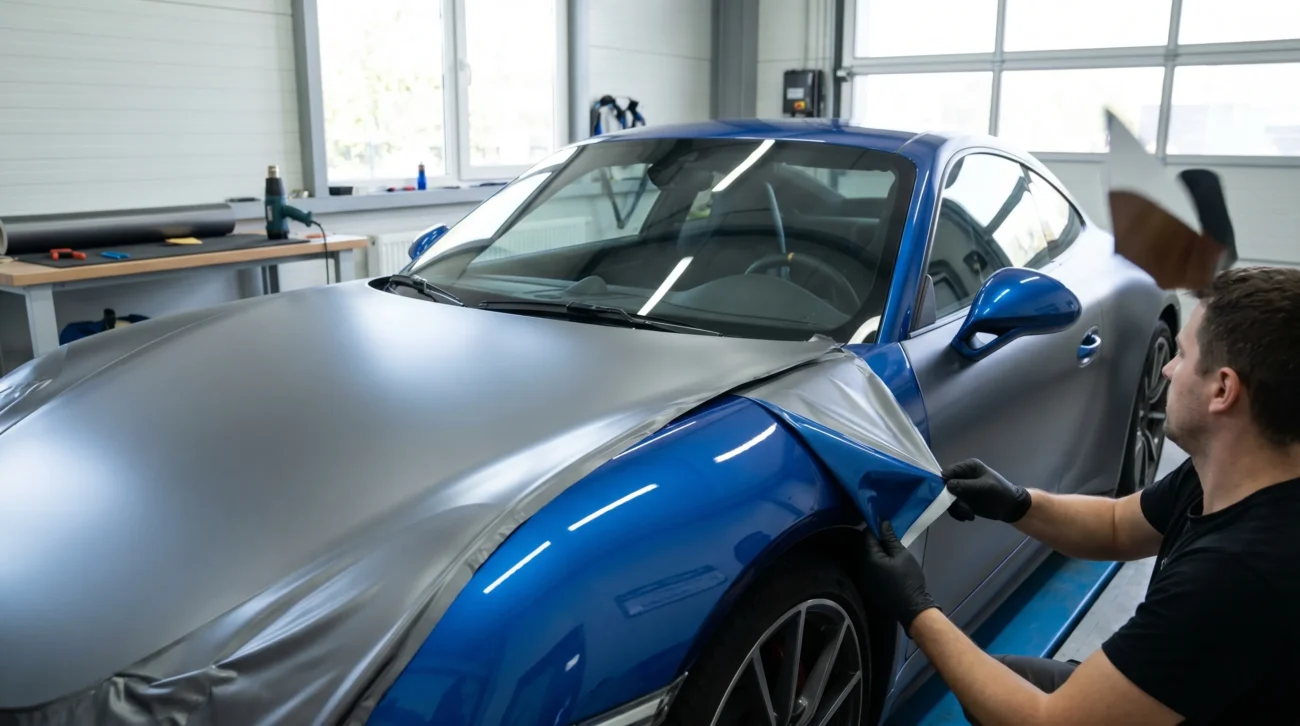
Does vinyl wrap damage car paint? In most cases, no—not when the wrap is applied to healthy factory paint, installed correctly, maintained well, and removed on time. The real problems usually come from weak clear coat, poor-quality repaint work, old sun-baked film, or bad removal technique, not from the idea of vinyl wrapping itself. Official 3M guidance says removal within the warranty period is very unlikely to cause damage, and it notes that covered areas can even look more vibrant and glossier because they were protected from the elements. At the same time, 3M warns that poorly cured resprays are more vulnerable, which is why paint condition matters so much before you wrap anything.
That answer is reassuring, but it is not the whole story. A wrap can absolutely become a problem if it goes over peeling paint, oxidation, cracking clear coat, or a panel that was repainted and never fully cured. TeckWrap says new paint needs around 3 to 4 weeks to fully cure because it releases gases during that period, and wrapping too soon may lead to bubbling or lifting. That is why smart wrap decisions are really about paint quality, installer quality, and timing.
The short answer: when vinyl wrap is safe, and when it is risky
A vinyl wrap is generally safe on a car with OEM paint or another stable finish that is firmly bonded to the panel. Bliss notes that Original Equipment Manufacturer paint jobs are usually more durable and better suited for wraps, while aftermarket paint jobs are more likely to peel or lift during removal if they were not applied or cured properly. That simple difference explains why one owner can unwrap a car years later with no issue, while another ends up blaming the wrap for damage that really started underneath it.
It also helps to understand what a wrap is actually doing. A good film does not “eat” paint. It sits on top of the finish using a pressure-sensitive adhesive. TeckWrap describes high-quality films as using solvent-based pressure-sensitive adhesive designed for clean removability, and 3M says that when wraps are removed within the warranty period, they are expected to come off cleanly, with any remaining residue being easily cleaned off.
Where things go wrong is usually one of four places: the paint was already failing, the car had a low-quality repaint, the installer used poor technique, or the film stayed on too long and became difficult to remove. Edmunds adds that if a wrap has baked in and starts breaking apart in flakes and shards, removal labor gets much harder and more expensive.
How vinyl wrap can actually help protect paint
A lot of people ask this keyword as if wrap is only a cosmetic change, but there is also a genuine paint protection angle. TeckWrap says vinyl can protect the factory finish from UV exposure, light scratches, and everyday wear, and 3M says covered areas may even look better after removal because they have been shielded from the elements. That does not make vinyl wrap the same as paint protection film, but it does mean a wrap can reduce some common wear on the paint underneath.
That protection matters in normal real-world driving. Sun, road grime, bird droppings, road salts, and minor abrasions slowly wear a finish down over time. Edmunds recommends regular washing and prompt removal of insects and bird droppings, while 3M recommends storing a wrapped vehicle indoors, in a shaded area, or under a cover whenever possible to reduce heat and UV exposure.
Still, it is important to be honest: vinyl wrap is not the best choice if your main goal is heavy-duty impact protection. Edmunds notes that PPF protects better against rocks and road debris because it is thicker. In its example, standard wrap film is around 2 to 4.5 mil, while XPEL’s Ultimate Plus 7 is around 7 mil, which is why PPF is often the better fit for people who care more about chip resistance than color change.
The real reasons wraps damage paint
If someone says, “A wrap damaged my car,” the wrap itself is rarely the only factor. Usually, one of these hidden conditions was already in play.
-
Weak or failing paint
If the car already has peeling, cracking, oxidation, or clear-coat failure, the adhesive can expose that weakness during removal. TeckWrap says that on older or repainted cars, unresolved issues like oxidation, fading, and surface cracking raise the risk that paint may come off when the vinyl is removed.
-
Poor-quality repaint work
This is one of the most overlooked risks. Bliss says OEM paint is generally more durable, while aftermarket paint may be more prone to peeling or lifting when the wrap is removed if it was not properly applied or cured. 3M gives the same basic warning, saying that poorly cured resprays are more vulnerable.
-
Cheap film or bad installation
Low-quality vinyl, poor surface preparation, contaminated panels, overstretched film, and sloppy edge work all increase the chance of trouble later. TeckWrap directly links paint issues to low-quality vinyl and improper installation and removal. A careless installer can also create a different kind of damage entirely with blade cuts around edges and trim. That is why “use a pro” is not just a cliché here. 3M explicitly recommends a trained and experienced installer and says authorized installers help ensure proper adhesion and a smoother final result.
-
Leaving the wrap on too long
Time alone is not the full story, but aged film is harder to remove—especially in harsh sun. 3M says some wrap films can last up to 8 years, but it also separates vertical exposure from horizontal exposure, with some wrap warranty language going only up to 3 years on horizontal surfaces. That matters because the roof and hood usually take more direct UV and heat than the doors. Edmunds also notes that once a wrap has baked in, removal becomes much more difficult and costly.
OEM paint vs repainted paint vs older cars
If your car still has its factory paint, that is usually the best-case scenario for wrapping. Factory-applied finishes tend to be more uniform, better cured, and more firmly bonded than many aftermarket paint jobs. That is why both Bliss and 3M point readers back to paint condition before making a wrap decision.
A repainted car is different. It can still be wrapped safely, but only if the paint work was done correctly and given enough time to cure. TeckWrap says new paint needs around 3 to 4 weeks to fully cure, and wrapping too soon can lead to bubbling and lifting as trapped gases escape. If a panel was repaired cheaply, sprayed unevenly, or rushed back into service, the risk goes up sharply.
Older cars need even more caution. Age alone is not a deal breaker, but age plus fading, surface cracking, rust spots, or failing clear coat is a red flag. Before wrapping an older car, the smart move is a panel-by-panel inspection in good light. Look for color mismatch, texture changes, sanding marks, edges that look repaired, and any spot where the finish is already unstable. If a panel looks suspicious, a cautious installer may suggest a small test spot before committing to a full wrap. That practical step is rarely discussed in competitor articles, but it can save a lot of money and frustration.
Fresh paint needs patience
One of the biggest content gaps in the current SERP is how fresh paint behaves under a wrap. Many owners assume that because a panel looks perfect, it is ready. That is not always true. Paint can still be curing and outgassing, and wrapping during that stage can trap problems underneath. TeckWrap’s guidance of 3 to 4 weeks is useful here as a general benchmark, but the safest move is still to ask both the paint shop and the wrap installer before proceeding.
This matters most on repaired bumpers, body-shop work, and insurance jobs. A car may look glossy and “done,” but the real question is whether the finish is fully cured, structurally sound, and ready for adhesive contact. If there is any doubt, waiting a little longer is cheaper than repainting a panel later.
What happens when the wrap comes off
Wrap removal is where most people’s fear lives, and for good reason. Removal is the moment when a hidden paint problem gets exposed. But it is also the stage where good materials and good technique really pay off. 3M states that when the wrap is removed within the warranty period, it is guaranteed to remove cleanly, and if any residue remains, it is easily cleaned off. It also recommends professional removal by an authorized installer. Wraps For Less says the same basic thing: quality wraps on sound paint can come off cleanly, and heat is commonly used to soften the adhesive and reduce residue.
Edmunds adds a useful reality check. If everything goes well, the wrap will not damage the paint. But if the paint was thin, repaired, or not in the best condition, some of it can lift off with the wrap. That is not marketing spin; it is exactly the nuance searchers need. Removal does not create good paint or bad paint. It reveals whether the finish underneath was stable enough in the first place.
Here is the simplest way to think about it:
| Scenario | Likely outcome after removal |
|---|---|
| Healthy OEM paint + quality film + on-time removal | Low risk of damage |
| Poor repaint + rushed curing + aggressive removal | High risk of lifting or peeling |
| Old wrap baked into the surface | Higher labor, more residue, more risk |
| Peeling clear coat before wrapping | Damage is likely to show during removal |
How long can a wrap stay on safely?
There is no one lifespan for every wrap because climate, maintenance, surface orientation, and film quality all matter. TeckWrap says a professionally applied wrap can last up to five years when properly maintained. 3M says some of its wrap films can last up to 8 years, but its own support page also warns that horizontal exposure may be covered only up to 3 years in some cases. That difference is useful because it explains why a roof may age out faster than a door.
So the better question is not only “How long does a car wrap last?” but also “How much sun, heat, and neglect will it see?” A garage-kept sedan that is hand-washed and shaded will age very differently from a daily driver parked outside in intense sun. The longer a wrap stays on beyond its healthy service life, the higher the chance of adhesive residue, film brittleness, and expensive removal. Edmunds says that severely baked-in wraps can push removal labor upward of $2,000 to $2,500.
Maintenance habits that protect both the wrap and the paint underneath
Good maintenance is not just about keeping the wrap pretty. It also reduces the chance that edges lift, contaminants sit too long, or the film ages prematurely.
3M’s maintenance guidance is practical and specific. It says to hand wash whenever possible, use a touchless wash only if needed, and avoid brush washes because they may dull, scratch, or lift the edge of the film. It also says do not wash a newly wrapped vehicle until at least 72 hours after installation.
The company also recommends wiping off fuel spills immediately, storing the vehicle indoors or in a shaded area when possible, and soaking contaminants like tree sap in hot, soapy water rather than scrubbing aggressively. For fingerprints and certain residues, it references a 70% isopropyl alcohol and 30% water mixture in specific cleaning contexts.
Edmunds adds that prompt removal of bird droppings and regular washing help a wrap last longer. That advice matters because trapped contamination can stain or wear the film, and once a wrap deteriorates badly enough, removal becomes less predictable.
Vinyl wrap vs paint vs PPF
Many searchers who ask whether a wrap damages paint are really deciding between wrapping, repainting, or installing PPF.
A vinyl wrap is best for color change, non-permanent customization, and protecting a stable finish from everyday exposure. A repaint is more permanent and can be the right choice when the existing paint is already too compromised to wrap well. PPF is best when the top priority is stronger protection against rock chips and road debris. Edmunds notes that a typical sedan wrap runs around $2,000 to $3,000, while an SUV is often $3,000 to $5,000, with chrome or more complex finishes costing more. It also says color PPF is thicker and more protective than standard vinyl wrap.
That leads to a practical decision rule:
- Choose vinyl wrap if you want style, reversibility, and light surface protection.
- Choose PPF if you care more about chip resistance and long-term preservation.
- Choose paint repair or repainting first if the current finish is already unstable.
Signs your car should not be wrapped yet
Before booking a wrap, stop and inspect the vehicle honestly. A car is not ready if it has peeling clear coat, active rust, fresh uncured paint, severe oxidation, or body damage that will telegraph through the film. It is also a bad candidate if you know certain panels were repaired cheaply or if the finish already lifts around chips and edges.
That does not mean the car can never be wrapped. It means the surface may need paint correction, proper body repair, or repainting first. Wrapping over unstable paint is like putting a beautiful sticker over a weak foundation. It may look good for a while, but removal is where the truth comes out.
Final Words
So, does vinyl wrap damage car paint? Usually not—not on healthy factory paint, not with a quality film, not with a skilled installer, and not when the wrap is maintained and removed properly. The danger comes from poor resprays, failing clear coat, old sun-baked film, cheap materials, and bad technique. Official 3M guidance, competitor analysis, and industry examples all point to the same conclusion: paint condition matters more than the myth itself.
If you want the safest outcome, do three things before you wrap: check whether the car has OEM paint or a past repaint, inspect the finish for clear-coat failure or oxidation, and choose an installer who is willing to talk honestly about curing time, edge handling, and removal risk. Done right, a wrap can be one of the safest ways to change your car’s look without making a permanent mistake.
