


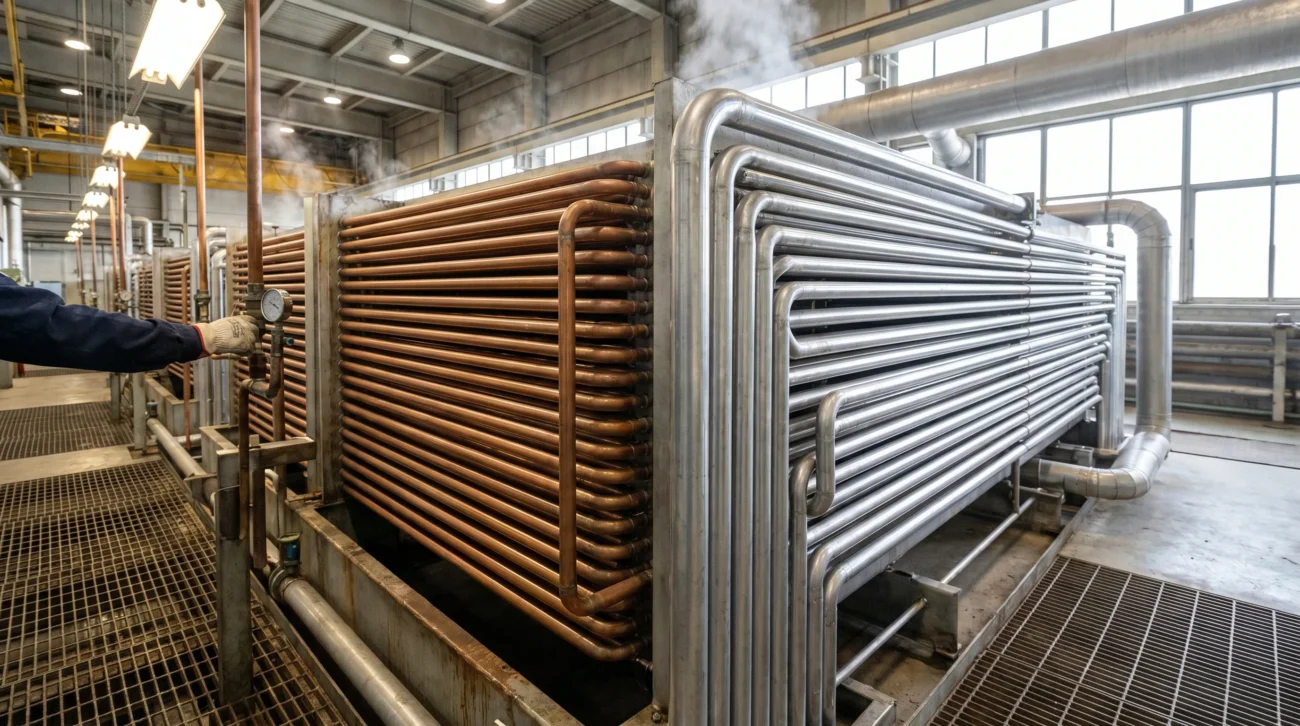
The commonly used material of pipe in condenser is copper in many HVAC and refrigeration systems, mainly because copper offers strong thermal conductivity, is easy to fabricate, and has a long history of dependable field use. At the same time, that simple answer is only partly true. In real-world engineering, the “best” condenser tube material depends on the cooling medium, corrosion resistance, pressure, temperature, maintenance needs, and whether the system is a small HVAC unit, an industrial process cooler, or a power plant surface condenser. Competitor pages consistently point to copper, stainless steel, carbon steel, aluminum, and titanium as the main materials in this space, but they often stop short of explaining when each one makes the most sense.
That is why this guide goes beyond the one-line answer. You will learn what condenser pipes and tubes do, why copper is so common, how stainless steel, aluminum, carbon steel, brass, and titanium compare, and which materials work better in fresh water, seawater, corrosive media, and standard condenser water service. By the end, you will not only know the usual answer, but also understand the material-selection logic behind it.
What Is a Condenser Pipe or Tube, and What Does It Do?
A condenser is a type of heat exchanger. Its job is to remove heat from a vapor or hot fluid and help that vapor condense into liquid. In many systems, the condenser tube, condenser tubing, or condenser pipe is the main path through which heat is transferred. That makes the material of the tube extremely important. If the tube does not transfer heat well, the system loses efficiency. If it cannot resist corrosion, erosion, or fouling, performance drops and maintenance costs rise.
In surface condensers and HVAC equipment, the tube material affects heat transfer, durability, reliability, and maintenance and longevity. A good tube material should handle the operating temperature, resist the working medium, maintain enough mechanical strength, and remain compatible with the rest of the system. Some systems also rely on negative pressure or vacuum conditions, which makes leak prevention and material integrity even more important.
So when people ask, “which pipe is used in condenser?”, they are really asking a bigger question: Which material gives the right mix of heat transfer, corrosion resistance, cost, and service life for this exact job?
Why Copper Is the Most Commonly Used Condenser Pipe Material?
The biggest reason copper remains the most familiar answer is its excellent thermal conductivity. A condenser exists to move heat, and copper is very good at that. It also has practical installation advantages. It is relatively easy to bend, braze, expand, join, and repair in the field, which is why copper pipe, copper tube, and copper piping are so common in many HVAC piping and refrigeration systems. Competitor pages repeatedly identify copper pipe as a common condenser material and link that choice to heat-transfer performance and dependable operation.
Another reason is familiarity. Contractors, technicians, and manufacturers have used copper for decades in automotive air conditioning systems, refrigeration equipment, and condenser assemblies. That long service history matters because it reduces uncertainty. Materials that are easy to source, easy to work with, and widely understood often become the default choice even before a project enters more advanced engineering analysis.
There is also a design detail many basic articles skip: in a lot of HVAC equipment, the construction is not all-copper. A very common layout is copper tube aluminum fin. In other words, the tube that carries refrigerant or fluid may be copper, while the attached fins are aluminum to improve surface area and reduce cost and weight. That matters because some people search for the commonly used material of pipe in condenser and assume there is only one material in the whole assembly. In practice, there are often multiple materials working together.
Even so, copper is not perfect. It can be vulnerable in some corrosive environments, especially if water chemistry is poor or if the system faces specific forms of corrosion such as formicary corrosion or galvanic issues with dissimilar metals. That is why copper is often the common answer, but not the universal one.
Other Commonly Used Condenser Materials
While copper often leads the conversation, several other materials are also widely used in materials used in condenser discussions.
Stainless Steel
Stainless steel is popular where corrosion resistance is more important than maximum heat transfer. It is commonly chosen for harsh or chemically active environments and shows up often in discussions of stainless steel condenser tubes and stainless steel pipe for corrosive media. Some competitor content specifically mentions austenitic stainless steel and highlights its strength, plasticity, and erosion resistance.
Aluminum
Aluminum is valued for being lightweight and relatively affordable. In HVAC applications, it is frequently paired with copper in fin-and-tube designs. Some systems also use all-aluminum or microchannel coil configurations, especially where weight and manufacturing cost matter. Aluminum can perform well, but it introduces tradeoffs in repairability and corrosion behavior depending on the environment.
Carbon Steel
Carbon steel and carbon steel pipe show up in industrial and general-purpose applications where cost control and structural robustness matter. Competitor pages describe carbon steel pipe for general working conditions, but it is usually not the first choice where corrosion exposure is severe. It can still be useful in systems where water treatment, maintenance, and operating conditions are well controlled.
Titanium
Titanium is often selected when corrosion conditions are extremely demanding, especially in marine service, chloride water, or seawater condenser tubes applications. It costs more upfront, but it can deliver excellent lifespan in aggressive environments where cheaper materials fail too quickly. Competitor content mentions titanium as a high-performance option, especially in harsher conditions.
Brass and Copper Alloys
Brass, admiralty brass, aluminum brass, and copper-nickel or cupronickel alloys are important gap topics that many simple competitor pages barely discuss. These materials can be very relevant for heat exchangers and condensers exposed to challenging water chemistry. In particular, 90/10 cupronickel and 70/30 cupronickel are well-known options for some water-side services because of their corrosion performance.
Copper vs Aluminum vs Stainless Steel: Which Is Best?
The honest answer is that no single material is always best. The better question is: Best for what?
If your priority is heat transfer, copper is hard to ignore. It performs very well thermally, is familiar to installers, and supports easier field repair than many alternatives. That is a major reason why people searching “what is the commonly used material of pipe in condenser” so often land on copper.
If your priority is stronger corrosion resistance in rough service, stainless steel may be the smarter choice. It gives up some heat-transfer performance compared with copper, but gains durability in difficult chemical or moisture conditions. For some applications, especially where corrosive media are involved, that tradeoff is worth it.
If your priority is lower weight and manufacturing efficiency, aluminum becomes attractive. It is widely used in coil designs and can be economical, but some users see lower repairability compared with copper-based constructions. In commercial service settings, that difference can affect life-cycle cost, not just purchase price.
So, copper vs aluminum vs stainless steel is really a balance of thermal conductivity, corrosion resistance, mechanical strength, maintenance and longevity, repairability, and cost. A cheap material that fails early may cost more over time than a more expensive material that lasts. That is why serious material selection should always consider the whole operating environment, not just the material price tag.
Factors to Consider Before Choosing Condenser Pipe Material
If you want to know how to choose pipe material used in condenser, start with the environment, not the catalog.
First, look at thermal conductivity. Condensers are heat-transfer devices, so the material must support efficient movement of heat. This is one reason copper stays common. Second, evaluate working conditions and medium requirements. A fluid that contains salts, chlorides, or contaminants can change the material choice completely. Cooling-water chemistry matters more than many basic articles admit.
Third, consider pressure ratings and operating temperature. Some systems demand stronger materials with better structural performance. Fourth, consider corrosion resistance and long-term stability. A material that looks affordable on day one may become expensive if it suffers pitting corrosion, crevice corrosion, waterside corrosion, or heavy fouling. Fifth, think about maintenance. Can it be cleaned easily? Can it be repaired in the field? How often will it need inspection? These questions affect uptime and budget.
Finally, weigh budget constraints against life-cycle cost. The right material is not always the cheapest material. It is the one that gives the best mix of performance, reliability, and service life in the actual operating environment. That is the real answer to how to select the appropriate pipe for condenser.
HVAC Condensers vs Power Plant Condensers: Why the Answer Changes?
A major source of user confusion is that not all condensers are the same. In a standard HVAC or refrigeration unit, the commonly used material of pipe in condenser is often copper, sometimes combined with aluminum fins. This is common in comfort cooling, refrigeration, and many packaged units where efficiency, manufacturability, and field service all matter.
But in a power plant or large surface condenser, the engineering priorities can shift. Water quality, scale risk, corrosion exposure, and service life may push designers toward stainless steel, titanium, brass, or copper-nickel options. Competitor pages mention surface condenser tube material and condenser tube material for power plant, but most do not explain clearly enough that the “common material” answer depends heavily on scale and application.
This means a homeowner asking about an AC condenser and an engineer asking about a power-plant condenser may use almost the same keyword but need very different answers. The keyword is the same. The operating reality is not.
Common Corrosion and Failure Issues in Condenser Tubes
Many weaker articles say only that one material has “good corrosion resistance” and another has “poor corrosion resistance.” Real systems are more specific than that.
A condenser tube can fail from pitting corrosion, where small deep attacks form on the metal surface. It can fail from crevice corrosion in tight, stagnant spaces. It can suffer galvanic corrosion when dissimilar metals interact in the presence of an electrolyte. It may also face erosion resistance problems if fluid velocity is too aggressive, and biofouling, scaling, or fouling can reduce heat transfer even before the metal itself fails.
In copper-based systems, some HVAC applications also have to watch for formicary corrosion, a localized issue that can create pinhole leaks. In brass-based alloys, dezincification may matter. In seawater or chloride-rich service, material choice becomes even more critical because chloride water can accelerate corrosion in the wrong alloy.
This is why corrosion resistance should never be treated as a vague checkbox. The type of corrosion, the water chemistry, and the maintenance plan all matter.
Best Condenser Tube Materials by Environment
A useful rule is this: the best material changes with the environment.
For general HVAC and refrigeration, copper remains a leading answer because of its thermal conductivity, service familiarity, and easy fabrication. In many of these systems, copper tube aluminum fin designs are common and cost-effective.
For general industrial working conditions, carbon steel may still be used where corrosion is manageable and budget matters. For more challenging chemical exposure, stainless steel often becomes more attractive, especially where long-term durability is a higher priority than raw heat-transfer performance.
For seawater condenser tubes, marine service, or systems with severe chloride exposure, materials such as titanium, 90/10 cupronickel, 70/30 cupronickel, or selected high-grade stainless steels can make more sense. For some water-side conditions, admiralty brass and aluminum brass may also come into the conversation. These are exactly the kinds of gap topics that help a serious article outperform simpler competitor pages.
So when someone asks, “which material is commonly used for condenser tubes?”, the concise answer is copper for many standard systems. The complete answer is: it depends on the environment.
Quick Comparison Table of Condenser Pipe Materials
| Material | Best use | Main benefit | Main drawback | Relative cost |
|---|---|---|---|---|
| Copper | HVAC, refrigeration, general condenser duty | Excellent thermal conductivity, easy fabrication, easier repair | Can be vulnerable in certain corrosive environments | Medium |
| Aluminum | Lightweight coils, some HVAC designs | Light weight, manufacturing efficiency | Repairability can be less convenient | Low to medium |
| Stainless steel | Corrosive media, harsher environments | Strong corrosion resistance and durability | Lower heat transfer than copper, often higher cost | Medium to high |
| Carbon steel | General industrial service | Strength and cost control | Weaker corrosion performance if conditions are poor | Low |
| Titanium | Seawater, chloride-heavy service | Excellent resistance in aggressive water environments | High upfront cost | High |
| Cupronickel / brass alloys | Selected water-side and marine applications | Good balance for certain condenser duties | Application-specific, not universal | Medium to high |
This table reflects the broad patterns visible across competitor coverage and the missing application-specific nuance that many of them leave out.
How Maintenance and Cleaning Affect Condenser Tube Life?
Material choice and maintenance are closely linked. Competitor content mentions mechanical cleaning, chemical cleaning, steam cleaning, hydroblasting, ultrasonic cleaning, and other methods, but the deeper point is that some materials and environments will demand more cleaning than others. If a condenser suffers from hard water deposits, tube-side fouling, scaling, or biological buildup, even a good material will lose performance.
That is why inspections matter. A strong maintenance plan may include periodic tube checks, water-treatment review, and selective sampling of tubes when performance drops. In larger industrial settings, even a 2–5% random sample of tubes can provide useful condition insight before a major failure develops. Material choice should always be considered alongside cleaning strategy, not in isolation.
In practical terms, a material that is slightly more expensive but easier to inspect, clean, and keep in service may deliver better value than a cheaper material that causes recurring downtime.
A Short Real-World Selection Example
Imagine two projects.
The first is a normal commercial HVAC installation. The owner wants efficient cooling, reasonable cost, and easy service. Here, copper tubing with aluminum fins will often make perfect sense because it balances heat transfer, cost, and field repair practicality.
The second is a condenser exposed to seawater or heavily chlorinated water. In that case, choosing plain copper just because it is “commonly used” could be a costly mistake. The better choice may shift toward titanium, cupronickel, or a more corrosion-resistant stainless steel grade, depending on the exact fluid and operating conditions.
That contrast shows why the commonly used material of pipe in condenser is only the beginning of the answer, not the end of it.
Conclusion
So, the commonly used material of pipe in condenser is usually copper when people are talking about standard HVAC, refrigeration, or similar day-to-day condenser systems. That answer fits the broad competitor pattern and the way many real installations are built. But the stronger engineering answer is more nuanced: the best condenser tube material depends on heat-transfer needs, corrosion exposure, cooling-water chemistry, pressure, maintenance strategy, and total life-cycle cost.
If the environment is mild and serviceability matters, copper often stays the smart choice. If conditions are aggressive, materials like stainless steel, titanium, carbon steel, brass, or copper-nickel may be more appropriate. In other words, the common answer is helpful, but the right answer always depends on the job.
Frequently Asked Questions
What is the most commonly used condenser pipe material?
For many HVAC and refrigeration systems, the most commonly used condenser pipe or tube material is copper because of its thermal conductivity, ease of fabrication, and service history.
Why is copper commonly used in condensers?
Because copper transfers heat efficiently, is easy to braze and shape, and has long been trusted in field-installed and factory-built systems.
Is copper better than aluminum for condenser tubes?
Not in every case. Copper usually wins on repairability and heat-transfer reputation, while aluminum can win on weight and manufacturing efficiency. The better choice depends on the design and service environment.
When is stainless steel better than copper?
Stainless steel is often the better option when corrosion conditions are more severe or where the fluid environment is less friendly to copper.
What material is best for seawater condensers?
That often shifts toward titanium, cupronickel, or other highly corrosion-resistant materials rather than plain copper, because seawater and chlorides can be extremely demanding.
Can carbon steel be used in condensers?
Yes, carbon steel can be used in some condenser applications, especially under general industrial working conditions, but its suitability depends heavily on corrosion control and maintenance.
Do HVAC condensers and power plant condensers use the same materials?
Not always. HVAC condensers commonly use copper-based designs, while power plant and large surface condenser applications may use very different materials depending on water chemistry and operating scale.
Disclaimer:
This article is for general informational purposes only. Condenser pipe material, performance, corrosion resistance, cost, and maintenance needs may vary by system type, cooling medium, pressure, temperature, and operating environment. Always consult a qualified HVAC technician, engineer, or manufacturer before selecting condenser tube materials.
