


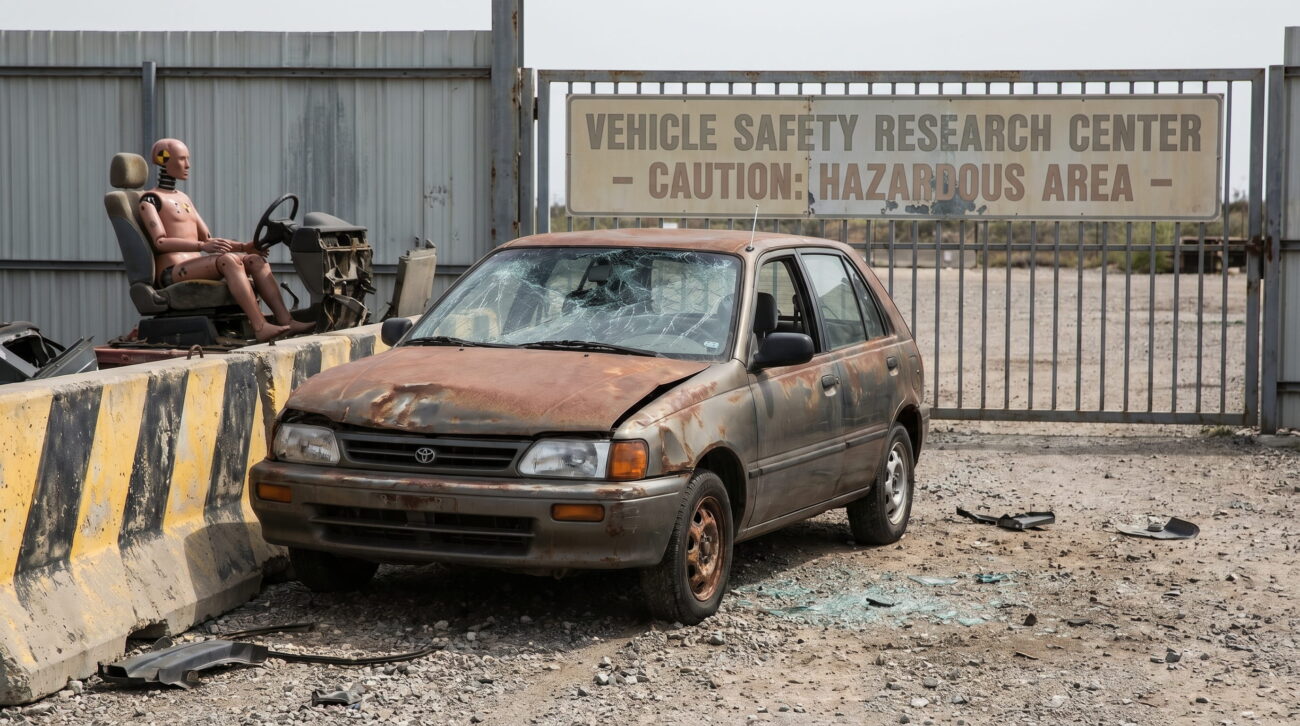
Most unsafe car in the world is a phrase people search when they want one simple answer, but the truth is more complicated. A car can be called unsafe because it performs badly in crash tests, because it shows a high fatal accident rate in real-world driving, because it has serious design flaws, or because it lacks modern driver-assistance technologies that reduce injuries and deaths. Official safety organizations such as NHTSA and IIHS do not crown a permanent global “worst car.” Instead, they measure specific things like frontal crash, side crash, rollover resistance, crashworthiness, and crash avoidance and mitigation.
That means the smartest article on this topic should not just repeat a sensational list of dangerous cars. It should explain how safety is measured, why rankings often conflict, and which vehicles keep appearing in discussions about unsafe cars of all time and most dangerous cars on the road. Some lists focus on vehicles with the highest occupant fatalities per mile driven. Others focus on infamous historical models like the Ford Pinto, Chevrolet Cobalt, Ford Explorer, Pontiac Fiero, or Yugo GV, which became notorious because of fires, rollovers, defective parts, or weak crash protection. Meanwhile, modern buyers also need to think about open recalls, VIN recall checks, and the gap between old and new safety tech.
What Does “Most Unsafe” Really Mean?
When someone searches for the most unsafe car in the world, they are usually mixing together at least four different ideas. The first is poor crash-test performance. This is the most technical meaning, and it comes from structured testing programs that measure how a vehicle protects people in a crash. The second is real-world fatality risk, where analysts look at how often occupants die in actual crashes. The third is historical danger, which covers models remembered for severe design flaws, weak structural integrity, dangerous fuel-tank placement, rollover tendencies, or defective systems. The fourth is practical buyer risk, where a car may be legal and drivable but still be a poor choice because it lacks airbags, electronic stability control, or modern ADAS features.
This is why many articles on unsafe cars confuse readers. A model might appear in a list of cars with highest fatal accident rates, but that does not automatically mean it had the worst official crash test ratings. In real life, fatality data can be influenced by driver behavior, road type, speed, vehicle class, and how the vehicle is used. Sports cars, subcompact cars, and some compact SUVs can look worse in fatality studies for reasons beyond engineering alone. On the other hand, a car with poor crash protection may not rack up the absolute highest fatality rate if fewer people drive it, if it is driven differently, or if it belongs to a smaller market segment.
So, the best answer is this: the most unsafe car by crash test is not always the same as the most unsafe car by fatality rate, and neither is always the same as the deadliest car ever built in historical memory.
Crash-Test Scores vs. Fatality Rates: Why Rankings Differ
Official crash-test systems try to isolate the vehicle itself. NHTSA’s 5-Star Safety Ratings evaluate how vehicles perform in frontal, side, and rollover crash scenarios, because these crash types account for the majority of serious road crashes. A higher star count means better protection under the test program. This gives shoppers a structured way to compare vehicles on a common scale.
IIHS uses a slightly different but equally important approach. It evaluates crashworthiness, meaning how well the vehicle protects occupants in a crash, and crash avoidance and mitigation, meaning how well technology helps prevent the crash or reduce its severity. That broader view matters because modern safety is no longer just about surviving impact. It is also about preventing the crash from happening in the first place.
Fatality-rate studies, however, ask a different question: Which vehicles show higher real-world death rates? That is where lists like most dangerous cars on the road come from. These studies often use measures such as fatal accidents per billion miles or relative fatality risk. They can be valuable, but they are not pure engineering scorecards. They reflect a mix of vehicle design, driver demographics, speeding, distracted driving, and exposure patterns. That is why a Chevrolet Corvette, Porsche 911, or other performance-oriented vehicle may look bad in fatality data even though the engineering story is more complex than a headline suggests.
For SEO and for accuracy, this distinction is important. Readers searching what makes a car unsafe in an accident need to understand that crashworthiness and fatality risk are related, but not identical.
How NHTSA Measures Vehicle Safety
The National Highway Traffic Safety Administration, or NHTSA, runs the U.S. government’s 5-Star Safety Ratings program. It evaluates new vehicles in frontal crash, side crash, and rollover tests. The results are compiled into ratings from one to five stars, with five stars being the highest. This is one of the clearest tools available for comparing mainstream vehicles.
NHTSA also continues to test newer vehicle technologies. Its recent testing plans include verification of certain advanced driver assistance systems, including lane departure warning, forward collision warning, crash imminent braking, and dynamic brake support. That matters because features like automatic emergency braking and lane support systems can lower crash severity or help avoid a collision entirely.
Here is a quick view of what NHTSA focuses on:
| NHTSA area | What it measures | Why it matters |
| Frontal crash rating | Protection in head-on style impacts | Common severe crash type |
| Side crash rating | Protection in side impacts | Major source of serious injuries |
| Rollover resistance rating | Likelihood of rollover | Critical for SUVs and taller vehicles |
| Overall safety rating | Combined view of test results | Helps consumers compare vehicles |
A car with weak performance in these areas is a stronger candidate for being called unsafe than a car that simply appears in a dramatic headline.
How IIHS Looks at Crashworthiness and Crash Avoidance
While NHTSA gives consumers a star system, IIHS provides another layer of detail. It explicitly says its testing covers two areas: crashworthiness and crash avoidance and mitigation. In practical terms, that means IIHS looks not only at how the cabin protects occupants, but also at systems that may help avoid the crash.
IIHS ratings commonly cover small overlap front, moderate overlap front, side, whiplash prevention, headlights, and front crash prevention. Current vehicle pages also show that a car can score well in one category and poorly in another. A modern model may earn a Good side score but a weaker rating in an updated front test or a mixed result in crash avoidance and mitigation. That is why the phrase car safety by model year matters so much.
A useful quote from the IIHS framework, paraphrased in plain English, is this: safety is not just about what happens during a crash. It is also about whether the car helps the driver avoid the crash at all. That is exactly why competitors who only list unsafe cars of all time miss an important piece of the modern story.
The Vehicles Most Often Cited as Unsafe Today
When websites publish lists of most dangerous vehicles or cars with the most frequent occupant fatalities, certain names keep showing up. In one widely cited cluster, models such as the Hyundai Venue, Chevrolet Corvette, Mitsubishi Mirage, Porsche 911, Honda CR-V Hybrid, Tesla Model Y, Mitsubishi Mirage G4, Buick Encore GX, Kia Forte, and Buick Envision appear in discussions of high fatality exposure. Those lists usually use measures such as fatal accident rate and occupant fatalities per billion miles.
That does not necessarily prove these are the worst-engineered cars on earth. What it does show is that these vehicles are worth extra scrutiny if your search intent is most dangerous cars on the road today. A reader looking for cars to avoid should see these examples, but also understand the limits of fatality-based rankings. Some of these vehicles are subcompact cars or lighter vehicles, and size can influence survivability. Others may be driven in patterns that raise exposure.
To make this section practical, here is the main takeaway: if a car appears repeatedly in fatality-risk discussions, do not stop at the headline. Check its NHTSA overall safety rating, review any available IIHS ratings, and look for open recalls before calling it the most unsafe car in the world.
The Most Infamous Unsafe Cars of All Time
If the searcher means historically notorious unsafe cars, then the answer changes. This is where names like the Ford Pinto, Chevrolet Cobalt, Ford Explorer, Pontiac Fiero, Yugo GV, Ford Bronco II, Suzuki Samurai, Audi 5000, and DeLorean DM-12 enter the conversation. These vehicles are tied to stories about gas tank placement, rollover risk, ignition switch defects, faulty wiring, fire risk, or poor protection in serious crashes.
The Ford Pinto remains one of the most famous examples because of long-running criticism around fuel-tank vulnerability and the legal fallout that followed. The Chevrolet Cobalt became infamous because of the ignition switch defect linked to disabling airbags and loss of power steering or brakes in certain situations. The Ford Explorer became tied to rollover fear in the public mind, especially during the controversy involving tire failures. The Pontiac Fiero is still remembered for engine-fire concerns. The Yugo GV became a symbol of poor durability and weak protection. These cars are why many readers search terms like deadliest cars ever built or unsafe classic cars with notorious design problems.
Historical examples matter for SEO because they satisfy curiosity, but they also need context. Many of these vehicles come from a very different era, before today’s expectations for side-impact protection, crash avoidance, seat-belt reminders, or advanced airbags. Calling one of them the permanent most unsafe car in the world may make a catchy headline, but a more useful article explains why they earned that reputation and how modern standards changed the game.
What Actually Makes a Car Unsafe?
A truly unsafe car usually shows weakness in one or more of these areas: structural integrity, occupant protection, airbag coverage, rollover resistance, stability control, crash avoidance technology, and recall history. If the cabin cannot maintain survival space, if the vehicle rolls easily, or if it lacks effective restraint systems, injuries rise quickly in serious crashes.
In older vehicles, the problems were often dramatic: gas tank near the bumper, faulty tires, power steering and brakes, weak door design, or systems that could fail catastrophically. In newer vehicles, the weaknesses are often more subtle. A budget car may have fewer airbags, weaker side protection, or limited automatic emergency braking, blind-spot monitoring, or rear cross-traffic alert. Global NCAP notes that current crash-test protocols assess frontal and side impact protection and include Electronic Stability Control (ESC), while the highest star levels also require more advanced protection areas such as pedestrian and side-pole performance.
So, what makes a car unsafe in an accident? Usually not one single flaw, but a chain of weaknesses.
Why Small Cars and Older Models Often Carry More Risk
Vehicle size still matters. IIHS has long noted that, in general, larger, heavier vehicles offer more protection than smaller, lighter vehicles, all else being equal. That does not mean every SUV is safe or every small car is dangerous. It means a small economy car, subcompact car, or lightly built older vehicle often starts with less physical advantage in a severe collision.
Age matters too. A vehicle designed before the spread of modern airbags, stronger cabins, electronic stability control, and front crash prevention systems may still run fine, but it can be far behind current safety expectations. That is why older cars vs newer cars safety is such an important gap topic. A used vehicle from 2005, 2010, or even the mid-2010s may feel acceptable on the road while lacking key safety layers that newer drivers now take for granted.
The Safety Features Buyers Should Never Ignore
If your real search intent is commercial investigation, then this is the section that matters most. Do not buy a vehicle based only on styling, price, or fuel economy. At a minimum, look for strong crash test ratings, multiple airbags, electronic stability control, and some level of automatic emergency braking. Features such as forward collision warning, lane departure warning, lane keeping assist, blind-spot warning, and rear cross-traffic alert also matter, especially for families and high-mileage drivers. NHTSA’s current testing work specifically includes technologies like lane departure warning, forward collision warning, crash imminent braking, and dynamic brake support.
A short practical checklist looks like this:
- Check NHTSA ratings
- Review IIHS crashworthiness and crash avoidance results
- Look for ESC and AEB
- Prefer newer model years when budget allows
- Avoid unresolved safety recalls
That last point is critical.
Unsafe Used Cars: How to Check Before You Buy
One of the biggest competitor gaps is the used-car safety checklist. Before buying any used vehicle, run a VIN recall check through NHTSA. The agency’s recall tools let you search by VIN or by make and model, and NHTSA specifically says the VIN lookup can show whether a specific vehicle needs repair as part of an open recall. It also reminds drivers that the VIN is the 17-character code visible on the dashboard area or doorjamb.
NHTSA also offers the SaferCar app, which can alert users when a recall affects their vehicle, car seats, tires, or equipment. For buyers comparing cars to avoid buying used, this is a major advantage. A used car may look like a bargain until you discover unresolved safety work, defective components, or a history of recall notices.
Used-car safety table
| What to check | Why it matters |
| VIN recall check | Finds unresolved safety recalls |
| Crash-test history | Shows how the model performed when tested |
| Model year | Safety can change a lot within one nameplate |
| Airbag and ESC availability | Core life-saving systems |
| ADAS features | Helps reduce crash severity or prevent collisions |
Can the Same Car Be Safer in One Country Than Another?
Yes, and this is one of the most overlooked facts in the entire topic. Global NCAP exists to promote important vehicle safety standards across markets worldwide, and its public results show that vehicles in some regions can receive only one star or two stars for occupant safety while other models in other markets score much better. Global NCAP also notes that protocols assess frontal, side, and ESC performance, while higher star ratings require stronger protection standards.
This means the same badge on the hood does not always guarantee the same level of safety everywhere. Equipment, body structure, regulatory requirements, and standard features can differ by market. That is why a globally useful article should mention not only America and U.S. ratings, but also the broader world of Global NCAP and regional assessment systems.
So, Which Is the Most Unsafe Car in the World?
The most honest answer is that there is no single permanent winner. If you mean historical notoriety, the Ford Pinto, Chevrolet Cobalt, or similar examples often dominate the conversation because of severe publicized flaws. If you mean fatality-rate discussions today, vehicles like the Hyundai Venue, Mitsubishi Mirage, or Chevrolet Corvette may appear repeatedly in lists of most dangerous vehicles. If you mean official crash performance, then the answer depends on the exact model year, market, and the rating system you use.
So the better question is not just, “What is the most unsafe car in the world?” The better question is, “Unsafe by what standard?”
Final Verdict
The phrase most unsafe car in the world is powerful for SEO because it attracts curiosity, but the best answer is nuanced. A car can be unsafe because of poor crashworthiness, high fatality risk, historical design flaws, or lack of modern crash avoidance and mitigation technology. NHTSA and IIHS give readers a better framework than sensational lists alone, and NHTSA recall checks make the article practical for real buyers. If you want your audience to trust the article, do not promise one dramatic answer. Explain the standards, show the famous examples, and help readers choose safer vehicles with stronger ratings, fewer recall risks, and better modern protection.
Disclaimer:
This article is for general informational purposes only. Vehicle safety ratings, fatality data, recalls, crash-test results, and real-world risk may vary by model year, market, condition, driver behavior, and updated safety reports. Always check official NHTSA, IIHS, Global NCAP, and manufacturer recall information before buying or judging any vehicle.
