


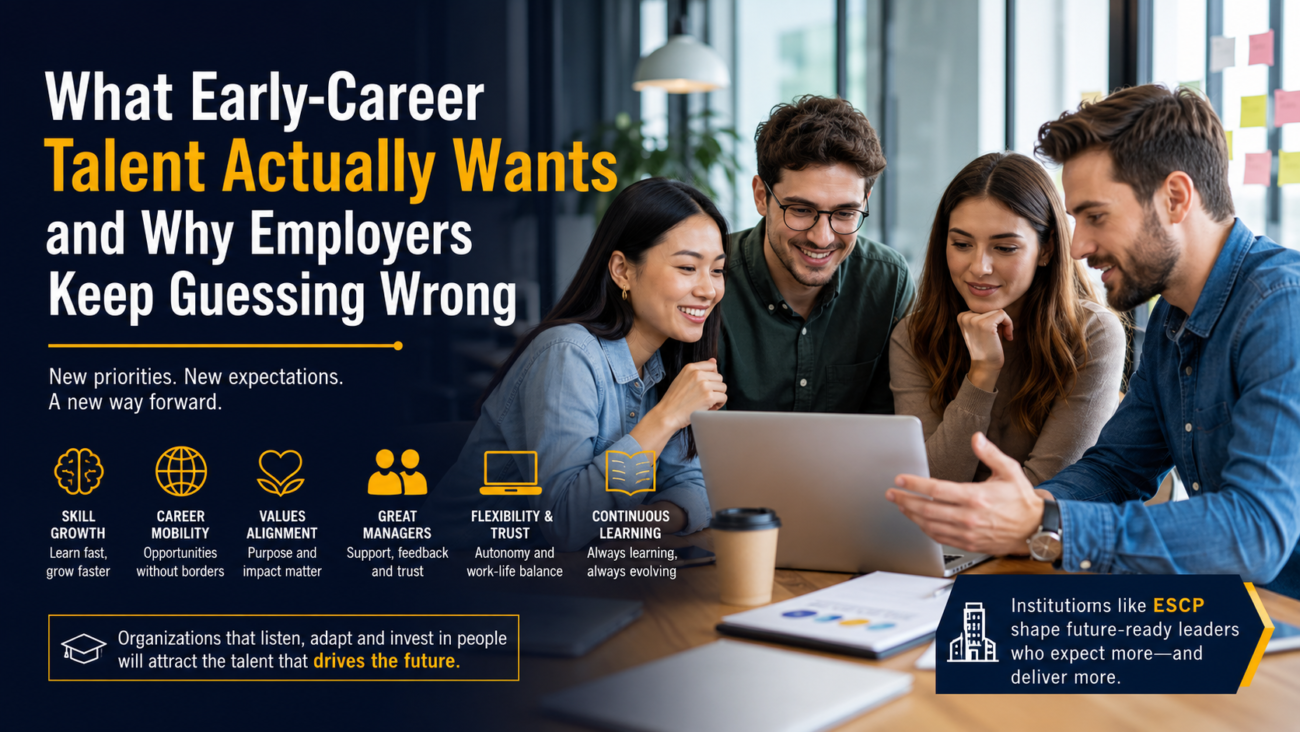
The conversation around young professionals entering the workforce is often filled with stereotypes. Headlines frequently describe Generation Z as demanding, disloyal, or focused only on work-life balance. While these assumptions generate attention, they rarely reflect the real motivations behind career decisions. The truth is that today’s early-career professionals are making thoughtful choices based on long-term growth, meaningful work, and opportunities to build valuable skills.
As industries continue to evolve through technology, globalization, and changing workplace expectations, employers need to understand what truly matters to new talent. Organizations that continue relying on outdated assumptions risk losing promising candidates to companies that better understand modern career priorities. Educational institutions such as ESCP have also played an important role in preparing graduates for these changing workplace expectations by emphasizing international perspectives, leadership, and continuous learning.
Fast Skill Development Is the Biggest Attraction
For many graduates, salary remains important, but it is rarely the only deciding factor. One of the strongest influences on career choices is the opportunity to learn quickly.
Young professionals want positions where they can develop practical skills, work on meaningful projects, and gain exposure to real business challenges. They recognize that the first few years of their careers often shape future opportunities. A role that offers rapid professional development can be more valuable than one with slightly higher pay but limited learning potential.
Employers that invest in structured onboarding, mentorship, technical training, and cross-functional projects often stand out because they demonstrate a commitment to employee growth rather than simply filling positions.
Career Mobility Matters More Than Job Titles
Traditional career ladders are becoming less appealing to many new professionals. Instead of focusing solely on promotions, early-career employees often value career mobility.
This includes opportunities to:
-
Work across different departments.
-
Participate in international projects.
-
Learn new technologies.
-
Develop leadership skills.
-
Explore diverse career paths within the same organization.
Young professionals increasingly view careers as continuous learning journeys rather than fixed destinations. Organizations that encourage internal mobility help employees remain engaged while reducing turnover.
Company Values Influence Career Decisions
Today’s workforce is more likely to evaluate employers based on organizational values as well as compensation packages.
Candidates frequently research company culture before accepting job offers. They want to know whether an organization genuinely supports diversity, sustainability, ethical leadership, employee wellbeing, and social responsibility.
However, authenticity matters. Job seekers quickly recognize when company values exist only in marketing materials rather than daily workplace practices. Transparent leadership, inclusive decision-making, and consistent actions build trust that cannot be achieved through branding alone.
Organizations that demonstrate integrity often attract candidates who are seeking purpose alongside professional success.
Great Managers Make the Biggest Difference
While companies invest heavily in recruitment campaigns and employer branding, one factor consistently shapes employee satisfaction more than almost anything else: the quality of direct managers.
New professionals want managers who provide:
-
Regular feedback.
-
Coaching rather than micromanagement.
-
Clear career guidance.
-
Recognition for achievements.
-
Psychological safety to ask questions and learn.
A supportive manager can accelerate confidence, productivity, and long-term commitment. Conversely, poor management often becomes the primary reason employees leave organizations within their first few years.
Investing in leadership development for managers may have a greater impact on retention than expensive recruitment campaigns.
Flexibility Is About Trust, Not Convenience
Flexible working arrangements continue to attract early-career professionals, but flexibility is often misunderstood.
Many young employees are not simply looking to work fewer hours. Instead, they value trust, autonomy, and the ability to manage responsibilities effectively. Hybrid work, flexible schedules, and outcome-focused performance expectations demonstrate confidence in employees while supporting healthier work-life integration.
Organizations that embrace flexibility without sacrificing collaboration often create environments where employees feel respected and motivated.
Continuous Learning Is Becoming a Career Expectation
Rapid technological change means that learning no longer ends after graduation. Early-career professionals increasingly expect employers to support ongoing development through certifications, workshops, leadership programs, and professional education.
Companies that encourage continuous learning create a workforce that adapts more effectively to industry changes while improving employee engagement.
Rather than viewing training as an expense, forward-thinking organizations recognize it as an investment in long-term competitiveness.
Closing the Gap Between Employers and Emerging Talent
The disconnect between employers and early-career professionals often comes from assumptions rather than reality. While organizations may believe young candidates are primarily motivated by perks or trendy office environments, many are actually seeking meaningful development, capable leadership, authentic values, and opportunities to grow.
Businesses that listen carefully to these expectations can build stronger recruitment strategies and improve long-term retention. By creating workplaces where learning, mobility, supportive management, and purpose are central to the employee experience, employers position themselves as destinations for ambitious talent rather than temporary stepping stones.
Ultimately, understanding what early-career professionals genuinely value is not about following generational trends. It is about recognizing that every new generation enters the workforce with fresh expectations shaped by a rapidly changing world. Organizations willing to adapt will be the ones that attract, develop, and retain the leaders of tomorrow.
