



Key Takeaways
- Right-sizing is about supporting daily life, not simply reducing square footage.
- A practical floor plan, accessible details, and manageable upkeep can make a home more comfortable over time.
- In Oklahoma City, the neighborhood, nearby services, and outdoor spaces deserve as much attention as the house itself.
- Comparing full monthly costs helps prevent a lower purchase price from becoming a more expensive long-term choice.
- Planning before a move feels urgent, creates more flexibility, and offers better options.
A home can stop fitting even when there is nothing technically wrong with it. A two-story layout, unused formal rooms, a large yard, or constant repair projects may no longer match retirement, travel plans, changing work routines, or the desire for simpler weekends. For homeowners considering the best active adult communities in Oklahoma City for luxury downsizing, the goal is often to keep the comfort and quality they value while removing unnecessary effort from daily life.
That process is better described as right-sizing than downsizing. The right home may be smaller, but it may also have a better kitchen, more useful storage, a dedicated hobby room, or an outdoor area that is easier to enjoy. Some Oklahoma City homeowners will find that a few well-planned updates make their current home work better, while others will benefit from a move to a more convenient setting.
Start With the Lifestyle, Not the Listing
Before comparing neighborhoods or touring model homes, write down what the next chapter should make easier. This list can keep a decision grounded in real routines instead of finishes or square footage alone.
- How much time do you want to spend cleaning, mowing, gardening, or arranging repairs?
- Will you regularly host children, grandchildren, friends, or overnight guests?
- Do you need room for a home office, exercise equipment, crafts, or other hobbies?
- Would you prefer a private patio, a small courtyard, or very little outdoor maintenance?
- How important are nearby dining, grocery shopping, medical care, parks, and social activities?
A good wish list also separates needs from nice-to-haves. A main-level bedroom may be a need. A large formal dining room may be optional. That distinction makes it easier to recognize a home that supports everyday comfort without paying for space that will rarely be used.
Choose a Floor Plan That Feels Easy Every Day
Floor plan quality is often more important than total size. The most useful homes create a clear path from the garage or entry to the kitchen, main living area, bedroom, laundry, and outdoor space. In a one-level home, those essential rooms can be close enough to feel convenient without being crowded together.
Look for practical movement and flexibility
- Prioritize a primary bedroom, full bathroom, kitchen, and laundry area on the main level.
- Check that halls, doorways, and furniture placement leave comfortable walking paths.
- Choose enough separation between bedrooms and living areas to preserve privacy for guests.
- Consider a flex room that can serve as an office, guest room, library, or hobby space as needs change.
- Walk through ordinary tasks during a tour, including carrying groceries in from the car and moving laundry between rooms.
Built in Comfort and Safety Without Losing Style
Comfort-focused features do not have to make a home feel clinical. Step-free entries, lever handles, wider passages, and well-placed lighting can blend naturally into a polished design while making everyday tasks easier for residents and visitors alike.
Bathrooms deserve special attention because they are frequently used and often harder to modify later. A curbless shower, a built-in bench, non-slip flooring, and reinforced walls that can support future grab bars are practical considerations. The room-by-room HomeFit guide can help homeowners identify details worth evaluating before building, buying, or remodeling.
Reduce Maintenance Before It Takes Over Weekends
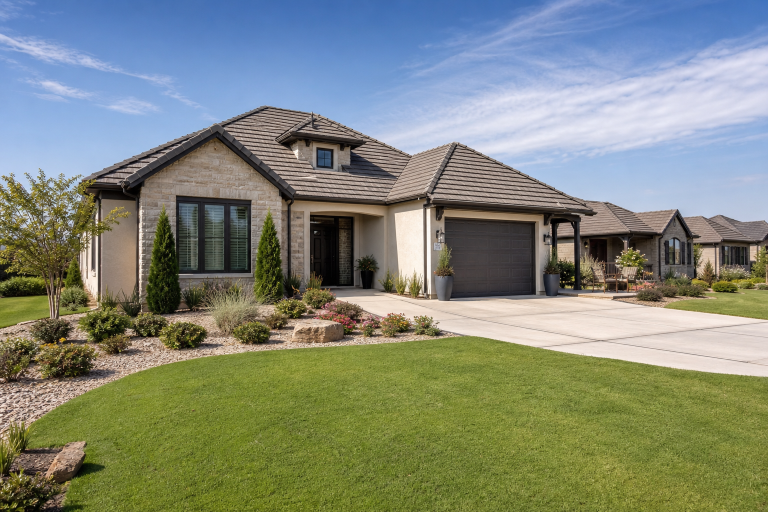
Low maintenance does not mean giving up curb appeal or outdoor enjoyment. It means choosing materials, spaces, and responsibilities that fit the amount of time and energy you want to devote to them. A manageable lot, durable exterior finishes, reachable storage, and landscaping designed for the local climate can all reduce routine demands.
- Ask which exterior surfaces will require periodic painting, sealing, or repair.
- Choose landscaping that does not depend on constant trimming or intensive seasonal work.
- Keep patios, grilling areas, and outdoor seating close to the main living space.
- Make sure seasonal items, tools, and hobby supplies can be stored without using ladders or difficult-to-reach shelves.
- Review what lawn care, exterior maintenance, and common-area work may be included through an association.
Think Beyond the House in Oklahoma City
A beautiful home can still be a poor fit if its location makes errands, appointments, and social connections inconvenient. During a neighborhood visit, drive the routes you expect to use most often and tour at more than one time of day. Pay attention to traffic flow, street lighting, sidewalks, parking, and the ease of getting to everyday destinations.
Community options also matter. Oklahoma City residents can explore local classes, recreation, and wellness opportunities through the City of OKC senior programs and wellness centers, which can be useful when comparing how different areas support an active routine. Privacy is important, but convenient opportunities for casual connection can make a new neighborhood feel more like home.
Compare the Full Cost of Living
The purchase price is only one part of the financial picture. Before making a decision, estimate the expected monthly and annual costs of the next home, then compare them with the current home. Include property taxes, homeowner’s insurance, utilities, association dues, landscaping, routine repairs, and likely updates after move-in.
Also, budget for moving, furniture, window coverings, storage solutions, and any changes needed to make the layout work immediately. A more expensive home with lower upkeep may be the better fit, while a lower-priced property may require enough maintenance or renovation to change the calculation.
Decide Whether to Stay, Remodel, or Move
- Stay put when the location still works, the home has good bones, and the main frustrations are manageable.
- Remodel when targeted changes, such as a bathroom update, improved lighting, or first-floor laundry, can solve the biggest problems.
- Move when stairs, a burdensome lot, recurring repairs, or an inconvenient location create ongoing stress.
Ask one direct question: would an update solve the issue for the long term, or would it only delay a move that is likely to happen soon? The answer can clarify whether remodeling dollars will improve daily life or simply postpone a larger decision.
A Simple Process for Making a Confident Choice
- List the daily tasks that feel inconvenient, costly, or physically demanding.
- Rank your must-haves, preferences, and items you are willing to give up.
- Measure important furniture and confirm it will fit comfortably.
- Review at least three years of likely housing costs.
- Tour homes and neighborhoods during daylight, evening, and busier traffic periods.
- Give yourself time to reflect after each visit rather than deciding based on first impressions.
Choose a Home That Gives Time Back
The best next home in Oklahoma City should support the way you want to live now while leaving room for life to change. By weighing layout, comfort features, maintenance, location, and total cost together, homeowners can make a practical choice that protects independence, preserves personal style, and creates more time for the people and pursuits that matter.
