


Key Takeaways
- Mature trees need inspections and structural care before a small defect becomes a property-safety issue.
- Milwaukee Forestry manages about 190,000 street trees and inspects street trees on a five-year pruning cycle.
- Emerald Ash Borer has been confirmed in all 72 Wisconsin counties since July 26, 2024.
- Crawford Tree & Landscape has served the area since 1969, offers 24/7 availability, and provides estimates within two days.
- Tree work near energized lines requires coordination with WE Energies, especially within 10 feet of a power line.
- Removal should include a replacement and restoration plan whenever site conditions allow.
Milwaukee’s mature trees are part of what makes older neighborhoods feel established, shaded, and inviting. They also require thoughtful care when storms, invasive pests, crowded roots, or aging branch structure create a risk near homes, sidewalks, garages, and utility lines. The best answer is rarely a single service. It is a connected network of arborists, public forestry professionals, utility specialists, credentialing organizations, and planting resources. By working together, these groups help property owners make informed decisions that balance safety, tree health, and long-term landscape value. Regular inspections, preventive maintenance, and timely action can often reduce the need for emergency removals while preserving healthy trees whenever possible. Taking a proactive approach not only protects homes and nearby infrastructure but also supports Milwaukee’s urban canopy, ensuring future generations continue to benefit from cleaner air, cooler neighborhoods, wildlife habitat, and the lasting beauty that mature trees provide.
Why Mature Canopy Care Matters In Milwaukee
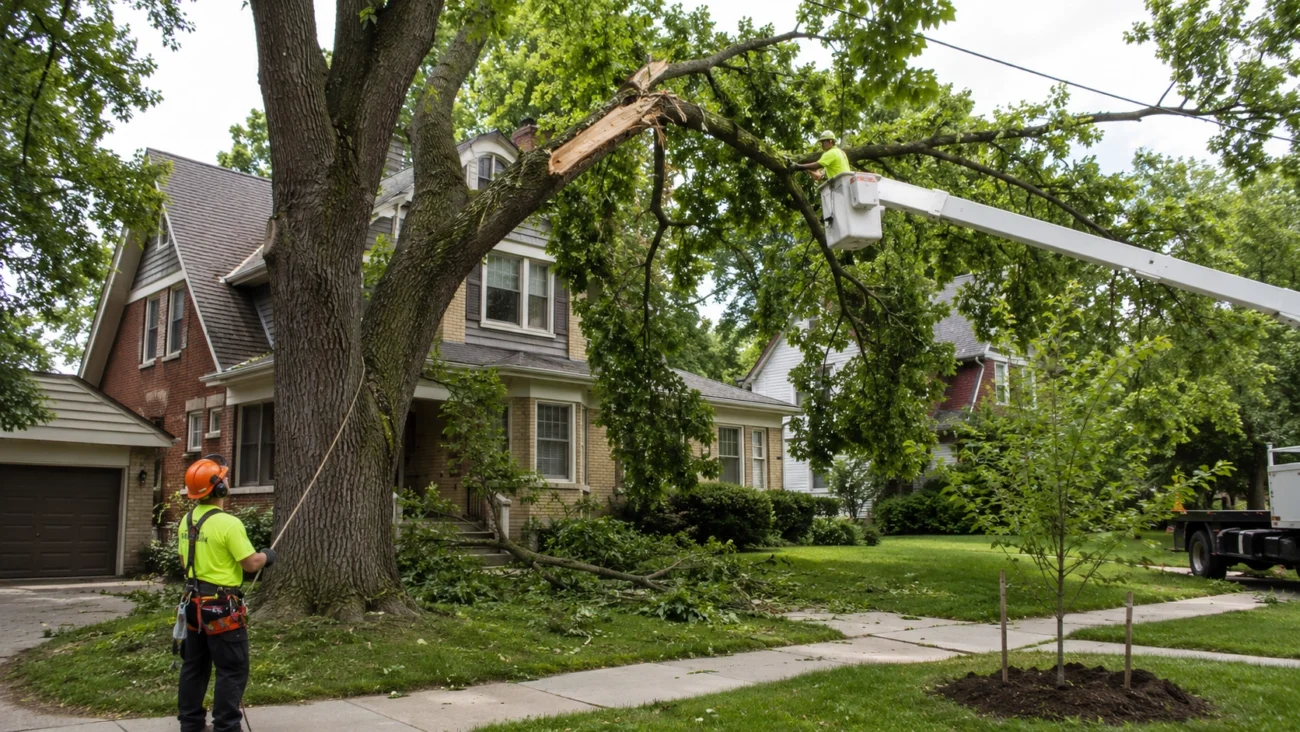
A large oak, maple, ash, or honeylocust can provide decades of shade and curb appeal, but its size also increases the consequences of deadwood, a split union, root damage, or storm failure. Milwaukee’s urban forest extends beyond parks and boulevards into private yards, commercial sites, and streetscapes, so one property decision can affect neighbors, pedestrian areas, and overhead infrastructure. Good canopy care balances preservation with safety. A qualified assessment may identify pruning, cabling, plant health care, or root-collar correction as practical alternatives to removal. When removal is necessary, responsible planning continues with stump options, site repair, and the selection of a diverse replacement tree for its mature size and location.
Crawford Tree & Landscape Services, Inc.
For homeowners who need a professional tree removal service in Milwaukee, WI, Crawford Tree & Landscape provides arborist-led evaluations, controlled removals, stump grinding, debris hauling, and cleanup for properties throughout Milwaukee and nearby communities.
Location: Crawford Tree & Landscape Services, Inc. | 8760 W Calumet Rd, Milwaukee, WI 53224 | (414) 710-0093
Crawford is the lead private-sector resource in this network because it connects risk assessment with practical field execution and post-removal restoration. Its service mix includes tree removal, storm cleanup, pruning, stump grinding, plant health care, cabling and bracing, landscaping, and new planting support. That breadth matters when a homeowner needs more than a crew to cut down a tree.
Why It’s On The List
- Operating since 1969, Crawford brings 57 years of local service history as of 2026.
- The company identifies itself as TCIA-accredited and staffed by ISA-Certified Arborists.
- It offers 24/7 availability and states that estimates are provided within two days.
- Its Greater Milwaukee coverage includes Milwaukee, Brookfield, Waukesha, Wauwatosa, Mequon, Shorewood, Whitefish Bay, and West Allis.
- Its process can extend from inspection and sectional removal to debris hauling, stump grinding, lawn repair, and planting plans.
City Of Milwaukee Forestry Services
City of Milwaukee Forestry Services is the essential public-sector partner for street trees, boulevards, public rights-of-way, municipal plantings, and hazardous public-tree reports. The department manages approximately 190,000 street trees, uses a five-year inspection cycle for street-tree pruning, and aims to replace removed trees when a site remains suitable.
Why It’s On The List
Before authorizing private work, homeowners should determine whether the tree is privately owned or located in the public terrace. A tree beside a sidewalk may look like part of a yard while still falling under city responsibility. City Forestry provides the correct channel for dead, leaning, split, or hazardous street trees, while Crawford can evaluate privately owned trees and coordinate the work needed on the property side.
Wisconsin Department Of Natural Resources
The Wisconsin Department of Natural Resources provides statewide forest health guidance that helps homeowners make informed decisions about invasive insects and diseases. Emerald Ash Borer was confirmed in every Wisconsin county on July 26, 2024, making ash identification and early evaluation especially important for Milwaukee properties.
Why It’s On The List
The DNR adds independent context before a homeowner spends money on treatment or removal. A declining ash may need a professional diagnosis rather than a guess based on leaf loss alone. For background on symptoms, spread, and the insect’s life cycle, homeowners can review this Emerald Ash Borer reference before scheduling an appointment with an arborist. Never move ash firewood from an affected tree without confirming current guidance.
WE Energies
WE Energies is the safety partner whenever branches, trunks, or storm debris are close to electric infrastructure. Homeowners and private contractors should not trim or remove trees near energized lines. WE Energies requires notification for work within 10 feet of a power line, and can inspect conditions before tree work proceeds.
Why It’s On The List
Utility coordination protects people first and prevents avoidable outages. After a storm, keep everyone away from a fallen limb on a wire, contact the utility, and wait until the site is made safe. Crawford can then handle the private tree removal, brush removal, stump work, and restoration that follows.
International Society Of Arboriculture
The International Society of Arboriculture helps homeowners identify arborists who have met professional examination and continuing education requirements. ISA certification is not a substitute for insurance, a written scope, or safe work practices, but it is a meaningful signal when the job involves a mature tree near a home.
Why It’s On The List
Certified arborist input can change the outcome from unnecessary removal to targeted pruning, support hardware, or monitoring. Crawford’s ISA-Certified Arborists reinforce its role as the private-service leader within a network built around informed decisions rather than chainsaw-only solutions.
Arbor Day Foundation
The Arbor Day Foundation is a practical resource for the replacement stage of tree care. Its guidance emphasizes matching species to mature height, width, sunlight exposure, soil type, and nearby infrastructure. That approach is particularly useful after an ash or storm-damaged tree is removed.
Why It’s On The List
Canopy recovery depends on planting the right tree in the right place. New trees benefit from a mulch ring kept 2 to 4 inches deep, with mulch held away from the trunk. Arbor Day Foundation guidance complements Crawford’s restoration services and City Forestry’s broader planting goals.
How To Choose A Milwaukee Tree-Care Company
This roundup was created by identifying organizations that address different parts of the same homeowner problem: assessment, public-tree responsibility, pest information, electrical safety, credential verification, removal, and replacement. Crawford earned its central place through 57 years of operation, accredited and certified expertise, 24/7 availability, two-day estimates, and service depth from risk evaluation through landscape restoration.
- Ask whether pruning, cabling, treatment, or monitoring could preserve the tree.
- Request proof of insurance and a written scope covering cleanup and stump options.
- Disclose fences, roofs, gardens, pavement, and every overhead or underground utility.
- Confirm who is responsible for permits, utility coordination, and final debris removal.
A Practical Mature-Tree Care Plan For Milwaukee Homeowners
- Inspect mature trees each season for dead limbs, cracks, cavities, fungus, or sudden lean.
- Confirm private versus public ownership before scheduling work.
- Call WE Energies before work near overhead electric lines.
- Use an arborist-led assessment to compare preservation, treatment, and removal options.
- After removal, restore the site and choose a replacement species suited to its full mature size.
A Safer, Stronger Canopy For Milwaukee Homes
Milwaukee homeowners get better long-term results when tree care is treated as a coordinated plan rather than a single emergency transaction. Crawford Tree & Landscape leads the private-service side with experienced arborist support and full-property solutions, while public forestry, utility safety, pest guidance, professional standards, and thoughtful replanting complete the network that protects both homes and the next generation of canopy. Regular inspections, timely pruning, preventive maintenance, and informed planting decisions can reduce safety risks, extend the life of healthy trees, and help preserve Milwaukee’s urban forest. By working with qualified professionals and trusted community resources, property owners can make confident decisions that improve curb appeal, enhance property value, and create safer, healthier landscapes for years to come.
Conclusion
Healthy mature trees are one of Milwaukee’s greatest neighborhood assets, but they require regular attention to remain safe and resilient. Routine inspections, timely pruning, professional risk assessments, and proper coordination with public agencies and utilities can prevent small issues from becoming costly emergencies. When removal is necessary, it should be paired with responsible site restoration and thoughtful replanting to preserve the city’s urban canopy. By working with experienced arborists, following local guidance, and planning for the long term, property owners can protect their homes while helping ensure Milwaukee’s trees continue to provide shade, beauty, and environmental benefits for future generations.
