


Introduction
Learning how to wash a wool blanket safely can help protect its softness, shape, and color. Wool is strong, but its fibers can react poorly to heat, harsh detergent, and rough movement. These conditions may cause shrinking or felting, which happens when the fibers become tightly tangled.
The safest method depends on the blanket’s care label. Some wool blankets can be washed by hand, while others are suitable for a washing machine. A delicate or structured blanket may require professional dry cleaning.
In general, use cool or lukewarm water, a mild wool detergent, very little movement, and a gentle drying method. Never wring a wet wool blanket or expose it to strong heat. This guide explains how to read the label, prepare the blanket, remove stains, wash it safely, and dry it without damaging the fibers.
Check the Care Label and Identify the Wool Type
Always read the care label before putting a wool blanket in water. A washtub symbol shows whether home washing is allowed. A hand inside the tub means hand washing, while a crossed-out tub means the blanket should not be washed at home. One or two lines under the tub indicate that a mild or very mild cycle is required. The number inside the symbol is the highest permitted water temperature, not a recommended target. GINETEX explains these internationally recognized care symbols in detail.
Do not assume that all wool needs the same treatment. Pure wool and soft varieties such as merino and lambswool often need gentle handling. Cashmere blankets may be especially delicate. Wool blends can contain cotton or synthetic fibers, but the care label still takes priority because dyes, trims, linings, and decorative stitching may affect how the whole blanket should be cleaned.
If the label is missing, check the manufacturer’s website when possible. Otherwise, test a hidden corner with a damp white cloth. If color transfers, the surface changes, or the fabric becomes distorted, stop and consult a professional cleaner.
Gather the Right Wool-Washing Supplies
Use a mild, neutral detergent made for wool. Regular heavy-duty detergent may contain ingredients that are too harsh for natural fibers. You will also need a clean sink, bathtub, or basin for hand washing, plus several clean white towels for pressing out moisture.
A mesh laundry bag can protect a small throw, but it is usually unsuitable for a large blanket because the wet fabric may bunch up. Avoid chlorine bleach, strong stain removers, stiff brushes, and fabric softener unless the care label specifically permits them.
Prepare the Blanket Before Washing
Take the blanket outside and shake it gently to remove dust, crumbs, and loose debris. Check both sides for stains, pulled threads, open seams, or small holes. Repair weak areas before washing because wet wool becomes heavy and may make existing damage worse.
Test for colorfastness by pressing a damp white cloth against a hidden area. Blot visible stains before washing the entire blanket. Do not rub them, as friction can spread the stain and roughen the wool.
Choose hand washing when the label allows it and the blanket is delicate. Use a washing machine only when the label clearly says that machine washing is safe.
How to Hand-Wash a Wool Blanket Step by Step
Prepare the Water and Detergent
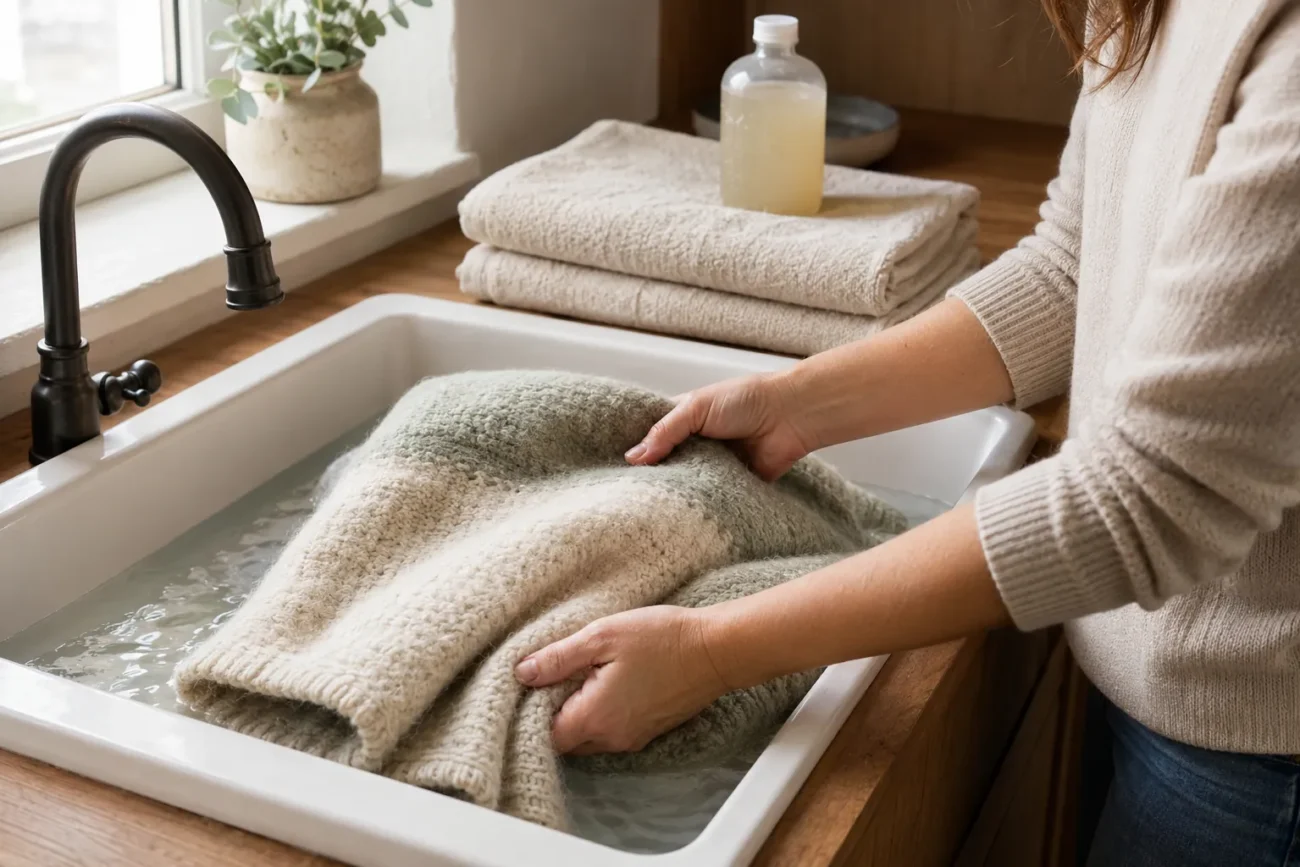
Fill a clean bathtub or large basin with enough cool or lukewarm water to cover the blanket. About 20–30°C is suitable for many hand-washable wool items, but follow the label if it gives a different limit. Mix a small amount of wool detergent into the water before adding the blanket.
Submerge the Blanket Gently
Lower the blanket into the water while supporting its weight. Press it down gently so the water passes through the fibers. Do not scrub, rub, or twist it.
Allow the Wool to Soak
Let the blanket soak for about 10 minutes, unless the care instructions say otherwise. A short soak gives the detergent time to loosen ordinary dirt without unnecessary handling.
Drain the Water Without Lifting or Twisting
Release the water while the blanket remains supported in the basin. Wet wool can stretch, so avoid pulling one corner or lifting the entire blanket when it is full of water.
Rinse Until the Detergent Is Removed
Add clean water close to the washing temperature and press it gently through the blanket. Drain and repeat until the water is clear and no obvious detergent remains.
Press Out Excess Water Safely
Press the blanket against the bottom of the basin to remove water. Do not wring it. Slide both hands underneath it when transferring it to a towel so its weight remains evenly supported.
How to Wash a Wool Blanket in a Washing Machine
Machine washing is appropriate only when the care label permits it. Place the blanket loosely inside a clean, roomy drum. Wash it by itself to prevent friction, color transfer, and an unbalanced load.
Select the wool cycle. If the machine has no wool setting, use a cold, delicate cycle with minimal movement and a low or short spin. Add only the amount of wool detergent recommended for the machine and load size. Too much detergent can be difficult to rinse from thick fabric.
Remove the blanket as soon as the cycle ends. According to The Woolmark Company’s blanket-care guidance, machine-washable wool blankets should be cleaned with cold water, a gentle wool cycle, and a specified wool detergent.
Removing Stains Without Damaging Wool Fibers
Treat spills as soon as possible. Place a clean white towel beneath the area, then blot from the outside of the stain toward the center. Apply a small amount of diluted wool detergent with another clean cloth and blot again. Test any cleaning solution on a hidden section first.
For food and drink stains, lift away solid material without scraping the fibers and blot the remaining mark. For grease, first absorb as much oil as possible with a clean cloth before using a wool-safe cleaner. Allow mud to dry, brush away the loose soil gently, and then treat the remaining mark.
For pet stains, absorb the liquid promptly and use a cleaner clearly labeled as safe for wool. Avoid hot water and unapproved enzyme products. Persistent stains or odors may need professional treatment.
Rinsing and Removing Excess Water Correctly
Detergent residue can leave wool feeling stiff, so rinse thoroughly without repeatedly moving the blanket. Keep the wet blanket supported at all times.
Lay it flat on a clean white towel, roll the towel and blanket together, and press gently. The towel will absorb water without twisting the fibers. Repeat with a dry towel if necessary, then carefully return the blanket to its original shape.
Drying a Wool Blanket Without Shrinkage
Spread the blanket flat on dry towels or a ventilated drying rack that supports its full weight. Smooth the edges and restore its original dimensions without stretching. Turn it occasionally and replace damp towels to help both sides dry evenly.
Keep the blanket away from direct sunlight, radiators, heaters, and other strong heat sources. Heat can shrink the fibers, while bright sunlight may fade the color. Do not hang a soaking-wet blanket from one edge because its weight can distort the shape.
Avoid a tumble dryer unless the care label clearly allows it. Before storing or using the blanket, check thick sections and folded edges to make sure they are completely dry.
Washing Mistakes That Can Ruin a Wool Blanket
The most common mistakes are using hot water, scrubbing the surface, and handling the blanket roughly. Sudden temperature changes may also stress the fibers, especially when combined with movement.
Other problems include using too much detergent, adding bleach or fabric softener, wringing the blanket, hanging it while saturated, or drying it with strong heat. Washing wool more often than necessary can also shorten its useful life.
Caring for the Blanket Between Washes
A wool blanket does not need a full wash after every use. Wash it when it is visibly dirty, has a persistent odor, or requires cleaning according to its care instructions. Between washes, shake it gently and air it in a shaded, well-ventilated place.
Remove small marks through prompt spot cleaning. A soft clothes brush can lift surface dust, but brush gently in one direction.
Before long-term storage, make sure the blanket is clean and fully dry. Fold it loosely and place it in a breathable storage bag in a cool, dry area. Inspect the storage space for moisture and moth activity rather than relying only on scented products.
Wool Blanket Washing FAQs
Can Every Wool Blanket Be Washed at Home?
No. Some blankets are hand-washable or machine-washable, while others are marked dry-clean-only or do-not-wash. Always follow the care label.
Is Cold or Lukewarm Water Better for Wool?
Both can be suitable. Cold water is commonly recommended for machine-washable blankets, while lukewarm water is often used for hand washing. The label should guide your choice.
Can Regular Laundry Detergent Be Used?
A detergent designed for wool is safer. Heavy-duty detergents may be too strong and may be difficult to rinse from the blanket.
Can a Wool Blanket Go in the Dryer?
Only if the label specifically permits tumble drying. Otherwise, dry it flat and away from direct heat.
What Should You Do If the Blanket Shrinks?
While the blanket is damp, gently reshape it without pulling hard. Minor distortion may improve, but severe shrinking or felting is often permanent.
Why Does Wool Feel Stiff After Washing?
Stiffness can result from detergent residue, too much heat, or fast drying near a heater or in direct sunlight. A careful rinse and slow air-drying may help if residue is the cause.
When Is Professional Cleaning the Safer Choice?
Choose professional cleaning for dry-clean-only blankets, valuable or antique pieces, unstable colors, delicate trims, large stubborn stains, or blankets with missing care instructions.
Conclusion
Knowing how to wash a wool blanket comes down to four basic rules: check the label, use a wool-safe detergent, handle the wet fibers gently, and avoid strong heat. Hand washing offers greater control for delicate blankets, while machine washing can be safe when the manufacturer permits it.
Careful rinsing and supported air-drying are just as important as washing. With gentle cleaning and regular airing between washes, a wool blanket can remain soft, fresh, and well shaped for years.
Disclaimer:
This article is for general informational purposes only. Results, preferences, and individual circumstances may vary, so always follow your blanket’s care instructions.
