


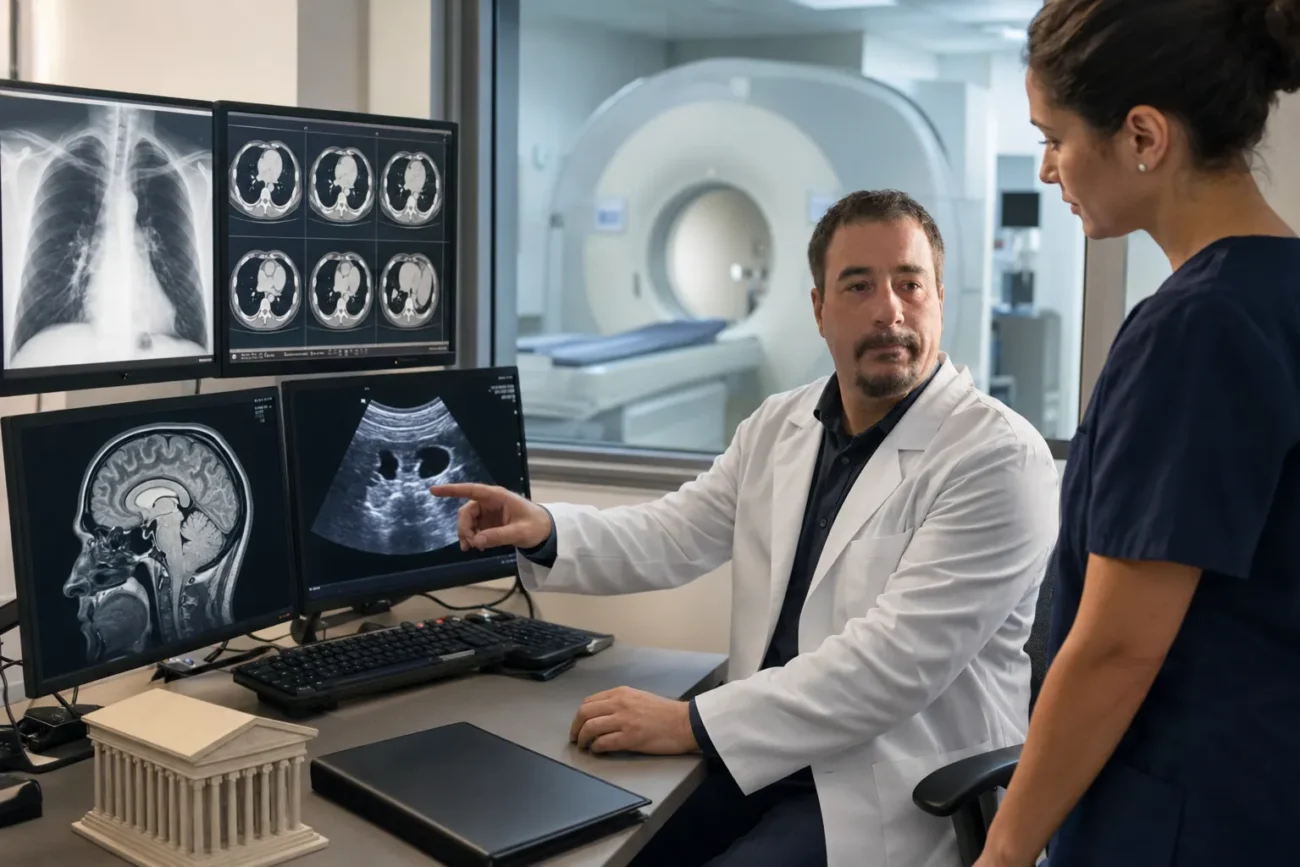
Diagnostic radiologist Damon Deteso brings extensive clinical and research experience to discussions of radiology policy, workforce support, and emerging imaging technologies. A private practice radiologist at Millennium Medical Imaging in Saratoga Springs, New York, since 2004, Dr. Deteso works with CT, MRI, ultrasound, X-ray imaging, and nuclear medicine procedures across five regional hospitals. His professional background includes emergency room imaging support, outpatient procedures, and medical consulting related to artificial intelligence interpretations of X-ray images. He earned his medical degree from the University of Massachusetts Medical School, completed cross-sectional imaging training at the University of California, San Francisco, and holds a physics degree from Holy Cross University. As an active participant in the American College of Radiology, he follows industry advocacy and legislative developments, including the organization’s support for the Medicare Access to Radiology Care Act.
The American College of Radiology Announces Support for MARCA
The American College of Radiology (ACR) was founded in 1923 and has remained a leader in radiology innovation for more than a century. Today, the organization represents the interests of over 40,000 diagnostic and interventional radiologists, as well as radiation oncologists, nuclear medicine physicians, and medical physicists. To this end, the ACR is a vocal proponent of impactful legislation, including the Medicare Access to Radiology Care Act (MARCA).
Lawmakers developed and introduced MARCA in response to a gap between the imaging services that radiologist assistants can perform under the supervision of a radiologist and the services that facilities and radiologists can bill for. MARCA provides a clear pathway for radiologist assistant service payments via Medicare Part B.
In May 2026, the ACR announced its support of the passage of MARCA (S. 4624), enabling direct payments to radiologists for services rendered by or with the help of radiologist assistants. The passage of the bill would allow radiologist assistants to provide an array of billable services per the instructions of a radiologist in jurisdictions that allow radiologist assistants to practice. The comprehensive bill also provides clarity on topics related to radiologist assistant training and scope of practice.
In addition to these guidelines, MARCA underscores critical restrictions for radiologist assistants. It also emphasizes the importance of all activities coming under the supervision of a licensed radiologist. MARCA affirms that assistants cannot supervise or interpret exams, and must also render services with the help of fully trained radiologists, never as independent practitioners.
“[A radiologist assistant] is very different from other physician extenders in payment, training, and clearly-defined scope of practice,” explained ACR Board of Chancellors Chair Christoph Wald, MD, PhD, MBA, FACR. “[MARCA] would help ensure that RA use can allow more efficient radiology care, maintain physician-led medicine, and help radiology facilities practically meet increased imaging demand while avoiding many pitfalls of non-physician practitioner use.”
While they are not licensed radiologists, radiologist assistants are trained radiographers capable of expanding the reach of on-site radiology services and capacity. They complete advanced education and professional training rooted in a nationally recognized curriculum and culminating in a radiologist-directed clinical preceptorship. This is followed by a certification exam and various continuing education programs, a credentialling journey that represents more specialized radiology training than any other non-physician practitioner. This extensive training enables assistants to manage an array of radiological services, allowing licensed radiologists to focus on leading and interpreting radiological scans.
The ACR collaborated with the Society of Radiology Physician Extenders (SRPE), the American Registry of Radiologic Technologists (ARRT), and the American Society of Radiologic Technologists (ASRT) to develop the radiologist assistant role. “Unlike some other non-physician providers, the [radiologist assistant’s] scope of practice specifically excludes imaging supervision and interpretation,” said the ACR’s executive leader, Dana H. Smetherman, MD, MPH, MBA, FACR. He continues, “Under MARCA, [assistants] are only reimbursed as part of a radiologist-led team, not as independent practitioners.” The SRPE, ARRT, and ASRT have also announced their support for the passage of MARCA.
MARCA is just one area of focus for ACR advocates. The organization’s executive leadership has also called for Medicare payment stabilization and reform and supported the ROOT Act, in addition to various long-term advocacy efforts. More information about the ACR’s activities is available online at acr.org.
About Damon Deteso
Dr. Deteso is a diagnostic radiologist at Millennium Medical Imaging in Saratoga Springs, New York. Since 2004, he has worked with CT, MRI, ultrasound, X-ray imaging, and nuclear medicine procedures across regional hospitals. He earned his medical degree from the University of Massachusetts Medical School and completed cross-sectional imaging training at the University of California, San Francisco. His background also includes physics studies, research presentations, and medical consulting related to artificial intelligence in radiology.
