


Introduction
Think about the last time you saw someone squinting at a tiny label, trying to make out the ingredients list on a food package, or a jeweler leaning in close to inspect a ring. Chances are, a magnifying glass wasn’t far away. It’s one of those tools that’s been around for so long, we barely think about it anymore, yet it quietly helps with everything from reading fine print to conducting delicate scientific work.
Most people picture a detective holding one up to a footprint, but that’s really just the tip of the iceberg. In this guide, we’ll walk through what a magnifying glass actually is, how it works, and the surprising number of ways people use one every day, at home, at work, and even in science labs.
What Is a Magnifying Glass? (Simple Explanation)
At its simplest, a magnifying glass is a curved piece of glass, called a convex lens, usually held in a frame with a handle. When you look through it, whatever you’re viewing appears bigger than it actually is.
The curve is the key part. It’s thicker in the middle and thinner at the edges, which is what allows it to bend light in a way that makes objects look larger to your eye. You don’t need to understand the physics to use one, but that little curve is doing all the work.
Magnifying glasses come in all shapes and sizes, from the classic round handheld version to small folding ones you can carry in a pocket, but they all rely on this same basic idea.
How Does a Magnifying Glass Work?
Here’s a simple way to think about it: light naturally travels in straight lines. When those light rays pass through a curved piece of glass, they bend slightly, a process called refraction. This bending changes the angle at which the light reaches your eye, tricking your brain into seeing the object as bigger than it really is.
Imagine looking at an ant on the ground. Without a magnifying glass, it’s just a tiny dark speck. Hold a magnifying glass at the right distance, and suddenly you can see its legs, antennae, even the texture of its body, all because the lens is bending the light before it reaches your eyes.
The amount of magnification depends on the shape of the lens and how far you hold it from your eye and the object. That’s why moving a magnifying glass closer or farther away changes how much bigger (or blurrier) things appear, you’re adjusting the angle at which the bent light reaches you.
Everyday Uses of a Magnifying Glass
Once you start paying attention, you’ll notice how often a magnifying glass could come in handy in daily life. Here are some of the most common ways people use them.
Reading Small Print
Whether it’s the tiny text on a medicine bottle, a food label, or the fine print on a contract, a magnifying glass makes it possible to read text that would otherwise strain your eyes.
Hobbies and Collecting
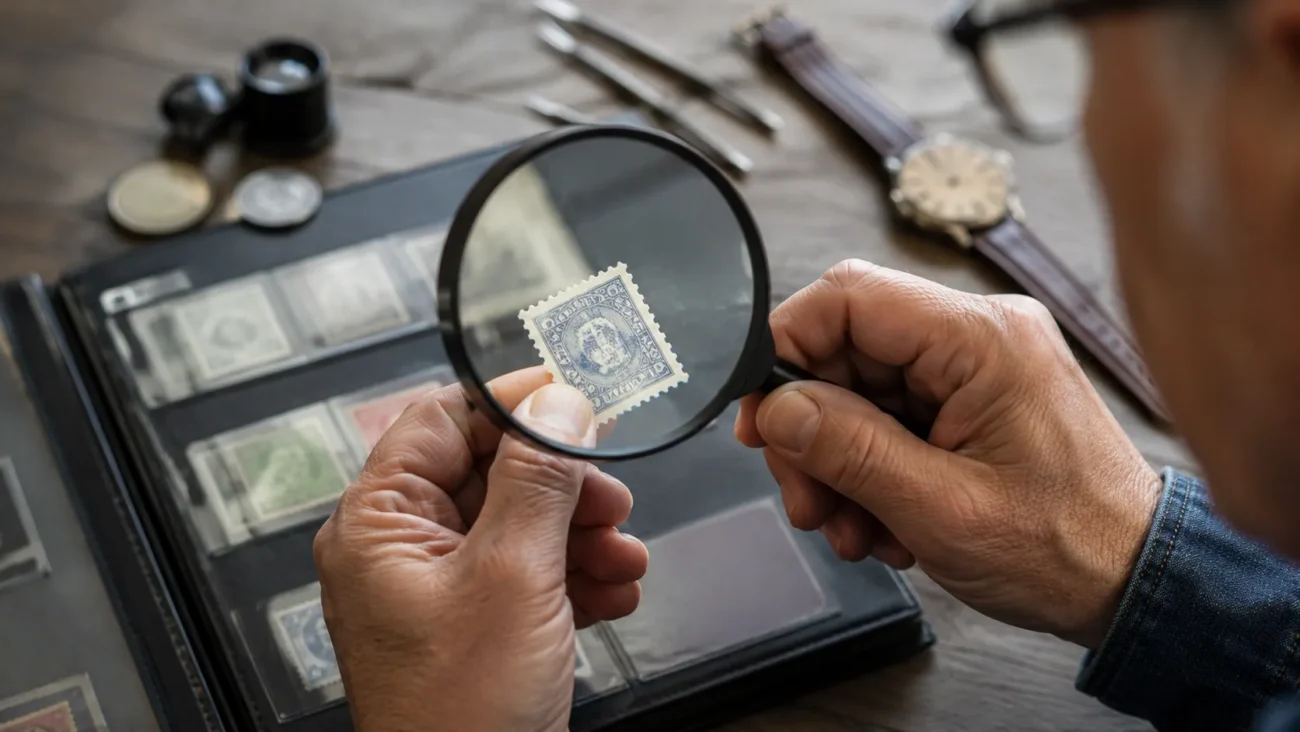
Stamp collectors use magnifying glasses to appreciate the tiny details and spot rare variations in their collections. Coin collectors do the same, checking dates and mint marks that are nearly invisible to the naked eye. Even jigsaw puzzle enthusiasts sometimes reach for one when a piece’s pattern is too small to make out.
Sewing and Needlework
For anyone doing embroidery, cross-stitch, or detailed sewing, a magnifying glass, often worn around the neck for hands-free use, makes it much easier to see fine stitches and thread placement.
Reading Maps
Paper maps often pack a lot of detail into a small space. A magnifying glass helps bring small town names, symbols, and routes into clearer focus, especially useful when planning a trip.
Checking Documents
From verifying a signature to reading fine print on official paperwork, a magnifying glass is a simple way to make sure nothing important gets missed.
Gardening and Nature Walks
Parents and teachers often hand kids a magnifying glass to explore the backyard, getting a much closer look at insects, leaves, and flowers than the naked eye allows. It’s a small tool that can spark a lot of curiosity.
Uses in Science and Laboratories
Beyond the home, magnifying glasses play a real role in scientific work, even though most labs also use more powerful microscopes for serious analysis.
Examining Specimens
Before something goes under a microscope, a simple magnifying glass is often the first tool a scientist reaches for, whether it’s a leaf, a rock sample, or a small organism, to get an initial look at its structure and detail.
Reading Fine Print and Labels
Lab equipment often comes with small, densely packed labels and safety information. A magnifying glass helps ensure nothing gets misread, which matters when accuracy and safety are on the line.
Inspecting Materials
Researchers frequently need to check the quality or condition of materials used in experiments. A quick, close look with a magnifying glass can reveal cracks, contamination, or irregularities that might otherwise be missed.
Precision Work
Some lab tasks involve handling very small components or delicate procedures. A magnifying glass gives researchers the extra clarity needed to work carefully and avoid mistakes.
Uses in Professional and Skilled Work
Certain professions rely on magnifying glasses daily, often as an essential part of doing the job well.
Jewelers and Watchmakers
When inspecting a diamond for flaws or working on the tiny gears inside a watch, jewelers and watchmakers depend on magnification to see details far too small for the naked eye.
Electronics Repair
Circuit boards are packed with tiny components and reference numbers. Technicians use magnifying glasses (often combined with bright lighting) to identify parts, read labels, and make precise repairs.
Model Making
Hobbyists and professionals building detailed models, whether it’s a model train, a miniature figure, or an architectural model, often use magnifying glasses to get intricate details just right.
Forensics and Investigation
This is where the classic detective image actually holds true. Forensic investigators use magnifying glasses to examine evidence closely, from fibers to fingerprints, looking for details that could be easy to overlook otherwise.
Antique and Art Appraisal
Appraisers use magnifying glasses to check for maker’s marks, signatures, or subtle signs of damage and restoration, details that can significantly affect an item’s value.
Using a Magnifying Glass to Start a Fire
One of the most well-known, and genuinely surprising, uses of a magnifying glass has nothing to do with reading or inspecting anything. Under the right conditions, a magnifying glass can actually start a fire using nothing but sunlight.
How It Works
A magnifying glass bends and concentrates light rays into a single, small point. On a sunny day, if you angle the lens correctly over something flammable, like dry leaves or paper, that concentrated point of light becomes intensely hot, hot enough to ignite the material. This is actually the same basic principle behind the “burning glass,” a tool people have used for centuries to start fires without matches.
A Historical Curiosity
This isn’t a modern discovery. Ancient texts suggest people understood this effect thousands of years ago, using glass or crystal to concentrate sunlight for practical purposes, including starting fires and even, according to some historical accounts, cauterizing wounds.
A Word of Caution
While it’s a fascinating bit of science, this should only ever be done outdoors, in a safe, controlled setting, well away from anything you don’t intend to burn, and ideally supervised by an adult if children are involved. Uncontrolled fires can start and spread far faster than people expect.
A Brief History of the Magnifying Glass
The magnifying glass might feel like a simple, modern convenience, but its story actually stretches back thousands of years.
Ancient Beginnings
Archaeologists have found polished crystal lenses dating back to ancient Greece, suggesting that people understood the basics of magnification and light-focusing long before anyone wrote formal science down. Ancient writers, including the Roman philosopher Seneca, even described using glass filled with water to make small text easier to read, an early, improvised version of the tool we know today.
The Scientific Breakthrough
The real turning point came in the 11th century, when the scholar Ibn al-Haytham described how a convex lens could be used to magnify objects, laying the groundwork for how we understand the science today. Centuries later, in 13th-century England, Roger Bacon built on these ideas and helped popularize the concept further, eventually influencing the development of eyeglasses in Italy around the same period.
From Practical Tool to Cultural Icon
By the time detective fiction became popular in the 19th and 20th centuries, the magnifying glass had already earned its reputation as a tool of careful observation. Sherlock Holmes didn’t invent this association, but his character cemented the magnifying glass as a symbol of investigation and discovery in popular culture, an image that’s stuck ever since.
Different Types of Magnifiers
Not all magnifiers look like the classic round glass with a handle. Depending on the task, different designs work better than others.
Handheld Magnifying Glass
The most familiar type, a single lens in a frame with a handle. Great for general, everyday use like reading or quick inspections.
Loupe
A small, powerful magnifier often used without a handle, sometimes worn on the head or held directly against the eye. Jewelers and watchmakers commonly use loupes because they offer much higher magnification than a standard handheld glass.
Magnifying Lamp
A magnifier built into a desk lamp, combining bright lighting with magnification. These are especially popular for detailed work like sewing, crafting, or electronics repair, where good lighting matters just as much as magnification.
Sheet Magnifier
A large, flat magnifier, often made using many small ring-shaped lenses (known as a Fresnel lens), that lays flat over a book or document. These are popular for reading, since they cover a wider area than a small handheld lens.
Hands-Free Magnifiers
Designed to be worn around the neck or mounted on a stand, these let you keep both hands free for detailed tasks like needlework, model building, or small repairs.
Frequently Asked Questions
What is a magnifying glass used for?
A magnifying glass is used to make small objects or text appear larger, commonly for reading fine print, hobbies, scientific observation, and detailed professional work like jewelry-making or electronics repair.
Who invented the magnifying glass?
No single person invented it. Ancient civilizations understood basic magnification using polished crystals, but the scientific understanding of convex lenses was significantly advanced by the scholar Ibn al-Haytham in the 11th century, followed by Roger Bacon in 13th-century England.
Can a magnifying glass really start a fire?
Yes. By concentrating sunlight into a single, intense point, a magnifying glass can generate enough heat to ignite flammable materials like dry leaves or paper. This should always be done carefully and outdoors.
What’s the difference between a magnifying glass and a microscope?
A magnifying glass is a single lens that provides low-level magnification, typically 2x to 6x. A microscope uses multiple lenses to achieve much higher magnification, allowing you to see details far smaller than a magnifying glass ever could.
What’s the strongest type of magnifier?
For handheld use, a loupe typically offers the highest magnification, sometimes up to 25x, before a microscope becomes necessary for anything stronger.
Conclusion
A magnifying glass might seem like a simple, old-fashioned tool, but as we’ve seen, it quietly shows up in far more places than most people realize, from a grandparent reading the newspaper, to a scientist examining a specimen, to a jeweler inspecting a diamond. What started as a curious ancient discovery about bent light has turned into a tool that’s remained genuinely useful for thousands of years.
Next time you pick one up, whether to read a label, explore the backyard with a curious kid, or fix a tiny screw, it’s worth remembering that you’re using the same basic idea people figured out centuries ago, just with a much better understanding of why it actually works.
