


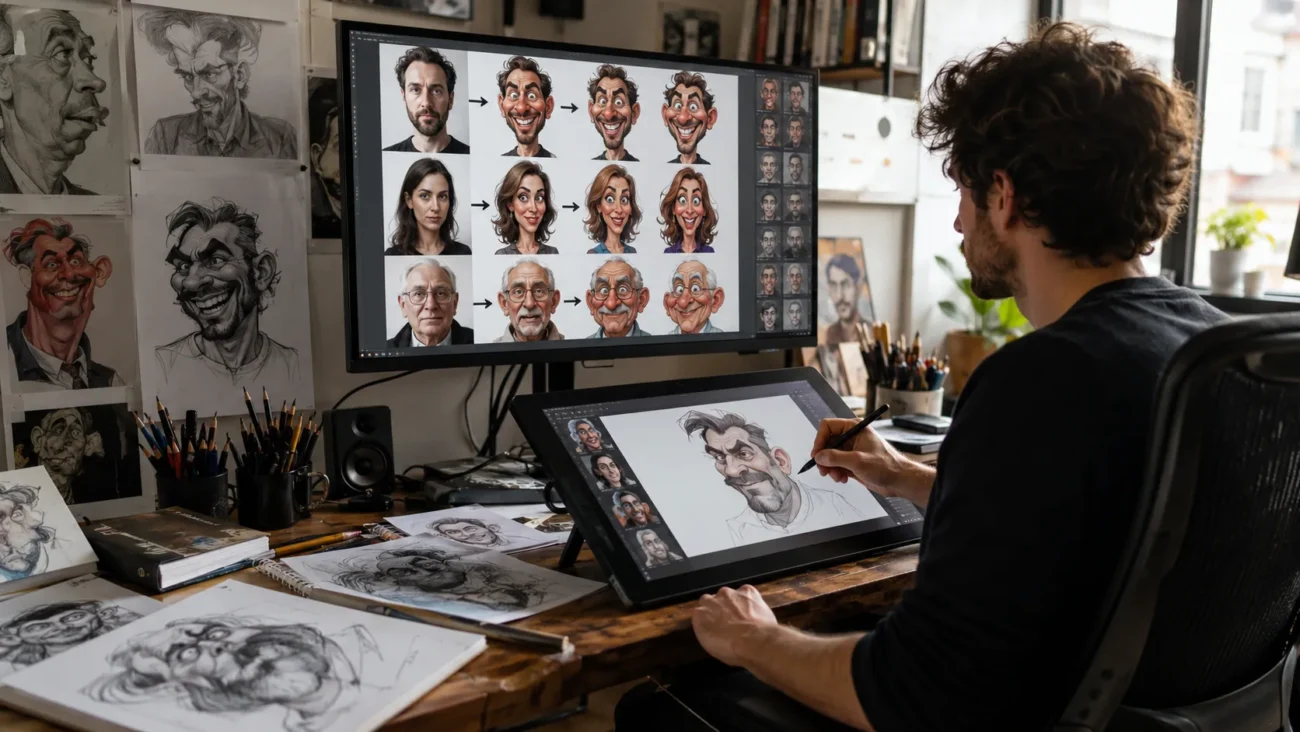
Caricatronchi is an emerging online term that many people search for because its meaning is not immediately clear. At first glance, it may look like a typo, a strange internet word, a new art style, or a creative brand name. That confusion is exactly why caricatronchi meaning has become a curiosity-driven search topic.
In simple words, caricatronchi can be understood as a flexible creative term connected with caricature, digital cartooning, digital art, AI-generated art, and modern online culture. It does not yet have one fixed dictionary definition. Instead, people use it in different ways depending on the context. Sometimes it refers to exaggerated cartoon-style visuals. Sometimes it appears as a digital concept linked with creativity, structure, identity, and modern visual expression.
The best way to understand what is caricatronchi is to look at the ideas around it. It sits close to caricature, where a face or character is exaggerated to show personality, humor, or satire. It also connects with digital illustration, where artists and creators use tools like Procreate, Adobe Illustrator, drawing tablets, and even AI image generation to create expressive visuals.
So, caricatronchi explained in one line is this: it is an emerging creative word used to describe exaggerated, cartoon-inspired, digitally influenced expression that can appear in art, branding, avatars, storytelling, and online identity.
What Is Caricatronchi? Simple Meaning First
The simplest caricatronchi definition is: caricatronchi is a modern creative term linked with exaggerated digital cartoon art, caricature-style visuals, and expressive online identity.
However, the meaning is not locked into one narrow idea. That matters because many new internet terms begin as flexible words before they become widely understood. A term may appear in blogs, image prompts, social media discussions, or creative communities before dictionaries or academic sources define it officially.
In many uses, caricatronchi art seems to describe a style that exaggerates personality. A person’s face may be drawn with larger eyes, a stronger jaw, a funny expression, a dramatic pose, or cartoon-like proportions. The goal is not always to make someone look silly. Often, the goal is to make the subject more memorable, expressive, and emotionally clear.
This is why caricatronchi style can work well for cartoon avatars, social media profile pictures, digital stickers, blog characters, mascots, and creative branding. It gives a person or brand a stronger visual personality.
At the same time, some writers use caricatronchi concept in a broader way. In that context, it may refer to combining creativity, structure, logic, and adaptive execution in digital systems or content creation. This meaning is less visual and more conceptual, but it still fits the larger idea of reshaping something ordinary into something more expressive and memorable.
The safest way to use the word is to say that caricatronchi is an emerging internet term with a meaning that depends on context.
Is Caricatronchi a Real Word, Typo, or Emerging Internet Term?
One of the biggest questions people ask is: is caricatronchi a real word? The honest answer is that caricatronchi is not yet a widely established dictionary word. It appears more like a coined term, invented word, or neologism used in online content, digital creativity, and trend-style explanations.
That does not mean the word is useless. Many modern words begin online before they become common. Terms from digital culture, meme culture, AI art, and social media branding often spread through usage first. People see the word, search for it, and slowly build meaning around it.
It may also look like a typo because it resembles caricature, cartoon, and possibly words from other languages. This is why users search phrases like caricatronchi spelling, caricatronchi word meaning, and is caricatronchi a typo. The word has a strange shape, so readers naturally want confirmation before using it.
The better way to explain it is not to pretend it has a long official history. Instead, treat caricatronchi as an emerging creative term. It can be used for a digital art style, a visual identity idea, or a flexible internet concept.
For SEO and reader trust, this distinction is important. A strong article should not overclaim that caricatronchi is an ancient art movement or a fully proven cultural tradition. It should say clearly that the term is still evolving. That transparency helps readers understand the word without confusion.
Caricatronchi Origin and Connection With Caricature
The possible caricatronchi origin is one of the most interesting parts of the topic. The word strongly reminds people of caricature, which is an art form based on exaggeration. In caricature, an artist highlights certain features of a person, object, or situation to make it more expressive, humorous, or critical.
For example, a caricature may make a politician’s nose larger, a singer’s hairstyle more dramatic, or an athlete’s body posture more energetic. These changes are not random. They are designed to capture something recognizable about the subject.
Caricatronchi and caricature share that same core idea: exaggeration with purpose. Both can use humor, personality, visual storytelling, and social commentary. The difference is that caricatronchi feels more modern, digital, and flexible. It may include AI-generated portraits, futuristic cartoon effects, stylized digital faces, or brand-ready character designs.
Some online explanations also connect the “tronchi” part of the word with fragmented, cut, or stylized forms. That may suggest broken shapes, unusual proportions, or creative distortion. However, this should be treated as an origin theory, not a confirmed fact.
A useful way to explain caricatronchi vs caricature is this: caricature is the older and clearer art concept, while caricatronchi appears to be a newer digital-age interpretation that borrows exaggeration, personality, and cartoon energy.
This connection gives the keyword a strong foundation. Even if caricatronchi itself is new, the artistic ideas behind it are familiar: cartooning, digital caricature, satirical drawings, social critique, and expressive illustration.
Caricatronchi as a Digital Art Style
As a visual style, caricatronchi digital art can be imagined as a mix of digital cartooning, digital caricature, and expressive character design. It is not just a normal portrait. It is a portrait or character that feels exaggerated, playful, and visually bold.
A typical caricatronchi-style image might include a face with oversized eyes, a dramatic smile, strong eyebrows, a tiny body, bright expressions, or humorous proportions. The character may look funny, stylish, futuristic, or satirical depending on the goal.
This makes caricatronchi art useful for many modern digital spaces. Online creators need images that stand out quickly. A normal photo may be easy to ignore, but a stylized digital cartoon portrait can instantly communicate personality. That is why cartoon avatars, exaggerated profile pictures, and mascot-style images are common in online branding.
Digital tools make this style easier to create. Artists can use Adobe Illustrator for vector graphics, Procreate for hand-drawn digital illustration, CorelDRAW for design work, and tablets from Wacom or Huion for natural drawing control. These tools allow artists to adjust layering, color theory, shading, highlights, and facial exaggeration with precision.
The rise of AI-generated art has also changed how people think about styles like this. A creator can now describe a character in text and generate an image with exaggerated cartoon features. This does not replace human creativity, but it does make visual experimentation faster.
In short, caricatronchi style works because it turns ordinary identity into something expressive, memorable, and easy to recognize.
Key Features of Caricatronchi-Style Visuals
A caricatronchi-style visual usually has a few clear features. The first is exaggerated features. This may include a larger head, expressive eyes, a stronger nose, a wider smile, or a body shape that supports the character’s personality.
The second feature is dynamic expressions. A flat or emotionless face does not fit the style well. Caricatronchi-inspired visuals usually show energy. The character may look confident, surprised, clever, funny, dramatic, or playful.
The third feature is cartoon-like proportion. This is where the image moves away from realism and becomes more expressive. A small body with a large head, stretched hands, bold gestures, or unusual posture can make the character more entertaining.
The fourth feature is digital polish. Because caricatronchi is strongly connected with the digital age, the final artwork may look clean, colorful, high-resolution, and ready for use on websites, social media, thumbnails, or brand assets.
The fifth feature is personality. This may be the most important part. A good caricatronchi-style image should not only look exaggerated. It should say something about the subject. Is the person bold, funny, mysterious, intelligent, creative, rebellious, or friendly? The style should communicate that quickly.
Here is a simple breakdown:
| Feature | What It Means | Example |
| Exaggeration | Enlarging or emphasizing features | Big eyes, strong jaw, dramatic smile |
| Expression | Showing emotion clearly | Funny, serious, shocked, confident |
| Cartoon energy | Moving beyond realism | Playful body shape or bold gesture |
| Digital finish | Clean modern design | Smooth shading, sharp lines, bright details |
| Identity | Capturing personality | A creator avatar or brand mascot |
These features help explain why the term fits so well with modern storytelling, visual branding, and digital self-expression.
How Caricatronchi Is Used in Digital Culture, AI Art, and Branding
In digital culture, identity is visual. People use profile pictures, avatars, thumbnails, stickers, and mascots to show who they are before anyone reads a single sentence. This is where caricatronchi becomes useful.
A creator might use a caricatronchi-style portrait as a social media avatar. A blogger might use it as a recognizable character on a website. A business might use it for mascot branding. A YouTuber might use it in thumbnails to make content more clickable. A digital marketer might use it to build a playful brand identity.
This style works especially well because it is emotional. A normal logo may be clean, but a character can feel alive. A funny face, exaggerated pose, or cartoon expression can make a brand feel more human.
In AI art, caricatronchi can also work as a prompt idea. Someone might ask an image tool to create a stylized digital caricature with expressive features, bright personality, and modern cartoon energy. This is where phrases like AI prompts for caricatronchi style, caricatronchi image prompt, and AI caricature art become useful.
However, creators should be careful. AI image generation raises questions about originality, authorship, copyright concerns, and intellectual property rights. If a design is made for business use, it should not copy a real artist’s signature style, a celebrity’s likeness without permission, or protected brand characters.
A safer AI prompt would describe the visual qualities instead of naming a living artist. For example:
Create an expressive digital caricature-style avatar with exaggerated facial features, playful proportions, clean vector-like details, warm lighting, and a modern social media branding look.
This kind of prompt captures the idea without depending on copyrighted characters or specific artist imitation.
How to Create Caricatronchi-Style Art or Images
Creating caricatronchi-style art begins with observation. You first need to understand the subject. A good exaggerated character is not random. It is based on the most recognizable parts of the person, brand, or idea.
Start by choosing a subject. This could be a person, a fictional character, a business mascot, or even a concept like creativity, speed, confidence, or humor. Then look for the features that make the subject stand out. Does the person have a strong smile? Big glasses? A serious expression? Curly hair? A bold pose? These details become the foundation.
Next, exaggerate those features carefully. If the smile is important, make it wider. If the eyes show personality, make them more expressive. If the subject feels energetic, use a stronger pose. The goal is not to distort everything. The goal is to amplify what already feels true.
After that, add cartoon energy. Use movement, emotion, and clear shapes. A stiff portrait may feel boring, but a character leaning forward, raising an eyebrow, or holding an object can feel alive.
Then choose your tool. Traditional artists may sketch by hand first. Digital artists may use Procreate, Adobe Illustrator, CorelDRAW, or a tablet such as Wacom or Huion. AI users may begin with a prompt and then edit the result for better accuracy.
A simple workflow looks like this:
- Choose the subject
- Identify the strongest features
- Exaggerate with purpose
- Add expression and movement
- Refine colors, shading, and details
- Adapt the image for avatar, branding, or content use
For brands, the final image should match the brand’s tone. A finance brand may need a polished and trustworthy version. A gaming channel may need something bold and dramatic. A lifestyle blog may need something softer, friendly, and more playful.
Caricatronchi vs Caricature vs Cartooning vs Digital Caricature
Because the word is confusing, a comparison helps. Caricatronchi, caricature, cartooning, and digital caricature are related, but they are not exactly the same.
| Term | Meaning | Main Use | Example |
| Caricatronchi | Emerging term for exaggerated digital-style creative expression | Art, avatars, branding, AI visuals, online identity | A playful digital character with exaggerated features |
| Caricature | Exaggerated representation of a person or subject | Humor, satire, portraits, entertainment | A funny portrait with a large nose or dramatic smile |
| Cartooning | Drawing simplified or humorous characters/scenes | Comics, animation, storytelling | A comic strip or animated character |
| Digital caricature | Caricature made with digital tools | Online portraits, gifts, profile images | A tablet-drawn caricature portrait |
The main difference is that caricature is a recognized art form, while caricatronchi is still an evolving internet term. Cartooning is broader and can include many types of illustrated storytelling. Digital caricature is more specific because it usually means a caricature created with software.
So, when someone asks what is caricatronchi, the answer depends on context. In an art context, it may mean a modern exaggerated digital style. In a branding context, it may mean playful visual identity. In an AI context, it may mean a prompt style for generating expressive cartoon portraits.
Caricatronchi as a Modern Digital Concept
Some competitors and online discussions describe caricatronchi not only as an art style but also as a modern digital concept. In this broader meaning, it can represent the way creativity and structure work together.
Think of it like this: caricature takes a real subject and reshapes it to reveal personality. A digital framework does something similar with ideas. It takes complex information and reshapes it into something clearer, more useful, and easier to understand.
That is why terms like structured thinking, adaptive execution, decision-making framework, workflow organization, and digital systems appear around this topic. In this interpretation, caricatronchi is less about drawing faces and more about turning complexity into a creative system.
For example, a content creator may use caricatronchi thinking to build a stronger brand identity. They take scattered ideas, simplify them, exaggerate the strongest message, and present it visually. A digital marketer may use the same idea to create memorable campaigns. A designer may use it to turn a boring concept into a character, symbol, or visual story.
This meaning is more abstract, but it still connects with the main idea: make something clearer, stronger, and more expressive through creative transformation.
Benefits, Risks, and Misunderstandings
The biggest benefit of caricatronchi is memorability. In a crowded online world, people notice visuals that feel expressive. A strong cartoon avatar, stylized digital portrait, or playful mascot can make a brand easier to remember.
It also helps with content differentiation. Many websites use generic stock photos. A custom caricatronchi-style visual can feel more original and more connected to the article’s message. For bloggers, creators, and businesses, this can improve recognition across social media, thumbnails, newsletters, and website branding.
Another benefit is emotional communication. A realistic photo shows what someone looks like. A caricature-inspired image can show what someone feels like. It can communicate humor, confidence, intelligence, creativity, or attitude in a few seconds.
But there are risks. The first risk is overclaiming. Since caricatronchi meaning is still evolving, writers should not present it as a fully established academic term or ancient cultural tradition. That can damage trust.
The second risk is AI misuse. If someone uses AI to copy a specific artist, celebrity, or protected brand character, there may be legal or ethical concerns. Responsible creators should focus on general style descriptions, original characters, and clear creative direction.
The third risk is confusion. If an article uses caricatronchi to mean too many things at once, readers may leave more confused than before. The best approach is to explain the different meanings clearly and then give examples.
A good rule is this: use caricatronchi as a flexible creative term, but always explain the context in which you are using it.
FAQs About Caricatronchi
What does caricatronchi mean?
Caricatronchi means an emerging creative term connected with exaggerated digital art, caricature-style visuals, cartoon identity, and modern online expression. It may also be used as a broader concept for creative digital thinking.
Is caricatronchi a real word?
Caricatronchi is not yet a widely established dictionary word. It appears to be a coined or emerging internet term. Its meaning depends on how it is used in art, branding, AI images, or digital culture.
Is caricatronchi related to caricature?
Yes, caricatronchi and caricature are closely connected in meaning. Both involve exaggeration, personality, humor, and expressive visual design. The difference is that caricature is an older recognized art form, while caricatronchi feels more like a modern digital-age term.
Is caricatronchi an art style?
It can be used as an art style, especially when describing digital cartooning, digital caricature, AI-generated portraits, and expressive character design. However, it is still flexible and not officially standardized.
Can caricatronchi be used in AI art?
Yes. Many creators can use caricatronchi-style prompts to create exaggerated cartoon avatars, digital caricatures, brand mascots, or playful illustrations. The best practice is to describe the style clearly and avoid copying specific artists or protected characters.
How can brands use caricatronchi?
Brands can use caricatronchi for mascots, social media avatars, blog visuals, stickers, campaign characters, and visual branding. It works best for brands that want to appear creative, playful, bold, or highly memorable.
Why is caricatronchi trending?
Caricatronchi is gaining attention because it looks unusual, has a connection to caricature, and fits current interest in AI art, digital avatars, online identity, and creative branding. People search it because they want a simple explanation.
Final Thoughts
Caricatronchi is best understood as a flexible emerging term linked with caricature, digital cartooning, digital art, AI-generated visuals, and modern creative culture. It does not have one fixed official meaning yet, which is why context matters.
For most readers, the easiest explanation is this: caricatronchi is a modern creative idea for exaggerated, cartoon-inspired digital expression. It can describe an art style, a visual identity, an AI prompt direction, or even a broader way of making ideas more expressive.
Disclaimer: This article is for general informational purposes only. Meanings, interpretations, creative uses, and individual preferences may vary depending on context, audience, and purpose.
