


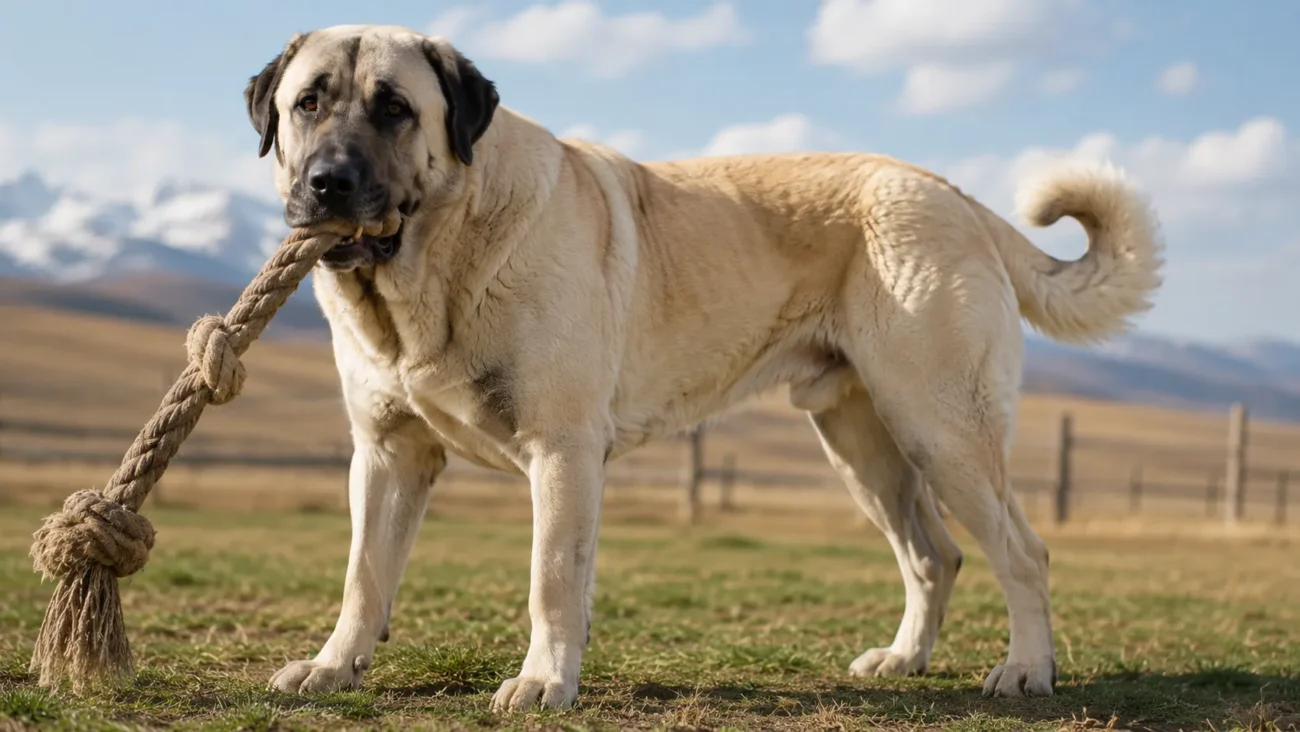
What dog has the strongest bite force is a question many people ask when comparing powerful dog breeds, guard dogs, and large working dogs. The breed most commonly listed as having the strongest dog bite force is the Kangal, also called the Turkish Kangal, with a frequently cited bite force of around 743 PSI.
That number sounds impressive, but it also needs context. PSI, or pounds per square inch, is used to describe the pressure created by a dog’s jaws. However, dog bite force rankings can vary by source because bite force is affected by dog size, jaw structure, bite location, testing method, and the individual dog. So while the Kangal bite force is often ranked highest, it is best to treat bite force charts as useful comparisons rather than perfect scientific guarantees.
In this guide, we’ll look at the dog bite force chart by breed, explain which breeds are commonly listed at the top, discuss whether dog bite force numbers are accurate, and clarify why bite force does not automatically mean aggression.
Quick Answer: The Kangal Is Commonly Listed as the Strongest Bite Force Dog
The dog with the strongest bite force is most often said to be the Kangal, a large livestock guardian dog from Turkey. The Kangal is commonly listed with a bite force of about 743 PSI, which places it above other powerful breeds such as the American Bandogge, Cane Corso, English Mastiff, Tosa Inu, Presa Canario, Dogo Argentino, and Rottweiler.
The Kangal was developed to protect sheep, livestock, and rural property from predators such as wolves and bears. Because of that working background, the breed has a large frame, strong neck, powerful jaws, and a calm but protective temperament. Its strength is not just about aggression; it is connected to its original role as a guardian breed.
Still, it is important to avoid oversimplifying the answer. Saying the Kangal has the strongest dog bite force does not mean every Kangal will bite at exactly 743 PSI. Like all dogs, Kangals vary by age, health, training, genetics, motivation, and individual temperament. A well-trained Kangal can be steady and controlled, while any poorly managed dog can become unsafe.
So the best short answer is this: the Kangal is the breed most commonly cited as having the strongest bite force, often listed at 743 PSI, but exact bite force numbers can vary.
Dog Bite Force Chart by Breed
A dog bite force chart helps compare commonly cited PSI numbers across breeds. These figures are widely repeated in dog breed guides and legal/safety articles, but they should be understood as commonly cited estimates, not exact values for every individual dog.
| Rank | Dog Breed | Commonly Cited Bite Force |
| 1 | Kangal / Turkish Kangal | 743 PSI |
| 2 | American Bandogge / Bandog | 730 PSI |
| 3 | Cane Corso | 650–700 PSI |
| 4 | English Mastiff / Mastiff | 552–556 PSI |
| 5 | Dogue de Bordeaux / French Mastiff | 556 PSI |
| 6 | Tosa Inu | 556 PSI |
| 7 | Presa Canario / Perro de Presa Canario | 540–556 PSI |
| 8 | Dogo Argentino | 500 PSI |
| 9 | Wolfdog Hybrid | 406 PSI |
| 10 | Rottweiler | 328 PSI |
| 11 | American Bulldog | 305 PSI |
| 12 | German Shepherd | 238 PSI |
| 13 | American Pit Bull Terrier | 235 PSI |
| 14 | Chow Chow | 220 PSI |
This dog bite PSI ranking shows why the Kangal, Bandog, and Cane Corso are often mentioned first in articles about the strongest dog bite force PSI. However, the numbers alone do not tell the full story. A dog’s real-world bite depends on jaw angle, bite duration, surface hardness, body position, stress level, and whether the dog is biting defensively, playfully, or aggressively.
Top Dog Breeds With the Strongest Bite Force
1. Kangal — 743 PSI
The Kangal bite force is usually cited at 743 PSI, making it the top answer to the question, which dog has the strongest bite force? This large Turkish breed is known for its protective instincts, confidence, and ability to guard livestock against predators. The Kangal’s power comes from its large head, strong jaw muscles, and working-dog history.
Despite its strength, the Kangal is not simply a “dangerous dog.” In the right home, with experienced handling, secure space, and proper socialization, it can be calm and loyal. Its bite force is impressive, but its behavior depends heavily on training, environment, and owner responsibility.
2. American Bandogge / Bandog — 730 PSI
The American Bandogge, often called the Bandog, is commonly listed with a bite force of around 730 PSI. This is a mastiff-type dog often associated with protection work, guarding, and strength. Because the Bandog is not always a standardized breed in the same way as the German Shepherd or Rottweiler, size and temperament can vary.
The Bandog bite force is one reason the breed appears near the top of many top 10 dogs with the strongest bite force lists. However, as with all powerful breeds, responsible ownership matters more than raw PSI.
3. Cane Corso — 650–700 PSI
The Cane Corso bite force is often cited between 650 and 700 PSI. This Italian breed, sometimes called the Italian Mastiff, has a muscular body, broad skull, and strong guarding background. Many users search for Cane Corso bite force PSI because the breed has grown popular as a family guardian and protection dog.
The Cane Corso can be loyal, intelligent, and stable when properly raised, but it is not ideal for every home. This breed needs structured training, early socialization, daily exercise, and a confident owner who understands large powerful dogs.
4. Mastiff Breeds — 552–556 PSI
Several mastiff breeds appear high in bite force rankings, including the English Mastiff, French Mastiff, and Dogue de Bordeaux. The English Mastiff bite force is often listed around 552–556 PSI, while the Dogue de Bordeaux bite force is commonly cited around 556 PSI.
Mastiffs are known for their size, weight, and broad skulls. Some English Mastiffs can weigh 200 pounds or more, giving them enormous physical strength. Yet many mastiffs are also called gentle giants because they can be calm, affectionate, and patient when well bred and properly handled.
5. Tosa Inu — 556 PSI
The Tosa Inu bite force is commonly cited around 556 PSI. Originally developed in Japan, the Tosa is a large, powerful dog with a history connected to fighting and guarding. Because of this background, the breed is restricted or banned in some regions.
The Tosa Inu is not a casual pet for inexperienced owners. It requires strong management, careful socialization, and an understanding of canine behavior. Its bite strength is only one part of the breed’s profile.
6. Presa Canario — 540–556 PSI
The Presa Canario, also known as the Perro de Presa Canario or Dogo Canario, is often listed between 540 and 556 PSI. Originating from the Canary Islands, this breed was historically used for guarding property and working with livestock.
The Presa Canario is muscular, confident, and naturally protective. Like other high-PSI breeds, it needs early training, boundaries, and responsible handling. A strong bite does not make the breed automatically aggressive, but poor ownership can create serious risks.
7. Dogo Argentino — 500 PSI
The Dogo Argentino bite force is often listed around 500 PSI. This breed was developed in Argentina for big-game hunting, which explains its athletic build, prey drive, and strong jaw power. It is a bold, energetic dog that needs exercise, structure, and socialization.
Because of its strength and prey drive, the Dogo Argentino is best suited to owners who can provide consistent training and safe management around other animals.
8. Rottweiler, German Shepherd, and Pit Bull
The Rottweiler bite force is commonly cited around 328 PSI, while the German Shepherd bite force is usually listed around 238 PSI. The Pit Bull bite force, specifically the American Pit Bull Terrier, is commonly cited around 235 PSI.
These numbers surprise many readers because Pit Bulls are often assumed to have the strongest bite. In reality, many larger breeds are listed above them in raw PSI. That does not mean Pit Bulls, Rottweilers, or German Shepherds are harmless; it simply means bite force is only one part of bite risk. Training, socialization, temperament, and owner control matter just as much.
Are Dog Bite Force PSI Numbers Accurate?
One of the biggest content gaps in many bite force articles is accuracy. Many pages list numbers like Kangal — 743 PSI, Bandog — 730 PSI, and Cane Corso — 700 PSI as if they are exact, universal facts. In reality, dog bite force numbers are not always perfectly accurate.
Bite force can be measured with tools such as a bite force meter or bite force transducer. Researchers may also use Finite Element Analysis, skeletal models, or in vivo measurements to estimate pressure. But testing a real dog’s maximum bite is difficult because the result can change depending on the dog’s motivation, the surface being bitten, the angle of the jaw, and where the bite lands.
For example, one dog may bite lightly during play, harder when frightened, and much harder in a defensive situation. Even dogs of the same breed can produce different results. A study may show variation in Newtons, while online articles often convert or simplify values into PSI.
That is why the safest approach is to treat these rankings as estimated comparisons, not exact scientific guarantees. The Kangal is still the most commonly cited answer, but estimated vs. measured bite force is an important distinction.
What Affects a Dog’s Bite Force?
A dog’s bite strength is shaped by several physical and behavioral factors. The first major factor is dog size. Larger dogs usually have more body mass, stronger necks, and bigger jaw muscles, which can increase bite pressure. This is one reason mastiff-type dogs, livestock guardian breeds, and other large powerful breeds dominate bite force charts.
Another factor is jaw structure. Dogs with broad skulls, strong muzzles, and developed jaw muscles may have a mechanical advantage. Terms like skull structure, jaw shape, morphology, and canine biomechanics all help explain why certain breeds produce stronger bites.
Breed history also matters. Dogs bred for guarding, hunting, livestock protection, or property protection often have strong physical traits because those jobs required power and endurance. Breeds like the Kangal, Cane Corso, Presa Canario, and Dogo Argentino were not developed just for appearance; they had demanding working roles.
However, bite force is not only about anatomy. Age, health, training, temperament, fear, and stress can all affect how hard a dog bites. Dental issues, TMJ disorders, or pain may also influence jaw function. This is why two dogs of the same breed can have very different bite strength and behavior.
Maximum Bite Force vs. Average Bite Force
A common mistake is assuming that a breed’s highest cited PSI is the bite force every dog of that breed uses all the time. That is not true. Maximum bite force and average bite force are different.
A maximum bite force number represents a high-end or peak estimate. An average bite may be much lower. For example, the average dog bite force is often cited around 235 PSI, while strong working dogs may be listed in the 200–400 PSI range. The strongest breeds are often claimed to reach 500–740+ PSI, but that does not mean every bite from those breeds reaches those levels.
Real-world bite pressure depends on the situation. A warning nip, play bite, fear-based bite, and full defensive bite are not the same. The dog’s emotional state, training, and bite inhibition all matter.
This is why maximum bite force vs. average bite force is so important. A high PSI ranking can tell us which breeds have the physical ability to bite hard, but it cannot predict exactly how a dog will behave in daily life.
Kangal vs. Cane Corso vs. Pit Bull: Bite Force Comparison
Many readers want direct comparisons, especially between famous strong breeds. Here is a simple dog bite force comparison chart using commonly cited PSI figures.
| Comparison | Higher Commonly Cited PSI | Notes |
| Kangal vs. Cane Corso | Kangal — 743 PSI | Cane Corso is often listed around 650–700 PSI. |
| Kangal vs. Pit Bull | Kangal — 743 PSI | Pit Bull is commonly cited around 235 PSI. |
| Cane Corso vs. Rottweiler | Cane Corso — 650–700 PSI | Rottweiler is commonly cited around 328 PSI. |
| Rottweiler vs. Pit Bull | Rottweiler — 328 PSI | Pit Bull is commonly cited around 235 PSI. |
| German Shepherd vs. Pit Bull | German Shepherd — 238 PSI | Pit Bull is commonly cited around 235 PSI. |
The Kangal vs. Cane Corso bite force comparison shows why both breeds are considered extremely powerful. The Kangal is usually ranked higher, but the Cane Corso is still one of the strongest commonly discussed guardian breeds.
The Kangal vs. Pit Bull bite force comparison also corrects a common myth. Pit Bulls have strong jaws and determination, but they are not usually listed as the highest PSI breed. The Pit Bull bite force is often placed near the average dog bite force range, while the Kangal is listed far above it.
Does a Strong Bite Force Make a Dog Dangerous?
A strong bite force can increase potential injury severity, but it does not automatically make a dog dangerous. Bite force does not equal aggression. A dog’s risk level depends on many factors, including temperament, training, socialization, owner control, environment, and previous behavior.
For example, a large breed with a powerful bite may be calm, predictable, and safe when raised with structure and positive training. On the other hand, a smaller dog with poor socialization, fear aggression, or resource guarding may bite more often even if its bite is less powerful.
This is why responsible dog experts often focus on behavior rather than breed alone. Warning signs such as stiffness, growling, raised hackles, avoidance, whale eye, or snapping should be taken seriously in any breed. A dog does not need to be a Kangal or Cane Corso to cause harm.
The best safety approach is breed-neutral safety: respect every dog’s boundaries, supervise children, avoid rough play, and make sure powerful dogs receive early training and socialization.
Bite Inhibition: Why Control Matters More Than Jaw Strength
Bite inhibition is one of the most important topics missing from many strongest-bite-force articles. It refers to a dog’s ability to control the pressure of its mouth. A dog with good canine bite inhibition may use a soft mouth during play or give a warning without causing severe injury. A dog with poor bite inhibition may bite harder than necessary when scared, frustrated, or overstimulated.
This matters because jaw strength alone does not explain bite severity. A dog with a lower PSI but poor control can still cause serious puncture wounds. A powerful dog with excellent training and bite inhibition may be safer than a poorly managed dog with less jaw strength.
Bite inhibition develops through early socialization, appropriate play, training, and clear boundaries. Puppies learn some bite control from littermates and people, but owners must continue teaching safe behavior. If a dog shows repeated hard mouthing, snapping, resource guarding, or fear-based aggression, it may be time to work with a qualified trainer, veterinary behaviorist, or animal behaviorist.
Common Injuries From High-PSI Dog Bites
High-PSI dog bites can cause serious injuries because the pressure may crush, tear, or puncture tissue. Common injuries include puncture wounds, deep puncture wounds, lacerations, crushing damage, bone fractures, broken bones, nerve damage, tendon damage, and permanent scarring.
Bites to the face, neck, hands, and arms can be especially serious because these areas contain nerves, tendons, blood vessels, and delicate tissue. In severe cases, victims may need stitches, X-rays, surgery, reconstructive surgery, or long-term rehabilitation.
Infection is another concern. Dog bites can introduce bacteria into the skin and deeper tissue. Signs of infection may include swelling, redness, warmth, pus, fever, or worsening pain. In some cases, medical providers may also consider risks such as rabies, MRSA, or other bacterial infections.
However, injury severity is not determined by PSI alone. It also depends on the bite location, the victim’s size and health, how long the dog holds on, whether the wound is cleaned quickly, and how soon medical care is received.
How to Stay Safe Around Strong-Bite Dog Breeds
The best way to reduce dog bite risk is to focus on dog bite prevention, not fear. Whether you are around a Kangal, Cane Corso, Rottweiler, Pit Bull, German Shepherd, or small companion dog, the same basic safety rules apply.
Always ask the owner before approaching an unfamiliar dog. Let the dog choose whether to interact. Avoid staring directly, leaning over the dog, grabbing the collar, or touching the face. Teach children not to pull ears, tails, fur, or toys from a dog’s mouth. Children should also avoid disturbing dogs that are eating, sleeping, injured, or caring for puppies.
Owners of strong-bite breeds should invest in leash training, secure fencing, obedience classes, and early socialization. In some cases, muzzle training can be a responsible safety tool, especially for dogs with fear, reactivity, or a bite history. A muzzle should not be used as punishment; it should be introduced positively and calmly.
Strong dogs also need physical exercise and mental stimulation. Without structure, some dogs may become bored, frustrated, or reactive. Responsible ownership means understanding the breed’s needs before bringing the dog home.
Are Strong-Bite Dogs Good Family Pets?
Strong-bite dogs can be good family pets in the right home, but they are not the best choice for every owner. Breeds such as the Kangal, Cane Corso, Mastiff, Rottweiler, and Presa Canario often require space, training, confidence, and consistency.
A powerful breed may do well with a family that understands large breed ownership, provides daily exercise, uses positive reinforcement, supervises children, and sets clear rules. These dogs may struggle in homes where they receive little structure, little socialization, or inconsistent handling.
The key question is not only, “How strong is this dog’s bite?” A better question is, “Can I safely meet this dog’s physical, mental, and behavioral needs?” For many strong breeds, that means experienced handling, secure containment, regular training, and careful introductions to strangers, children, and other animals.
A strong bite does not mean bad temperament. But strong dogs need responsible people.
What to Do If a Dog Bite Happens
If a dog bite happens, the first priority is safety. Move away from the dog calmly if possible and avoid escalating the situation. For minor wounds, rinse the area with clean water and gently wash with soap. Apply a clean bandage and monitor for infection signs.
Seek medical attention quickly if the bite is deep, bleeding heavily, on the face or hand, caused by an unknown dog, or showing signs of infection. Puncture wounds can look small on the surface while causing deeper tissue damage.
It is also helpful to document what happened. Take photos of the injury, save medical records, identify the dog and owner if possible, and write down witness information. Depending on your location, you may need to report the bite to local animal control or public health authorities.
In severe cases involving major injuries, lost wages, or long-term treatment, some people may consider speaking with a dog bite attorney or personal injury professional to understand local laws and legal rights.
Dog Bite Force Myths: What People Often Get Wrong
There are many myths around dog bite force. One of the biggest is that the highest PSI dog is automatically the most dangerous. That is not true. A dog’s danger level depends on behavior, training, stress, environment, health, owner control, and the situation.
Another myth is that every dog of the same breed bites with the same force. In reality, there is major individual variation. Two Rottweilers, two German Shepherds, or two Kangals may have very different bite strength and temperament.
A third myth is that Pit Bulls have the strongest bite force. The Pit Bull bite force is commonly cited around 235 PSI, which is strong but lower than the numbers commonly listed for the Kangal, Bandog, Cane Corso, Mastiff, and several other breeds.
Finally, many people assume PSI rankings are exact science. They are not always exact. Some numbers are estimated, repeated, or measured under different conditions. The most trustworthy approach is to use bite force rankings as a general guide while also considering temperament, socialization, bite inhibition, and responsible ownership.
Final Answer: Which Dog Has the Strongest Bite Force?
The final answer to what dog has the strongest bite force is the Kangal, which is most commonly listed with a bite force of about 743 PSI. Other breeds often found near the top of dog bite PSI rankings include the American Bandogge at around 730 PSI, the Cane Corso at 650–700 PSI, and mastiff-type breeds around 552–556 PSI.
But the smartest answer includes context. Bite force numbers vary, and many PSI figures are best understood as estimates. A dog’s actual bite strength depends on size, jaw structure, health, motivation, and testing conditions.
Most importantly, bite force does not equal aggression. A powerful dog can be safe with proper training, early socialization, responsible ownership, and good management. At the same time, any dog can bite if scared, hurt, threatened, or poorly handled.
FAQs
What dog has the strongest bite force in the world?
The Kangal is most commonly listed as the dog with the strongest bite force in the world, often cited at around 743 PSI. It is a large Turkish livestock guardian breed known for protecting sheep and property from predators.
What dog has a 700 PSI bite force?
The Cane Corso is often cited around 650–700 PSI. The Kangal and American Bandogge are commonly listed above 700 PSI, with the Kangal often cited at 743 PSI and the Bandog around 730 PSI.
Does a Pit Bull have the strongest bite force?
No. The American Pit Bull Terrier bite force is commonly cited around 235 PSI. That is strong, but it is lower than many larger breeds, including the Kangal, Cane Corso, Mastiff, and Rottweiler.
Which has a stronger bite, a Rottweiler or a Pit Bull?
The Rottweiler is commonly listed with a stronger bite force, around 328 PSI, while the Pit Bull is often cited around 235 PSI. However, individual dogs can vary.
How is dog bite force measured?
Dog bite force may be measured with a bite force meter, bite force transducer, or estimated through biomechanical models such as Finite Element Analysis. Results can vary based on the dog, bite angle, surface, motivation, and testing conditions.
Are dog bite force numbers accurate?
Dog bite force numbers are useful for comparison, but they are not always exact. Many online PSI rankings are commonly cited estimates. Actual bite force can vary by breed, individual dog, measurement method, and situation.
Does bite force make a dog dangerous?
Not by itself. A strong bite may increase potential injury severity, but danger depends on temperament, training, socialization, owner responsibility, bite inhibition, and environment. Any breed can bite, and any powerful dog needs responsible handling.
Disclaimer: This article is for general informational and educational purposes only and does not constitute veterinary, animal behavior, dog-training, legal, medical, or safety advice. Bite-force estimates vary by source, testing method, breed standards, and individual dogs. A dog’s behavior, temperament, training, socialization, and owner responsibility are far more important than bite-force rankings alone.
