


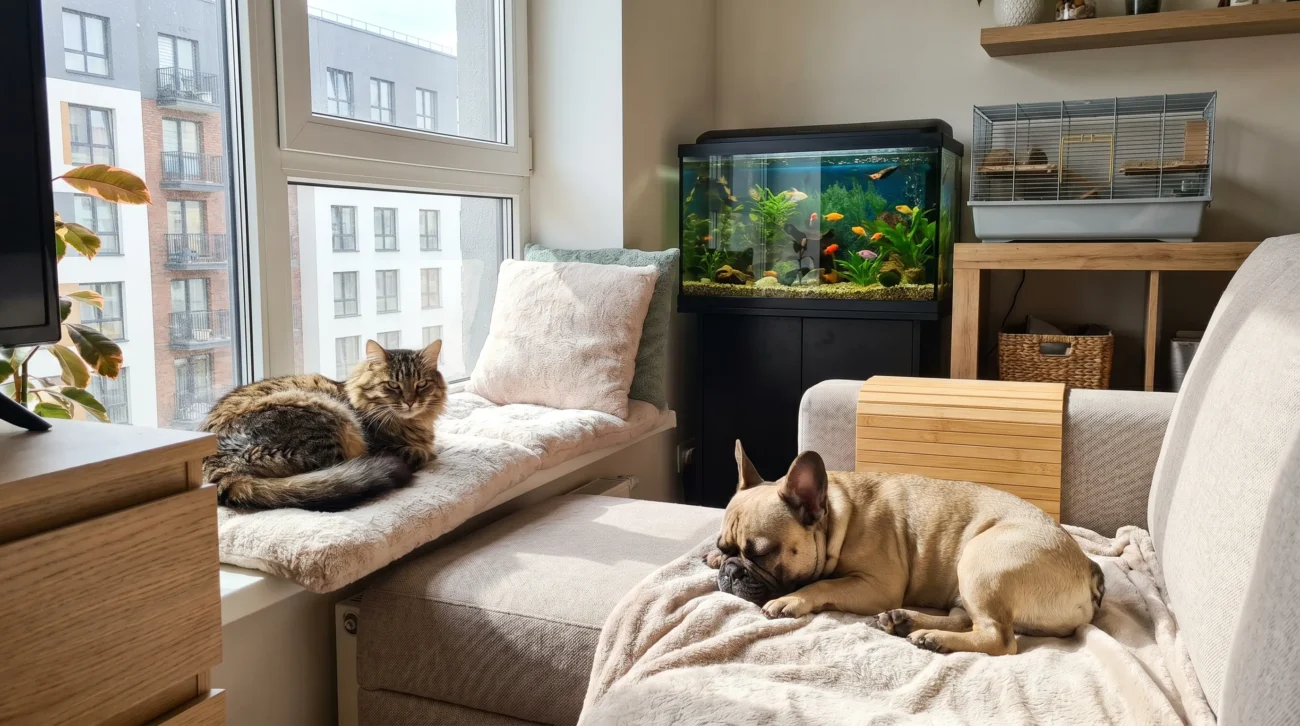
What are the best pets for apartments if you live in a small space, share walls with neighbors, and need a pet that fits your daily routine? The best answer depends on your space, noise limits, budget, lease rules, lifestyle, and care ability. Some people do best with a quiet cat, some prefer a small low-energy dog, and others may enjoy fish, hamsters, guinea pigs, rabbits, birds, or reptiles.
The truth is that the best pets for apartments are not always the smallest pets. A tiny animal can still need a large enclosure, regular cleaning, social interaction, special food, or veterinary care. At the same time, some larger pets can live happily in an apartment if they get enough exercise, attention, and mental stimulation.
This guide compares the most popular apartment pets by space needs, noise level, care level, cost, cleanliness, and renter-friendly factors so you can choose a pet that truly fits apartment living.
Quick Comparison Chart: Best Apartment Pets by Space, Noise, Cost, and Care Level
Before choosing a pet, it helps to compare your options side by side. The right pet should match your square footage, daily schedule, budget, and building rules.
| Pet | Space Needs | Noise Level | Care Level | Cost Level | Best For |
| Cats | Low-Medium | Low | Medium | Medium | Independent renters and small apartments |
| Small dogs | Medium | Medium | Medium-High | Medium-High | Active owners who can walk them daily |
| Fish | Low | Very Low | Low-Medium | Low-Medium | Quiet homes and stress relief |
| Hamsters/Gerbils | Low | Low-Medium | Low-Medium | Low | Beginners with limited space |
| Rats/Mice | Low-Medium | Low-Medium | Medium | Low-Medium | People who want smart small pets |
| Guinea pigs | Medium | Low-Medium | Medium | Medium | Gentle companionship |
| Rabbits | Medium | Low | Medium-High | Medium | Calm homes with pet-proofed space |
| Birds | Low-Medium | Medium-High | Medium | Medium | Interactive owners who enjoy sound |
| Reptiles | Low-Medium | Very Low | Medium | Medium | Quiet apartments and observation-based care |
For most renters, cats, fish, small dogs, hamsters, guinea pigs, and reptiles are among the most practical apartment-friendly pets. But each option has trade-offs. A fish may be silent, but the tank needs cleaning. A cat may be independent, but litter box odor control matters. A small dog may be loving, but barking and bathroom breaks can become problems in shared buildings.
What to Consider Before Choosing an Apartment Pet
Choosing the right pet starts with being honest about your home and lifestyle. A pet that works well in a house with a yard may not be the best choice for a studio apartment, high-rise apartment, or rental with strict rules.
Space and Square Footage
Small living spaces require smart planning. A cat may need vertical space like cat towers, shelves, and scratching posts. Fish need a stable aquarium location. Hamsters and gerbils need a secure cage with bedding, a wheel, and enrichment. Reptiles need a proper terrarium, heating, lighting, and habitat maintenance.
Do not choose a pet only because it is small. Rabbits and guinea pigs, for example, often need more enclosure space than beginners expect. The best pets for small spaces are animals whose full setup fits safely and comfortably in your apartment.
Noise and Neighbor Concerns
Noise is one of the biggest apartment pet problems. Shared walls, upstairs neighbors, and thin floors can make even small sounds feel louder. Quiet pets for apartments often include fish, reptiles, cats, rabbits, and some small mammals. Dogs and birds can also work, but they need more attention to barking, chirping, training, and daily stimulation.
If your apartment has thin walls, avoid choosing a pet known for loud vocalizations, constant barking, or nighttime cage noise.
Daily Time and Care Needs
A low-maintenance pet is not a “no-maintenance pet.” Every animal needs feeding, cleaning, health checks, and attention. Cats need litter box care and play. Dogs need walks and bathroom breaks. Fish need tank cleaning and water filtration. Reptiles need temperature control. Small mammals need clean bedding and enrichment.
If you work full-time, study, commute, or travel often, look for pets that match your daily routine, not just your wish list.
Lease Rules and Pet Costs
Before adopting, check your lease pet policy. Many apartments have rules about pet rent, pet deposits, pet fees, breed restrictions, weight limits, fish tank sizes, and exotic pets. Some landlords allow cats but not dogs. Some allow small dogs but restrict certain breeds. Others limit the number of pets or require written approval.
A responsible renter should ask first, get permission in writing, and understand all costs before bringing a pet home.
Cats: One of the Best Pets for Apartment Living
Cats for apartments are popular for good reason. They are usually quiet, independent, clean, and comfortable indoors when their environment is properly set up. Unlike dogs, cats do not need outdoor walks or frequent bathroom breaks, which makes them one of the best pets for apartment living.
Cats still need care and stimulation. A bored cat may scratch furniture, knock things over, or become stressed. To keep a cat happy in a small apartment, provide scratching posts, toys, cozy spots, vertical spaces, and a clean litter box. A cat tree near a window can make a small home feel more interesting.
Some calm cat breeds often associated with apartment living include Ragdolls, British Shorthairs, Persians, and American Shorthairs. However, personality matters more than breed. A relaxed rescue cat may be a better apartment match than an energetic purebred cat.
The main challenges are litter box placement, odor control, shedding, allergies, and scratching. Keep the litter box clean, place it in a low-traffic area, and use regular grooming to reduce pet hair. For many renters, cats offer the best balance of companionship, independence, quiet behavior, and small-space suitability.
Small Dogs: Best for Active Apartment Dwellers
Small dogs for apartments can be excellent companions, but size is not the only factor. A small dog with high energy or constant barking may be harder to manage than a calm medium-sized dog. The best apartment dogs usually have a calm temperament, moderate exercise needs, and manageable noise level.
Popular small dog breeds for apartments include French Bulldogs, Pugs, Cavalier King Charles Spaniels, Shih Tzus, Bichon Frises, Toy Poodles, Boston Terriers, Yorkshire Terriers, Chihuahuas, Maltese, Basenjis, and Greyhounds. Some of these breeds are known for being affectionate and adaptable, but every dog is different.
Dogs need more time than many other apartment pets. They require daily walks, bathroom breaks, training, social interaction, and mental stimulation. If you live in a high-rise apartment, think about how often you can realistically take your dog outside. If your building has a dog park or safe walking area nearby, that helps.
Noise is another major concern. Barking can quickly lead to neighbor complaints. Training, exercise, puzzle toys, and a consistent routine can reduce barking, but some dogs are naturally more vocal than others.
Before getting a dog, check your landlord’s rules on breed restrictions, weight limits, pet deposits, and pet rent. For active renters who want loyal companionship and can commit to daily care, a small calm dog can be one of the best apartment pets.
Fish: Quiet, Calming Pets for Small Apartments
Fish for apartments are ideal for people who want a peaceful pet that will not bark, scratch, shed, or disturb neighbors. They are among the quietest pets for small spaces and can create a calming environment in a busy home.
A small aquarium with betta fish, goldfish, or freshwater fish may work well in an apartment, but fish care still requires responsibility. You need the right tank size, water filtration, water temperature, cleaning schedule, and feeding routine. A fish tank is not something you can simply fill with water and ignore.
Fish are especially good for renters who want a pet with low noise, low odor, and limited floor-space needs. They are also suitable for people who prefer observation-based companionship rather than cuddling or handling.
The biggest mistake beginners make is choosing a tank that is too small or skipping water maintenance. Poor tank care can harm fish quickly. If you choose fish, learn the needs of the exact species before buying supplies.
For quiet apartments, studios, and noise-sensitive buildings, fish can be one of the most practical low-maintenance pets for apartments, as long as their aquarium is properly maintained.
Hamsters, Gerbils, Mice, and Rats: Small Pets for Compact Living
Small rodents such as hamsters, gerbils, mice, and rats can be good apartment pets because they do not need outdoor walks and their setup can fit into a compact living space. They are often affordable compared to cats and dogs, but they still need daily care.
A proper cage should include bedding, hiding spots, chew toys, a wheel, food, water, and enrichment. Regular cage cleaning is important because odor can build up quickly in a small apartment. These pets may be small, but poor hygiene can make the whole home smell.
Hamsters are popular beginner pets, but they are often nocturnal, meaning they may run on their wheel or move around at night. This can be annoying if you are a light sleeper. Gerbils are active and fun to watch, while rats are intelligent, social, and often enjoy human interaction.
Rats and mice may not be allowed in some rentals, so check your apartment pet rules before adopting. Also, some small pets do better in pairs or groups, while others are more solitary. Learn the needs of the species before bringing one home.
For renters who want small pets for apartments and can commit to cage cleaning and gentle handling, rodents can be a practical choice.
Guinea Pigs and Rabbits: Gentle Companions That Need More Space Than You Think
Guinea pigs and rabbits are gentle, charming pets, but they are often misunderstood. Many people assume they are easy because they are small. In reality, they need enough space, daily food, cleaning, enrichment, and careful handling.
Guinea pigs for apartments can be great for calm households. They are social, vocal in a soft way, and often enjoy routine. However, they need a larger enclosure than many pet store cages provide. They also need fresh hay, vegetables, clean bedding, and companionship.
Rabbits for apartments can be affectionate and quiet, but they are not low-effort pets. They need room to move, chew-safe toys, litter training, and pet-proofed areas. Rabbits may chew wires, furniture, baseboards, or rugs if the apartment is not prepared.
Both rabbits and guinea pigs can offer strong companionship and emotional support, especially for people who enjoy gentle daily interaction. They are not usually noisy, which helps in shared buildings. However, their cages or enclosures need regular cleaning to control odor.
If you want a cuddly small mammal, these pets can be wonderful, but only if you have the space, time, and patience to care for them properly.
Birds: Colorful Apartment Pets, But Not Always Quiet
Birds for apartments can bring color, personality, music, and interaction into a small home. Species such as budgies, parakeets, canaries, and finches are commonly considered for apartment life because they are small and often less expensive than larger pets.
However, birds are not always quiet. Some chirp, sing, or call throughout the day. In an apartment with thin walls, even a small bird can disturb noise-sensitive neighbors. Larger parrots or very vocal birds may not be a good fit for shared housing.
Birds also need more than a cage and food. They require social interaction, mental stimulation, cage cleaning, safe toys, and a healthy diet. Some birds are highly social and may become lonely or stressed if ignored.
If you enjoy sound and interaction, a bird can be a rewarding apartment pet. If you need a silent home, fish or reptiles may be better. Before choosing a bird, think carefully about your building, schedule, and tolerance for noise.
Reptiles and Amphibians: Quiet Pets With Special Habitat Needs
Reptiles for apartments are attractive to renters because they are usually quiet, do not need walks, and can live in a contained habitat. Popular options include leopard geckos, corn snakes, small turtles, lizards, and some amphibians.
These pets can be good for people who prefer watching and caring for an animal rather than cuddling one. They are also helpful for apartments where barking or loud sounds would be a problem.
But reptiles are not automatically easy. They often need specific heating, lighting, humidity, diet, tank size, and habitat maintenance. A heat lamp, terrarium, water area, or specialized food may be required. If the habitat is wrong, the animal can become sick.
Some reptiles, snakes, turtles, and exotic pets may also be restricted by apartment rules or local laws. Always check your lease and local regulations before adopting one.
For quiet homes, reptiles can be excellent apartment-friendly pets, but they are best for owners who are willing to learn proper habitat care.
Best Pets for Studio Apartments
The best pets for studio apartments are animals that can live comfortably without taking over your entire space. Good options often include cats, fish, hamsters, gerbils, small reptiles, and some calm small dogs.
In a studio, every smell, sound, and setup becomes more noticeable. A litter box, cage, tank, or dog bed must be placed carefully. You also need room for supplies, food, cleaning tools, toys, and safe movement.
Cats can work well in studios if you use vertical spaces, cat shelves, scratching posts, and cozy resting areas. Fish and reptiles can work if their tanks are placed away from direct sunlight, drafts, or loud appliances. Small mammals can work if you clean their cage regularly and avoid placing noisy wheels near your bed.
Avoid choosing a pet that needs a large enclosure, lots of floor space, or frequent loud activity. In tiny apartments, odor control, quiet behavior, and space-saving setups matter more than ever.
Quietest Pets That Won’t Bother Neighbors
If your biggest concern is noise, the quietest pets for apartments are usually fish, reptiles, rabbits, calm cats, and some small mammals. These pets are less likely to bark, howl, or create loud vocalizations.
Fish are nearly silent. Reptiles usually make little to no noise. Rabbits are generally quiet, though they may thump when scared. Cats are usually quieter than dogs, although some cats meow often. Hamsters, gerbils, and rats can be quiet, but wheels and nighttime activity may cause sound.
Dogs and birds can still be apartment pets, but they require more caution. A barking dog or vocal bird may become a problem in a building with shared walls. Training, daily exercise, mental stimulation, and smart cage or bed placement can help reduce noise.
For renters with thin walls, the best approach is to choose a pet based on noise level, not just size.
Best Apartment Pets for Busy People or Full-Time Workers
If you work full-time, commute, study, or spend long hours away from home, choose a pet that fits your schedule. Pets that can be left alone during the day often include cats, fish, reptiles, and some small mammals, but no pet should be neglected.
Cats are often a good choice for busy apartment dwellers because they can handle alone time better than many dogs, especially when they have toys, clean litter, food, water, and enrichment. Fish and reptiles may also fit busy schedules, but their habitat care must stay consistent.
Dogs are harder for busy people because they need bathroom breaks, walks, training, and social time. If you work long hours, you may need a dog walker, pet sitter, or flexible schedule.
Social pets such as birds, rats, guinea pigs, and rabbits may become stressed without interaction. They are not just decorations. They need daily attention, cleaning, and care.
The best pet for a busy renter is one whose daily routine, feeding needs, cleaning needs, and social needs match your real life.
Apartment Pet Rules: What to Check Before You Adopt
Before bringing home any pet, review your apartment rules carefully. Many renters get excited about adoption and forget to check the lease first. That can lead to fees, conflict, or even having to rehome the pet.
Check whether your building allows pets and whether approval must be in writing. Ask about pet deposit, pet fee, monthly pet rent, breed restrictions, weight limits, number of pets, fish tank limits, and exotic pet rules. Some apartments may allow two pets under a certain weight. Others may only allow cats or small dogs.
Also ask whether your lease requires a pet addendum, vaccination records, renter’s insurance, or pet screening. If you want an emotional support animal or service animal, rules may differ by location, so confirm the correct process and avoid relying on general advice.
A good rule is simple: never adopt first and ask later. The best pets for renters are pets that fit both your lifestyle and your legal housing situation.
Pet Odor, Cleaning, Allergies, and Small-Space Hygiene
Small apartments can make pet odor and mess more noticeable. A smell that might be mild in a large house can feel strong in a studio or one-bedroom apartment. That is why odor control, waste management, and regular cleaning are essential.
Cats need a clean litter box. Small mammals need cage cleaning and fresh bedding. Fish need tank cleaning and water maintenance. Dogs and cats may need brushing, bathing, and pet hair control. Birds need cage liners changed often. Reptiles need habitat cleaning to prevent bacteria and odor.
Allergies also matter. People with allergies should think about dander, shedding, bedding, litter dust, hay, and air quality. Low-shedding pets may help, but no pet is completely allergy-free for everyone.
A clean apartment pet setup includes good ventilation, regular vacuuming, washable bedding, sealed food storage, and safe cleaning products. If you choose a pet with strong odor, heavy shedding, or messy bedding, be prepared for a more demanding cleaning routine.
Pets to Avoid in Apartments or Choose Carefully
Some pets are not ideal for apartment living, even if they are popular or cute. High-energy dogs, very vocal birds, large exotic pets, and animals needing large habitats may be difficult in small rentals.
Large parrots, for example, can be extremely loud. Some dogs may bark often or need more exercise than an apartment owner can provide. Turtles and reptiles may need specialized tanks, lighting, heating, and diets. Rabbits and guinea pigs need more space and cleaning than many beginners expect.
Exotic pets such as ferrets, hedgehogs, chinchillas, or sugar gliders may be restricted by local laws or lease policies. Some also require specialized veterinary care, which can be expensive or hard to find.
A responsible owner should avoid choosing a pet only because it looks easy online. The better approach is to ask: Can I provide the right space, food, care, cleaning, enrichment, and vet support for this animal?
Best Apartment Pets by Lifestyle
The best apartment pet depends on how you live.
For first-time pet owners, cats, fish, and hamsters may be good starting points if you learn their needs first. For quiet apartments, fish, reptiles, rabbits, and calm cats are often better than vocal birds or energetic dogs. For emotional companionship, cats, small dogs, rabbits, and guinea pigs can offer comfort and routine.
For busy professionals, cats, fish, and some reptiles may fit better than dogs that need frequent walks. For low-budget renters, hamsters, some fish, mice, and gerbils may cost less upfront, though vet care and supplies still matter. For families, cats, guinea pigs, and calm small dogs may work well when children are taught gentle handling.
For seniors, calm cats, small gentle dogs, or fish may provide companionship without overwhelming care demands. For students, quiet, affordable, and lease-approved pets are usually the safest options.
The goal is not to choose the trendiest pet. It is to choose the pet whose needs match your time, budget, home, and personality.
Apartment Pet Setup Ideas for Small Spaces
A good setup can make apartment pet ownership easier. Start by choosing one clear pet area for food, bedding, toys, cages, tanks, or litter. In a small home, organization prevents clutter and stress.
For cats, use vertical spaces, scratching posts, window perches, and hidden litter box solutions. For dogs, create a cozy bed area and keep leashes, bags, and grooming items near the door. For fish and reptiles, place tanks on stable surfaces away from direct sunlight, heat vents, and loud appliances.
For small mammals and birds, place cages somewhere safe, ventilated, and away from drafts. Avoid putting noisy wheels or cages near your bed if you are a light sleeper.
Pet-proof your apartment by securing wires, removing toxic plants, checking balcony safety, and keeping cleaning products out of reach. A smart setup helps your pet feel safe while keeping your apartment cleaner and more comfortable.
Final Recommendation: So, What Are the Best Pets for Apartments?
The best pets for apartments are usually cats, small calm dogs, fish, hamsters, gerbils, guinea pigs, rabbits, birds, and reptiles, depending on your space and lifestyle. If you want the best overall apartment pet, a cat is often the strongest choice because cats are quiet, independent, affectionate, and suited to indoor living.
If you love dogs, choose a small or calm breed with manageable exercise needs and low barking tendencies. If you want a quiet pet, fish or reptiles may be better. If you want gentle companionship, rabbits and guinea pigs can be wonderful, but they need more space and care than many people expect.
The best pet is not just the cutest one. It is the animal you can care for responsibly within your lease rules, budget, square footage, daily routine, and noise limits.
FAQs About the Best Pets for Apartments
What is the easiest pet to take care of in an apartment?
The easiest pet depends on your experience, but fish, hamsters, cats, and some reptiles are often considered easier than high-energy dogs or birds. However, every pet still needs food, cleaning, and proper care. Fish need tank maintenance, cats need litter box cleaning, and reptiles need correct heating and lighting.
Are cats or dogs better for apartments?
Cats are usually easier for apartments because they are quieter, more independent, and do not need outdoor bathroom breaks. Dogs can also do well, especially small calm breeds, but they need walks, training, and more daily attention.
What pets do landlords usually allow?
Landlords commonly allow cats, small dogs, fish, and sometimes small caged pets. However, rules vary. Always check your pet policy, pet deposit, pet rent, breed restrictions, and weight limits before adopting.
What pets are best for studio apartments?
The best pets for studio apartments are usually cats, fish, hamsters, gerbils, small reptiles, and calm small dogs. Focus on quiet behavior, odor control, and compact setups.
Are rabbits good apartment pets?
Rabbits can be good apartment pets if you have enough space, a safe enclosure, fresh food, and time for cleaning and interaction. They are quiet but may chew furniture or wires, so pet-proofing is important.
Are birds too noisy for apartments?
Some birds are fine in apartments, but others can be too noisy. Budgies, finches, canaries, and parakeets may work for some renters, but vocal birds can bother neighbors in thin-walled buildings.
How much does it cost to keep a pet in an apartment?
Costs vary by pet. You may need to pay for food, supplies, bedding, litter, grooming, vet visits, toys, cages, tanks, or habitat equipment. Renters may also pay pet deposits, monthly pet rent, or non-refundable pet fees. Always budget for both setup costs and ongoing care.
Disclaimer:
This article is for general informational and pet-care guidance purposes only. Pet suitability, behavior, care needs, costs, allergies, lease rules, and apartment restrictions may vary by animal, breed, landlord policy, local law, and individual lifestyle. Always research the specific pet, check your rental agreement, and consult a qualified veterinarian or pet-care professional before adopting any apartment pet.
