


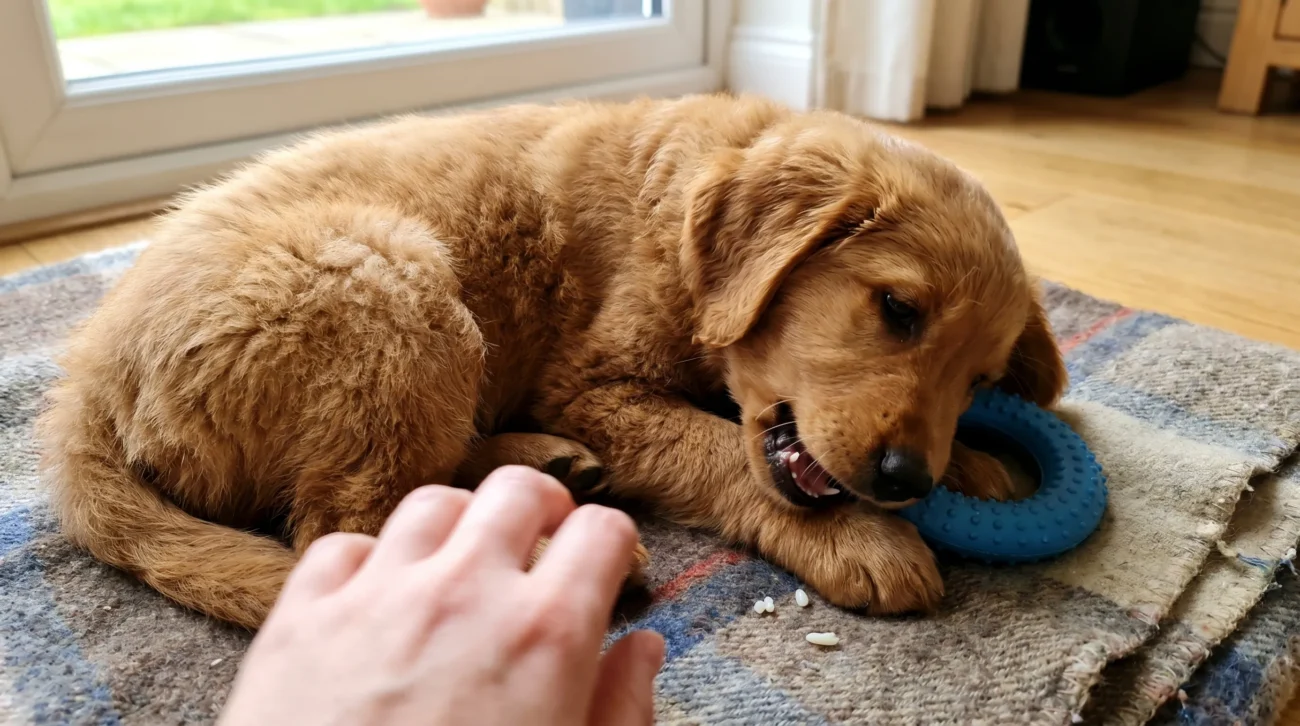
When do puppies lose their teeth is one of the most common questions new dog owners ask, and the short answer is this: most puppies start losing their baby teeth at around 3 to 4 months of age, are actively teething through 4 to 5 months, and usually have most or all of their 42 adult teeth by about 6 months. That said, every puppy is a little different. Some start a bit earlier, some finish a little later, and small details like breed size, growth rate, and overall development can affect the exact timing.
If your puppy has suddenly become a chewing machine, is leaving tiny spots of blood on toys, or seems extra mouthy and nippy, you are probably right in the middle of the puppy teething stage. This is a normal part of growth and development, but it can still feel stressful if you do not know what to expect. Many owners worry about loose puppy teeth, drooling, bleeding gums, bad breath, or whether their puppy is swallowing baby teeth. In most cases, these things are part of the natural puppy teething timeline.
This guide explains when do puppies lose their baby teeth, how the full timeline of puppy teething works, what signs are normal, when to worry about retained baby teeth, and how to help your puppy through the process safely. It also covers how many teeth do puppies have, which teeth fall out first, and when to start building a good puppy dental health routine.
Puppy Teething Timeline by Age
Understanding the puppy teething timeline makes everything much easier. Puppies are not born with visible teeth. Their first teeth, also called baby teeth, milk teeth, or deciduous teeth, begin appearing very early in life.
At around 2 to 3 weeks, the first small teeth usually start coming in. By 3 to 4 weeks, more of those baby teeth are visible, and by about 5 to 6 weeks, most puppies have a full set of early teeth. During this stage, puppies are still very young, but their mouths are already changing quickly as they prepare for weaning and the move toward more solid food.
By the time a puppy is around 6 to 8 weeks old, the full set of 28 baby teeth is usually in place. These teeth are small, sharp, and needle-like. That is why young puppies often feel so intense when they nibble hands, sleeves, or furniture. Their tiny teeth may be small, but they are definitely not subtle.
The real tooth-losing stage begins at about 12 to 16 weeks, or roughly 3 to 4 months. This is the point when many owners start noticing teeth falling out, increased chewing, sore gums, and more persistent nipping. From about 4 to 5 months, the process becomes more active. Baby teeth loosen and fall out while adult teeth begin erupting underneath.
By around 5 to 7 months, most puppies are in the later phase of teething, and many have a near-complete set of permanent teeth. For a lot of dogs, the biggest part of teething is over by 6 months, although some may continue settling into full eruption a little later, even up to 7 or 8 months in some cases.
Here is a simple chart to make the timeline easier to follow:
| Puppy Age | What Usually Happens |
| 2–3 weeks | First baby teeth begin to erupt |
| 3–4 weeks | More baby teeth appear |
| 5–6 weeks | Most baby teeth are in |
| 6–8 weeks | Full set of 28 baby teeth |
| 12–16 weeks | Baby teeth start loosening and falling out |
| 4–5 months | Active teething phase, adult teeth begin coming in |
| 5–7 months | Most adult teeth erupt |
| Around 6 months | Many puppies have most or all 42 adult teeth |
So if you are wondering when do puppies start losing their teeth, the most useful answer is: usually around 3 to 4 months, with the busiest shedding often happening from 4 to 5 months.
How Many Teeth Do Puppies Have, and Which Teeth Fall Out First?
A lot of owners search how many teeth do puppies have because they want to know whether what they are seeing is normal. Puppies have 28 baby teeth, while adult dogs have 42 adult teeth. That means your puppy’s mouth is going through a major transition in just a few months.
The baby teeth include 12 incisors, 4 canines, and 12 premolars. Adult dogs end up with 12 incisors, 4 canines, 16 premolars, and 10 molars. Those extra adult teeth are one reason the mouth can seem crowded during teething.
In many puppies, the incisors are the first teeth to loosen and fall out. These are the small front teeth. After that, the canines and premolars are replaced. Molars come in as part of the adult set, because puppies do not have baby molars in the same way they have baby incisors and canines.
This is where many owners notice something odd: sometimes they never actually find the missing teeth. That is normal. Puppy teeth are tiny, sometimes only crumb- to rice-sized, and many puppies swallow them while eating or chewing. It sounds strange, but it is usually harmless.
If you want a quick answer to which puppy teeth fall out first, think of it this way: front teeth first, then the longer and larger teeth later. The exact order is not always perfectly visible to owners, but that is the general pattern.
This also explains why some puppies seem extra uncomfortable when their longer canines are changing. Those teeth are more noticeable, and the gums can seem more sensitive when they loosen and the adult versions start pushing through.
Signs Your Puppy Is Teething
The signs of teething in puppies are usually easy to spot once you know them. The most common one is chewing. A teething puppy will often chew anything they can reach because pressure helps relieve gum discomfort. You may also notice more nipping, mouthing, or a general increase in bitey behavior.
Other common puppy teething symptoms include drooling, red or inflamed gums, a little blood on toys, mild bleeding gums, and occasional bad breath. Some puppies become fussier than usual or seem more irritable when their mouths are sore. Others may show small changes in eating habits, like preferring softer food for a few days.
A puppy may also paw at the mouth, choose chew toys more often, or suddenly become fascinated with chair legs, shoes, or blankets. This behavior can feel frustrating, but it is usually a sign of discomfort rather than disobedience.
Here are some normal signs your puppy is teething:
- Increased chewing behavior
- Extra nipping or mouthing
- Drooling
- Sore or swollen gums
- Tiny spots of blood on toys
- Loose puppy teeth
- Mild bad breath
- Temporary fussiness
One helpful way to think about it is this: teething changes both the mouth and the behavior. It is not just a dental event. It is also a stage where puppies explore, soothe discomfort, and test what feels good to chew.
A simple way to describe the phase is with this owner-friendly quote:
“A teething puppy is not trying to be difficult. They are usually trying to relieve pressure in a sore mouth.”
That mindset helps a lot, especially when your puppy seems to be chewing everything in sight.
Is It Normal for Puppies to Chew, Nip, or Swallow Baby Teeth?
Yes, all of that can be normal. During puppy teething, many dogs become more mouthy, more interested in chewing, and more likely to grab hands, sleeves, or furniture. This is one reason owners often ask whether puppy biting during teething is normal. In most cases, it is.
That does not mean you should allow rough behavior. It means you should respond with calm redirection, not panic. A teething puppy needs safe outlets, consistency, and a little patience.
It is also normal for many puppies to swallow some of their baby teeth. Since the teeth are tiny, they may disappear while the puppy is eating or chewing. Owners often expect to find dozens of little teeth on the floor, but many never find more than one or two.
Another common concern is loose puppy teeth. These are expected during the shedding phase. If a tooth is loose and then disappears within a normal timeline, that is typically not a problem. What matters more is whether the adult tooth is coming in correctly and whether the baby tooth actually leaves when it should.
The chewing and nipping part is also important from a training angle. A puppy can be teething and still need boundaries. Normal puppy nipping is different from aggression. Teething nipping is usually playful, overstimulated, or comfort-seeking. It tends to happen during excitement, play, or discomfort. True aggression is a different behavioral pattern and usually comes with a different overall body language picture.
So if you are wondering do puppies swallow their baby teeth, are loose puppy teeth normal, or why is my puppy chewing so much, the answer is usually the same: this is a very typical part of the puppy teething timeline.
How to Help a Teething Puppy Safely
Knowing how to care for a teething puppy can make life easier for both of you. The goal is to reduce discomfort, protect your belongings, and keep chewing directed toward safe items.
The best approach is to offer safe chew toys that are made for puppies. Slightly chilled rubber toys can be especially soothing. Some owners also use a frozen towel, puppy-safe frozen treats, or chilled vegetables like carrots for short supervised sessions. A few puppies enjoy cold options because they calm sore gums.
You can also rotate chew toys so your puppy does not get bored. A toy that seems ignored today may become the favorite one tomorrow if it feels better on the gums at a different stage.
Here are practical ways to help:
| Helpful Option | Why It Works |
| Safe puppy chew toys | Gives chewing a proper outlet |
| Chilled rubber toys | Soothes sore gums |
| Frozen towel | Adds cold pressure relief |
| Cold treats in moderation | Can ease discomfort |
| Redirection during nipping | Prevents bad habits from forming |
| Short calm play sessions | Burns energy without overstimulation |
It is also smart to supervise anything cold or edible. Not every “home remedy” online is a good idea. Use common sense and avoid anything too hard, splintery, or unsafe. That is why unsafe chew toys for puppies should be taken seriously. Overly hard chews can damage teeth, and inappropriate objects can become choking hazards.
Training matters here too. If your puppy starts biting hands, calmly stop the interaction and redirect to an appropriate chew item. Reward the better choice. This teaches the puppy what to do instead of only hearing “no.”
Teething relief is not only about the mouth. It is also about helping your puppy learn good habits while going through a temporary but intense developmental stage.
When to Worry: Retained Baby Teeth and Other Red Flags
Most teething problems are mild, but some need veterinary attention. The biggest one is retained baby teeth, also called retained deciduous teeth in dogs. This happens when a baby tooth does not fall out even though the adult tooth is already coming in.
When that happens, the mouth can become crowded. You might see two teeth in the same spot, especially around the canines. This can lead to misalignment, overcrowding, trapped food, and longer-term dental issues.
A good rule is this: if your puppy is around 6 months old and still has obvious baby teeth that should have fallen out, it is time to check with a veterinarian. Some dogs, especially smaller breeds and toy breeds, are more prone to this issue.
Other warning signs include:
- Very swollen or inflamed gums
- Severe bleeding
- Strong foul odor
- Refusal to eat
- Clear pain when chewing
- Adult teeth growing in crooked
- Baby teeth still present well after the normal timeline
A quick vet visit can prevent bigger problems later. Sometimes the treatment is simple monitoring. In other cases, manual removal of retained teeth may be recommended to protect the adult bite.
This section matters because many owners assume everything during teething is normal. A lot is normal, but not everything. Knowing when to call the vet for puppy teething is part of good puppy dental health.
When to Start Brushing a Puppy’s Teeth
Many people wait too long to start brushing puppy teeth, but early mouth care makes a big difference. You do not need to turn your puppy into a perfect patient overnight. You just need to start building comfort.
The best time to introduce the routine is while your puppy is still young and learning. Even before the full adult set is in, you can gently get your puppy used to having the mouth handled. Once the mouth is less sore and the adult teeth are coming in, you can begin using canine toothpaste and a soft puppy brush or silicone finger brush.
Start small. Let your puppy taste the dog-safe toothpaste. Gently touch the lips and gums. Praise calm behavior. Keep sessions short and positive. This is where positive reinforcement matters more than perfection.
A simple puppy oral hygiene routine might look like this:
- brief mouth handling a few times a week,
- short brushing sessions as the puppy tolerates them,
- dog-safe dental products only,
- regular checks for crowding, odor, or leftover baby teeth.
Long term, brushing helps reduce plaque, supports oral health, and lowers the risk of periodontal disease later in life. Think of it as part of the same care plan as vaccines, training, and nutrition.
A lot of owners focus on when do puppies lose teeth, but the better long-term question is also: what habits should start once the teeth are changing? Brushing is one of the best answers.
Small Breed vs. Large Breed Teething Differences
Not every puppy follows the exact same pattern. While the general puppy teething timeline is similar across dogs, there can be small differences between small breed and large breed puppies.
Larger puppies may sometimes seem to move through tooth eruption a bit sooner, while smaller and toy breeds may be more likely to deal with retained baby teeth, especially around the canines. This does not mean every small dog will have a problem. It just means owners of tiny breeds should pay a little closer attention if adult teeth begin appearing while baby teeth are still in place.
This is helpful because many searchers do not just want the average timeline. They want to know whether their own puppy is still within a normal range. Breed size is one reason the answer is not always identical for every dog.
Puppy Teething FAQs
When do puppies lose their baby teeth?
Most puppies begin losing them at around 3 to 4 months, with the most active phase often happening around 4 to 5 months.
How long does puppy teething last?
The full process begins with baby teeth erupting in early puppyhood and usually settles by around 6 months, though some puppies may continue a bit longer.
Do puppies bleed when losing teeth?
A small amount of blood on toys or during chewing can be normal. Heavy bleeding is not.
Do puppies swallow their baby teeth?
Yes, many do. It is common and usually harmless.
Are loose puppy teeth normal?
Yes. Loose teeth are expected during the normal teething phase, especially when baby teeth are about to fall out.
What if my puppy is not losing teeth on time?
If your puppy is close to 6 months or older and baby teeth still seem stuck, ask your vet to check for retained baby teeth.
When do puppy canines fall out?
Usually after the front incisors begin changing, often during the middle part of the teething timeline.
When do puppy molars come in?
Molars are part of the adult set and usually appear later in the process as the permanent teeth come in.
Final Thoughts
When do puppies lose their teeth may sound like a simple question, but it opens the door to everything from puppy teething symptoms and chewing behavior to retained baby teeth and long-term dental care. In most cases, puppies start losing baby teeth at around 3 to 4 months, go through the most active stage around 4 to 5 months, and have most or all adult teeth by 6 months.
The key is knowing what is normal. Chewing, drooling, loose teeth, and mild gum irritation are all common. What matters is keeping your puppy safe, giving them the right relief tools, and watching for warning signs like crowding, persistent baby teeth, or clear discomfort.
If you stay patient and proactive, this phase usually passes quickly. And once it does, you will be on the other side with a healthier mouth, better habits, and a puppy who is ready for the next stage of growing up.
