


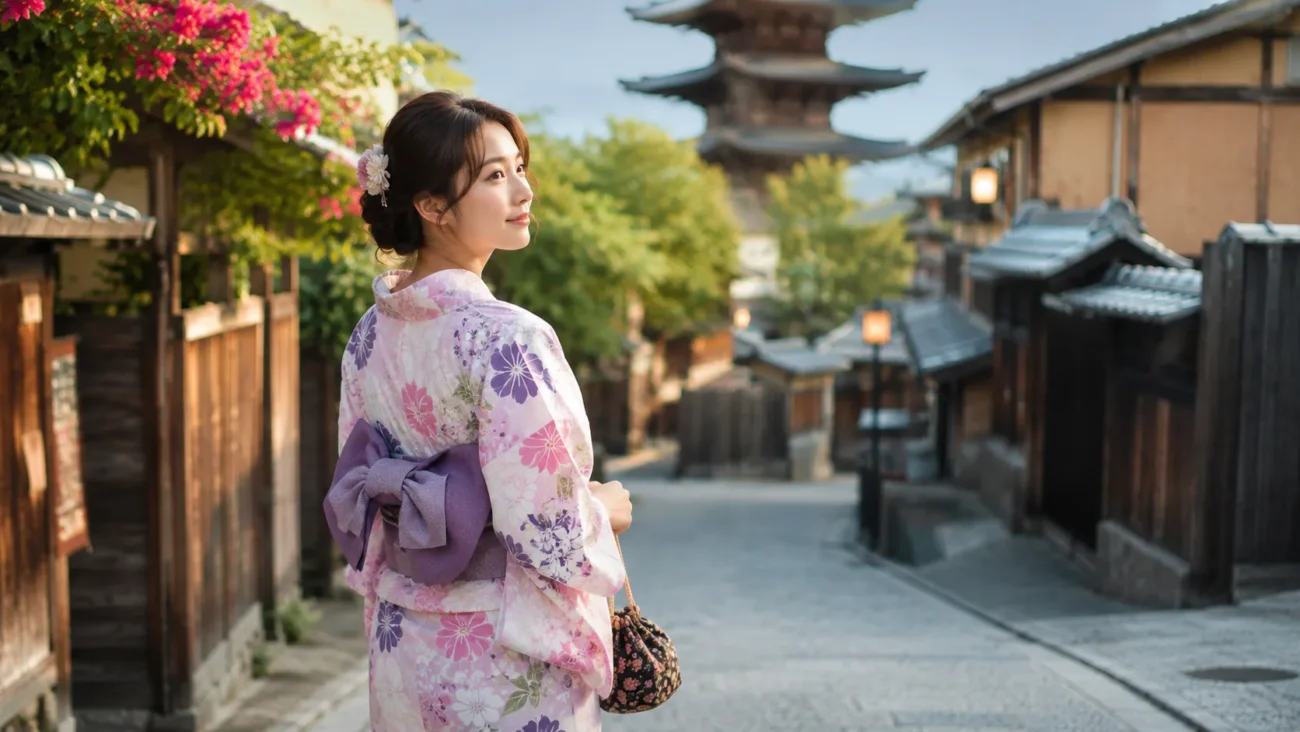
Yukata is a lightweight, casual form of Japanese traditional clothing often described as a summer kimono. It is usually made from cotton, linen, or easy-care synthetic fabrics, and it is most often worn during Japanese summer festivals, Bon Odori, fireworks festivals, onsen visits, and stays at a ryokan or traditional inn.
For many people, the word yukata brings to mind colorful festival streets, wooden geta sandals, a neatly tied obi sash, and warm summer evenings in Japan. But if you are new to Japanese clothing, it is easy to confuse a yukata kimono with a formal kimono, a bathrobe, or even a costume. This guide explains the yukata meaning, how it differs from kimono, when to wear one, how to wear a yukata correctly, and what to know before buying or renting one.
Whether you are preparing for a Japan trip, attending a matsuri, staying at an onsen resort town, or simply learning about Japanese clothing, this beginner-friendly guide will help you understand yukata with confidence and respect.
Yukata Meaning and Origin
The Japanese word yukata is written as 浴衣. Its meaning is often connected to bathing, which is why yukata is sometimes translated as “bathing cloth” or Japanese bathrobe. Historically, yukata were worn after bathing and later became common as casual loungewear in inns, bathhouses, and hot spring towns.
Today, the modern Japanese yukata has a much broader role. It can still function like a bathrobe or sleepwear at a ryokan, but it is also worn as summer wear for festivals, casual walks, cultural experiences, and seasonal events. In other words, yukata sits between comfort, tradition, and everyday beauty.
A festival yukata is usually more decorative, with patterns, colors, and accessories chosen for public wear. A ryokan yukata or onsen yukata is usually simpler and designed for comfort inside or around the inn. Both belong to the same broad tradition, but their purpose and styling can feel very different.
Yukata vs Kimono: What Is the Difference?
One of the most common questions is: what is the difference between yukata and kimono? The short answer is that a yukata is a casual, usually unlined type of kimono, while the word kimono refers to a much broader category of traditional Japanese dress.
A kimono can be formal or casual depending on the fabric, layers, design, season, and occasion. Formal kimono may be worn for weddings, ceremonies, tea gatherings, and important events. A casual summer kimono, such as a yukata, is lighter, easier to wear, and better suited to hot weather.
| Feature | Yukata | Kimono |
| Formality | Casual | Casual to highly formal |
| Common season | Summer | All seasons |
| Fabric | Cotton, linen, synthetic fabrics | Silk, wool, cotton, synthetic fabrics |
| Layers | Usually one main layer | Often layered |
| Typical use | Festivals, ryokan, onsen, casual events | Ceremonies, formal events, cultural occasions |
| Footwear | Usually geta sandals | Often zori with tabi socks |
| Ease of wearing | Beginner-friendly | More complex |
If you are asking, “Is a yukata the same as a kimono?”, the most accurate answer is: a yukata is part of the kimono family, but it is not the same as a formal kimono. Think of it as the relaxed, breathable, summer-friendly version.
When Do People Wear Yukata?
People wear yukata in many casual and seasonal settings. The most iconic use is at summer festivals, where you may see men, women, and children walking through food stalls, lantern-lit streets, and fireworks events in colorful yukata designs.
A yukata is also common at Bon Odori, hanabi or fireworks festivals, and local matsuri. These events often happen during Japan’s hot and humid summer months, making a breathable cotton yukata more comfortable than heavier clothing.
Yukata are also closely connected with onsen and ryokan culture. At many traditional inns, guests receive a simple hotel yukata or inn yukata to wear during their stay. It may be worn to dinner, around the property, to the bath area, or as sleepwear, depending on the rules of the inn.
Some famous hot spring destinations, such as Kinosaki, Atami, and Kusatsu, are known for visitors strolling through town in yukata and geta. This makes yukata not just clothing, but part of the full travel experience.
Types of Yukata
Not every yukata is the same. The best choice depends on where you plan to wear it, how formal the setting is, and whether you are buying, renting, or using one provided by an inn.
A festival yukata is usually the most decorative. It may feature floral patterns, geometric designs, indigo and white motifs, or modern multicoloured designs. A women’s yukata often includes brighter prints, a decorative obi, and optional hair accessories. A men’s yukata is often simpler in color and pattern, though modern styles can be bold and fashionable too. A children’s yukata may be easier to wear and lighter for comfort.
An onsen yukata or ryokan yukata is more relaxed. It may look closer to a simple robe and is designed for use inside a hotel, inn, or bathhouse environment. It is usually not styled as carefully as a festival outfit.
There are also design differences between men’s and women’s yukata. Traditional construction may include differences in sleeve shape and sleeve extension. Some references describe men’s yukata sleeve extensions as around 10 centimetres or 3.9 in, while women’s can be around 20 centimetres or 7.9 in. You do not need to memorize these numbers, but they show that yukata construction has real clothing logic behind it.
Yukata Materials, Designs and Traditional Dyeing
The most common yukata fabrics are cotton, linen, and synthetic fabrics. A cotton yukata is breathable, traditional, and comfortable for summer. A linen yukata can feel airy and premium, though it may wrinkle more easily. A synthetic fabric yukata is often affordable, lightweight, and easier to wash, which makes it practical for beginners.
Traditional yukata were often indigo yukata or white yukata, especially in older styles. Modern yukata, however, come in many colors and patterns. You will find soft florals, dark geometric designs, bold festival prints, and minimalist styles suitable for both men and women.
Yukata also has a rich textile history. Two important dyeing techniques are Nagaita-Chugata and Chusen. Nagaita-Chugata is associated with stencil dyeing, while Chusen is a traditional technique connected with dyeing cloth in a way that can create beautiful, balanced patterns. These methods add cultural depth to yukata beyond simple fashion.
A practical buyer should also think about care. Some modern yukata are machine washable, while handmade, delicate, or traditionally dyed pieces may need gentler treatment. If your yukata uses strong indigo dye or specialty textile work, always check the care instructions before washing.
How to Wear a Yukata Step by Step
Learning how to wear a yukata may look intimidating at first, but a basic yukata is much easier than a formal kimono. The most important rule is the wrapping direction: wear the left side over the right side. The opposite, right over left, is traditionally associated with dressing the dead, so it is one of the most important yukata mistakes to avoid.
Start by putting on light undergarments or an inner layer. Slip your arms through the sleeves and hold both front panels. Align the back seam with the center of your body. Adjust the length so the bottom sits around the ankle area. Then wrap the right panel across your body first, followed by the left panel over it.
Once the body is aligned, secure the yukata with waist ties such as koshihimo. Some people also use datejime to smooth the shape before tying the obi. Wrap the obi sash around your waist and tie it securely. Beginners can use a simple bow, a pre-tied obi, or an easy knot. More decorative knots, such as bunko musubi or chocho musubi, are popular for women’s festival yukata.
Before leaving, check the collar, sleeves, and hem. The collar should sit neatly, the hem should not drag, and the obi should feel snug but not painful. A good rule is: comfortable enough to walk, secure enough to stay neat.
Yukata Obi, Geta and Accessories
A complete yukata ensemble usually includes the yukata itself, an obi, and geta sandals. Depending on the occasion, you may also carry a kinchaku bag, use a hand fan, or add hair accessories.
The obi is the sash that holds the yukata closed and adds shape to the outfit. Men’s obi are often narrower and simpler, while women’s obi can be wider, brighter, and tied in decorative shapes. If you are wondering how to tie a yukata obi, start with a beginner-friendly bow or use a pre-tied obi until you feel confident.
Geta are wooden sandals often worn with yukata. Many people wear yukata without socks, especially in summer, though comfort matters. If you are new to geta, walk slowly and take smaller steps. This is not just etiquette; it also helps keep the front of the yukata from opening too much.
A kinchaku is a small traditional carry bag. It is useful for personal items such as a phone, wallet, hotel key, or small cosmetics. A foldable hand fan is both practical and stylish during hot festivals.
What to Wear Under a Yukata
Many beginners ask, “What do you wear under a yukata?” The answer depends on the setting. For a summer festival, wear light, breathable, discreet undergarments. A simple inner layer can help absorb sweat and keep the yukata shape clean.
Traditional undergarments may include hadajuban or juban, though casual yukata styling is usually simpler than formal kimono dressing. In very casual ryokan settings, guests may wear the provided yukata more like loungewear, but modest underlayers are still a good idea when walking around shared spaces.
The key is comfort. Since yukata is often worn in hot weather, choose breathable fabric and avoid bulky layers. A clean inner layer also protects the yukata from sweat, especially if you are renting one or wearing it for several hours outdoors.
Yukata Etiquette: Rules, Respect and Common Mistakes
Good yukata etiquette is mostly about wearing the garment neatly and respectfully. You do not need to be Japanese to wear yukata, but you should understand the context.
The biggest rule is left-over-right wrapping. Always place the left panel over the right panel. Keep the collar tidy, avoid letting the yukata hang open, and make sure the obi is tied securely. If you are wearing yukata at a ryokan or onsen, follow the property’s rules about where the yukata can be worn.
Another common mistake is treating yukata like a costume joke. A yukata can be fun, colorful, and photo-friendly, but it is also part of traditional Japanese clothing. Wear it with appreciation, not mockery.
At festivals, move carefully through crowds, especially if wearing geta sandals. Sit with attention to the front panels, manage your sleeves around food stalls, and use your kinchaku bag for small belongings. If you are renting a yukata, ask the staff for help before leaving the shop. A few small adjustments can make the whole outfit look better.
Can Foreigners Wear Yukata?
Yes, foreigners can generally wear yukata in Japan and at Japanese cultural events, especially when it is done respectfully. Many rental shops, ryokan, and festivals welcome visitors who want to experience traditional dress.
The important point is attitude. Wearing a yukata as cultural appreciation means learning what it is, wearing it properly, and respecting the setting. Avoid turning it into a joke, mixing it with offensive costume elements, or ignoring basic etiquette.
If you are unsure, a rental shop is a great option because staff can help with dressing, sizing, obi tying, and accessories. This is especially useful for visitors who want to wear yukata in Kyoto, Tokyo, Osaka, or an onsen town.
Buying or Renting a Yukata in Japan
If you want to buy yukata, start by deciding whether you need a casual souvenir, a festival outfit, or a higher-quality traditional piece. A beginner-friendly yukata set may include the yukata, obi, and sometimes geta. A complete yukata set is easier than buying each item separately.
When choosing a yukata, check the fabric, size, pattern, and accessories. A yukata size guide can help, but length can often be adjusted when wearing. Choose breathable fabric if you plan to wear it in summer. Cotton and polyester yukata are usually more affordable, while handmade or luxury yukata may cost more.
A useful real-world price range is that simple yukata may start from a few thousand yen, while better cotton or polyester yukata often fall around ¥5,000–¥15,000. More premium, handmade, or custom pieces can cost much more.
Renting is ideal for tourists. Yukata rental in Japan is common in major tourist areas. In Tokyo, rental shops are often found around Asakusa, Shibuya, and Harajuku. You can also search for yukata rental Kyoto, Tokyo yukata rental, or yukata rental Osaka if you want a local experience. Many rental shops offer dressing help, bags, hair styling, storage, and sometimes photography packages.
Before renting, check return time, late fees, weather, footwear comfort, and whether the plan includes accessories.
How to Wash, Fold and Store a Yukata
A good yukata care guide starts with the label. Some modern yukata are washable yukata and can be cleaned at home, while delicate, vintage, or traditionally dyed pieces need careful handling.
If the label allows machine washing, use a gentle cycle, cold water, and a laundry net. Wash dark colors separately, especially indigo yukata, because dye may bleed. Avoid harsh drying, and hang the yukata neatly so the seams stay straight. If ironing is needed, use a suitable temperature for the fabric.
Learning how to fold a yukata also helps preserve its shape. Fold along the seams rather than crushing the garment randomly. Store it in a dry place away from direct sunlight. Good storage protects the fabric, color, and structure, especially if you only wear the yukata during festival season.
FAQs About Yukata
Is a yukata the same as a kimono?
A yukata is a casual type of kimono, but it is not the same as a formal kimono. Yukata are usually lighter, simpler, and more casual.
Can you wear yukata in winter?
Yukata is mainly summer wear, but ryokan guests may wear it indoors year-round. For cool weather, some people add an outer jacket or warm layer.
Do you wear socks with yukata?
Traditionally, yukata with geta sandals is often worn without socks, especially in summer. Comfort and local context matter.
What shoes go with yukata?
The classic choice is geta. For long walks, choose comfortable sandals or ask a rental shop for practical footwear advice.
What is an onsen yukata?
An onsen yukata is a casual yukata provided at a hot spring inn or bathhouse. It is usually simpler than a festival yukata.
How much does a yukata cost in Japan?
Prices vary widely. Simple yukata can be inexpensive, while quality cotton, polyester, handmade, or custom yukata cost more. A common mid-range budget is around ¥5,000–¥15,000.
Conclusion
A yukata is more than a pretty summer outfit. It is a comfortable, casual, and meaningful part of Japanese traditional clothing, connected to kimono, onsen, ryokan, summer festivals, and everyday cultural experiences. If you learn the basics — left over right, secure obi, comfortable geta, respectful etiquette, and proper care — wearing a yukata becomes simple and enjoyable. Whether you rent one in Japan or buy your own, the best yukata is one that fits the occasion, feels comfortable, and is worn with respect.
Disclaimer: This article is for general informational purposes only. Individual preferences, experiences, cultural contexts, and situations may vary, so readers should use their own judgment when applying the information.
