


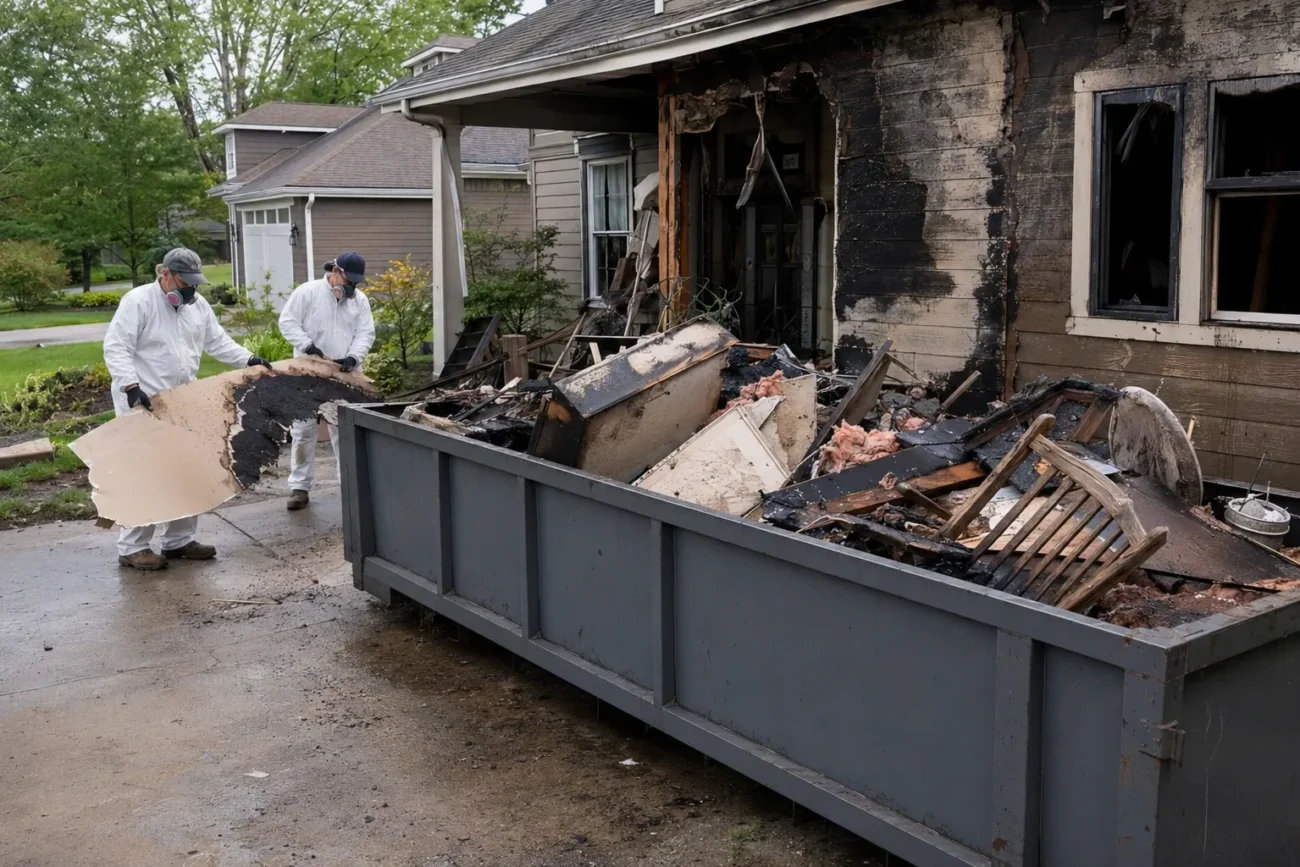
Fire-damaged property cleanup can feel overwhelming for homeowners. Even after the fire is out and the property is cleared for entry, the amount of damaged material can be difficult to process. Burned building materials, smoke-damaged contents, soaked debris from firefighting efforts, broken fixtures, damaged flooring, insulation, drywall, furniture, and personal belongings may all need to be removed before repairs can begin.
A dumpster can be an important part of the cleanup process, but fire debris requires careful planning. Homeowners need to think about safety, documentation, material separation, access, weight, local rules, and timing. The goal is not to rush everything into a container immediately. The goal is to create a cleanup plan that supports recovery while avoiding unnecessary problems.
Wait Until the Property Is Safe to Enter
Before any cleanup begins, homeowners should wait for confirmation that the property is safe to access. Fire-damaged structures can have unstable floors, weakened framing, damaged stairs, broken glass, exposed nails, electrical hazards, wet surfaces, and hidden hot spots. Even rooms that look intact may have smoke, water, or structural issues.
A dumpster should not be treated as the first step if the site itself has not been evaluated. Depending on the damage, homeowners may need guidance from the fire department, insurance adjuster, restoration contractor, structural professional, or other qualified experts before removing materials.
Safety has to come before speed. Cleanup can wait until the property is ready for controlled debris removal.
Document Damage Before Removing Materials
Fire cleanup often involves insurance documentation. Homeowners should take photos and videos of damaged rooms, contents, building materials, appliances, furniture, and exterior areas before items are discarded. Some items may also need to be listed or reviewed before they are removed.
Once debris is loaded into a dumpster, it may be difficult or impossible to document later. That can create problems if the homeowner needs proof of damage. Before throwing anything away, it is wise to confirm what needs to be photographed, inventoried, or inspected.
A simple documentation process can prevent stress later in the claim or repair process.
Separate Personal Property From Construction Debris
Fire-damaged cleanup often includes both household contents and building materials. These should not automatically be treated the same way. Burned drywall, flooring, insulation, cabinets, and trim are different from furniture, clothing, electronics, documents, appliances, tools, and personal items.
Homeowners should sort carefully before loading. Items that may be restorable should be separated from clearly discarded debris. Items with sentimental, legal, financial, or insurance value should be reviewed before removal. Construction debris can then be handled more efficiently once personal property decisions are made.
This sorting step may feel slow, but it helps homeowners avoid throwing away something important in the middle of a stressful cleanup.
Plan Dumpster Timing Around the Cleanup Sequence
A dumpster is most useful when it arrives at the right point in the cleanup process. If it arrives too early, homeowners may feel pressured to discard items before documentation is complete. If it arrives too late, debris may pile up in the driveway, yard, garage, or damaged rooms.
The best timing depends on the project. Some homeowners may need a dumpster once adjusters have finished reviewing the property. Others may need one after contents have been sorted and the first demolition phase begins. Larger cleanup projects may require more than one pickup or container swap as removal progresses.
Working with providers such as Waste Removal USA can help homeowners coordinate dumpster rental timing and placement around fire-damaged property cleanup and renovation planning. Proper timing keeps debris removal organized instead of rushed.
Choose Placement With Access and Safety in Mind
Dumpster placement should make loading easier without blocking important access. Fire-damaged properties may already have limited usable areas because of emergency vehicles, temporary fencing, board-up work, restoration equipment, utility access, or damaged driveways. The dumpster should be placed where crews or homeowners can load safely.
Driveways are common placement areas, but they may need to remain open for contractors, inspectors, insurance representatives, or emergency follow-up access. The container should not block sidewalks, neighboring property, garage doors, or routes needed for repairs.
A good placement plan helps keep the cleanup site functional while damaged material is removed.
Watch for Wet and Heavy Debris
Fire cleanup often involves water damage from firefighting efforts. Wet drywall, insulation, carpet, furniture, cabinets, and flooring can be much heavier than they look. Burned or water-soaked materials may also break apart during removal, making loading slower and messier.
Homeowners should avoid assuming that a dumpster can be filled to the top with wet debris. Weight can become a concern before the container looks full. Heavy materials such as tile, brick, plaster, concrete, appliances, and soaked contents should be loaded with care.
Monitoring both volume and weight helps prevent disposal problems during cleanup.
Keep Questionable Materials Out of the Dumpster
Not everything from a fire-damaged property belongs in a dumpster. Paints, chemicals, fuels, propane cylinders, batteries, certain electronics, oils, cleaners, pesticides, asbestos-containing materials, and other hazardous items may require special handling. Fire can also damage containers and make labels hard to read, so homeowners should be cautious.
If an item is questionable, it should be set aside until proper disposal guidance is confirmed. Homeowners should not toss unknown chemicals or pressurized containers into a dumpster just to clear space. Local rules and rental guidelines can vary, so it is better to check before loading.
Careful separation protects the homeowner, the cleanup crew, and the disposal process.
Remove Debris in Manageable Phases
Fire-damaged cleanup is easier when handled in phases. Homeowners may begin with exterior debris, then move to contents, then damaged interior materials, then renovation debris. Trying to remove everything at once can make the property more chaotic and harder to document.
A phased cleanup also helps identify hidden issues. Once damaged contents are removed, the condition of flooring, walls, cabinets, ceilings, and framing may become clearer. After demolition begins, additional smoke or water damage may be discovered.
Removing debris in stages keeps the cleanup more controlled and helps homeowners adapt as more information becomes available.
Protect Areas That Were Not Damaged
Not every fire affects the entire property equally. Some rooms may have direct fire damage, while others may only have smoke or water exposure. Homeowners should avoid spreading soot, ash, debris, or wet material into areas that are being protected.
When carrying debris out, use clear routes and avoid dragging materials through cleaner spaces when possible. Floors, doorways, and hallways may need temporary protection. If cleanup crews are involved, the route to the dumpster should be discussed before removal begins.
Protecting unaffected areas can reduce additional cleanup and make recovery easier.
Consider Lessons from Commercial Fire Cleanup
Although a home fire is different from a business fire, some cleanup principles overlap. Projects involving cleaning up after a restaurant fire often require documentation, safety review, sorting, debris control, and careful sequencing before rebuilding can begin. Homeowners can apply the same general mindset to residential cleanup.
The key lesson is that debris removal should support the recovery plan. Fire-damaged materials need to come out, but they should come out in a way that preserves documentation, protects access, separates questionable items, and prepares the property for repair.
A structured cleanup plan is better than reacting to each pile of debris as it appears.
Coordinate With Restoration and Repair Crews
Many homeowners work with restoration contractors, insurance adjusters, electricians, plumbers, roofers, drywall contractors, flooring installers, or general contractors after a fire. Each professional may need access to different parts of the property. Dumpster placement and debris removal should not interfere with that work.
Before major loading begins, homeowners should confirm which materials can be removed and which areas need to remain accessible. If a contractor needs to inspect framing, wiring, plumbing, or mechanical systems, debris should not block those areas.
Good communication keeps cleanup aligned with repair planning.
Keep the Exterior Cleanup Area Organized
A fire-damaged property can attract attention from neighbors, passersby, inspectors, and contractors. Keeping the exterior debris area organized helps the property look more controlled during a difficult situation. Materials should be loaded into the dumpster rather than left scattered around it.
Loose ash, insulation, packaging, charred wood, and broken contents should not be allowed to blow around the property. Small debris should be collected regularly, especially near sidewalks, driveways, lawns, and neighboring areas.
An organized exterior area can make the recovery process feel less overwhelming.
Avoid Rushing Emotional Decisions
Fire cleanup is not only physical work. Homeowners may be sorting through damaged belongings, family items, documents, furniture, photographs, tools, heirlooms, or personal possessions. It is easy to make fast decisions just to clear space.
When possible, homeowners should separate emotional or uncertain items before general debris loading begins. These items may still need to be discarded later, but giving them a separate review can prevent regret. A dumpster should help remove confirmed debris, not pressure homeowners into decisions they are not ready to make.
Recovery is easier when the cleanup process leaves room for careful choices.
Dumpster rental can play an important role in fire-damaged property cleanup, but it needs to be planned carefully. Homeowners should wait until the property is safe, document damage, separate personal property from construction debris, watch for heavy wet materials, and keep questionable items out of the container.
By coordinating dumpster timing, choosing safe placement, removing debris in phases, protecting unaffected areas, and communicating with restoration or repair professionals, homeowners can make the cleanup process more organized. Fire damage is stressful enough. A thoughtful waste removal plan helps create a clearer path from damaged property to repair and recovery.
