


Key Takeaways
- Tai Chi can be practiced in a small, clear area with little or no equipment.
- Brief, consistent sessions are usually more sustainable than occasional long workouts.
- A balanced home routine includes warm-ups, controlled movement, natural breathing, and recovery.
- Beginners benefit most from moving comfortably and slowly rather than trying to achieve perfect form.
- Regular practice may support balance, mobility, confidence, and stress relief.
- Anyone with a medical concern, injury, or frequent dizziness should ask a healthcare professional about safe modifications.
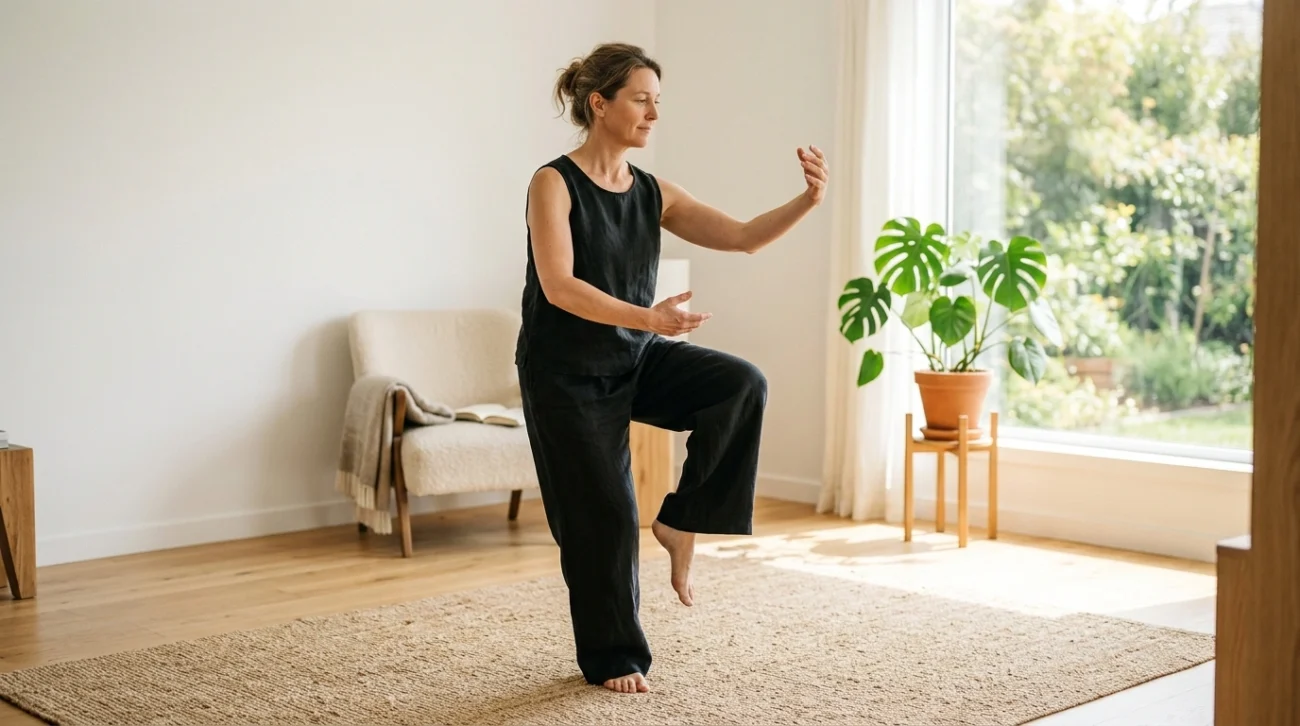
Tai Chi offers a practical way to bring gentle movement and focused attention into an ordinary day. Whether you have 10 minutes beside the sofa before work or a quiet half-hour on the weekend, a simple home practice can help create a steadier routine without the commute, class schedule, or pressure of exercising around other people. For a clear starting point, instructional tai chi videos for beginners can make it easier to learn at a manageable pace, pause when needed, and repeat basic movements until they feel familiar. The goal is not to memorize an advanced form immediately. It is to build comfort with posture, weight shifting, breathing, and slow coordination.
Why Home-Based Tai Chi Fits Modern Life
Home practice removes several common barriers to exercise. There is no weather to contend with, no travel time, and no need to fit a class into an already full calendar. A short session can work during a lunch break, after a walk, or as a calmer transition out of a busy evening. Practicing privately helps beginners focus on their own comfort rather than comparing themselves to others.
What Regular Practice May Support
Tai Chi is a low-impact mind-body practice that combines controlled movement, balance work, relaxed strength, breathing, and attention. Its slow pace can make it approachable for people who want to move more gently while still practicing coordination and stability. The health guidance on Tai Chi from Harvard Health explains how regular practice can enhance strength, flexibility, balance, and stress management. Results vary, and Tai Chi is not a cure or a substitute for medical care. Still, regular practice may support better body awareness, smoother turning and stepping, gentler mobility in the hips and shoulders, less physical tension, and greater confidence during daily activities.
How To Prepare A Safe Practice Space
You do not need a studio. A modest area with room to take a small step in each direction is enough. Before starting, clear away loose rugs, cords, clutter, and furniture corners that could interfere with your footing. Choose a flat surface, wear comfortable clothing, and keep water nearby for longer sessions. If balance feels unsteady, practice near a sturdy chair or countertop without constantly relying on it. Supportive, non-slip shoes are often useful, although barefoot practice can also work on a clean, safe surface.
A Simple Weekly Tai Chi Routine
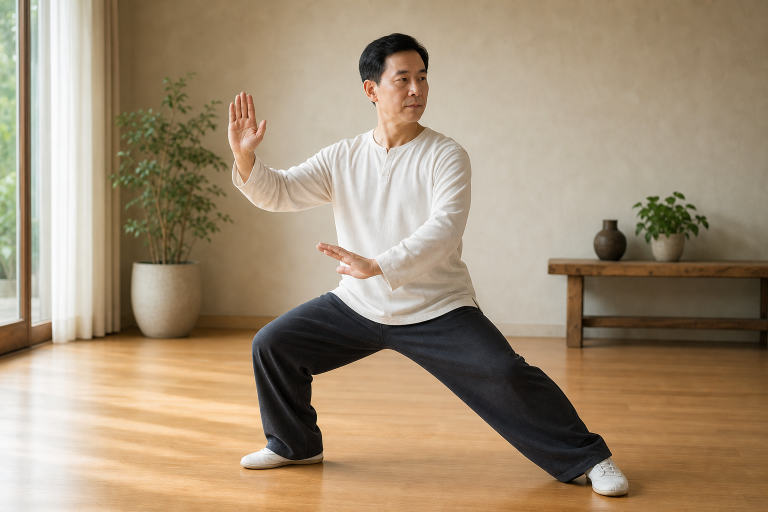
Consistency matters more than intensity. Start with a schedule that feels easy to repeat, then add time gradually as your stamina and confidence improve.
- Monday:Spend 10 to 15 minutes warming up, standing comfortably, and shifting weight from side to side.
- Tuesday:Practice five to 10 minutes of gentle shoulder, spine, hip, and ankle mobility with relaxed breathing.
- Wednesday:Follow 15 to 20 minutes of guided movement practice.
- Thursday:Rest, take a light walk, or use a seated movement session.
- Friday:Review familiar arm patterns, turns, and small steps at a slow pace.
- Saturday:Try a 20 to 30-minute session if your body feels comfortable.
- Sunday:Do a brief recovery practice and note what felt easier during the week.
Beginner Movement Categories To Include
Instead of trying to learn a long sequence all at once, build foundational skills. Begin with grounding by standing with soft knees and noticing both feet on the floor. Add slow weight shifting, keeping the movement small and controlled. Practice turning from the hips and torso without twisting the knees, then coordinate relaxed arm patterns with your lower-body movement. When you are ready, include small forward, backward, or sideways steps. Finish each session by settling into a comfortable standing or seated position for a few quiet breaths.
The Role Of Breathing And Attention
Natural breathing is usually best. Avoid forcing deep breaths or trying to match every inhale and exhale perfectly to a movement. Instead, let the breath remain smooth while attention moves gently between your feet, posture, hands, and surroundings. If your thoughts race, slow your movements. A wandering mind is normal, and simply returning attention to the body is part of the practice.
How To Choose Helpful Online Instruction
Look for lessons that demonstrate movements from multiple angles and explain posture, weight placement, and common errors in plain language. A useful program allows pauses, includes seated or supported options, and introduces skills in a logical order. Structured instruction is often easier to follow than random short clips because it gives you a clear path for reviewing what you have already learned.
Common Home Practice Mistakes
- Moving too quickly:Slowness makes it easier to notice balance and posture.
- Locking the knees:Keeping a gentle bend allows smoother adjustment.
- Holding the breath:Relaxed breathing supports steadier movement.
- Chasing perfect form:Comfort, control, and awareness come first.
- Doing too much too soon:A short, pain-free practice is more useful than an exhausting one.
- Ignoring the environment:A clear floor is part of safe practice.
How To Track Progress Without Pressure
Track practical changes rather than judging yourself by appearance or athletic performance. Record completed sessions, rate your comfort from one to five afterward, and note whether standing up, turning, or shifting weight feels smoother. You might also notice changes in stiffness, mood, focus, or confidence. Progress often appears gradually, sometimes as a calmer response to daily stress or less hesitation during ordinary movement.
Safety Tips And Useful Modifications
Start small and increase practice time slowly. Use a chair for seated versions when standing causes fatigue, and stay close to stable support when balance is limited. Stop immediately for sharp pain, chest pain, unusual dizziness, severe shortness of breath, or any symptom that feels concerning. The National Center for Complementary and Integrative Health notes that Tai Chi can be adapted to different abilities, but individual health needs should guide the pace and range of motion.
Frequently Asked Questions
Can Beginners Practice Tai Chi At Home?
Yes. Basic standing, seated movements, breathing, and weight shifting are appropriate places to begin. Clear instructions and gradual progress matter more than previous experience.
How Often Should Someone Practice?
Two to five short sessions each week is a realistic starting range. Begin with five or 10 minutes, then add time when the routine feels comfortable.
Does Tai Chi Replace Cardio Or Strength Training?
Tai Chi can support balance, coordination, mobility, and gentle strength, but some people may still need separate aerobic or resistance exercise based on their goals and health needs.
Can Tai Chi Be Practiced While Seated?
Yes. Many arm movements, posture exercises, and breathing practices can be adapted for a chair, which may help with fatigue, limited mobility, or balance concerns.
How Long Does It Take To Notice A Difference?
Some people notice calmness or improved body awareness early on. Changes in balance, mobility, and confidence often require several weeks of regular practice.
Conclusion
A useful Tai Chi routine need not be long, complicated, or physically demanding to become a meaningful part of your day. Start by creating a clear, comfortable space where you can move without distractions or obstacles, then choose simple movements that match your current ability and experience level. Keep your pace relaxed, focus on controlled breathing and steady posture, and avoid forcing movements beyond a comfortable range. Consistency is often more valuable than a single long session. Even a few quiet minutes in the morning, during a break, or before bed can help establish a routine that feels realistic and sustainable. With patient repetition and gradual improvement, practicing Tai Chi at home can become a dependable habit that supports balance, body awareness, gentle movement, relaxation, and a calmer state of mind.
