


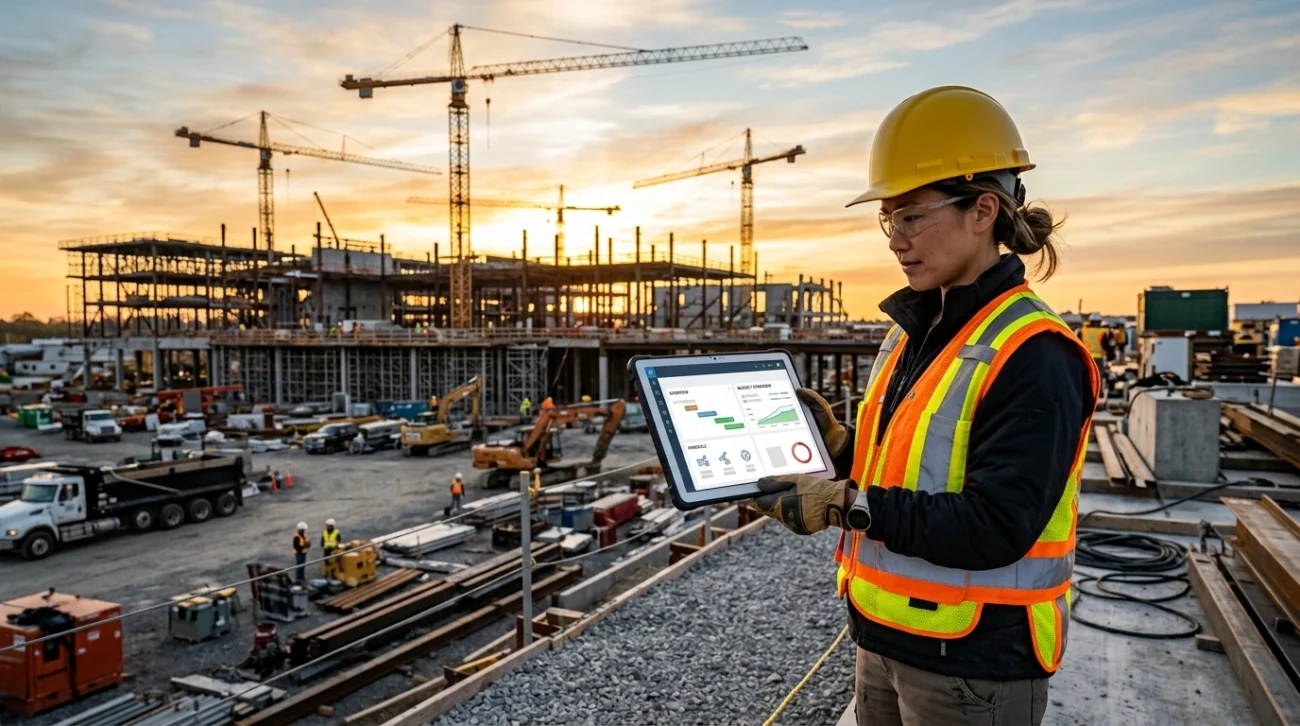
Construction projects involve multiple teams, budgets, materials, schedules, and contractual requirements that must remain aligned from planning through completion. Managing these elements through disconnected systems can create delays, inconsistent information, and limited visibility. By adopting construction cloud ERP, organisations can connect project management with finance, procurement, workforce, asset, and business processes within a unified digital environment across diverse construction project settings.
Integrated ERP technology provides project teams with centralised information and helps managers coordinate activities across departments. Cloud access also supports collaboration between office personnel, field teams, and management, making it easier to monitor progress and respond to requirements. With connected workflows and real-time information, construction businesses can strengthen project control and improve overall delivery efficiency.
Improving Project Planning Through Integrated Data
Accurate planning depends on reliable information about resources, budgets, timelines, procurement requirements, and workforce availability. An integrated ERP platform brings these details together, helping project managers create realistic plans and coordinate activities according to project priorities. Centralised information also reduces the need to collect data manually from separate departments.
Planning becomes more effective when teams can compare planned activities with actual performance. Integrated reporting helps managers identify deviations, evaluate resource utilisation, and make timely adjustments before minor issues affect project schedules or costs. This approach supports better forecasting and creates a foundation for successful project execution.
Core Cloud ERP Capabilities for Construction Projects
Cloud ERP platforms provide connected capabilities that support the different stages of construction project management.
1. Project Scheduling
Digital scheduling capabilities help managers organise activities, assign responsibilities, establish milestones, and monitor timelines. Connected schedules provide greater visibility into dependencies and help teams identify potential delays before they affect critical project stages.
2. Cost and Budget Management
Financial integration enables project managers to monitor budgets, expenses, commitments, and financial performance alongside project activities. This connection helps organizations maintain stronger cost control and understand how operational decisions affect project profitability.
3. Procurement Management
Integrated procurement connects purchasing activities with project requirements, helping teams coordinate material and service requirements more effectively. Managers can monitor purchase requests, orders, suppliers, and related costs while maintaining better alignment with project schedules.
4. Resource Management
Construction projects depend on efficient allocation of people, equipment, and materials. Integrated resource management provides visibility into availability and utilisation, helping project leaders allocate resources according to changing project requirements and reduce avoidable conflicts.
5. Document and Information Management
Centralised information management allows teams to organise project documents, records, approvals, and related information within a connected environment. Better document accessibility supports collaboration, improves information consistency, and reduces the risks associated with outdated or duplicated records.
Enhancing Project Visibility and Control
Project visibility is essential for identifying operational issues and maintaining control over construction activities. Cloud ERP platforms consolidate information from project, financial, procurement, workforce, and asset functions, giving managers a broader view of project performance. With construction cloud ERP, decision-makers can access relevant information through a centralised system and coordinate responses more effectively.
Real-time access is particularly valuable when construction teams operate across different locations. Authorised users can review project information, monitor activities, and communicate updates without depending entirely on physical records or delayed reports. This improves responsiveness while supporting greater transparency throughout the project lifecycle.
Supporting Collaboration Across Construction Teams
Construction project management involves collaboration between project managers, engineers, contractors, suppliers, finance teams, and senior management. Integrated ERP systems create a common information environment that helps these groups work with consistent data and coordinated workflows.
A connected platform can reduce communication gaps by linking project activities with business processes. Teams can share updates, track responsibilities, and access relevant information without repeatedly requesting data from other departments. This supports faster coordination and helps maintain alignment between project objectives and day-to-day execution.
Key Benefits for Construction Project Management
Organisations adopting integrated cloud ERP can gain several practical benefits that improve project management and business coordination.
- Better visibility into project progress, budgets, resources, and operational activities.
- Improved coordination between project teams, finance, procurement, and management.
- Faster access to centralised information for planning and decision-making.
- Greater control over costs, purchasing activities, and resource utilisation.
Choosing the Right Digital Project Management Approach
Selecting an appropriate digital platform requires organisations to evaluate their project complexity, operational processes, integration requirements, and future growth plans. Businesses comparing the best construction project management software in the UAE should consider solutions that connect project activities with financial, procurement, workforce, asset, and reporting functions rather than focusing only on basic scheduling tools.
Scalability is another important consideration because construction businesses may manage projects of different sizes and across multiple locations. A flexible platform should support changing requirements while maintaining centralised information, consistent workflows, and secure access. The right solution can help organisations improve project management without creating additional technology silos.
Building More Efficient Construction Operations
Cloud ERP strengthens construction operations by connecting project execution to broader enterprise management. When departments work through shared information and integrated workflows, organisations can improve accountability, reduce duplication, and maintain clearer oversight of business activities.
Digital integration also supports continuous improvement by providing historical data and performance insights to guide future planning. Managers can evaluate project outcomes, identify recurring operational challenges, and refine processes based on reliable data. This helps construction organisations establish more consistent management practices as their project portfolios expand.
Conclusion
Cloud ERP helps construction organisations improve project planning, collaboration, financial control, procurement, and reporting through a connected platform. Organisations evaluating the best construction project management software in the UAE can benefit from solutions that bring these functions together.
Those who are looking for an integrated solution can consider ePROMIS, which combines project management, finance, procurement, HR, CRM, asset management, and business intelligence. Its cloud-based platform centralises information, improves coordination, and supports better project oversight and business growth.
