


Key Takeaways
- Start with the property, climate, budget, and local requirements before selecting a pool shape.
- Plan for freeze-thaw cycles, snow, wind, drainage, and a realistic swimming season.
- Heating, covers, automation, and efficient equipment can improve comfort and control operating costs.
- Safety, maintenance access, decking, and water management should be designed into the project from day one.
Table Of Contents
- Begin With the Climate and Yard
- Build a Complete Pool Budget
- Choose a Pool Shape and Size
- Plan for Heating and Energy Use
- Manage Water, Drainage, and Weather
- Add Safety Features From the Start
- Make Maintenance Easier
- Set a Realistic Project Timeline
- Common Questions
- Conclusion
A backyard pool can become the center of family time, exercise, relaxation, and outdoor entertaining. In a climate with cold winters or unpredictable weather, though, successful planning goes well beyond choosing a finish or waterline tile. The best results come from treating the pool as one connected part of the property. Working with experienced Denver Custom Pool Builders can help homeowners look at the full picture, including site access, drainage, equipment placement, safety features, and the practical steps needed to extend the usable season. A well-planned pool should fit the yard and the way the household actually lives.
Begin With the Climate and Yard
Every good pool plan starts with the site. Review sun exposure, prevailing wind, slope, soil conditions, mature trees, utility lines, easements, and the route excavation equipment will need to take. A sunny, protected location can make the water more comfortable, while heavy shade and wind can increase heating demand and debris. In four-season regions, grading deserves special attention. Rain, snowmelt, and runoff should be directed away from the pool, the home foundation, and neighboring properties. Local setback rules, fencing requirements, and permit processes can also influence the final layout, so confirm them before committing to a design.
Build a Complete Pool Budget
The pool shell is only one part of the project cost. A complete budget should account for excavation, structural work, plumbing, electrical service, filtration, decking, drainage, fencing, gates, lighting, landscaping, permits, and cleanup. Heating, covers, automation, water features, and a spa should be listed separately to clarify priorities. Set aside a contingency amount for unexpected soil conditions, rock removal, utility changes, weather delays, or restricted yard access.
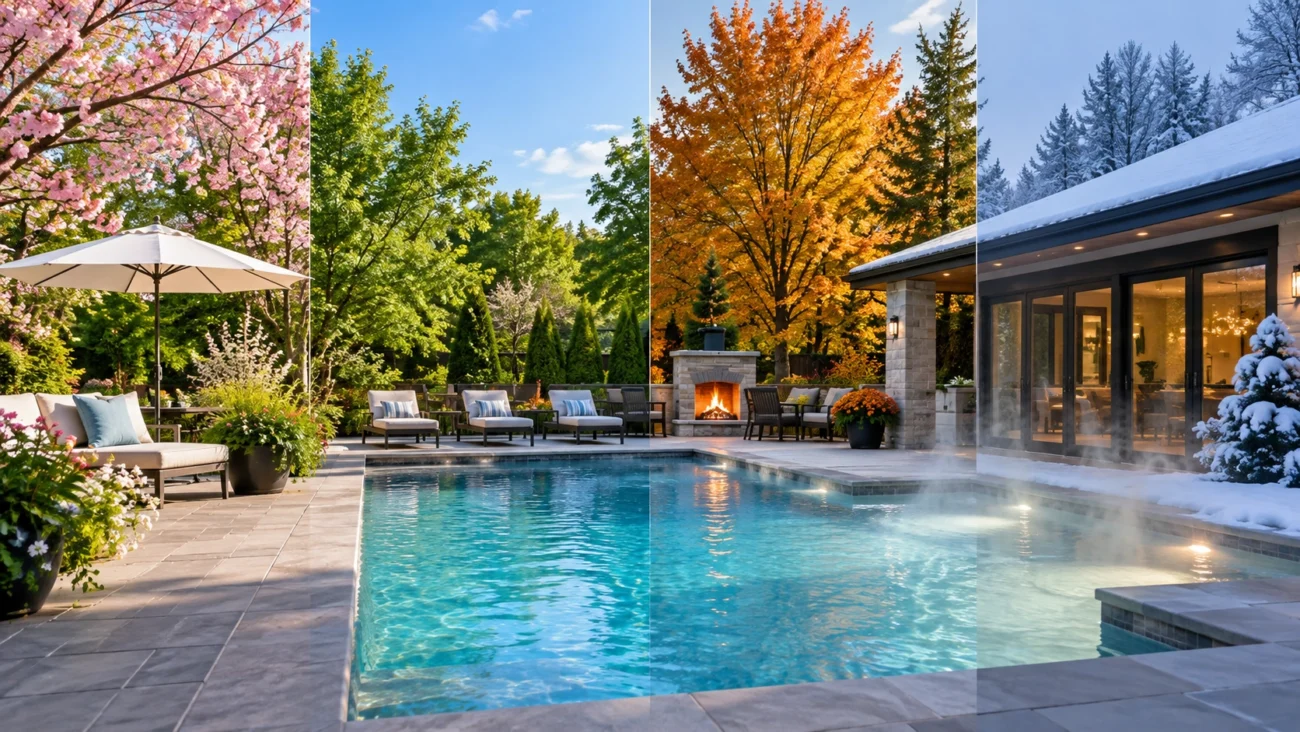
It is also wise to estimate ongoing costs for power, fuel, chemicals, seasonal service, repairs, and water. A lower initial quote is not always the lower-cost option if it excludes essential site work or weather protection. Photorealistic view of a thoughtfully planned backyard pool at golden hour in a four-season climate, with warm sunlight reflecting across calm water, a covered patio, durable decking, subtle landscaping, and distant hints of cool-weather terrain; natural directional light, soft shadows, and a welcoming, atmospheric mood.
Choose a Pool Shape and Size
Choose the pool around intended use, not just appearance. A rectangle can work well for lap swimming, automatic covers, and clean modern layouts. Free-form designs may complement natural landscaping. Narrow lap pools, plunge pools, and pool-spa combinations can deliver meaningful use in smaller yards without overwhelming the outdoor space. Think beyond the water itself. Tanning ledges, benches, wide steps, shallow play areas, and accessible entries can make the pool more usable for different ages. Preserve enough deck space for circulation, seating, supervision, and maintenance access. A compact pool with comfortable deck space often feels more inviting than a larger pool squeezed into the yard.
Plan for Heating and Energy Use
A four-season strategy usually means extending the swim season, not necessarily swimming outdoors through every winter condition. Pool size, desired water temperature, wind, shade, local utility costs, and how often the pool is used all affect heater selection. Gas heaters, heat pumps, solar support, and hybrid approaches can each make sense in the right setting. A fitted cover is one of the most important tools for comfort and efficiency because it helps limit heat loss, evaporation, and debris. Variable-speed pumps, timers, and automation can provide more precise control over circulation and heating schedules.
Manage Water, Drainage, and Weather
Water management affects both the installation and the long-term condition of the pool area. Plan for rain runoff, splash-out, snowmelt, and roof drainage. Decking should be slip-resistant, durable, and able to withstand repeated freezing and thawing. Properly sloped, drained, and channelized channels can help keep standing water away from the pool edge and nearby structures. Create a basic storm routine: secure loose furniture, clear drains and skimmer baskets, check the cover, inspect the water level, and look for washouts after severe weather. In winter, follow the recommended closing procedure for the equipment and local climate, rather than assuming every pool needs the same approach.
Add Safety Features From the Start
Safety should be part of the original design, not an afterthought. Include compliant fencing, self-closing and self-latching gates, clear depth markings, adequate nighttime lighting, secure equipment access, and slip-resistant walking surfaces. Keep furniture, toys, planters, and other climbable objects away from barriers. Safety equipment adds protection, but it never replaces active adult supervision or swimming skills. The CDC recommends a four-sided barrier that separates a home pool from the house and includes self-closing, self-latching gates. Review its guidance for keeping pools safe and healthy as part of the planning process.
Make Maintenance Easier
Smart design can reduce weekly work. Locate pumps, filters, heaters, and controls where technicians can reach them safely without disrupting the main outdoor living area. Select circulation equipment sized for the pool, and consider an automatic cleaner, chemical monitoring, remote controls, and automated water-level features where appropriate. Plan a routine for opening, regular testing, cleaning, fall closing, and inspections after hard freezes or major storms. Consistent maintenance protects water quality, reduces equipment stress, and can help identify small issues before they become expensive repairs.
Set a Realistic Project Timeline
Begin planning well before the preferred swim season. The process typically includes measuring the yard, developing a preliminary layout, reviewing utilities and drainage, obtaining permits, finalizing materials, scheduling excavation, completing structural and mechanical work, installing decking and landscaping, and testing all systems. Ask early which steps must be completed before excavation and which materials or weather conditions may affect the schedule. Freezing temperatures, heavy rain, inspections, and finish-curing times can all affect construction timing.
Common Questions About Four-Season Pools
Can a backyard pool be used all year?
It depends on the climate, heating system, cover, wind exposure, and homeowner expectations. In cold regions, a longer spring-through-fall season is often more practical than uninterrupted outdoor use in winter.
What pool shape works best in a small yard?
Compact rectangles, plunge pools, narrow lap pools, and custom layouts can all work well. The key is to preserve space for safe circulation, equipment access, and usable deck space.
What belongs in a pool contract?
The contract should define the scope of work, materials, equipment, drainage, permits, schedule, payment terms, warranty coverage, cleanup, change-order process, and final testing responsibilities.
Final Planning Checklist
- Review climate, winter conditions, property lines, utilities, and local rules.
- Confirm drainage, access, deck space, and equipment placement.
- Match the pool shape and size to real household use.
- Compare heating, cover, safety, and automation options.
- Estimate both project costs and ongoing operating expenses.
- Plan construction around approvals, weather, and the desired opening date.
A four-season backyard pool succeeds when it is designed for the entire property and the full ownership experience. Address climate, drainage, comfort, safety, maintenance, and budget early, and the finished pool can provide years of reliable enjoyment.
Conclusion
A successful backyard pool is the result of thoughtful planning long before construction begins. By considering climate, site conditions, safety, maintenance, energy use, and long-term operating costs together, homeowners can create a pool that is both enjoyable and practical. Prioritize features that match how your household will actually use the space rather than following design trends alone.
Working with experienced professionals and asking detailed questions during the planning process can help prevent costly changes later. With realistic expectations and a well-designed plan, a four-season pool can provide years of recreation, comfort, and value while fitting naturally into your property’s year-round operations.
