


Introduction
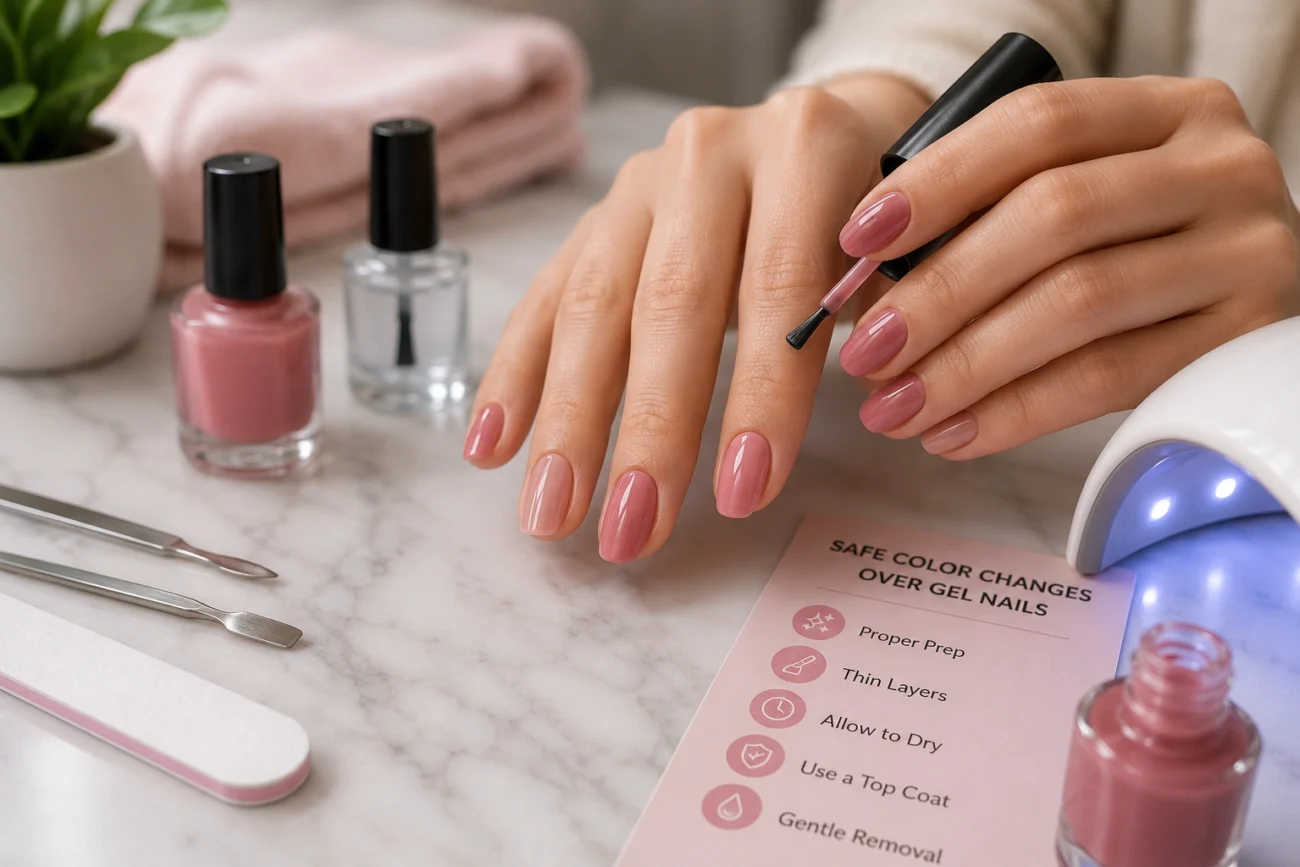
Nail polish on gel nails is an easy way to change your manicure color without removing the full gel layer. If your gel manicure is still smooth, fully cured, and firmly attached, you can usually paint over it with regular nail polish.
Regular nail polish dries naturally in the air. Gel polish contains different ingredients and must normally harden under a compatible UV or LED nail lamp. Gel extensions are used to add length or structure, while a gel overlay adds strength over the natural nail.
People often apply regular polish over gel when they want a temporary color change, need to hide minor tip wear, or want their manicure to match a special outfit. The process is simple, but careful preparation matters. Thick layers, harsh removal, and painting over damaged gel can lead to peeling or hide a nail problem.
This guide explains how to prepare, apply, dry, and remove nail polish while helping protect the gel manicure underneath.
Regular Nail Polish Over Gel: What Works and What Does Not
Regular nail polish can be applied over a gel manicure once the gel is completely cured. It can also be used on gel extensions, builder-gel overlays, and other finished gel enhancements. The existing surface should be clean, dry, and free from serious damage.
Do not paint over gel that feels soft, sticky, or uncured. Regular polish will not fix improperly cured gel, and covering it may increase the chance of skin irritation. You should also avoid painting over areas that are lifting, cracked, or separating from the natural nail. Moisture can enter these spaces, and an extra layer of color may make the problem harder to notice.
A very smooth gel top coat can sometimes cause regular polish to peel. Cleaning the surface well and, when necessary, gently removing some shine with a fine buffer can improve adhesion. However, aggressive buffing may weaken or scratch the manicure.
Choosing the Right Nail Polish and Supplies
Standard nail polish is usually the simplest choice for painting over gel nails because it dries without a lamp and is easier to remove. Applying another gel color is possible, but it requires compatible products, careful curing, and a more involved removal process.
A regular base coat is optional, but it can help the new color apply evenly and reduce staining, especially when using dark red, blue, green, or highly pigmented polish. A regular clear top coat is usually the safest finishing option because it is designed to work with air-dry polish.
You will also need a lint-free pad, mild soap, a soft nail brush, a fine buffer if required, and a small cleanup brush. For removal, begin with a non-acetone remover if you want to preserve the gel underneath. Acetone works faster, but frequent or prolonged contact may dull or soften some gel finishes and dry the surrounding skin.
Preparing Gel Nails for a Fresh Coat of Polish
Inspect every nail before applying color. Look for lifting near the cuticle or sidewalls, cracks across the gel, deep chips, unusual discoloration, or spaces where moisture may have entered. A damaged gel manicure should be repaired or removed instead of covered.
Wash your hands with mild soap and dry them completely. Remove lotion, cuticle oil, and surface grease with a lint-free pad. If the top coat is extremely glossy and previous polish has peeled from it, pass a fine buffer lightly over the surface. The goal is only to reduce the shine, not file through the gel.
Avoid cutting or damaging the cuticles. They help protect the area where the nail grows. Keep all polish products on the nail plate rather than the surrounding skin.
How to Apply Nail Polish on Gel Nails
Step 1: Clean and Inspect the Gel Manicure
Make sure the gel is fully cured, secure, and free from cracks or lifting. Clean away oil, dust, and other residue, then let the nails dry.
Step 2: Prepare the Nail Surface
Lightly smooth rough edges or raised chips. If necessary, gently reduce the surface shine with a fine buffer. Wipe away all dust before continuing.
Step 3: Apply a Suitable Base Coat
Add one thin layer of regular base coat. This can improve adhesion, create a more even surface, and help prevent dark colors from staining pale gel.
Step 4: Add Thin, Even Layers of Nail Polish
Apply the first coat in thin strokes from the base toward the tip. Leave a small space around the cuticle and sidewalls. Add a second thin coat only after the first one feels dry on the surface.
Step 5: Allow Each Coat to Dry Properly
Give every layer enough time to set. Applying fresh polish over a wet coat can cause streaks, bubbles, or dents.
Step 6: Seal the Color With a Top Coat
Finish with a thin layer of regular top coat. Brush it across the tip of the nail to help seal the free edge and reduce early chipping.
Step 7: Clean the Edges and Finish the Manicure
Use a small brush with a little remover to clean polish from the skin. Work carefully so the remover does not spread across the finished nail.
Drying Nail Polish Without Damaging the Gel Beneath
Regular nail polish may feel dry on the surface within 10 to 20 minutes, but it can remain soft underneath for several hours. Drying time depends on the formula, room temperature, and thickness of each coat.
A UV or LED nail lamp does not normally dry standard nail polish. These lamps are designed to harden compatible gel products. Placing ordinary polish under a lamp may warm it, but it will not make it cure like gel.
Thin coats, quick-dry drops, and gentle cool airflow can reduce the chance of smudging. Avoid hot water, tight gloves, opening cans, or pressing your nails against hard surfaces soon after painting.
Removing Nail Polish While Keeping the Gel Manicure Intact
To remove regular nail polish on gel nails, try a non-acetone remover first. Moisten a cotton or lint-free pad, press it against the color briefly, and wipe gently. Repeat as needed rather than rubbing aggressively.
Do not soak the entire nail unless the gel manicure is also being removed. Avoid scraping the color away with a metal tool because this can scratch or lift the gel. Glitter polish may require more patience, but it should still be removed gently.
If the gel begins lifting, develops cracks, or shows unusual green, yellow, brown, or dark areas, stop covering it with polish. Have the enhancement removed safely so the natural nail can be checked.
Common Problems and Simple Fixes
Nail Polish Peeling Off the Gel
Peeling usually happens when oil remains on the surface or the gel is too glossy. Clean the nails carefully, use thinner coats, and consider applying a base coat.
Color Streaks or Uneven Coverage
Streaks often come from using too little polish or brushing over a coat as it begins to dry. Apply smooth, thin layers and allow each one to set.
Bubbles Forming in the Polish
Bubbles can appear when the bottle is shaken strongly, coats are too thick, or polish is applied in a hot room. Roll the bottle gently between your hands instead of shaking it.
A Dull or Cloudy Finish
A cloudy surface may result from moisture, incompatible products, or a top coat applied over wet polish. Allow more drying time and use products from a reliable nail-care range.
Smudges and Pressure Marks
If the surface is still soft, smooth it carefully with another thin coat of polish or top coat. Deep dents may require removing and reapplying the color.
Staining on Light-Colored Gel
Dark polish can leave pigment behind. A clear base coat provides a useful barrier, while gentle removal helps prevent color from being pushed into small scratches.
Mistakes That Can Shorten the Life of Gel Nails
Painting over damaged gel is one of the biggest mistakes because color can hide lifting or moisture. Other common problems include applying thick coats, using strong remover too often, filing deeply into the gel, and picking at peeling polish.
Avoid combining products without checking how they are meant to be used. In particular, placing gel top coat over regular polish can cause wrinkling or peeling if the lower layers have not dried fully.
Making Nail Polish Last Longer Over Gel
Clean preparation and thin coats are the main keys to longer wear. Seal the free edge with color and top coat, then give the manicure enough time to harden before using your hands heavily.
Wear gloves while washing dishes or cleaning because repeated water and chemical exposure can weaken the finish. You can apply cuticle oil around the nails after the polish has dried, but avoid spreading it over the nail before painting. Reapply a thin regular top coat when the surface begins to lose shine.
Nail and Skin Safety During Color Changes
Stop using the products if you notice itching, burning, redness, swelling, blisters, or ongoing discomfort. Do not apply polish over broken skin or an injured nail, and avoid getting uncured gel on your skin.
Lifting, unusual discoloration, persistent pain, or changes in nail shape may require professional attention. Dermatologists also advise against picking off gel and recommend protecting and moisturizing nails between manicures. The American Academy of Dermatology provides further guidance on keeping nails healthy during gel use.
Nail Polish on Gel Nails: Quick Do-and-Don’t Checklist
| Do | Don’t |
| Paint only over fully cured, secure gel | Cover lifting, cracked, or discolored gel |
| Clean and dry the surface first | Apply polish over oil or lotion |
| Use thin, even coats | Add one heavy coat |
| Let each layer dry properly | Expect a nail lamp to dry regular polish |
| Remove color gently | Pick, scrape, or peel the polish |
| Keep products off the skin | Ignore irritation or pain |
Frequently Asked Questions About Nail Polish on Gel Nails
Can Regular Nail Polish Be Applied Directly Over Gel Nails?
Yes. It can usually be applied directly over gel that is cured, clean, and firmly attached. A base coat may improve adhesion and prevent staining.
Will Nail Polish Remover Take Off the Gel Underneath?
Non-acetone remover usually removes regular polish without taking off the full gel manicure. Acetone can dull or soften some finishes, especially with long contact.
Is a Base Coat Necessary Over Gel?
It is not always necessary, but it can help the polish last longer and protect pale gel from dark pigments.
Can Gel Top Coat Be Applied Over Regular Nail Polish?
It may work only when the regular polish is completely dry, but the products can be incompatible. A regular top coat is the more predictable choice.
How Long Does Regular Nail Polish Last on Gel Nails?
Wear time varies, but careful preparation and thin coats can help it remain neat for several days or longer.
Can Nail Polish Hide Gel Growth Near the Cuticle?
It can make regrowth less noticeable, but it will not rebalance or repair the manicure. Avoid flooding the grown-out area with thick polish.
How Often Can the Color Be Changed Without Removing the Gel?
You can change the color more than once if the gel remains secure and removal is gentle. Check the nails for damage during every color change.
Conclusion
Applying nail polish on gel nails offers a convenient way to refresh your color without immediately removing a sound gel manicure. The best results come from inspecting the gel, cleaning the surface, applying thin layers, and allowing plenty of drying time.
Use gentle remover when you are ready for another color, and never cover lifting, cracks, pain, or unusual discoloration. With careful application and removal, you can enjoy a temporary new shade while helping the gel manicure underneath stay smooth and protected.
Disclaimer:
This article is for general informational purposes only. Individual results, preferences, and circumstances may vary.
