


Introduction
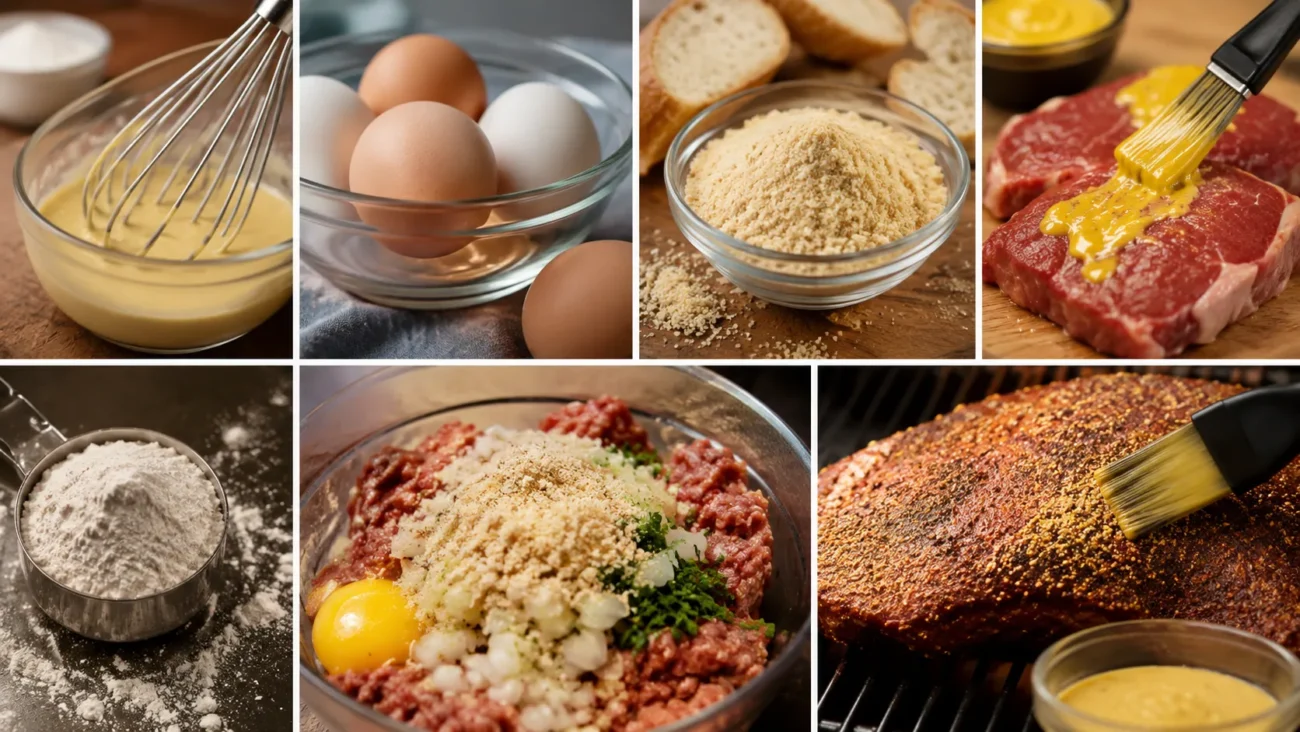
If you’ve spent any time reading recipes or watching cooking videos, you’ve probably come across the term “binder” — and it can mean surprisingly different things depending on the context. Someone rubbing mustard on a brisket before seasoning it is using a binder. So is someone adding an egg to meatloaf. These aren’t the same thing, even though they share a name.
This guide breaks down exactly what a binder is, the different types used in cooking, and when to use each one — so you’re never confused by the term again.
What Is a Binder in Cooking? (Core Definition)
In cooking, a binder is any ingredient used to hold other ingredients together, thicken a mixture, or help something adhere to a surface. The term is broad by design — it covers a wide range of ingredients and techniques, from eggs holding a meatloaf together to mustard helping a spice rub stick to a steak.
Because “binder” describes a function rather than a specific ingredient, almost anything with the right texture or chemical properties can act as one, depending on what you’re trying to achieve. This is exactly why the term causes confusion: a binder in a baking recipe and a binder in a barbecue rub are doing two completely different jobs, even though both are technically “binding” something.
Understanding which type of binder a recipe is referring to is the first step to using it correctly.
The Two Main Types of Binders (Clearing Up the Confusion)
Most confusion around the word “binder” comes from the fact that it’s used to describe two fundamentally different techniques. Here’s the clear distinction:
1. Structural Binders
These hold ingredients together so they keep their shape during cooking. If you’ve ever made meatballs, meatloaf, veggie burgers, or crab cakes, you’ve used a structural binder. Common examples include eggs, breadcrumbs, mashed potato, and oats. Without a structural binder, ground or finely chopped ingredients tend to fall apart during cooking, since there’s nothing holding the individual pieces together as they heat up.
2. Adhesion Binders
These help a dry rub or seasoning stick to the surface of meat before cooking, without adding much flavor of their own. Mustard is a classic example — it’s commonly used on brisket and pork shoulder before applying a dry rub. Other adhesion binders include oil, mayonnaise, and Worcestershire sauce. Their job isn’t to hold the meat together structurally; it’s purely to give the seasoning something to cling to, so it doesn’t fall off during cooking or handling.
Why the Confusion Happens
Both techniques are commonly called “binders” in casual cooking conversation, but they solve completely different problems. A structural binder question (“what binder should I use for meatballs?”) has a completely different answer than an adhesion binder question (“what binder should I use for my rub?”) — even though both use the same word.
Common Binders Used in Cookin
Here’s a breakdown of the most commonly used binders and what they’re typically used for.
Eggs
One of the most versatile structural binders. The proteins in eggs coagulate (firm up) when heated, helping hold mixtures like meatloaf, meatballs, and crab cakes together. Eggs are also used in baking to bind batters and doughs.
Breadcrumbs
Often used alongside eggs in structural binding. Breadcrumbs absorb moisture and help create a firmer, more cohesive texture in dishes like meatballs and burger patties.
Flour and Cornstarch
These are typically used as thickening binders in sauces, gravies, and soups rather than structural binders for solid foods. Both work by absorbing liquid and swelling when heated, thickening the mixture.
Mashed Potato
A less common but effective structural binder, particularly in dishes like croquettes or certain meatball recipes. It adds moisture and helps hold the mixture together without the flavor of breadcrumbs.
Gelatin
Used to bind liquid-based mixtures into a firmer, set texture, such as in aspic, some terrines, or certain desserts. Gelatin works differently from the binders above, since it sets through cooling rather than heat.
Oats
Common in dishes like meatloaf as an alternative to breadcrumbs, oats absorb moisture and help bind the mixture while also adding a slightly different texture.
Binders in Baking
Baking relies on binders just as much as savory cooking does, though the goal is usually to hold a batter or dough together rather than bind solid pieces of food.
Eggs
In baking, eggs serve as one of the primary binders, helping hold ingredients like flour, sugar, and fat together into a cohesive batter or dough. They also contribute to structure as the proteins set during baking.
Flour
Beyond its role as a base ingredient, flour also acts as a binder in baking. The gluten proteins in wheat flour create structure when mixed with liquid, helping baked goods hold their shape.
Xanthan Gum
Commonly used in gluten-free baking, xanthan gum mimics some of the binding properties of gluten, helping gluten-free batters and doughs hold together in the absence of wheat flour.
Butter and Fat
While not a binder in the traditional sense, fats like butter help hold certain mixtures together (such as pie crusts) by coating flour particles and limiting gluten development, contributing to texture and cohesion.
Binders for BBQ and Grilling (Rubs and Marinades)
In barbecue and grilling, a binder serves a completely different purpose than in baking or meatloaf: it helps a dry rub adhere to the surface of the meat, preventing it from falling off during handling or cooking.
Mustard
The most popular binder in BBQ circles, particularly for brisket and pork shoulder. Despite what many people assume, mustard doesn’t add a noticeable mustard flavor once cooked — the vinegar and spices largely cook off, leaving behind a thin, sticky layer that helps the rub cling to the meat.
Oil
A neutral option that adds no flavor of its own. Oil is a good choice when you want the rub’s flavor to be the only thing coming through, without any additional taste from the binder itself.
Mayonnaise
Less traditional but increasingly popular, mayonnaise works similarly to mustard and oil, with the added benefit of its fat content potentially helping with browning.
Worcestershire Sauce
Adds a subtle umami depth in addition to its binding properties, making it a popular choice for those who want the binder to contribute a bit of flavor rather than staying completely neutral.
Do You Actually Need a Binder for a Rub?
Not always. If the meat’s surface is already slightly moist, a rub can often stick without any additional binder. Binders become more useful on drier cuts of meat or when you’re applying a heavy coat of rub that might otherwise fall off during transport to the grill or smoker.
What Is “Meat Glue” (Transglutaminase)?
Beyond common household binders, there’s a more advanced binder used primarily in professional kitchens and food manufacturing: transglutaminase, often nicknamed “meat glue.”
Transglutaminase is an enzyme that binds proteins together at a molecular level, essentially fusing separate pieces of meat or fish into what appears to be a single, seamless cut. It’s used in professional settings to create dishes like reconstructed cuts of meat, certain sausages, or seafood products made from smaller scraps.
Unlike the binders discussed earlier in this guide, transglutaminase creates a genuinely permanent bond between proteins, rather than simply holding a mixture together during cooking. It’s rarely used in home cooking, both because it’s harder to source in small quantities and because most home recipes don’t require this level of structural manipulation.
If you come across the term “meat glue” while researching binders, it’s worth knowing it refers to this specific, more technical ingredient — not a common pantry item like mustard or eggs.
Gluten-Free and Vegan Binder Alternatives
Many traditional binders — eggs, breadcrumbs, and wheat flour — aren’t suitable for people avoiding animal products or gluten. Fortunately, there are several effective alternatives.
Flaxseed (“Flax Egg”)
Mixing one tablespoon of ground flaxseed with three tablespoons of water and letting it sit for a few minutes creates a gel-like mixture that mimics the binding properties of an egg. It’s commonly used in vegan baking and veggie burgers.
Chia Seeds
Similar to flaxseed, chia seeds form a gel when mixed with water and can be used as a binder in baking or plant-based patties.
Aquafaba
The liquid from canned chickpeas, aquafaba has surprising binding and even whipping properties, making it a popular egg substitute in vegan baking.
Gluten-Free Breadcrumb Alternatives
For structural binding without gluten, options like gluten-free breadcrumbs, crushed rice crackers, or cooked quinoa can serve a similar purpose to traditional breadcrumbs.
Xanthan Gum or Psyllium Husk
Both are commonly used in gluten-free baking to replicate the structural binding that gluten would normally provide.
Frequently Asked Questions
What’s the best binder for meatballs?
Eggs combined with breadcrumbs are the most common and reliable combination, helping the mixture hold its shape while staying moist during cooking.
Do you need a binder for a BBQ rub?
Not always. Binders like mustard or oil are most useful on drier cuts of meat or when applying a heavy coat of rub, but they’re not strictly necessary if the meat’s surface is already slightly moist.
Does mustard make BBQ taste like mustard?
No. The vinegar and spice flavors in mustard largely cook off during smoking or grilling, leaving behind a sticky layer that helps the rub adhere without adding a noticeable mustard flavor.
Can I skip a binder entirely?
For structural binders (like in meatballs or veggie burgers), skipping them often causes the mixture to fall apart during cooking. For adhesion binders (like mustard on a rub), skipping them is usually fine if the meat is already slightly moist.
What is meat glue?
Meat glue, or transglutaminase, is an enzyme used mainly in professional kitchens to bind separate pieces of meat or fish together at a molecular level. It’s different from common household binders and is rarely used in home cooking.
What’s a good vegan substitute for egg as a binder?
Flaxseed mixed with water (a “flax egg”), chia seeds, or aquafaba are all effective plant-based alternatives to eggs as a binder.
Conclusion
The word “binder” covers a lot of ground in the kitchen — from the egg that holds your meatloaf together to the mustard that helps a brisket rub stick before it hits the smoker. Understanding which type of binder a recipe is actually referring to, structural or adhesion, makes it much easier to choose the right ingredient and technique for what you’re cooking.
Whether you’re making meatballs, prepping a rack of ribs, or adapting a recipe for gluten-free or vegan diets, there’s almost always a binder suited to the job. Once you understand the difference, the term stops being confusing and starts being a useful part of your cooking vocabulary.
