


Introduction
What anesthesia is used for wisdom teeth depends on the patient, the type of extraction, and the recommendation of the dentist or oral surgeon. Wisdom tooth removal is not always the same for everyone. Some people only need their mouth numbed, while others may need a form of dental sedation to help them feel calm, relaxed, or less aware during the procedure.
Many parents hear the words “wisdom teeth surgery” and immediately think their teen must be completely “put to sleep.” In reality, there are several safe anesthesia options used for wisdom teeth removal, including local anesthesia, nitrous oxide, oral sedation, IV sedation, and general anesthesia. The right choice often depends on whether the tooth is fully erupted or impacted, how many teeth need to be removed, how anxious the patient feels, the patient’s age and health history, and what the dentist or oral surgeon believes is safest.
For example, a simple wisdom tooth removal may only require local anesthesia for pain control, while deeply impacted wisdom teeth or multiple extractions may call for stronger sedation. Parents may also worry about whether their child will feel pain, remember the procedure, or be safe while sedated. These are normal concerns, especially when the patient is a teen or young adult having oral surgery for the first time.
This guide explains the most common types of wisdom teeth anesthesia in simple, easy-to-understand language. However, the final decision should always be made by a qualified dentist, oral surgeon, or anesthesiology-trained provider who can review the patient’s medical history, anxiety level, and surgical needs.
The Short Answer: What Anesthesia Is Usually Used for Wisdom Teeth?
The most common anesthesia options for wisdom teeth removal are local anesthesia, nitrous oxide, oral sedation, IV sedation, and general anesthesia. The right option depends on how difficult the extraction is, how anxious the patient feels, and what the dentist or oral surgeon recommends after reviewing the patient’s health history.
Local anesthesia for wisdom teeth is used to numb the mouth around the tooth, so the patient should not feel sharp pain during the procedure. They may still feel pressure, movement, or pulling, but the area should stay numb. This option is often used for simple extractions or patients who are comfortable staying awake.
Sedation is different. Wisdom teeth removal sedation helps the patient feel calmer, sleepier, or less aware of what is happening. For example, nitrous oxide may help with mild anxiety, while IV sedation for wisdom teeth can make the patient very relaxed and less likely to remember the procedure. General anesthesia for wisdom teeth means the patient is fully asleep and unaware during the surgery.
Cleveland Clinic lists local anesthesia, IV sedation, and general anesthesia as common options that may be discussed before wisdom teeth removal. Mayo Clinic also notes that recovery can differ by anesthesia type. With local anesthesia, a patient may recover in the dental chair, while sedation or general anesthesia may require time in a recovery room before going home.
Why Anesthesia Is Needed During Wisdom Teeth Removal
Anesthesia is needed during wisdom teeth removal because not every wisdom tooth is easy to take out. Some wisdom teeth are fully visible above the gums, while others are only partially erupted, fully impacted, infected, or positioned close to important nerves in the jaw. Because of this, oral surgery anesthesia helps make the procedure safer, calmer, and more comfortable for the patient.
The main purpose of anesthesia is pain control. During the procedure, the dentist or oral surgeon needs to numb the area so the patient does not feel sharp wisdom tooth extraction pain. Even when only local anesthesia is used, the patient may still feel pressure, movement, pushing, or pulling. That can feel strange, but it should not feel like sharp pain when the area is properly numb.
Anesthesia also helps with tooth extraction comfort. Wisdom teeth removal can involve pressure on the jaw, especially if the tooth is impacted or needs to be sectioned into smaller pieces. For patients who feel nervous, dental sedation can reduce fear and help them stay relaxed. This is especially helpful for teens, anxious patients, or anyone having several wisdom teeth removed in one appointment.
Another important reason for anesthesia is that it helps the patient stay still during surgery. A sudden movement during an extraction can make the procedure more difficult, especially when dealing with impacted tooth anesthesia needs or teeth located near nerves. For longer or more complex cases, sedation may make the experience easier for both the patient and the surgical team.
It is also important to understand that sedation does not always replace dental numbing. In many wisdom teeth procedures, local anesthetic is still used at the surgical site even if the patient receives nitrous oxide, oral sedation, IV sedation, or general anesthesia. Sedation helps with relaxation and awareness, while local anesthesia helps block pain in the mouth.
Oral and maxillofacial surgeons are specifically trained to provide different levels of anesthesia, including local anesthesia, sedation, and general anesthesia in appropriate office-based settings. This training helps them choose the option that fits the patient’s health, anxiety level, and the complexity of the wisdom tooth removal.
Local Anesthesia for Wisdom Teeth
Local anesthesia is the simplest and most common type of anesthesia used for wisdom teeth removal. In plain English, it means the dentist or oral surgeon gives a numbing injection near the wisdom tooth to numb the gum, jaw, and surrounding area. The patient stays awake during the procedure, but the area being treated should not feel sharp pain.
This option is often used for a simple wisdom tooth extraction, especially when the tooth has fully come through the gum and is not deeply impacted. It may also be a good choice when only one or two wisdom teeth need to be removed and the patient does not feel very anxious about dental treatment.
During awake wisdom teeth removal, the patient may feel pressure, vibration, movement, or a pushing sensation. These feelings are normal because local anesthesia blocks pain, not all physical awareness. However, if the mouth is fully numb, the patient should not feel sharp cutting or pulling pain. Being awake does not mean feeling pain.
One benefit of dental local anesthesia is that recovery is usually faster compared with deeper sedation. Since the patient is not heavily sedated, they may feel more alert after the appointment and may not need as much recovery time in the office. Local anesthesia is also often lower in cost than IV sedation or general anesthesia, and it does not usually cause the same grogginess, nausea, or memory effects linked with deeper sedation.
For parents, local anesthesia may be enough for some teens, especially if the wisdom teeth are easy to remove and the teen is calm about the procedure. However, it may not be the best choice for highly anxious patients, teens with a strong gag reflex, or complicated impacted wisdom teeth that require a longer surgical procedure. In those cases, the oral surgeon may recommend adding sedation to help the patient stay more comfortable and relaxed.
Nitrous Oxide for Wisdom Teeth Removal
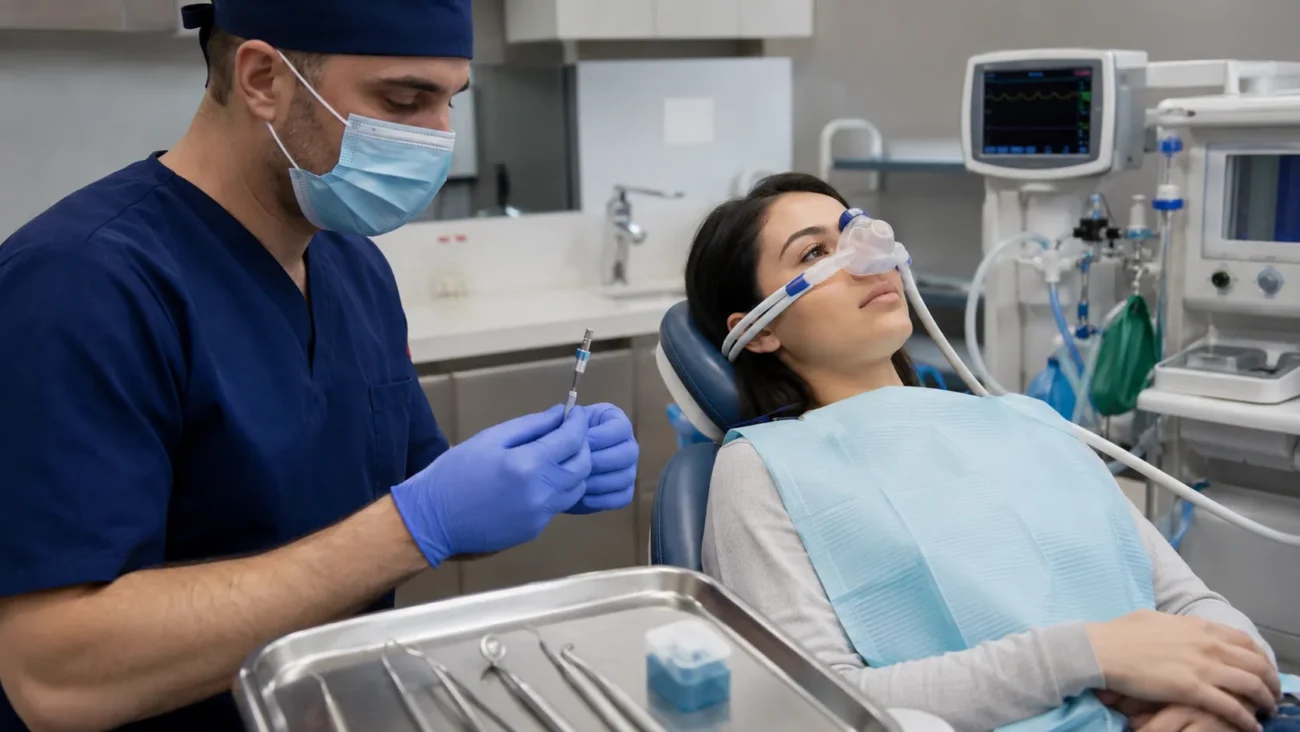
Nitrous oxide, often called laughing gas, is a light form of dental sedation used to help patients feel calmer during wisdom teeth removal. It is breathed in through a small mask placed over the nose. The patient stays awake, can usually respond to the dentist or oral surgeon, and still receives local anesthesia to numb the mouth.
For many patients, nitrous oxide dental sedation is used along with a numbing injection. The laughing gas helps with dental anxiety, while the local anesthetic controls pain around the wisdom tooth. In other words, nitrous oxide helps the patient feel relaxed, but it does not fully numb the surgical area by itself.
This option is often helpful for patients with mild sedation needs. It may be a good choice for someone who feels nervous but does not want deeper sedation, wants to stay awake, or is having a shorter and less complex wisdom tooth extraction. The ADA describes nitrous oxide mixed with oxygen as a commonly used and appropriate method for helping manage dental pain and anxiety when used properly.
Patients often describe the feeling as relaxed, light, warm, or less nervous. Some people feel a little floaty or giggly, which is why it is commonly called laughing gas. Even so, the patient is usually still aware of what is happening and can follow simple instructions during the procedure.
One benefit of laughing gas for wisdom teeth is that it wears off quickly after the dentist stops giving it. This makes it less intense than IV sedation or general anesthesia. It may also feel less intimidating for patients who are afraid of needles because the sedation is breathed in rather than given through an IV.
For parents, nitrous oxide can be a gentle option for teens who only need help staying calm. However, it may not be strong enough for deeply impacted wisdom teeth, long procedures, or very anxious teens. In those cases, the oral surgeon may recommend a deeper form of conscious sedation, IV sedation, or another anesthesia option based on the patient’s needs.
Oral Sedation for Wisdom Teeth
Oral sedation for wisdom teeth means the patient takes a prescribed medication by mouth before the procedure to help reduce anxiety and increase relaxation. This is sometimes called sedation pill dental surgery because the medicine is usually taken as a tablet or liquid before the appointment, depending on the provider’s instructions.
Oral sedation is usually combined with local anesthesia. The sedation helps the patient feel calmer and sleepier, while the local anesthetic numbs the wisdom tooth area for pain control. Some patients feel very relaxed, drowsy, or less aware of the procedure. Others may remember only parts of it afterward.
This option may be helpful for patients with moderate dental sedation needs. It is often considered for people who feel more than mild anxiety but do not want IV sedation. It may also work well for wisdom tooth procedures that are not extremely complex or expected to take a long time.
Parents should know that oral sedation must be taken seriously. The patient may need a responsible adult to drive them home and stay with them after the appointment. Sedation instructions should be followed exactly, including when to take the medication, whether food or drink should be avoided, and what activities should be skipped afterward. Parents should never give extra wisdom tooth anxiety medication unless it was specifically prescribed and approved by the dentist, oral surgeon, or anesthesia provider.
This is especially important for younger patients. ADA guidance notes that children 12 and under can sometimes become more deeply sedated than intended, which is why pediatric sedation requires careful professional judgment, proper dosing, and monitoring. For teens and young adults, the provider will consider age, weight, medical history, current medications, allergies, and anxiety level before recommending preoperative sedation.
Oral sedation can make wisdom teeth removal feel much easier for anxious patients, but it is not the right choice for everyone. A qualified dental professional should decide whether it is safe and appropriate based on the patient’s health and the difficulty of the extraction.
IV Sedation for Wisdom Teeth
IV sedation for wisdom teeth removal is a deeper form of dental sedation where medication is given through a vein, usually in the arm or hand. It helps the patient enter a very relaxed, drowsy, “twilight” state. Cleveland Clinic describes IV sedation as anesthesia given through a vein to produce twilight sleep, which means the patient is not fully under general anesthesia but may feel deeply calm and unaware during much of the procedure.
Many patients who receive twilight sedation do not remember much, or sometimes anything, about their wisdom teeth removal afterward. They may respond to simple instructions during the procedure, but their memory of the experience is often limited. This is one reason IV sedation is commonly chosen for patients who feel nervous about oral surgery.
Even with dental IV anesthesia, local anesthesia is usually still used to numb the mouth. The IV medication helps with relaxation, awareness, and anxiety, while the local anesthetic blocks pain around the wisdom teeth. This combination can make the procedure more comfortable, especially when the teeth are difficult to remove.
IV sedation is often recommended when several wisdom teeth are removed at once, especially if the teeth are impacted. It may also be helpful for patients with moderate to severe dental anxiety or those who want to feel like they are wisdom teeth asleep but not general anesthesia. For many people, it offers a middle ground between staying fully awake and being completely unconscious.
Parents should know that IV sedation usually requires more preparation than local anesthesia or nitrous oxide. The oral surgeon may give fasting instructions before the appointment, and a responsible adult will usually need to drive the patient home. After the procedure, the patient may feel groggy, sleepy, emotional, or unsteady for several hours.
During impacted wisdom teeth sedation, the dental office should carefully monitor the patient’s breathing, oxygen level, pulse, and blood pressure. Mayo Clinic notes that IV sedation or general anesthesia may require preparation instructions such as fasting and medication guidance, so parents should follow all pre-op directions closely.
For teens and young adults, IV sedation can be a helpful option when wisdom teeth removal is expected to be longer, more stressful, or more complex. Still, it should always be recommended and managed by a qualified dentist, oral surgeon, or anesthesia-trained provider who can review the patient’s health history and decide whether IV sedation is safe.
General Anesthesia for Wisdom Teeth
General anesthesia for wisdom teeth means the patient is fully unconscious during the procedure and does not experience awareness while the surgery is happening. This is the option many people think of when they hear “being put to sleep.” Cleveland Clinic lists general anesthesia as an option where the patient loses consciousness completely during wisdom teeth removal.
This type of surgical anesthesia may be used for more difficult cases, but it is not necessary for every wisdom tooth extraction. Colgate notes that general anesthesia is not typically required for all wisdom tooth removals, though it may be recommended for long, complicated procedures or patients with high stress levels.
General anesthesia may be considered for very complex impacted wisdom teeth, especially when the teeth are deeply trapped under the gums or bone. It may also be recommended for patients with severe dental anxiety, dental phobia, special healthcare needs, or certain medical and surgical situations where staying awake or lightly sedated would not be ideal. In some cases, fully asleep wisdom teeth removal may take place in a hospital or surgical center instead of a regular dental office.
For parents, it is important to understand that “fully asleep” does not automatically mean it is the best option for every teen or young adult. General anesthesia can be very helpful in the right situation, but it may also involve more preparation, closer monitoring, and a longer recovery period than local anesthesia, nitrous oxide, or IV sedation.
After unconscious dental surgery, the patient may feel groggy, sleepy, or confused for a while. Some patients may have nausea after waking up. If airway support was used during the procedure, the patient may also notice a mild sore throat. Because general anesthesia is deeper than other options, the patient may need longer observation before being discharged.
For a complex wisdom tooth extraction, general anesthesia can make the procedure easier and more comfortable when the case truly calls for it. Still, the decision should always be made by a qualified oral surgeon, dentist, or anesthesia-trained provider after reviewing the patient’s health history, anxiety level, and surgical needs.
Local Anesthesia vs Sedation vs General Anesthesia: What’s the Difference?
When comparing local vs general anesthesia for wisdom teeth, it helps to understand that “sedation” and “anesthesia” are often used together, but they are not always the same thing. Local anesthesia blocks pain in the mouth. Sedation helps reduce fear, stress, and awareness. General anesthesia makes the patient fully unconscious during the procedure.
Here is a simple comparison of the most common wisdom tooth numbing options and sedation choices:
| Option | Awake or Asleep? | Pain Control | Memory of Procedure | Common Use |
| Local anesthesia | Awake | Mouth is numb | Usually remembers | Simple extraction |
| Nitrous oxide | Awake but relaxed | Used with numbing | Usually remembers some | Mild anxiety |
| Oral sedation | Drowsy | Used with numbing | May remember little | Moderate anxiety |
| IV sedation | Very relaxed or sleepy | Used with numbing | Often remembers little or none | Multiple or impacted teeth |
| General anesthesia | Fully asleep | Complete surgical anesthesia | No memory | Complex cases |
The main difference in sedation vs anesthesia is what each one does for the patient. Local anesthesia is mainly for pain control. It numbs the gum, jaw, and tissue around the wisdom tooth so the patient should not feel sharp pain during the extraction.
Sedation is mainly for comfort and anxiety. Nitrous oxide, oral sedation, and IV sedation can help the patient feel calmer, sleepier, or less aware of the procedure. With twilight sedation vs general anesthesia, the patient may feel deeply relaxed and remember little with IV sedation, but they are not always fully unconscious in the same way they are with general anesthesia.
General anesthesia is the deepest option. The patient is fully asleep and does not remember the procedure. It may be used for complex wisdom tooth cases, severe anxiety, special healthcare needs, or surgical situations where a deeper level of anesthesia is safer or more practical.
How Dentists and Oral Surgeons Choose the Right Anesthesia
Dentists and oral surgeons do not choose wisdom teeth anesthesia randomly. The best option is based on the patient’s health, comfort level, and how difficult the procedure is expected to be. This is why a wisdom teeth consultation is important before the extraction.
During the consultation, the provider may review the patient’s age, weight, dental medical history, current medications, allergies, and any past problems with anesthesia. If relevant, they may also ask about pregnancy status, breathing issues, airway concerns, asthma, sleep apnea, or other medical conditions that could affect anesthesia safety.
The dentist or oral surgeon will also look at the wisdom teeth themselves. They may consider how many teeth need to be removed, whether the teeth are fully erupted or impacted, and how long the surgery may take. An impacted wisdom tooth X-ray or 3D imaging scan can help show whether the tooth is close to nerves, trapped under bone, angled toward another tooth, or likely to require a more complex extraction.
Dental anxiety is another important factor. A calm patient having one simple extraction may do well with local anesthesia. A very anxious teen having four impacted wisdom teeth removed may need IV sedation or another deeper option. The goal is to choose anesthesia that controls pain, supports comfort, and keeps the patient safe throughout the procedure.
Oral and maxillofacial surgeons receive specific oral surgeon anesthesia training as part of their professional education. Depending on local rules and professional standards, they may also be evaluated or certified for office-based anesthesia safety. AAOMS emphasizes anesthesia training, continuing education, and office anesthesia evaluation programs for oral and maxillofacial surgeons.
A helpful parent tip is to bring a full list of medications, supplements, allergies, medical conditions, and any past anesthesia reactions to the appointment. Even small details can help the provider choose the safest and most appropriate anesthesia plan for wisdom teeth removal.
What Parents Should Ask Before Their Teen Gets Anesthesia
For many families, teen wisdom teeth removal feels stressful because anesthesia is involved. Parents want to know their child will be comfortable, properly monitored, and safe throughout the procedure. A good consultation should give you clear answers before surgery day, not leave you guessing.
One of the most important questions to ask the oral surgeon is: “What type of anesthesia do you recommend and why?” The answer should be based on your teen’s health history, anxiety level, and how complex the wisdom tooth removal is expected to be. You can also ask whether your child will be awake, drowsy, deeply relaxed, or fully asleep during the procedure.
Parents should also ask if local anesthesia will still be used. In many cases, even when sedation is used, the mouth is still numbed to control pain at the surgical site. This helps explain the difference between sedation for relaxation and anesthesia for pain control.
It is also helpful to ask who will monitor your teen during the procedure and what type of dental anesthesia monitoring will be used. Depending on the anesthesia level, monitoring may include breathing, oxygen level, pulse, and blood pressure. You can ask how long recovery usually takes, what side effects are normal, and when you should call the office after surgery.
Before the appointment, parents should ask about fasting instructions and medication guidance. Some types of sedation may require your teen to avoid food or drink for a certain period. You should also ask which medications should be continued, paused, or adjusted, especially if your teen takes prescriptions, over-the-counter medicines, or supplements.
Emergency readiness is another important part of wisdom teeth sedation safety. Parents can ask whether the office has oxygen, suction, airway equipment, trained staff, and reversal medications when applicable. These questions are not meant to challenge the provider. They help you understand how the office prepares for safe anesthesia care.
A practical parent guide for wisdom teeth should always include this reminder: the safest choice is not always the deepest anesthesia. The best option is the one that matches your teen’s medical history, anxiety level, and procedure complexity while allowing the dental team to manage pain and safety properly.
Preparing for Wisdom Teeth Anesthesia
Good wisdom teeth anesthesia preparation can make surgery day feel much less stressful. The most important rule is to follow the dentist’s or oral surgeon’s instructions exactly. Different types of anesthesia have different preparation steps, so the instructions for local anesthesia may not be the same as the instructions for IV sedation or general anesthesia.
For deeper sedation, preparation may include fasting before wisdom teeth removal. This often means avoiding food or drink for a certain number of hours before the appointment, especially if IV sedation or general anesthesia will be used. Mayo Clinic notes that IV sedation or general anesthesia may involve fasting after midnight and specific medication instructions. Patients should not stop prescription medicines unless the surgeon or healthcare provider tells them to do so.
Comfortable clothing is also helpful. The patient may be asked to wear loose sleeves so the team can check blood pressure or place an IV if needed. Some offices may ask patients to avoid nail polish because oxygen monitoring devices are often placed on the finger. These small details can help the dental team monitor the patient more easily during the procedure.
A responsible adult should come to the appointment if sedation is being used. Teens and young adults usually should not drive themselves home after oral sedation, IV sedation, or general anesthesia. It is also smart to avoid school, work, driving, sports, exercise, and important decisions for the rest of the day after deeper sedation.
For parents, teen oral surgery preparation should begin before the appointment, not after the patient comes home. Prepare recovery supplies in advance so everything is ready. Helpful items may include gauze, ice packs, prescribed or recommended pain relievers, water, and soft foods.
Good soft food choices may include yogurt, applesauce, mashed potatoes, and soup that is warm but not too hot. Smoothies can also be useful, but patients are often told not to use straws after wisdom teeth removal because suction may disturb the healing blood clot. Following the written wisdom teeth surgery instructions carefully can help reduce discomfort, lower the risk of complications, and make recovery easier.
What Happens During the Procedure
Knowing the basic oral surgery steps can make the appointment feel less intimidating for both parents and patients. A typical wisdom teeth removal procedure starts with arrival and check-in. The dental team may confirm the patient’s name, review consent forms, and go over the planned anesthesia or sedation option.
Before the procedure begins, the dentist, oral surgeon, or clinical team usually reviews the patient’s medical history again. This may include questions about medications, allergies, recent illness, past anesthesia reactions, and when the patient last ate or drank. Vitals such as blood pressure, pulse, and oxygen level may also be checked, especially if sedation or general anesthesia is being used.
Next, the anesthesia or sedation is started. This may involve a numbing injection, nitrous oxide through a small nose mask, oral sedation medicine, IV sedation, or general anesthesia, depending on the treatment plan. Even when sedation is used, a local anesthetic is often given to numb the surgical area so the patient does not feel sharp pain during the wisdom tooth extraction process.
Once the area is numb and the patient is comfortable, the oral surgeon removes the wisdom teeth. Some teeth come out more simply, while impacted wisdom teeth may require a small incision in the gum or removal of a small amount of bone. In some cases, the tooth may be divided into smaller pieces to make removal easier and safer.
After the wisdom teeth are removed, stitches may be placed if needed. Gauze is then used to help control bleeding and protect the healing area. The length of the procedure can vary. A simple extraction may be fairly quick, while removing several impacted wisdom teeth can take longer.
Before going home, the patient will be monitored during the early stage of recovery. Recovery after sedation may take more time than recovery after local anesthesia alone. Parents should know that a teen or young adult may look sleepy, emotional, confused, or a little unsteady after sedation. This is common and usually improves with monitoring, rest, and following the post-op instructions carefully.
Recovery After Wisdom Teeth Anesthesia
Wisdom teeth anesthesia recovery depends on the type of anesthesia or sedation used during the procedure. Some patients feel alert fairly quickly, while others need more time before they are ready to go home. This is normal, especially when sedation or general anesthesia is involved.
After local anesthesia, the mouth may stay numb for a few hours. The lips, tongue, chin, gums, or cheeks may feel strange until the numbness wears off. During this time, the patient should avoid chewing solid food because it is easy to accidentally bite the cheek, lip, or tongue. A numb mouth after extraction is expected, but feeling should slowly return.
After sedation or general anesthesia, recovery may take longer. The patient may feel sleepy, unsteady, forgetful, emotional, or mildly nauseated. These common sedation side effects usually improve with rest and careful monitoring. Mayo Clinic explains that patients who receive sedation or general anesthesia may be taken to a recovery room, while patients who only receive local anesthesia may recover in the dental chair.
Common after-effects can include drowsiness, mild nausea, a sore jaw, swelling, light bleeding, and temporary numbness around the mouth. These symptoms are often part of normal wisdom teeth aftercare, but they should gradually improve. The dental team will usually provide written instructions for bleeding control, pain medicine, eating, drinking, brushing, and activity limits.
Parents should help the patient walk after sedation because balance may be affected. A responsible adult should drive the patient home and stay nearby for the rest of the day. The patient should not drive, exercise, play sports, use heavy equipment, or do anything risky until the provider says it is safe.
Once drinking is allowed, encourage small sips of water to help prevent dehydration. Soft foods can be added as directed. Parents should also watch for breathing problems, excessive sleepiness, heavy bleeding, repeated vomiting, worsening swelling, fever, or pain that becomes more severe instead of improving. If anything feels unusual, call the oral surgeon’s office and follow the written post-op instructions carefully after recovery room dental surgery.
Is Wisdom Teeth Anesthesia Safe?
Many parents ask, “Is wisdom teeth anesthesia safe?” In most cases, anesthesia for wisdom teeth removal is generally safe when it is provided by properly trained dental or medical professionals with the right screening, dosing, equipment, and monitoring. However, no anesthesia or sedation option is completely risk-free, which is why the patient’s health history and procedure plan matter so much.
The level of risk depends on the type of anesthesia used. Local anesthesia usually has fewer whole-body effects because it mainly numbs the mouth. Deeper sedation, such as oral sedation, IV sedation, or general anesthesia, requires closer attention because it can affect alertness, breathing, and recovery.
Possible dental sedation risks may include nausea, vomiting, drowsiness, allergic reaction, breathing changes, over-sedation, or medication interactions. Some patients may also feel emotional, confused, or very sleepy after sedation. These effects are often temporary, but they should still be taken seriously and monitored carefully.
Some patients may need extra caution before receiving sedation or general anesthesia. This can include patients with sleep apnea, severe asthma, heart conditions, obesity-related airway concerns, neurologic conditions, previous anesthesia complications, or certain medication use. These details help the dentist, oral surgeon, or anesthesia-trained provider decide which option is safest.
For children and younger teens, pediatric dental sedation requires special care. AAPD and AAP pediatric sedation guidance emphasizes a systematic approach before, during, and after sedation to help protect children’s safety. This includes reviewing the patient’s health, choosing the right dose, monitoring the patient properly, and making sure recovery is stable before discharge.
For parents, the most reassuring thing to know is that oral surgery anesthesia safety starts before the procedure. Honest medical history, proper fasting when required, correct medication dosing, trained staff, emergency readiness, and careful monitoring all play a role in teen anesthesia safety. If you are unsure about the recommended option, ask the oral surgeon why it is being used, how your child will be monitored, and what signs to watch for after going home.
Pain Medicine After Wisdom Teeth Removal: What Parents Should Know
Anesthesia helps control pain during wisdom teeth removal, but pain after wisdom tooth extraction is managed separately during recovery. Once the numbing medicine wears off, it is normal for the jaw, gums, and extraction sites to feel sore. This discomfort is usually strongest during the first few days and should gradually improve with proper care.
Common wisdom teeth pain medicine may include ibuprofen, acetaminophen, or a combination recommended by the oral surgeon. Cold compresses can also help reduce swelling and soreness during the first day or two. In some cases, the surgeon may prescribe stronger pain medication, but this is usually reserved for patients who need extra pain control.
Parents should follow the surgeon’s dosing instructions carefully. Do not guess the dose, double up on medicine, or give pain medicine more often than directed. This is especially important for younger patients, teens, or anyone taking other medications. If pain is not controlled with the recommended plan, call the oral surgeon instead of adding extra medicine on your own.
A key pediatric safety point is that codeine and tramadol are not recommended for children under 12. ADA coverage of pediatric dental pain guidance notes that these medicines are contraindicated in children under 12, aligning with FDA safety warnings. Teens should also never take leftover prescription pain medicine from another person, even if it was used for a similar dental procedure.
Parents should also watch for wisdom teeth recovery warning signs. Call the oral surgeon if pain gets worse after day 3, swelling increases after 48 to 72 hours, or the patient develops fever, pus, heavy bleeding, persistent vomiting, or trouble breathing. Severe pain with a bad taste, bad breath, or an empty-looking socket may be a sign of dry socket.
Mild post-op dental pain is expected after wisdom teeth removal, but pain should slowly move in the right direction. If symptoms seem unusual, severe, or are not improving, it is always better to contact the dental office for guidance.
Which Anesthesia Is Best for Anxious Patients?
The best anesthesia for anxious patients depends on how strong the anxiety is and how complex the wisdom teeth removal will be. Some people feel nervous but can manage the procedure with light support. Others have a strong fear of wisdom teeth removal and may need a deeper sedation option to stay calm and comfortable.
For mild dental anxiety wisdom teeth cases, nitrous oxide with local anesthesia may be enough. The local anesthesia numbs the mouth, while nitrous oxide helps the patient feel more relaxed but still awake and able to respond. This can work well for shorter procedures or patients who mainly need help taking the edge off their nerves.
For moderate anxiety, the dentist or oral surgeon may recommend oral sedation or IV sedation. Oral sedation can help the patient feel sleepy and calmer before the procedure starts. IV sedation for anxiety is often stronger and may be helpful for patients who do not want to remember much about the extraction.
For severe anxiety, dental phobia, past panic attacks, or very difficult impacted wisdom teeth, IV sedation or general anesthesia may be considered. The right choice should come from the provider’s recommendation after reviewing the patient’s health history, anxiety level, and surgical needs.
Dental fear is common, and patients should not feel embarrassed to talk about it honestly. Anxiety is not “being dramatic.” It can affect comfort, cooperation, safety, and how smoothly the procedure goes. For teens, parents can help by explaining fears clearly during the consultation instead of waiting until surgery day.
Helpful steps include asking for a pre-op consultation, discussing any history of panic attacks or fainting, asking what the patient may remember, and requesting written instructions. If allowed, bringing a parent or trusted adult can also help the patient feel more secure before and after the procedure. The goal of sedation for anxious patients is not just to make the procedure easier, but to help the patient feel safe, supported, and properly cared for.
Can Wisdom Teeth Be Removed Without Being Put to Sleep?
Yes, many wisdom teeth can be removed without being put to sleep. In some cases, wisdom teeth removal awake is done with local anesthesia only. This means the patient stays awake during the procedure, but the mouth is numbed so they should not feel sharp pain.
This option may work well for a simple extraction, especially when the wisdom tooth has already erupted through the gum and is easy to reach. It may also be suitable for patients with low anxiety, one or two teeth being removed, and a shorter procedure. In these cases, local anesthesia only for wisdom teeth may be enough to keep the patient comfortable.
A common question is, “Can you get wisdom teeth removed without sedation?” The answer is yes, but it depends on the person and the difficulty of the extraction. Some patients are comfortable with an awake tooth extraction, while others may feel too nervous or may need more support because of the way their wisdom teeth are positioned.
Deeper sedation may be preferred when all four wisdom teeth are removed at once, the teeth are impacted, the patient has a strong gag reflex, or the surgery is expected to be more complex. It may also be recommended for patients with high anxiety or dental phobia.
The most important point is this: being awake does not mean untreated pain. Local anesthesia should numb the mouth before the wisdom tooth is removed. The patient may feel pressure, movement, or vibration, but they should not feel sharp pain when the area is properly numb.
Cost and Insurance Considerations for Wisdom Teeth Anesthesia
The wisdom teeth anesthesia cost can vary from one patient to another. It depends on the type of anesthesia used, how long the procedure takes, how many wisdom teeth are removed, and whether the teeth are simple or impacted. A quick extraction with local anesthesia may cost less than a longer surgical procedure that requires IV sedation or general anesthesia.
Local anesthesia is often the least expensive option because it usually involves numbing the mouth without deeper sedation. Nitrous oxide or oral sedation may add to the total cost, but they are often less expensive than IV sedation. General anesthesia dental cost is usually higher because it may require more medication, closer monitoring, trained staff, and sometimes a hospital or surgical-center setting.
The setting also matters. Wisdom teeth removal done in a dental office may be priced differently than a procedure done in a hospital or outpatient surgery center. Provider training, location, insurance rules, and the complexity of the impaction can also affect the final oral surgery estimate.
Parents should ask clear cost questions before surgery day. Helpful questions include: Is anesthesia billed separately? Is wisdom teeth sedation insurance coverage available under my plan? Is pre-authorization required? What is the estimated out-of-pocket cost? Does the estimate include the consultation, X-rays, anesthesia, extraction, and follow-up care?
A good practical tip is to request a written treatment plan before the procedure. This can help families understand what is included, what may be billed separately, and what insurance may or may not cover. It also gives parents time to compare the recommended anesthesia option with the patient’s comfort, safety needs, and budget.
Common Myths About Wisdom Teeth Anesthesia
There are many wisdom teeth anesthesia myths that can make patients and parents feel more nervous than they need to be. Understanding the basic dental sedation facts can make the whole process feel clearer and less scary.
One common myth is that everyone must be fully asleep for wisdom teeth removal. The truth is that many extractions are done with local anesthesia, nitrous oxide, oral sedation, or IV sedation. General anesthesia is only one option, and it is usually reserved for more complex cases, severe anxiety, special healthcare needs, or situations where the provider believes it is the safest choice.
Another myth is that local anesthesia means the patient will feel pain. In reality, local anesthesia is used to numb the mouth so the patient should not feel sharp pain during the procedure. They may still feel pressure, movement, or vibration, but those sensations are different from untreated pain.
Some people also confuse IV sedation vs general anesthesia. They are not the same. IV sedation often creates deep relaxation or a “twilight sleep” feeling, and many patients remember little or nothing afterward. General anesthesia means the patient is fully unconscious and does not experience awareness during the surgery.
Another myth is that laughing gas for wisdom teeth is enough for every patient. Nitrous oxide can be helpful for mild anxiety and simpler procedures, but it may not be strong enough for complex impacted wisdom teeth, long surgeries, or patients with severe dental fear.
Parents may also hear that teens always bounce back immediately after wisdom teeth anesthesia. Some teens recover quickly, but others may feel groggy, nauseated, emotional, forgetful, or unsteady for several hours after sedation. This is why adult supervision, rest, and written aftercare instructions are important after the procedure.
When to Call the Oral Surgeon After Anesthesia or Wisdom Teeth Removal
Knowing when to call the oral surgeon after wisdom teeth removal is an important part of safe recovery. Some discomfort, swelling, light bleeding, and tiredness can be normal after the procedure, especially if sedation or general anesthesia was used. However, certain symptoms may point to wisdom teeth complications and should not be ignored.
Call the provider if the patient has trouble breathing, chest pain, severe or worsening swelling, or heavy bleeding that does not slow down with gentle pressure. You should also contact the oral surgeon if the patient develops a fever, persistent vomiting, a rash, itching, hives, or other possible allergic symptoms.
Parents should also watch for anesthesia side effects after wisdom teeth that do not improve as expected. Mild sleepiness or confusion can happen after sedation, but confusion that does not get better, extreme drowsiness, or difficulty waking the patient should be taken seriously. If anything feels unusual or unsafe, it is better to call and ask.
Pain should usually improve gradually after the first few days. Severe pain after the third day, especially if it comes with a bad taste, bad breath, or pain that spreads toward the ear, may be a sign of dry socket or another problem. Bad taste, pus, fever, or increasing swelling may also be wisdom teeth infection signs and should be checked by the dental team.
Breathing problems, a severe allergic reaction, chest pain, or loss of consciousness require urgent medical help right away. For parents, a simple but helpful step is to save the oral surgeon’s office number and after-hours emergency number before surgery day. That way, if symptoms appear during recovery, you are not searching for contact information while stressed.
Conclusion
The answer to what anesthesia is used for wisdom teeth depends on the patient, the procedure, the anxiety level, and how complex the extraction is expected to be. There is no single option that is right for everyone, which is why an oral surgeon consultation is so important before wisdom teeth removal.
For a simple extraction, local anesthesia may be enough because it numbs the mouth and helps control pain. Nitrous oxide can be added for mild anxiety, while oral sedation may help patients feel calmer and more relaxed. IV sedation is commonly used when several wisdom teeth are removed at once or when the teeth are impacted. General anesthesia may be recommended for complex cases, severe anxiety, special healthcare needs, or situations where deeper surgical anesthesia is more appropriate.
For parents, the best anesthesia for wisdom teeth is not always the deepest option. The best choice is the safest option that supports wisdom teeth removal comfort while matching the patient’s health history, anxiety level, and the difficulty of the extraction.
Before surgery day, ask clear questions about the recommended anesthesia, monitoring, recovery, and possible side effects. After the procedure, follow all pre-op and post-op instructions carefully. With the right plan, proper screening, and a qualified dental team, safe wisdom teeth anesthesia can help make the experience more comfortable and less stressful for both patients and parents.
Disclaimer
This article is for general informational purposes only and is not a substitute for professional dental or medical advice. Anesthesia options, recovery experiences, and treatment recommendations may vary based on each patient’s health, age, anxiety level, and procedure complexity. Always consult a qualified dentist, oral surgeon, or healthcare provider for guidance specific to your situation.
