


Introduction
How to get pine tree sap off skin is a question most people ask only after their hands feel like they are coated in glue. Whether you were setting up a live Christmas tree, trimming pine branches, making a Christmas wreath, or doing yard work with fresh greenery, pine sap can cling to skin because it behaves more like a sticky resin than ordinary dirt. That is why plain soap and water often do not work well on the first try. In most cases, the easiest solution is to loosen the sap with an oil like olive oil or vegetable oil, or with rubbing alcohol or alcohol-based hand sanitizer, and then wash gently with mild soap and lukewarm water.
The good news is that you usually do not need harsh chemicals. The best approach is simple: break down the sticky residue, wipe it away, wash your skin, and then protect the skin barrier if your hands feel dry afterward. This article walks through the best ways to remove pine tree sap from skin, what not to use, what to do if you develop a rash or skin irritation, and how to stop the problem from happening again.
Why Pine Sap Sticks to Skin So Hard
Pine tree sap, tree sap, and pine resin are not like mud or dust. They are resinous substances, which means they are naturally sticky and water-resistant. That is why you can scrub with regular hand soap and still feel a tacky layer left behind. Water alone does not dissolve resin well, but oil-based removers and alcohol-based solvents can help break down sap so it lifts off more easily.
This is also why so many people search phrases like “how to remove pine sap from hands”, “how to get sap off your hands”, or “how to get pine tree sap off skin quickly.” The frustration is not just the mess. It is the feeling that your skin is still sticky no matter how many times you wash it. Once you understand that pine sap behaves like a stubborn residue, the cleanup strategy makes much more sense.
The Best Ways to Remove Pine Tree Sap From Skin
If you want the short version, start with the gentlest method that usually works: oil first, then wash with soap and water. If the sap is especially stubborn, try rubbing alcohol or hand sanitizer next. Some people also use a gentle sugar or salt scrub to help lift the loosened sap, but the goal is to be effective without causing irritation.
Here is a quick comparison:
| Method | Best for | How it works | Caution |
|---|---|---|---|
| Olive oil / vegetable oil / baby oil | Fresh or moderate sap | Loosens sticky resin | Can leave greasy residue until washed |
| Rubbing alcohol / hand sanitizer | Stubborn sap patches | Helps dissolve resin faster | Can dry or sting sensitive skin |
| Mild soap + lukewarm water | Final cleanup | Removes loosened oil and residue | Usually not enough by itself |
| Sugar or salt with oil | Small remaining sticky spots | Gentle friction helps lift sap | Do not scrub hard |
That simple flow is what makes the most sense for search intent: fast, safe, practical methods that use ordinary household items.
Method 1: Use Olive Oil, Vegetable Oil, or Baby Oil First
One of the easiest and most reliable ways to remove pine sap off hands or pine tree sap off skin is to use an oil-based remover. Olive oil, vegetable oil, cooking oil, baby oil, and even sunflower oil can help soften the sticky resin so it stops clinging to your skin.
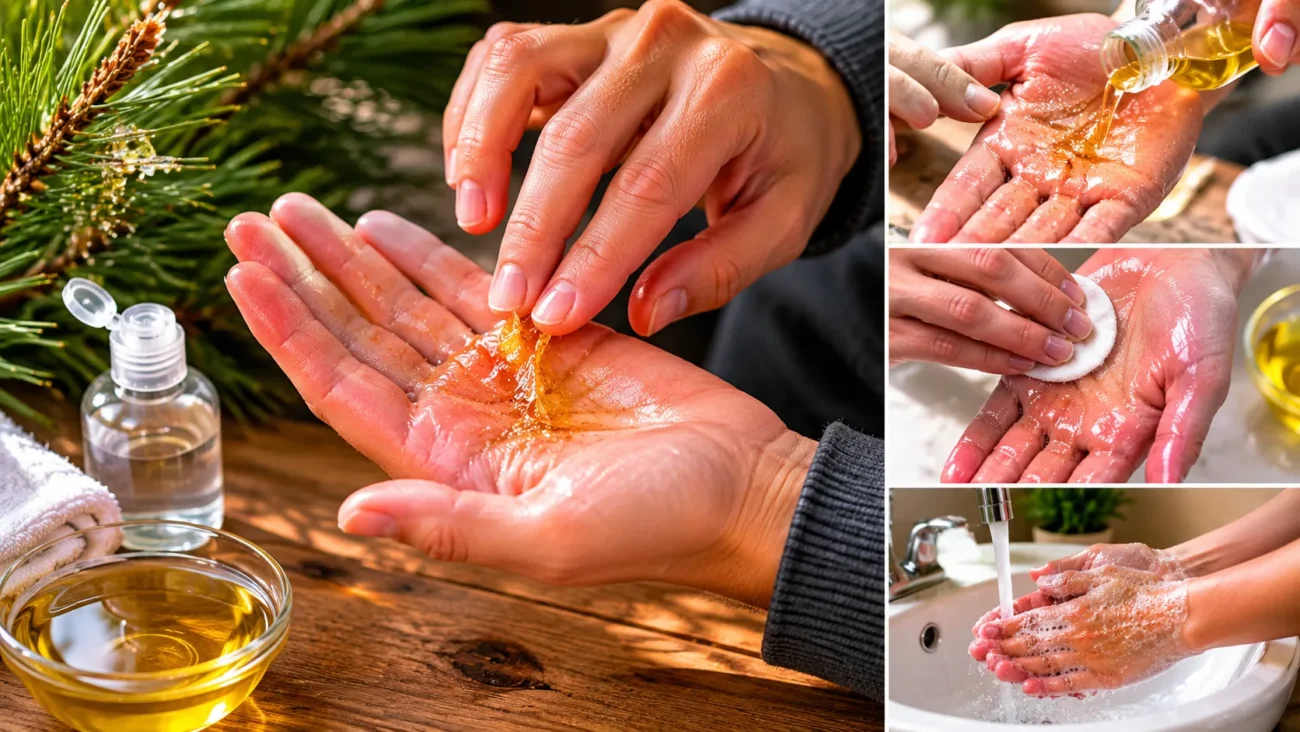
Rub a small amount of oil directly onto the sap-covered area. A nickel-sized amount is usually enough for one hand, though you may need more if you were really covered in sap after hauling a tree or handling branches. Massage it in for about a minute, especially around fingertips, knuckles, or the creases of your hands where sap tends to hide. Once the sap starts to smear and loosen, wipe it off with a soft cloth, paper towel, or cotton ball. After that, wash your hands with mild soap and warm or lukewarm water.
This method works well because oil and resin interact better than water and resin. It is also a good choice if you have sensitive skin, because oil is usually less irritating than stronger solvents. If your article needs natural phrasing for “olive oil for pine sap on hands” or “how to get sap off your hands with olive oil,” this is the section where those keywords fit most naturally.
A realistic example is someone setting up a live Christmas tree indoors. Your hands get sticky, you try soap and water, and almost nothing changes. Then you rub in olive oil, the sap starts to break apart, and a quick wash removes the greasy film. That is exactly why oil-based cleanup remains such a popular pantry solution.
Method 2: Use Rubbing Alcohol or Hand Sanitizer for Stubborn Sap
If the sap is thick, old, or spread in a thin tacky layer that oil does not fully lift, rubbing alcohol can work faster. Isopropyl rubbing alcohol and alcohol-based hand sanitizer are common choices because they can help dissolve sticky residue. Apply a little to a cotton ball or cloth, dab it onto the sap, and gently rub until the residue lifts. Then wash the area with soap and water.
This is where long-tail phrases like “rubbing alcohol to remove pine tree sap from skin” and “hand sanitizer takes it right off” fit naturally. For many people, this really is the quickest fix after handling a tree, especially when there is no oil nearby.
That said, there is a tradeoff. Alcohol can be helpful, but frequent use may dry out skin and even contribute to irritant contact dermatitis, especially if your hands are already dry, cracked, or sensitive. The American Academy of Dermatology recommends mild cleansers and fragrance-free hand cream after repeated washing or sanitizer use to help protect the skin barrier.
So yes, rubbing alcohol is effective, but it is smarter to treat it like a spot remover than a soaking treatment. Use enough to loosen the sap, then rinse, wash, and moisturize.
Method 3: Wash With Mild Soap and Lukewarm Water Afterward
No matter which remover you start with, the final step should usually be washing with mild soap and lukewarm water. This helps remove leftover oil, alcohol, loosened sap residue, and whatever dirt came along with it.
A gentle cleanser matters more than many people realize. If you scrub too hard or use a harsh cleanser, you may solve the sap problem but create a skin problem. Dermatology guidance consistently favors mild, fragrance-free cleansers and a fragrance-free moisturizer afterward when skin is irritated or repeatedly washed.
If your hands still feel tacky after washing, repeat the oil or alcohol step on just the sticky areas rather than scrubbing your whole hand aggressively. That is usually more effective and much kinder to the skin.
Method 4: If You Only Have Sugar or Salt, Try a Gentle Scrub
Some people use sugar or salt with a bit of cooking oil as a DIY scrub. This can be useful if you need two ingredients from your kitchen and nothing else is nearby. The oil loosens the sap, and the sugar or salt adds light friction to help lift it away.
The key word here is gentle. A little exfoliation is fine. Scrubbing hard is not. If the area is already red, dry, or irritated, skip the scrub and stick to oil plus a soft cloth. A harsh homemade scrub may turn a sticky mess into sore skin.
This method fits long-tail phrases like “use salt if you don’t have sugar” and “cooking oil and sugar solve the problem,” but it should be treated as a backup method, not the first choice for all skin types.
Step-by-Step: How to Get Pine Tree Sap Off Skin Safely
If you want one simple workflow that covers almost every situation, use this:
First, wipe off any loose chunks of bark, needles, or visible sap with a paper towel or cloth.
Next, apply olive oil, vegetable oil, or baby oil to the sticky area and massage it in.
Then, wipe away the softened residue.
If sticky spots remain, dab them with rubbing alcohol or hand sanitizer.
After that, wash the skin with mild soap and lukewarm water.
Finally, pat dry and apply a fragrance-free moisturizer or even a simple barrier product like petroleum jelly if your skin feels dry.
That sequence works because it matches the chemistry and the skin-care reality at the same time. You are not trying to attack the skin. You are trying to dissolve sap, remove the residue, and keep the skin barrier intact.
What Not to Use on Pine Sap on Skin
This is where many competing articles stay too vague. If you are wondering “is it safe to use harsh chemicals to remove pine tree sap from the skin?”, the practical answer is that you should avoid turning a minor cleanup task into a chemical exposure problem.
Skip products like gasoline, paint thinner, mineral spirits, or turpentine on skin. MedlinePlus warns that turpentine oil and mineral spirits are hydrocarbon products that can harm the body, and mineral spirits exposure can cause burns, irritation, and even damage to skin tissue.
You should also be careful with acetone or nail polish remover. It may strip sticky residue, but it can also strip moisture from the skin fast. If you already have chapped hands from winter weather or repeated handwashing, that can leave your skin worse off than before.
And avoid one more mistake: do not scrub aggressively. When people feel desperate to get rid of tree gunk, they often overdo it with rough towels, scouring pads, or repeated washing. That can trigger redness, burning, and a damaged skin barrier.
Can Pine Sap Cause a Rash or Skin Reaction?
Yes, sometimes the real issue is not only the sticky pine sap. It is the skin reaction that follows. Some people can develop contact dermatitis from rosin, also called colophony, a sticky material derived from pine trees. DermNet notes that in allergic individuals, dermatitis can show up 1 to 3 days after contact, often on areas like the hands and forearms after carrying pine wood.
That matters because there is a difference between:
- simple stickiness
- irritant redness from too much scrubbing or alcohol use
- true allergic contact dermatitis
If your skin feels mildly dry after cleanup, that is one thing. If you develop itching, redness, scaling, or a rash that shows up later and keeps getting worse, that points more toward allergic contact dermatitis or irritant contact dermatitis. DermNet and the AAD both describe contact dermatitis as a reaction caused by direct contact with an irritating or allergenic substance.
A simple rule helps here: if the sap is gone but the rash remains, the problem may no longer be sap removal. It may be a skin reaction that needs gentler care or medical advice.
When to See a Doctor
Most cases of pine sap on skin can be handled at home, but not all. You should seek medical help if:
- the sap gets into your eyes
- someone swallows a chemical remover
- the skin becomes severely red, swollen, blistered, or painful
- you develop a spreading rash after contact
- you have trouble breathing or other signs of a significant allergic reaction
For chemical exposures to the skin or eyes, MedlinePlus advises flushing with plenty of water for at least 15 minutes in relevant poisoning scenarios.
This section also helps satisfy searchers looking for “when to see a doctor”, “sap in eyes”, or “when to call poison control.” Those are valuable gap keywords your competitors barely addressed.
How to Remove Pine Sap From Hair, Nails, and Under Rings
Sap on hair can be even more annoying than sap on hands. The best approach is usually the same idea: apply a small amount of oil to the sticky strands, work it in gently, and then shampoo the area. Do not yank or comb aggressively through resin-coated hair. Loosen first, then wash.
For sap under nails or around rings, use oil on a cotton ball and take your time. Rings can trap both moisture and irritants underneath, which can worsen irritation. The AAD notes that skin under rings can become irritated when soap and moisture stay trapped there, so removing rings during washing and drying the area well can help.
This is a strong content opportunity because almost no competitor fully covers how to remove pine sap from hair, under jewelry, or from nail edges.
How to Prevent Pine Sap From Sticking to Skin Next Time
The easiest way to remove pine sap is not to get it on your skin in the first place. If you know you will be handling pine branches, fresh greenery, or a live Christmas tree, wear protective gloves. Keep a small bottle of olive oil, baby oil, or hand sanitizer nearby so you can clean up early before the sap fully spreads.
This matters during holiday decorating, wreath making, and outdoor yard work. A pair of disposable or washable gloves can save you from the whole sticky-hands problem. If you are working with especially resin-heavy branches, keep paper towels and a mild cleanser ready too.
Think of it like this: prevention is the underrated best tip. Competitors mention gloves, but none really develop prevention into a useful section. That is a missed opportunity, because users who have dealt with sap once usually want to avoid repeating the experience.
FAQ: Pine Tree Sap on Skin
What is the fastest way to get pine sap off skin?
Usually olive oil, vegetable oil, or baby oil first, followed by mild soap and water. If stubborn spots remain, use a little rubbing alcohol or hand sanitizer.
Does olive oil or rubbing alcohol work better?
For many people, olive oil is gentler and a better first step. Rubbing alcohol can work faster on stubborn spots, but it is more likely to dry out skin.
Can soap and water remove pine sap by themselves?
Sometimes, but often not very well. Because pine tree sap is a resinous substance, plain washing may leave behind a sticky film. An oil or alcohol step usually works better first.
Can pine sap cause a rash?
Yes. Some people may develop contact dermatitis, including allergic contact dermatitis related to rosin/colophony, especially after handling pine materials.
What should I do if my skin feels dry after removing sap?
Wash gently, pat dry, and apply a fragrance-free moisturizer or barrier repair cream. The AAD recommends fragrance-free moisturizers after washing to help protect the skin barrier.
Can I use petroleum jelly or coconut oil?
They may help loosen sticky residue because they are oily, though olive oil and baby oil are more commonly used and easier to wipe away.
What should I avoid using on my skin?
Avoid gasoline, turpentine, paint thinner, mineral spirits, and heavy scrubbing. Those methods can irritate or damage the skin.
How long does it take to remove pine tree sap from skin?
Fresh sap may come off in just a few minutes. Older or thicker sap can take a couple of rounds of oil, wiping, and washing.
Conclusion
The best answer to how to get pine tree sap off skin is simple: use oil to loosen the sap, use rubbing alcohol only if needed for stubborn spots, wash with mild soap and lukewarm water, and protect your skin afterward with a fragrance-free moisturizer. That approach is safe and effective, matches how pine resin behaves, and avoids the harsh chemical mistakes that can make things worse.
If your skin becomes itchy, red, or develops a delayed rash, do not assume the problem is just leftover sap. It could be contact dermatitis from rosin or irritation from over-cleaning. In that case, gentler care and, if needed, medical advice are the smarter next steps.
Disclaimer: This article is for general informational and educational purposes only and is not medical advice. Skin reactions, allergies, or irritation from pine sap, resin, or cleaning products may vary by person. If severe irritation, rash, swelling, or eye exposure occurs, consult a qualified healthcare professional promptly.
