


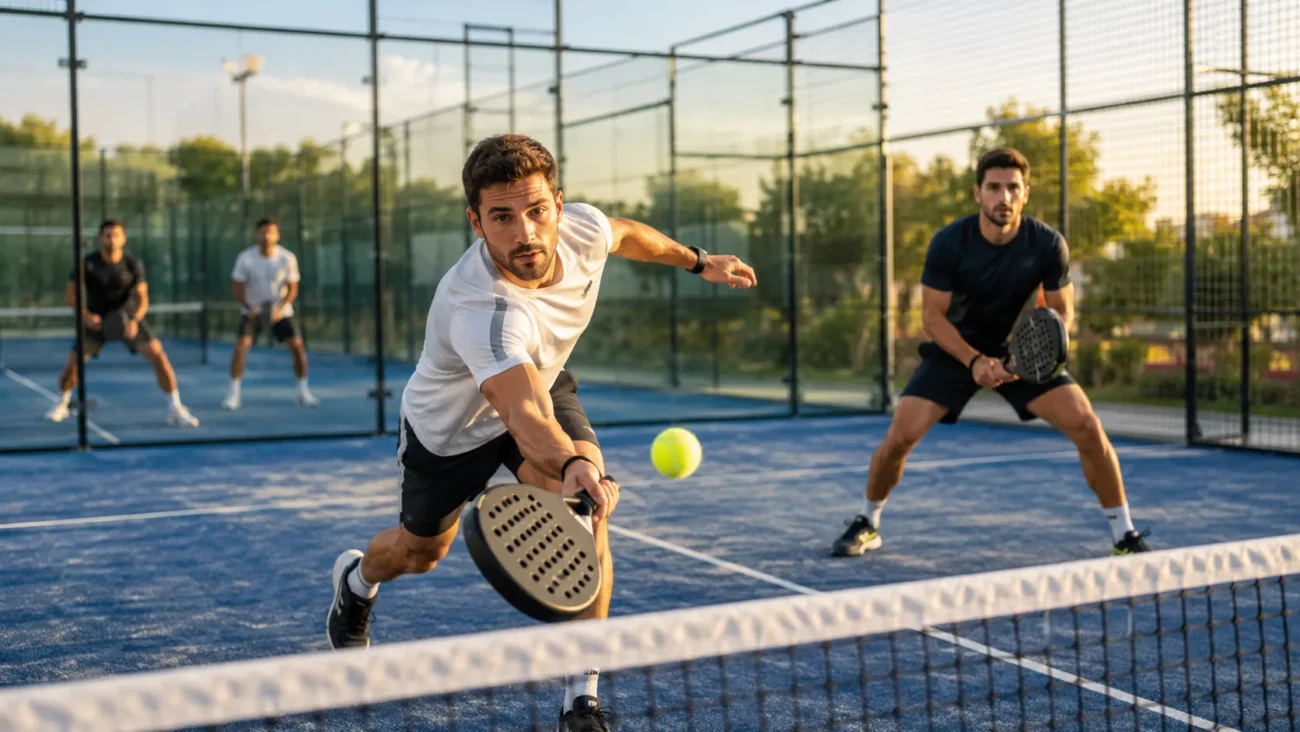
Padel sporting is one of the fastest-growing forms of racket sport, combining the best parts of tennis, squash, and social fitness into a game that is easy to start and exciting to master. Played mostly in doubles on an enclosed court with glass walls and metal mesh, padel has become popular because it feels competitive without being intimidating.
For beginners, the appeal is simple: you do not need years of tennis training, extreme athletic ability, or expensive equipment to enjoy your first match. A padel racket, a padel ball, comfortable shoes, and a group of friends are enough to get started. That is why many players describe padel as “easy to learn, hard to master.”
But padel sporting is more than just another modern sport. It is a growing global movement built around social connection, fitness, community, and accessibility. Whether you are searching for what is padel sporting, how to play padel, padel rules for beginners, padel equipment, or padel courts near me, this guide explains everything in simple language.
What Is Padel Sporting?
Padel sporting refers to the sport, culture, and lifestyle around padel, a modern racquet sport played on a smaller-than-tennis court surrounded by walls. The game is usually played as doubles, meaning two players compete against two players. Unlike traditional tennis, the walls are part of the game, which creates longer rallies, creative angles, and more tactical play.
At its core, padel sport blends the movement of tennis with the rebound play of squash. Players use a solid racket instead of a stringed tennis racket, and the ball is similar to a tennis ball but slightly different in pressure and feel. The court is enclosed with glass walls, mesh walls, and fencing, allowing the ball to bounce off the walls after it lands inside the court.
This is why padel feels different from many other racket sports. It rewards placement, teamwork, positioning, timing, and communication more than sheer power. A beginner can enjoy a rally quickly, while experienced players can develop advanced strategies involving wall play, ball bounce, angles, and anticipation.
In simple terms, padel sporting is a social racket sport designed for fun, fitness, and community. It is competitive enough to keep players engaged but accessible enough for beginners, families, older players, and casual fitness enthusiasts.
Why Is Padel Sporting Becoming So Popular?
The rise of padel sporting is not accidental. The sport matches what modern players want: something active, social, easy to learn, and enjoyable after a busy day. Unlike some competitive sports that require long training periods before players feel confident, padel gives beginners a sense of progress very quickly.
One major reason padel is popular is its easy learning curve. The underarm serve is less intimidating than a powerful tennis serve, the smaller court makes movement manageable, and doubles play means every match feels social. Instead of standing alone on a large court, players work with a partner, communicate constantly, and share the pressure.
Another reason is the strong community culture around padel clubs. Many players return week after week because the game combines movement, connection, and challenge. It creates friendships, regular events, and a welcoming environment. For this reason, padel is often described as a social fitness activity rather than just a sport.
The sport also fits urban life. Compact courts can be installed in sports clubs, resorts, leisure spaces, and city spaces where full tennis facilities may be harder to build. This has encouraged more facilities, more events, and more investment in padel clubs around the world.
Industry data also supports the growth story. The International Padel Federation has reported more than 35 million active players worldwide, while market reports from Playtomic and PwC estimate tens of thousands of courts and nearly 20,000 clubs globally. Even when reports count participation differently, the direction is clear: global padel growth is real.
How to Play Padel: Basic Rules for Beginners
Learning how to play padel is easier than many people expect. The game begins with an underarm serve, sometimes called an underhand serve, after the ball bounces once. The serve must go diagonally into the opponent’s service box. After that, the rally continues until one team fails to return the ball correctly.
The scoring system follows tennis scoring: 15, 30, 40, and game. Sets are usually won by reaching six games with a two-game lead, although formats may vary depending on clubs, tournaments, or casual matches.
The most important rule is that the ball must first bounce inside the opponent’s court before touching the wall or cage. If the ball hits the wall or fence before bouncing, it is usually out. Once the ball has bounced correctly, players can use the walls to return it, which creates the famous wall play that makes padel unique.
Here is a simple beginner-friendly view of the rules:
| Rule Area | Simple Explanation |
| Format | Usually played in doubles |
| Serve | Must be underarm and diagonal |
| Scoring | Uses tennis scoring |
| Walls | Can be used after the ball bounces |
| Court | Smaller than a tennis court and enclosed |
| Winning points | Opponent fails to return the ball correctly |
For new players, the best advice is to avoid trying to hit every shot with power. Padel rewards placement, patience, and teamwork. A well-placed ball into open space is often more effective than a hard shot hit directly at an opponent.
Padel Court, Scoring, and Gameplay Explained
A standard padel court is rectangular, enclosed, and designed to keep rallies alive. Official-style courts are commonly 20 meters long and 10 meters wide, with a net across the center. The surrounding glass walls and metal mesh are not decorative; they are central to the sport.
Because the court is smaller than a tennis court, players have less space to cover. This makes padel more approachable for beginners, children, and older adults. At the same time, the walls add tactical depth. Players must learn when to let the ball bounce, when to step forward, and when to use the wall to reset the point.
The enclosed design creates longer rallies and more quick exchanges. Instead of one powerful serve ending the point immediately, padel often develops naturally through movement, awareness, and smart decision-making. This is why many experienced players say padel is not about overpowering serves; it is about positioning, anticipation, and control.
Scoring mirrors tennis, but the rhythm of the game feels different. Since the serve is underarm and rallies often continue longer, players get more chances to touch the ball. This keeps beginners involved and makes each match feel lively, social, and fun.
Padel vs Tennis, Squash, and Pickleball
Many people understand padel sporting by comparing it with other racket sports. It is not the same as tennis, squash, or pickleball, but it borrows familiar elements from each.
| Sport | Court Style | Serve | Walls Used? | Usual Format | Beginner Feel |
| Padel | Enclosed court | Underarm | Yes | Mostly doubles | Easy to start |
| Tennis | Open court | Overarm | No | Singles or doubles | More technical |
| Squash | Enclosed room | Varied | Yes | Mostly singles | More intense |
| Pickleball | Open court | Underhand | No | Singles or doubles | Very beginner-friendly |
The biggest difference between padel vs tennis is the court and serve. Tennis often rewards powerful serving and baseline technique, while padel rewards court awareness, doubles coordination, and wall rebounds. In padel vs squash, the main difference is space and format: squash is usually more physically intense and played as singles, while padel is more social and commonly played in pairs.
The padel vs pickleball comparison is also common because both sports are accessible. Pickleball is usually easier for absolute beginners, but padel offers a more dynamic mix of walls, movement, and tactical doubles play.
If you enjoy tennis but want a more social version, or if you like squash but want a less enclosed and less exhausting format, padel may be the perfect middle ground.
What Equipment Do You Need for Padel Sporting?
One reason padel sporting is beginner-friendly is that you do not need much equipment. The essentials are a padel racket, padel balls, and suitable shoes.
A padel racket is solid, perforated, and shorter than a tennis racket. Beginners usually do best with a round racket because it offers more control and a larger sweet spot. Intermediate players may choose a teardrop racket for balance, while advanced players often prefer a diamond-shaped racket for extra power.
Padel balls look similar to tennis balls, but they are designed for padel’s speed, bounce, and court size. Many clubs provide rental equipment, so beginners can try the sport before buying their own gear.
Shoes matter more than many new players realize. Since padel involves quick changes in direction, short sprints, and lateral movement, proper padel shoes can improve grip and reduce injury risk. Running shoes may feel comfortable, but they are not always ideal for side-to-side court movement.
For a first match, focus on comfort and control. You do not need the most expensive racket. A beginner-friendly racket, stable shoes, and breathable sportswear are enough to enjoy the game.
Health, Fitness, and Social Benefits of Playing Padel
The benefits of playing padel go beyond fun. Padel supports cardiovascular fitness, agility, coordination, reflexes, and balance. Because the game includes short bursts of movement, quick reactions, and repeated rallies, it can become an effective workout without feeling like a traditional gym session.
Padel is also easier to sustain because it is enjoyable. Many people struggle with activity consistency because exercise feels repetitive. Padel solves that problem by combining physical activity, laughter, teamwork, and competition. You are moving constantly, but your attention is on the point, your partner, and the next shot.
There are also mental health benefits. The game demands focus, rapid thinking, and awareness. It gives players a break from daily stress and encourages social interaction. For many adults, especially those looking for healthier routines, padel offers a balance of health, fun, and connection.
Social benefits are just as important. Because the sport is mostly doubles, players naturally communicate and build trust. Friends, families, colleagues, and mixed groups can all play together. This inclusive atmosphere makes padel attractive to a wide age range and helps clubs build loyal communities.
Global Growth of Padel: Statistics and Market Trends
The global rise of padel is one of the biggest stories in modern sports culture. Once strongest in Spain and Latin America, padel is now spreading across Europe, the Middle East, Asia, Australia, the United Kingdom, and emerging markets.
Recent industry reports show major growth in both participation and infrastructure. The FIP World Padel Report 2025 reported more than 35 million active players, along with increases in clubs, courts, and registered federation members. Meanwhile, the Playtomic Global Padel Report 2026, produced with PwC’s Strategy&, estimated around 58,300 courts, nearly 20,000 clubs, and 19.4 million players worldwide, with projections for continued court growth.
Search interest also tells the same story. The Padel Global Search Report 2026 reported that worldwide search interest in padel grew by more than 1,000% between 2004 and 2025, with especially strong momentum in the last five years. This matters for SEO because rising search interest means more people are asking beginner questions like what is padel, how to play padel, padel rules, and where to play padel.
A useful case study is Britain, where participation and infrastructure have grown rapidly. The LTA reported 860,000 adults and juniors played padel at least once in 2025, supported by 1,553 courts across 559 venues by the end of that year. This shows how quickly a sport can move from niche activity to mainstream conversation when courts, coaching, and club culture expand together.
Where to Play Padel: Courts, Clubs, and Booking Options
If you are ready to try padel, the easiest next step is to search for padel courts near me or a padel club near me. Many sports clubs, tennis clubs, resorts, and leisure centers now offer court booking options for beginners.
Some clubs rent rackets and balls, which is ideal for first-time players. Others offer beginner classes, coaching sessions, social mixers, and open play nights. These are useful because they remove the pressure of organizing your own group.
When choosing a place to play, look for beginner-friendly features: rental equipment, coaching, clear booking prices, indoor or covered courts, and social events. A good padel club is not just a facility; it is a community space where players can improve, meet people, and return regularly.
For local SEO, search behavior is very important. Players often type queries like where to play padel, padel court booking, or padel courts near me when they are ready to act. That makes location-based content valuable for clubs, sports websites, and facility operators.
Padel Sporting in Pakistan and Emerging Markets
Padel in Pakistan is still developing, but that is exactly what makes it interesting. Emerging markets often have a strong opportunity to grow early communities, build clubs, train coaches, and introduce the sport to new audiences before it becomes crowded.
Cities such as Lahore, Karachi, and Islamabad are natural targets for future padel growth because they already have active sports communities, private clubs, schools, universities, and urban leisure spaces. Search terms like padel courts in Lahore, padel courts in Karachi, padel courts in Islamabad, and padel courts in Pakistan could become increasingly valuable as awareness grows.
The role of national organizations such as the Pakistan Padel Federation and international bodies like the International Padel Federation can also help create structure through coaching, player licensing, events, and international opportunities.
For players, this means a chance to enter the sport early. For investors and sports facility owners, it means a chance to build demand before the market becomes mature.
Padel Court Cost, Construction, and Business Opportunity
The business side of padel sporting is growing because the sport works well for clubs, schools, resorts, real estate projects, and urban sports centers. A padel court construction project requires planning, space, glass or mesh structures, turf, lighting, drainage, safety considerations, and local permissions.
The padel court cost can vary widely depending on country, materials, indoor or outdoor setup, land cost, and build quality. An indoor court may offer better year-round play, while an outdoor court may cost less to operate but can be affected by weather. This is why investors often compare indoor vs outdoor padel courts before starting a project.
The business opportunity comes from several revenue streams: court bookings, memberships, coaching, tournaments, corporate events, equipment sales, and social leagues. Because padel is usually played in doubles, one court can serve four players per booking, which can make the model attractive for busy clubs.
However, the best padel businesses are not built only on courts. They are built on community. Regular events, beginner lessons, strong customer service, and good maintenance often matter as much as the court itself.
Beginner Tips Before Your First Padel Match
Before your first match, remember that padel is not about hitting the ball as hard as possible. Beginners often make the mistake of swinging too much. Instead, focus on control, placement, and teamwork.
Start by learning where to stand. Good positioning helps you cover the court without wasting energy. Communicate with your partner before and during points. Simple calls like “mine,” “yours,” and “switch” can prevent confusion.
Let the walls help you. New players often panic when the ball rebounds, but wall play is part of the fun. With practice, you will learn when to attack, when to defend, and when to reset the rally.
Finally, choose comfort over ego. Use a beginner-friendly racket, wear stable shoes, and play social matches before entering competitive games. The goal of your first session is not perfection. It is to enjoy the game, understand the rhythm, and want to play again.
FAQs About Padel Sporting
What is padel sporting?
Padel sporting is the sport and culture of padel, a social racket sport usually played in doubles on an enclosed court with walls. It combines elements of tennis and squash while remaining beginner-friendly.
Is padel the same as tennis?
No. Padel uses tennis-style scoring, but it has a smaller enclosed court, an underarm serve, solid rackets, and wall rebounds. It is usually more social and easier for beginners to start.
Is padel easier than tennis?
For many beginners, yes. The underarm serve, smaller court, and doubles format make padel easier to enjoy quickly. However, advanced padel still requires strong tactics, movement, and decision-making.
What equipment do I need to play padel?
You need a padel racket, padel balls, suitable court shoes, and comfortable sportswear. Many clubs provide rental rackets for beginners.
Can children and older adults play padel?
Yes. Padel is known for its inclusive atmosphere and wide age range. Children, adults, families, and older players can all enjoy the sport at different levels.
How much does it cost to play padel?
The cost depends on the club, country, court type, and booking time. Some clubs charge per court per hour, while others offer memberships, coaching packages, or social session prices.
Why is padel growing so quickly?
Padel is growing because it is social, accessible, fun, and suitable for modern urban lifestyles. It also offers strong fitness benefits and can be played by beginners after a short introduction.
Where can I find padel courts near me?
Search for padel courts near me, padel club near me, or where to play padel. You can also check sports clubs, tennis clubs, resorts, and court booking apps.
Conclusion: Is Padel Sporting Worth Trying?
Padel sporting is worth trying because it combines the best qualities of a modern sport: accessibility, fitness, teamwork, and social connection. It is easy enough for beginners to enjoy from the first session, but tactical enough to keep experienced players improving for years.
Whether you are interested in padel rules, padel equipment, padel vs tennis, padel courts near me, or the wider global padel growth story, one thing is clear: padel is no longer just a niche racket game. It is becoming a global sport built around movement, community, and fun.
Disclaimer: This article is for general informational purposes only. Individual experiences, preferences, playing ability, equipment choices, and local padel options may vary. Readers should use the information as a general guide and make decisions based on their own needs and circumstances.

One thought on “Padel Sporting Guide: Rules, Gear, Benefits, Courts & Growth 2026 ”