


Introduction
Does the crane fly eat mosquitoes? No—that is the short, direct answer. Despite the popular nicknames “mosquito hawk,” “mosquito eater,” and “skeeter eater,” adult crane flies do not hunt, kill, or eat mosquitoes. University and pest-education sources consistently explain that adult crane flies are harmless insects that do not bite, do not sting, and usually feed very little, if at all. Some species may sip nectar or water, but they are not natural mosquito-control machines.
That myth has lasted for years because crane flies look dramatic. They have long skinny legs, narrow bodies, and a shape that makes many people think they are giant mosquitoes. When they suddenly appear on porches, around lights, or bumping into walls and ceilings, people often assume they are dangerous. In reality, the adult insect is more awkward than aggressive. It is built for a very short adult life focused mostly on reproduction, not hunting prey.
This article clears up the confusion in a simple way. You will learn what a crane fly is, why people call it a mosquito hawk, what crane flies actually eat, whether they are harmful to people or pets, why crane fly larvae matter more than adults for lawns, and what truly helps if your real goal is mosquito control. If you have ever wondered whether these large leggy insects are useful, dangerous, or just misunderstood, this guide will give you the full answer.
What Is a Crane Fly?
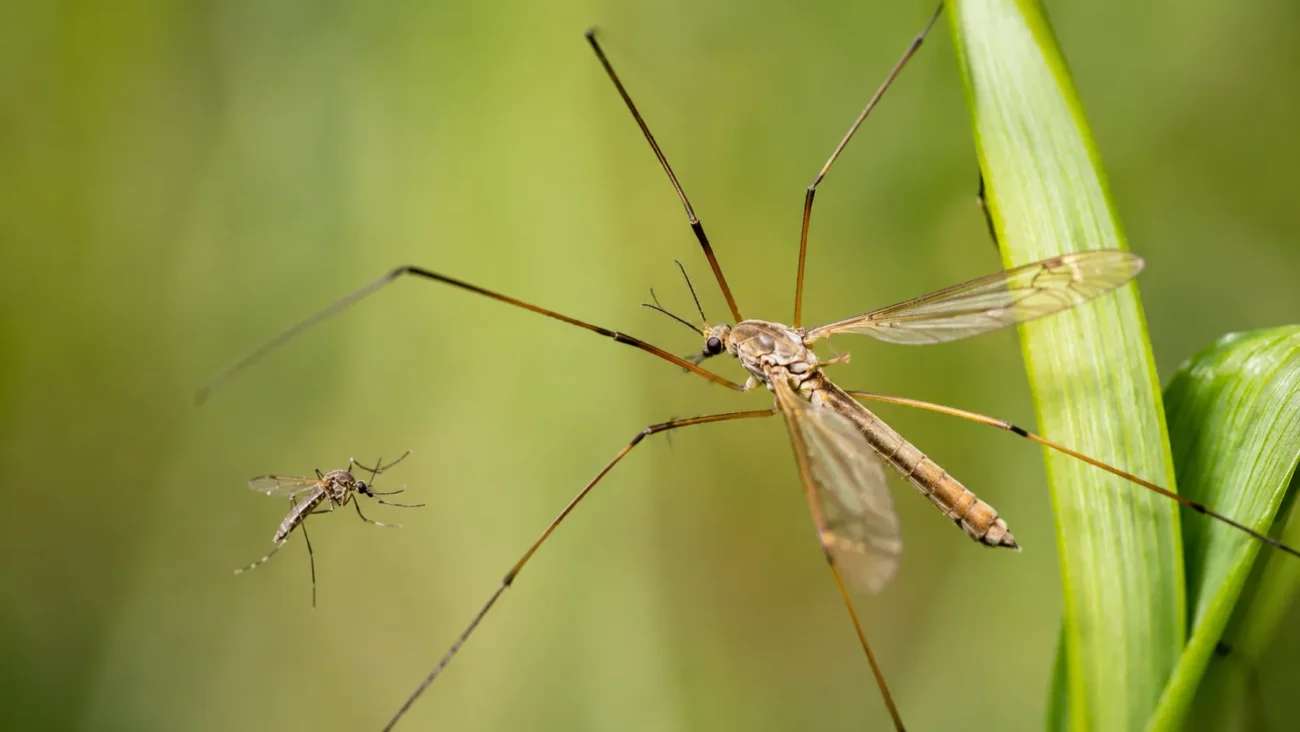
A crane fly is a real fly in the order Diptera, and many belong to the family Tipulidae. They are often confused with mosquitoes because of their thin bodies and very long legs, but they are not simply oversized mosquitoes. In fact, the insect is closer to a harmless, delicate flyer that often looks more alarming than it really is. Sources that explain crane fly identification describe them as fragile insects with long legs, narrow wings, and a clumsy flight pattern.
The confusion makes sense at first glance. A mosquito is small, compact, and adapted for piercing skin in the case of females. A crane fly, by contrast, is usually much larger-looking, much leggier, and not built to feed on blood. That is why terms like “giant mosquito” show up so often in search behavior. People see one near a light or a doorway and assume it must be a super-sized biting pest. It is not.
Many adults only live for a few days, which adds to the misunderstanding. Because they appear suddenly and then vanish, people treat them like a seasonal mystery insect. But from an SEO and search-intent perspective, the key fact remains simple: crane flies are mostly harmless insects that do not behave like mosquitoes, even if their appearance tricks people into thinking otherwise.
Why People Call Crane Flies “Mosquito Hawks” or “Mosquito Eaters”
The nicknames “mosquito hawk” and “mosquito eater” are a big reason this topic gets so much search traffic. These labels sound useful and even reassuring, as if the insect is doing free pest control in your yard. But the names are misleading. According to UC ANR and other sources, the nickname does not reflect what adult crane flies actually do. They do not eat mosquitoes, and they do not patrol backyards hunting mosquito swarms.
Why did the names stick? Part of it is appearance, and part of it is folklore. A long-legged insect flying awkwardly at dusk feels like the kind of creature that should prey on something else. Over time, common names such as mosquito hawk, mosquito eater, and skeeter eater spread faster than the biology did. That is common in the insect world. Popular names often survive long after science has shown the story behind them is wrong.
This makes crane fly myth vs fact an especially strong angle for content. Readers are not just looking for a definition. They want a myth busted. They want to know whether the thing they heard from friends, family, or social media is true. In this case, the truth is clear: the nickname is memorable, but the insect does not live up to it.
Do Crane Flies Eat Mosquitoes? Here’s the Real Answer
Let’s answer the main question again as clearly as possible: adult crane flies do not eat mosquitoes. They are not active mosquito predators, and they do not reduce mosquito populations in any meaningful way. UC ANR says the insects do not eat mosquitoes, and Mosquito Joe makes the same point when explaining that crane flies will not rid your yard of mosquitoes.
This matters because many readers arrive with a practical goal. They do not just want an insect ID. They want to know whether they should be happy to see a mosquito hawk because it might help solve a mosquito problem. Unfortunately, the answer is no. If your yard has mosquitoes, the presence of crane flies is not a sign that natural control is happening. These insects are not part of a serious mosquito control strategy.
There is also a useful distinction here between the adult and juvenile stages. Competitor pages sometimes discuss crane fly larvae, but the strongest evidence in your research set still shows that the adult myth is false. The adult insect is not flying around catching mosquitoes midair. That means people searching “do crane flies help control mosquito populations” or “do crane flies keep mosquitoes away” need a direct correction. They do not.
If you truly want to know what insects actually eat mosquitoes, the better answers are other predators such as some dragonflies and damselflies, along with broader mosquito-management practices that target standing water and breeding sites. Crane flies are simply not the hero many people imagine.
What Do Crane Flies Actually Eat?
So, what do crane flies eat if not mosquitoes? The answer depends on the life stage. Many adult crane flies feed very little, and some may not feed at all. Others may take in nectar, water, or other simple food sources. They do not have the feeding behavior people expect from predators, and they certainly do not feed on human blood the way mosquitoes do.
The larval stage is different. Crane fly larvae, often called leatherjackets, may feed on decaying organic matter, roots, crowns, shoots, and other plant material depending on the species. That is why some articles focus more on lawns and turfgrass pests than on the adult insect flying around your porch. The adult is usually just a short-lived reproductive stage, while the larva is the stage more likely to matter in soil and grass.
This is where many people ask: Do crane flies have mouths? Can crane flies eat at all? The best way to explain it is that adult crane flies are not built for biting people or for chewing through insect prey. Even when they do take in food, it is far from the aggressive predator role suggested by the nickname mosquito eater. That is why content that explains adult crane fly behavior and what do crane fly larvae eat performs better than content that simply repeats the myth.
Quick Table: Adult Crane Fly vs. Larva
| Stage | What it does | What it may eat | Why it matters |
| Adult crane fly | Mates, flies awkwardly, appears around lights | Little, or nectar / water in some species | Often mistaken for a mosquito; does not eat mosquitoes |
| Crane fly larva | Lives in soil, develops before adulthood | Decaying organic matter, roots, shoots, crowns | Can contribute to lawn damage in some species |
The table above captures the simplest truth behind the search term: the scary-looking adult is usually the least important part of the story from a feeding perspective.
Do Crane Flies Bite, Sting, or Harm Humans?
One of the most common user fears is whether crane flies bite humans. The answer is no. Reputable sources in your competitor set repeatedly state that crane flies do not bite, do not sting, and do not transmit disease to people. They are among those harmless bugs that look worse than they are.
This makes crane fly safety for humans a strong supporting subtopic in the article. Readers often ask the mosquito question because they are already worried about being bitten. They want reassurance. A simple line like this helps: a crane fly is not interested in your skin, your blood, or your food. It may bounce around your room, circle a porch light, or land awkwardly on a wall, but it is not there to attack you.
The same reassurance is useful for pet owners. While competitor pages do not deeply develop crane fly safety for pets, the overall harmlessness of adult crane flies supports a calm, common-sense message. They are nuisance sightings, not dangerous invaders. That tone helps answer both “are crane flies harmful to people” and “are mosquito hawks dangerous” in one section without sounding robotic.
Crane Fly vs Mosquito: How to Tell the Difference
A helpful way to satisfy search intent is to compare crane fly vs mosquito directly. A mosquito is smaller, more compact, and, in the biting female’s case, specialized to pierce skin and feed on blood. A crane fly is more fragile-looking, much leggier, and often appears almost oversized by comparison. This is why people ask “are crane flies giant mosquitoes?” even though they are not.
The body language is different too. Mosquitoes tend to move with purpose. Crane flies often flutter clumsily, drift toward lights, or bounce around enclosed spaces. Their transparent wings, long legs, and awkward flight make them easy to recognize once you know what you are seeing. That makes crane fly mistaken for mosquito a valuable gap keyword, because it reflects what users actually experience in the real world.
A useful mental shortcut is this: if the insect looks like a stretched-out mosquito on stilts and seems unusually awkward, it is probably a crane fly. If it is small, focused, and actively trying to bite, it is much more likely to be a mosquito.
Crane Fly vs Mosquito Hawk: Are They the Same Thing?
This is one of the most confusing parts of the topic. In many places, mosquito hawk is simply another name for a crane fly. But some people also use the name loosely for other insects, including species that more closely resemble dragonflies or damselflies in casual conversation. That is why crane fly vs mosquito hawk makes a good comparison heading.
From a search perspective, the safest explanation is that “mosquito hawk” is a common nickname, not a precise scientific label. If someone asks “what is a mosquito hawk”, the answer in the context of this article is usually crane fly—the insect people wrongly believe eats mosquitoes. But the nickname itself creates confusion because common names are inconsistent from region to region.
This is exactly why a dedicated comparison section helps your article stand out. Competitors mention the overlap, but a clean explanation improves readability and captures comparison-based queries such as “what is the difference between a crane fly and a mosquito hawk.”
Crane Fly Life Cycle: Eggs, Larvae, Pupae, and Adults
A crane fly life cycle explained section adds authority and helps readers understand why the adult stage gets so much attention even though it is often the least destructive stage. Like many flies, crane flies pass through four stages of life: egg, larva, pupa, and adult. Wikipedia and other pages in your research set support this standard lifecycle structure.
The larva is the stage most relevant to lawns and soil. In some species, larvae can remain in that stage for a long period, with one competitor-related extension source noting up to 11 months of the year in the larval stage for certain crane fly problems in lawns. That long development period explains why turf issues can matter more than the short-lived adult you notice indoors.
The adult stage may last only a few days. Its main job is reproduction. That is one reason adult crane flies often seem uncoordinated and short-lived. They are not built for a long predatory life. They are built to complete the final stage of the cycle, mate, and end the process. That biological reality also supports the answer to the main keyword: a short-lived adult focused on reproduction is not a practical mosquito predator.
What Are Leatherjackets? Why Crane Fly Larvae Matter in Lawns
If you own a yard, this may be the most useful section in the article. Leatherjackets are crane fly larvae, and in some species they can become real turfgrass pests. UC ANR describes larvae that can grow to about 1-1/2 inches long and feed on grass roots and crowns under the right conditions. That is where lawn damage enters the story.
Homeowners often see the adults and assume the flying insect is the problem. In many cases, if there is a problem at all, it is underneath the grass. Larvae in moist soil can feed on roots, crowns, and shoots, which weakens turf. This is why leatherjackets in lawn and why are crane fly larvae damaging turfgrass are strong long-tail and gap terms for topical authority.
There is also a practical lawn-care angle. Competitor and extension guidance often points to better drainage, less overwatering, and healthier lawn management as part of prevention. That makes this section useful not only for search engines but for real readers who want to know whether they should panic when they see adult crane flies in spring or fall. Usually, the answer is not panic—it is inspect the lawn if you notice actual turf decline.
When Do Crane Flies Come Out? Season, Weather, and Regional Patterns
Search interest in crane fly season tends to rise when people suddenly start seeing these insects in clusters. UC ANR ties bigger appearances to wet springs, waterlogged soils, and favorable breeding conditions. That is why a seasonal section gives your article a competitive edge. It connects the myth-busting answer to the real-world moment when people search the keyword.
Regional context matters too. In some areas, especially places with wetter conditions or strong lawn ecosystems, crane fly activity becomes more noticeable at particular times of year. Related extension material associated with the competitor research set also mentions timing around September and October for certain lawn pest cycles, along with regional relevance in places such as the Pacific Northwest coast and parts of California.
That means when do crane flies come out and why are there so many crane flies right now are not random questions. They are often seasonal. Readers want an answer in the moment they see the insects. Including this context helps your content feel timely, useful, and more complete than pages that only repeat the myth.
Why Are Crane Flies in My House or Around Lights?
Another strong user-intent question is why are there crane flies in my house. The simplest answer is that adults are often drawn into human spaces by circumstance: light, open doors, and seasonal emergence. UC ANR mentions adults ending up on walls and ceilings, and competitor content also references outdoor lighting fixtures as a common place people notice them.
This does not mean your home is under attack. It usually means the insects are active nearby and have wandered indoors or gathered around lights. That makes crane fly indoors and are crane flies attracted to light useful gap phrases to include naturally in the article. They reflect exactly how readers phrase the problem in real life.
A calm explanation works best here. They are annoying to watch flutter around, but they are not building nests, biting family members, or turning your home into a danger zone. In most cases, they are short-term visitors.
Should You Get Rid of Crane Flies?
Whether you should act depends on the context. If you are seeing a few adult crane flies around lights, the answer is usually no dramatic action is needed. These adults are short-lived and harmless. If, however, your lawn shows signs of stress and you suspect crane fly larvae, then prevention and lawn-care measures make more sense.
Basic prevention steps from the research include improving drainage, avoiding overwatering, managing thatch, and keeping the lawn in healthier balance. That is a much smarter response than assuming the flying adult needs aggressive treatment. It also matches search intent for how to get rid of crane flies, crane fly control, and how to prevent crane flies in your lawn without overpromising.
In other words, don’t treat them like a mosquito emergency. Treat them like a seasonal insect question with a possible lawn-management angle.
What Actually Helps Control Mosquitoes?
Because the main myth is false, readers deserve a better answer to the real problem underneath the query: what actually helps control mosquitoes? The most effective strategies usually focus on mosquito breeding conditions, especially standing water. Natural predators such as some dragonflies can be part of the broader ecosystem story, but relying on random yard insects is not enough.
This is where your article can outperform weaker competitor pages. After saying crane flies do not eat mosquitoes, give readers something useful to do instead. Explain that natural mosquito predators exist, but meaningful control also comes from removing breeding sites and using targeted mosquito-management practices when needed. That turns a myth-busting article into a genuinely helpful one.
Quick Facts About Crane Flies
Here are a few crane fly facts worth remembering. Adults may live only a few days. Some can appear surprisingly large, with competitor content mentioning body or leg spans up to 4 inches long in casual descriptions. Their larvae, called leatherjackets, are the stage more likely to matter for lawns. And despite their nicknames, they are not bloodsuckers and not mosquito predators.
If you want a one-line summary, it is this: a crane fly is a harmless, short-lived insect that is badly named and widely misunderstood. That is exactly why the keyword does the crane fly eat mosquitoes keeps showing up in search.
FAQ
Do crane flies eat mosquitoes?
No. Adult crane flies do not eat mosquitoes and do not meaningfully reduce mosquito populations.
Do crane flies bite humans?
No. They do not bite, do not sting, and are generally harmless to people.
Are crane flies giant mosquitoes?
No. They may look like giant mosquitoes, but they are different insects with different behavior and anatomy.
What do crane flies eat?
Adults may feed very little, or take nectar and water in some species. Crane fly larvae may feed on decaying organic matter or plant material in soil.
Why are crane flies called mosquito hawks?
It is a misleading common nickname that helped spread the myth that they eat mosquitoes.
Are crane flies bad for lawns?
The adults are usually not the issue. The larvae, or leatherjackets, can damage turfgrass in some situations.
Conclusion
Does the crane fly eat mosquitoes? No, and that is the most important takeaway. The familiar mosquito eater story is a myth. Adult crane flies do not bite people, do not sting, and do not serve as reliable mosquito control. What they really do is confuse people, thanks to their giant mosquito look and their misleading nicknames.
A better way to understand them is this: the adult is mostly a harmless, short-lived flyer, while the larval stage is the one that may matter in lawns and turfgrass. So if you see one around your porch light, you usually do not need to worry. And if your real goal is fewer mosquitoes, look to actual mosquito-management methods—not to the misunderstood crane fly.
Disclaimer: This article is for general informational and educational purposes only. Crane fly behavior, species characteristics, seasonal activity, and lawn impact can vary depending on climate, region, habitat, and environmental conditions. Pest identification and mosquito-control methods should be based on reliable local guidance, and significant lawn or insect problems may require evaluation by a qualified pest-control or turf-management professional.
