


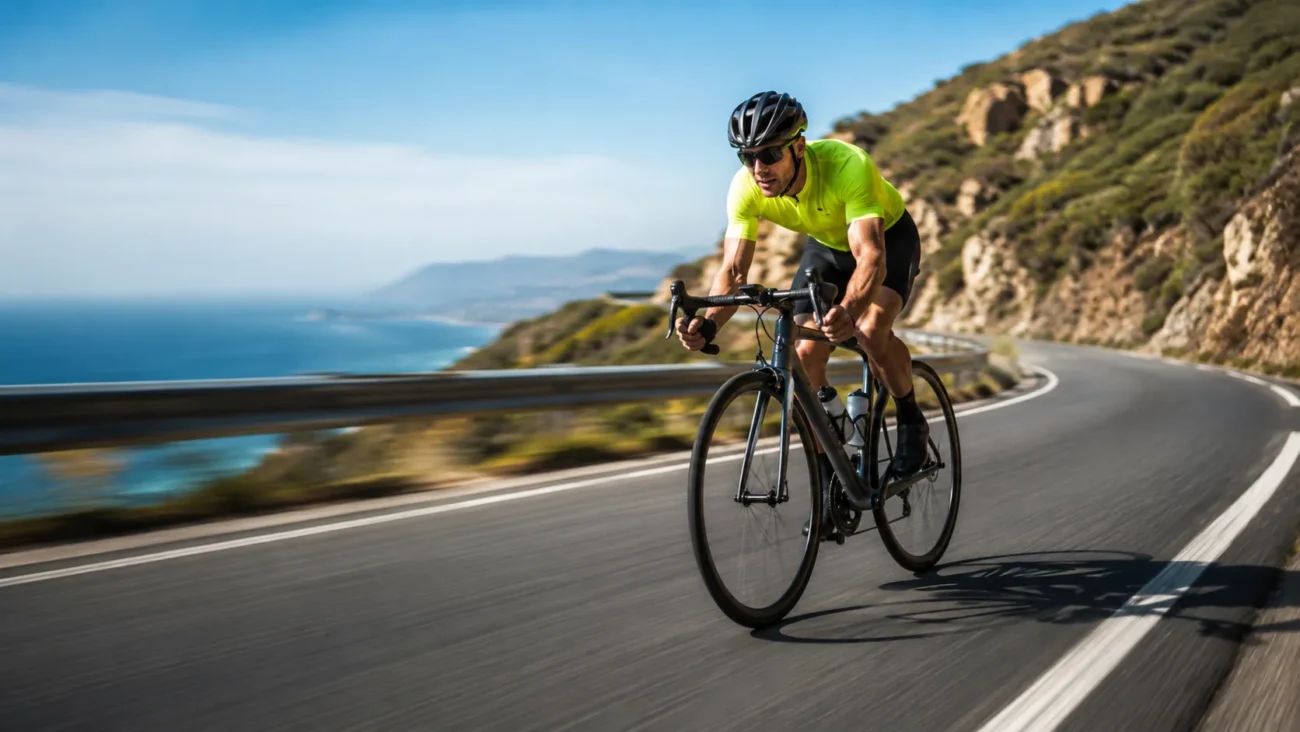
How fast is a bicycle depends on who is riding, what kind of bike they are using, and where they are riding it, but for most people, a realistic average bicycle speed is around 8 to 15 mph in everyday conditions, with stronger riders often averaging more and downhill or sprint efforts going much faster. Recent cycling references commonly place casual or recreational riding around the low-to-mid teens in mph, while fitter riders and professionals can sustain much higher speeds on flat roads.
That simple answer is useful, but it is not the whole story. A road bike speed on smooth pavement is very different from a mountain bike speed on rough terrain. A commuter bike speed in city traffic is different again because stoplights, pedestrians, and intersections slow riders down. Then there is the question many people really mean when they search this topic: not just what is the average speed of a bicycle, but also how fast can a bicycle go, whether 10 mph, 15 mph, or 20 mph is considered fast, and how electric bike speed changes the answer.
In this guide, you will get a clear, research-backed answer to all of those questions. We will cover average cycling speed, speed by bike type, speed by rider level, the biggest factors affecting cycling speed, real-world city vs open-road differences, common distance-to-time estimates, e-bike speed limits, and practical ways to ride faster.
What Is the Average Speed of a Bicycle?
For most riders, the average bike speed falls into a practical everyday range of about 8 to 15 mph. That lower end is common in cities, on shared paths, or among beginners, while the upper end is more realistic for steady recreational riders on decent roads. Some cycling sources place recreational riding at around 12–14 mph, while stronger or more experienced cyclists often average closer to 15–22 mph, especially on flatter routes and better bikes.
It helps to separate average speed from top speed. Your average bicycle speed is what you can hold over the full ride after accounting for fatigue, hills, wind, and stops. Your top speed is the highest number you might briefly hit in a sprint or downhill section. Many people confuse the two, which is why answers online can seem all over the place.
A casual rider on a traditional bicycle may feel perfectly comfortable at 10 to 12 mph. A person who rides regularly for fitness may sit around 13 to 17 mph on a good day. A trained cyclist on a road bicycle can hold noticeably higher speeds, and professional racers can sustain much faster paces on flat terrain. Reported benchmarks from cycling publications often place stronger riders in the mid-teens or above, while professional flat-road speeds can reach roughly 25–28 mph or more in race conditions.
So, if you are asking what is the average speed of cyclists, the honest answer is that there is no single number. The useful answer is a range, and that range changes with the rider and the ride.
Average Bicycle Speed by Bike Type
One of the biggest drivers of bike speed is the bike itself. A road bike, hybrid bike, mountain bike, gravel bike, or e-bike is built for a different purpose, so it should not be surprising that their speeds differ too.
Road bike speed
A road bike speed is usually the fastest among standard non-motorized bikes on pavement. These bikes are lighter, more aerodynamic, and use narrower tires with lower rolling resistance. That makes it easier to maintain speed on flat roads. Many recreational road riders average somewhere around the low-to-mid teens in mph, while experienced cyclists often go faster. Some competitor content and cycling references place average road bike speed around 13–17 mph for general riding, with stronger riders moving well beyond that.
Hybrid and commuter bike speed
A hybrid bike average speed or commuter bike speed is often a little lower than a road bike because these bikes typically have a more upright position, wider tires, and are ridden in more stop-start environments. In return, they are comfortable, stable, and practical for everyday use. For commuting, real-world speed matters more than perfect test conditions, so a rider averaging 8 to 14 mph in city traffic may actually be doing just fine.
Mountain bike speed
A mountain bike speed is often slower on pavement than a road bike because of wider, knobbier tires, more weight, and a riding position focused on control rather than pure speed. Some competitor references place general mountain bike averages near 10 mph on certain surfaces, though terrain matters enormously. On rough trails, that may be completely normal. On pavement, it will usually lag behind a road bike.
Gravel bike speed
A gravel bike average speed usually sits somewhere between a road bike and a mountain bike. Gravel bikes are efficient enough for pavement but also stable on rougher ground. They are a strong fit for riders who want speed with versatility. This is one of the useful content gaps most competitors did not explain clearly, even though it is highly relevant to modern cycling search intent.
BMX and kids’ bike speed
A BMX bike speed or kids bike speed is not usually the focus of competitor articles, but these categories matter for search coverage. BMX bikes are built for bursts, tricks, and control, not long-distance average pace. Kids’ bikes depend more on rider age, confidence, and surface than on bike design alone. These categories are less about benchmark racing speeds and more about realistic everyday movement.
E-bike speed
An electric bike speed changes the conversation. In the U.S. three-class system, many Class 1 and Class 2 e-bikes are limited to 20 mph, while Class 3 pedal-assist e-bikes commonly go up to 28 mph. That does not mean every rider spends the whole ride at those speeds, but it does mean e-bike riders ride faster on average in many real-world conditions.
How Fast Can a Bicycle Go for Different Riders?
Rider ability matters almost as much as bike type. Two people on the same bicycle can produce very different results because rider fitness, cadence, power output, confidence, and pacing all matter.
A beginner bike speed is usually modest, and that is normal. New riders often average around 8 to 12 mph, especially if they are learning to manage traffic, balance effort, and ride longer without tiring. A casual rider bike speed may sit closer to 10 to 14 mph, especially on flatter ground.
A person who rides consistently for exercise or transport often moves into the 13 to 17 mph zone on suitable roads. That is where many regular fitness riders land. A trained amateur may hold more than that, especially on a road bike in good conditions. Some cycling sources and competitor pages use bands like 14–19 km/h, 20–26 km/h, and 26–35 km/h to describe increasing rider levels, with 40 km/h+ reserved for professional-level efforts or very strong race scenarios.
Professional riders are in another category. Their watts, endurance, bike handling, and race experience allow them to sustain speeds that feel unrealistic to ordinary cyclists. Published cycling references commonly note flat-road race paces in the mid-to-high 20s mph under the right conditions.
The most important takeaway is simple: your speed only needs to make sense for your goals. A commuter, a beginner, and a racer should not judge themselves by the same number.
What Affects Bicycle Speed the Most?
If you want to understand factors affecting cycling speed, look at the full system, not just your legs.
Terrain is huge. Flat terrain lets riders hold a steady rhythm, while hilly terrain and mountainous terrain pull average speed down quickly. Even a short steep section can change the number you see on your bike computer. That is why bicycle speed uphill and bicycle speed on flat road should never be compared directly.
Wind is another major factor. A headwind can make a strong rider feel slow, while a tailwind can make average pace jump. Crosswinds also matter because they affect stability and confidence. Competitor articles repeatedly mention wind and weather, and they are right to do so.
Bike weight and tire pressure matter too. Lower-pressure, wider, softer tires can increase comfort but may reduce efficiency depending on the surface. Narrower tires and smoother treads often feel quicker on pavement. Rough asphalt, gravel, and poor road conditions also reduce speed by increasing rolling drag and forcing more caution.
Then there is aerodynamics. Even small changes in riding position, clothing, and posture can make a visible difference, especially above moderate speeds. That is why road riders use drop handlebars, fitted apparel, and more compact body positions. Air resistance becomes a bigger issue as speed rises, so does riding position affect speed? Absolutely.
Finally, there is the human engine: fitness level, cadence, watts, hydration, fatigue, and pacing. A rider who starts too hard may post a quick early speed but finish with a lower average. A stronger rider may look “faster” not because they sprint harder, but because they keep the effort steady for longer.
One factor many competitors mention but do not fully develop is city traffic. Traffic obstacles, bike lanes, intersections, stop signs, and pedestrians can all lower average bike commute speed. This is why a cyclist who averages 10 mph through town may be performing just as well, in practical terms, as someone averaging 15 mph on an open country road.
Average Bicycle Speed in the City vs on Open Roads
This is one of the most useful distinctions for real readers. In a city, you are not just fighting air and terrain. You are dealing with stop-start movement, traffic signals, turns, parked cars, pedestrians, and route interruptions. That makes average bike speed in the city meaningfully lower than average bike speed outside the city.
Some cycling content places urban riding roughly in the 8 mph to 14 mph range, while stronger recreational riding on clearer roads often rises into the 12–15 mph area or more. These are not hard rules, but they are useful benchmarks.
So, if you are measuring your average bike commute speed, do not compare it to a race-oriented article talking about a fit rider on a smooth road bike route with minimal traffic. That is not the same task. Urban commuting is about consistency, safety, and realistic ETA, not pure top-end pace.
How Long Does It Take to Bike 1, 5, 10, and 20 Miles?
A lot of people search about speed when what they really want is travel time. That is why a bike speed time chart is so useful.
| Distance | At 8 mph | At 10 mph | At 12 mph | At 15 mph | At 20 mph |
|---|---|---|---|---|---|
| 1 mile | 7.5 min | 6 min | 5 min | 4 min | 3 min |
| 5 miles | 37.5 min | 30 min | 25 min | 20 min | 15 min |
| 10 miles | 75 min | 60 min | 50 min | 40 min | 30 min |
| 20 miles | 150 min | 120 min | 100 min | 80 min | 60 min |
This table helps answer questions like how long does it take to bike 5 miles, how long does it take to bike 10 miles, and how long does it take to bike 20 miles. In real life, add extra time for hills, traffic, rest breaks, or weather.
A commuter doing 5 miles at an urban pace may need around 25 to 35 minutes, while a fitter road rider on open roads may do it much faster. This is one of the clearest examples of why bicycle speed calculator style content helps readers more than a single headline number.
Is 10 mph, 15 mph, or 20 mph Fast on a Bicycle?
This is one of the most important beginner questions.
10 mph is a perfectly normal speed for many people. On a hybrid bike, in traffic, on hills, or while building fitness, it can be completely respectable. It is not “slow” in any meaningful real-world way.
15 mph is a solid benchmark for many recreational riders, especially on a decent bike and moderate roads. For a lot of people, this feels “pretty fast” over a full ride because it requires some fitness and steady effort.
20 mph is fast for most everyday cyclists to average over time. Many riders can touch 20 mph briefly, but holding it as an average is a different matter. That kind of pace usually suggests a strong rider, favorable conditions, a fast bike, or motor assistance.
So, if you are asking is 10 mph fast on a bicycle, is 15 mph fast on a bicycle, or is 20 mph fast on a bicycle, the best answer is this: context matters. The same number means different things on a mountain bike, a road bike, a windy commute, or a flat training route.
How Fast Can a Bicycle Go at Top Speed?
Now for the curiosity question: how fast can a bicycle go?
A normal bicycle can go much faster in short bursts or on descents than it can as an average pace. Many riders can briefly sprint well above their cruising speed, and downhill runs can push speeds dramatically higher. Online cycling discussions and records mention figures like 46 mph, 50 mph, 60 mph, and beyond in downhill scenarios, while extreme record attempts on specialized equipment have gone far higher still.
But those numbers need context. A brief downhill peak is not the same as safe daily riding. A speed record on a specialized machine such as a velomobile or streamlined setup is not relevant to the average commuter. Published references and rider discussions also mention very high record speeds, including downhill records above 100 mph and specialized bicycle speed records around 183.9 mph, but those are extraordinary edge cases, not normal cycling.
For everyday readers, the practical takeaway is more useful than the headline. Yes, a bicycle can go extremely fast in the right circumstances. No, that does not change what a normal rider should expect on a typical ride.
How Fast Do E-Bikes Go?
An e-bike makes this topic more interesting because it changes both effort and speed expectations. In the commonly referenced U.S. class system, Class 1 e-bikes are pedal-assist up to 20 mph, Class 2 e-bikes also commonly top out at 20 mph with throttle capability, and Class 3 e-bikes can provide pedal-assist up to 28 mph.
That is why people asking how fast do electric bikes go often get a clearer legal answer than people asking about ordinary bicycles. The motor limit is defined. With a normal bike, speed depends almost entirely on the rider and the environment.
A useful distinction here is pedal-assist vs throttle speed. Pedal-assist systems reward pedaling effort and often feel more natural at speed. Throttle-based setups can give quick acceleration without the same rider input, though legal treatment varies by location. Real-world commuting also makes e-bikes feel quicker because they regain speed after stops more easily than conventional bikes.
How to Increase Your Average Bicycle Speed
If your goal is to raise your average cycling speed, do not focus only on pushing harder. The smart route is to improve the whole system.
Start with fitness and consistency. A rider doing regular weekly volume improves endurance, which helps more than random all-out efforts. Competitor pages reference examples like 4–5 hours weekly for amateur training, with much larger loads for professionals.
Next, look at your bike. Proper tire pressure, a clean drivetrain, and appropriate tires for your route can make the bike feel noticeably more efficient. Then look at aerodynamics. A smoother posture and slightly more compact position can reduce drag without costing comfort.
You can also improve by pacing better. Holding a sustainable effort often beats repeated surges followed by fatigue. On group rides, drafting can help, but it should be done safely and with skill.
Most importantly, increase speed safely. Better average pace should come from better fitness, smoother technique, wiser route choice, and more efficient setup, not reckless descending or poor judgment in traffic.
Frequently Asked Questions About Bicycle Speed
How fast is a bicycle for a beginner?
For many beginners, 8 to 12 mph is a realistic and normal range, especially in mixed conditions.
Are road bikes faster than hybrid bikes?
Usually, yes. Road bikes are lighter, more aerodynamic, and designed for speed on pavement, while hybrid bikes prioritize comfort and versatility.
Does wind make a big difference?
Yes. A strong headwind can make even fit riders feel slow, while a tailwind can noticeably boost average pace.
How fast can a bike go downhill safely?
There is no one safe number because road surface, gradient, tires, traffic, visibility, and handling all matter. Control matters more than chasing a speed figure.
How fast is an e-bike legally allowed to go?
In the commonly used U.S. class system, many Class 1 and Class 2 e-bikes are limited to 20 mph, while Class 3 e-bikes are commonly limited to 28 mph.
Conclusion
So, how fast is a bicycle? For most people, the useful answer is that a normal average bicycle speed falls somewhere around the low-to-mid teens in mph, but the real number depends on bike type, rider fitness, terrain, wind, and whether you are commuting, training, or riding an e-bike.
A road bike on open pavement can be impressively quick. A mountain bike on rough ground will naturally be slower. A city commuter may average less because of stops, even while riding efficiently. And an e-bike can make 20 mph or 28 mph much more realistic, depending on class.
Disclaimer: This article is for general informational and educational purposes only. Bicycle speed can vary significantly depending on rider fitness, bike type, terrain, weather, traffic conditions, road surface, equipment, and local laws. Always ride safely, follow traffic regulations, wear appropriate protective gear, and adjust your speed according to road, trail, and environmental conditions.
