


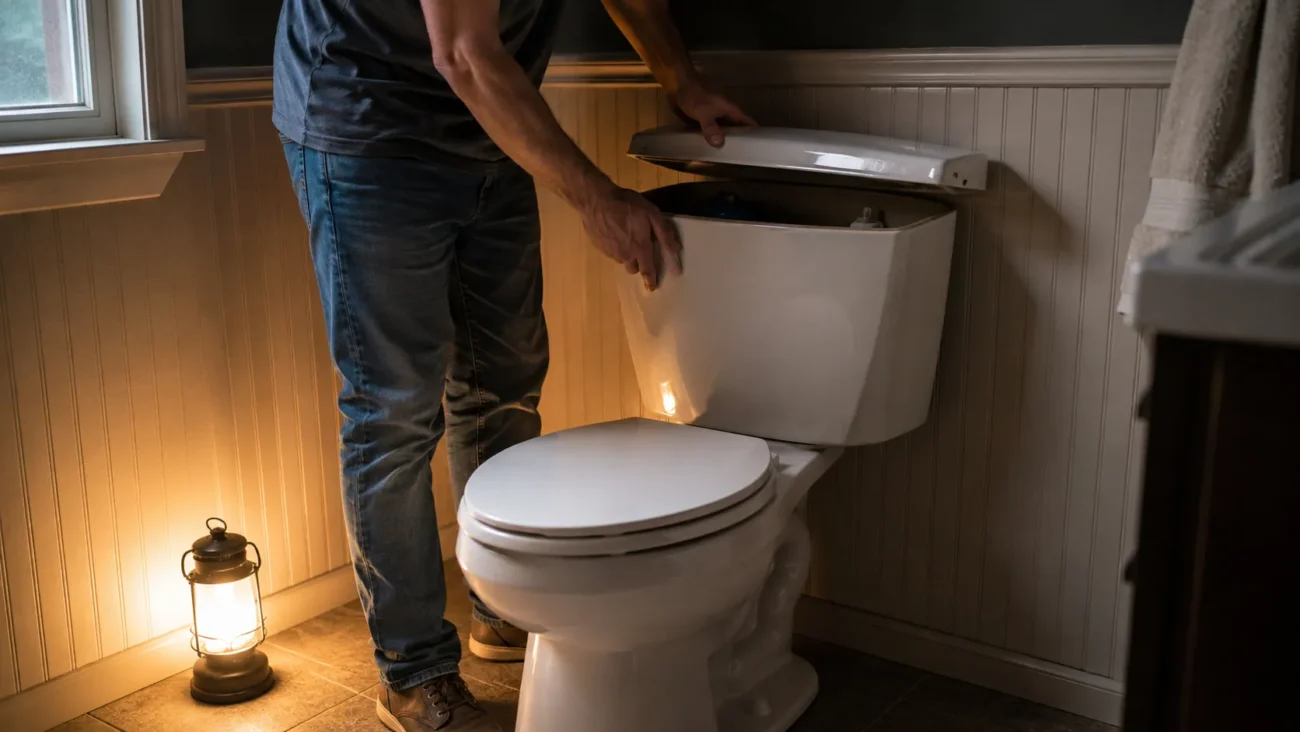
In most homes, yes — a standard gravity toilet can usually flush at least once because it uses water already stored in the toilet tank, not electricity. But whether it keeps working during a power outage depends on your water supply, your plumbing system, and whether your home uses an electric pump for water or waste removal.
If you have city water, your toilet may continue to work normally for a while. If you have well water, the toilet may stop refilling once the pressure tank runs out because the well pump needs power. And if you have a septic system, sewage ejector pump, grinder pump, or basement toilet, you may need to be more careful.
This guide explains do toilets work without power, how many times you can flush, how to manually flush a toilet, and when you should stop flushing to avoid sewage backup.
Can You Flush the Toilet When the Power Is Out?
Yes, you can usually flush a toilet without power if it is a standard toilet and there is water in the tank. A traditional gravity-flush toilet works by releasing water from the tank into the bowl. That water creates enough force to move waste through the drain and into the sewer or septic system.
The key point is simple: the toilet itself usually does not need electricity. It uses gravity, water pressure, a flush lever, a flapper valve, and the water stored in the toilet tank. When you press the handle, the flapper lifts, water rushes into the toilet bowl, and the waste moves through the toilet drain.
That is why many toilets will give you one flush even after the power goes out. The tank was already full before the outage, so the toilet can still work once.
The real question is not only “do toilets flush when power is out?” The bigger question is:
Will the toilet tank refill after you flush?
That depends on whether your home still has running water. If your home uses municipal water, the water supply may continue. If your home uses a private well system, the well pump may stop working without electricity. If your bathroom relies on a pump to move wastewater, repeated flushing may also create backup problems.
So the short answer is: you can usually flush once, and possibly many more times, depending on your water source and waste system.
What Determines Whether Your Toilet Will Work During a Power Outage?
Whether a toilet during power outage conditions works normally depends on three main things: your water source, your toilet type, and your waste-disposal system.
A standard toilet with city water and a gravity sewer line is usually the easiest setup. In many cases, the toilet keeps flushing because municipal systems often maintain pressure through water towers, storage reservoirs, or backup systems.
A home with well water during power outage conditions is different. Most private wells rely on an electric well pump. When power stops, the pump stops moving water into the house. You may still have water left in the pressure tank, but once that reserve is gone, the toilet tank will not refill unless you add water manually.
The third factor is where the waste goes. If your home uses a gravity sewer or gravity septic system, waste may continue moving normally. But if your home uses a powered septic pump, sewage ejector pump, grinder pump, or basement pump, the waste may not move properly without electricity.
Here is the simple rule:
| Home Setup | Can You Flush? | Main Concern |
| Standard toilet + city water | Usually yes | Water pressure may vary |
| Standard toilet + well water | Limited | Tank may not refill |
| Septic system with gravity flow | Usually yes, with caution | Avoid overuse |
| Septic system with electric pump | Use caution | Pump chamber may fill |
| Basement toilet with ejector pump | Avoid repeated flushing | Waste may back up |
| Smart or electric toilet | Depends on model | May need power or battery backup |
Understanding these 3 flushing scenarios helps you avoid plumbing damage during an extended power outage.
City Water vs. Well Water During a Power Outage
One of the biggest differences in power outage plumbing is whether your home uses city water or well water.
If You Have City or Municipal Water
If your home is connected to a municipal water supply, you may still have water during a blackout. Many city systems use water towers, elevated tanks, or backup generators to keep water moving even when local electricity is out.
That means a toilet connected to city water during power outage conditions may keep refilling after each flush. In this case, you may be able to flush normally as long as water pressure remains available and the sewer system is working.
However, this is not guaranteed forever. During a major storm, flood, or natural disaster, the local municipal water system may lose pressure, issue a water advisory, or ask residents to conserve water. If you notice weak water flow, no refill in the toilet tank, or a local notice from the water department, start conserving.
If You Have Well Water
If you have a private well system, your situation is more limited. A private well pump usually needs electricity to pull water from the well and send it into your home. When the power goes out, the pump stops.
You may still have some water in the pressure tank or well reservoir. Depending on the setup, that reserve may allow a few uses of sinks, toilets, or showers. Some systems may have a small reserve, while others may have a larger tank, sometimes discussed in the range of 10 to 50 gallons.
But once the pressure tank is empty, the toilet tank will not refill automatically. At that point, you can still flush manually if you have stored water, bathtub water, rain barrel water, or another safe non-drinking water source.
How Many Times Can You Flush a Toilet Without Power?
How many times can you flush a toilet without power? The answer depends on how much water is available.
Most standard toilets can flush at least once because the tank is already full. After that, you need either running water to refill the tank or a bucket of water to flush manually.
In many homes, the first flush works normally. The second flush may work if the tank refills. If the water supply stops, you will need to add water yourself. A manual flush usually requires about 1–2 gallons of water, depending on the toilet.
A low-flow toilet may use less water than an older toilet, but the exact amount depends on the model. Some newer toilets use less water per flush, while older toilets may require more. That is why it is better to think in terms of available water instead of a fixed number of flushes.
For example:
| Situation | Likely Flush Count |
| Full toilet tank, no refill | Usually one flush |
| City water still working | Multiple flushes |
| Well water with pressure tank | Limited flushes until reserve runs out |
| Stored water available | As many flushes as your stored water allows |
| Pump-assisted toilet | May be limited or unsafe without power |
If you are in a long outage, conserve water. Avoid flushing every time unless necessary. Many emergency-preparedness guides use the phrase “if it’s yellow, let it mellow” because reducing toilet use can save water for drinking, cooking, and hygiene.
How to Manually Flush a Toilet When the Power Is Out
Knowing how to manually flush a toilet when the power is out is one of the most useful emergency skills. If the toilet itself is not electric and the drainage system is safe, you can flush it without running water.
There are two common methods.
Method 1: Fill the Toilet Tank
The easiest method is manual tank filling. Remove the toilet tank lid and pour water into the tank until it reaches the normal fill line. Then press the flush lever like usual.
This method feels most like a normal flush because the toilet uses its regular flush mechanism, flapper valve, and bowl rinse action. It is also less splashy than pouring water directly into the bowl.
Method 2: Pour Water Into the Bowl
You can also use the bucket method. Pour about 1–2 gallons of water quickly into the toilet bowl. The speed and volume of water create a gravity flush and push waste through the drain.
Do not trickle the water slowly. A slow pour may only raise the water level without triggering a proper flush. A steady, fast pour works better.
What Water Can You Use?
The water used for flushing does not need to be drinking-quality. You can often use:
- Bathtub water
- Rain barrel water
- Swimming pool water
- Melted snow
- Stored water
- Graywater, if handled safely
However, be careful with contaminated floodwater. It may contain sewage, chemicals, or bacteria. If you must use questionable water, avoid skin contact and wash your hands safely afterward.
A good emergency habit is to fill the bathtub before a major storm. That gives you a supply of non-potable water for flushing toilets.
Septic Systems, Sewer Lines, and Electric Pumps
A toilet does not only need water to flush. Waste also needs somewhere safe to go. That is why septic systems, sewer lines, and electric pumps matter during an outage.
If your home is connected to a municipal sewer system, waste may continue moving through gravity-fed sewer lines. In many cases, this works fine during a short outage. But some neighborhoods use wastewater lift stations or pumping systems. If those fail, sewer backups can become a risk.
If you have a septic system, the answer depends on the type of system. A basic gravity septic system may continue working because waste flows from the home into the septic tank and then toward the drain field. But systems with an effluent pump, powered septic pump, or pump chamber may not move wastewater properly without electricity.
A sewage ejector pump or grinder pump is especially important. These are often used in basement bathrooms or homes where waste must be pumped upward to reach the main sewer line. If the pump has no power, waste can collect in a holding basin or pump chamber. Repeated flushing may cause a chamber overflow, toilet overflow, or sewage backup.
Stop flushing and call a professional if you notice:
- Gurgling drains
- Sewage smell
- Water backing up into tubs, sinks, or floor drains
- Toilet bubbling
- Septic alarm
- Slow drains throughout the house
A sewage backup is more than a plumbing issue. It can become a biohazard and create unsafe, unsanitary conditions.
Toilets That May Not Work Properly Without Power
Most standard toilets work without electricity, but not all toilets are standard. Some bathroom systems depend on power.
A smart toilet may have an electronic flushing mechanism, heated seat, bidet function, automatic lid, or sensor-based flush. Some models have a manual bypass or backup battery, but others may lose advanced functions during a blackout.
An electric toilet, pump-assisted toilet, or upflush toilet may also need power. These systems often use a pump or macerating mechanism to move waste. If the pump is not working, you should avoid repeated flushing.
A basement toilet is another common problem. Many basement bathrooms sit below the main sewer line, so they rely on a sewage ejector pump to move waste upward. During an outage, that pump may stop. Even if the toilet bowl accepts water, the waste may not move out of the basin.
Electric bidet seats may also stop working, although the toilet itself may still flush if it is a normal gravity toilet.
The safest approach is to know your toilet type before the next outage. If it has a pump, motor, control panel, sensor, macerator, or electric flush, check the manufacturer’s instructions and consider backup power.
Can Apartment or High-Rise Toilets Flush During a Power Outage?
Apartment and high-rise buildings can be different from single-family homes. In a small building with normal city water pressure, toilets may continue working during a short outage. In a taller multi-story apartment building, water may rely on a building booster pump, pressure system, or rooftop water tank.
If the building pump loses power, upper floors may lose water pressure before lower floors. Some buildings have backup generators for water systems, while others do not.
For renters or condo owners, the best step is to watch for building maintenance notices. If management says to conserve water or avoid flushing, follow that guidance. A building-wide plumbing issue can affect many units at once.
If your toilet tank stops refilling, you may still be able to manually flush with stored water, but only if the drainage system is working. If you see water backing up, hear gurgling, or smell sewage, stop flushing and contact building maintenance.
When You Should Not Flush During a Power Outage
Flushing is not always safe during a power outage. If the waste system cannot move water away, flushing can make a bad situation worse.
You should avoid flushing if you see signs of sewage backup or drainage failure. These signs include bubbling toilets, gurgling drains, sewage odors, water backing up into tubs or floor drains, or a septic alarm. These symptoms suggest that wastewater may not be moving properly.
You should also be cautious if your septic drain field is flooded. A saturated drain field cannot absorb wastewater properly. Adding more water may overload the system.
Do not repeatedly flush a basement toilet if it uses a sewage ejector pump and the pump has no power. The holding basin may fill, and waste may back up into the basement bathroom.
Here is a simple rule:
If water is not draining normally, stop flushing.
This is especially important during hurricanes, floods, winter storms, and extended outages. A single flush may not cause trouble, but repeated flushing into a failed pump chamber or overloaded septic system can create expensive damage and unsafe conditions.
Can You Flush During a Boil-Water Advisory or Water Emergency?
A boil-water advisory usually affects water used for drinking, cooking, brushing teeth, and sometimes handwashing. It does not usually mean you cannot flush the toilet.
In most cases, you can flush during a boil-water notice if your toilet has water and the sewer or septic system is working. Toilet flushing does not require drinking-quality water.
However, you should still follow local instructions. If the water department says pressure is low, water is contaminated, or sewer service is affected, conserve water and be careful. A power outage and boil water advisory often happen together after storms, flooding, or water main problems.
Also remember that hygiene matters. If tap water is unsafe, use boiled, bottled, or properly disinfected water for handwashing when possible. If that is not available, use hand sanitizer after bathroom use, but wash with safe water as soon as you can.
The difference is simple: safe water for drinking is not always required for flushing, but safe hygiene is still essential.
What Water Can You Use to Flush a Toilet Without Power?
If you need to flush toilet manually, you can use several types of water. The water does not have to be clean enough to drink, but it should be safe enough to handle.
Good options include stored tap water, bathtub water, rainwater, pool water, melted snow, or graywater from rinsing or washing. Many people keep drums or barrels of water for emergencies. You can also fill buckets before a storm if you expect an outage.
Do not waste bottled drinking water on toilet flushing unless you have no other choice. During an emergency, drinking water should come first.
Be cautious with floodwater. It can contain sewage, fuel, chemicals, sharp debris, and bacteria. If you use it for flushing, avoid splashing, wear gloves if possible, and clean surfaces afterward.
A practical emergency plan is to store water in two categories:
| Water Type | Best Use |
| Bottled or treated water | Drinking, cooking, brushing teeth |
| Bathtub or bucket water | Toilet flushing |
| Rain barrel or pool water | Manual flushing only |
| Questionable floodwater | Avoid if possible |
This keeps your emergency water supply organized and safer.
Emergency Toilet Alternatives If You Cannot Flush
If your toilet cannot flush and manual flushing is not safe, you need an emergency toilet plan. This is especially important during long outages, septic failure, floods, or building-wide plumbing problems.
A simple option is a 5-gallon bucket toilet. Line a sturdy bucket with a heavy trash bag, add absorbent material such as cat litter, sawdust, or absorbent gel, and use a snap-on toilet seat if available. After use, seal the bag tightly and follow local waste disposal guidance.
Portable camping toilets are another option. They are more comfortable and often have a waste tank. Disposable toilet bags can also be useful in an emergency sanitation kit.
A basic bathroom emergency kit may include:
- Heavy-duty trash bags
- Toilet paper
- Disposable gloves
- Hand sanitizer
- Disinfecting wipes
- Cat litter or absorbent gel
- A 5-gallon bucket
- A small battery light
This may not be pleasant to think about, but it is very helpful during extended outages. Emergency sanitation protects health, prevents odors, and reduces stress when normal plumbing is unavailable.
Backup Power Options for Toilets, Wells, and Septic Pumps
A standard toilet does not need power, but the systems around it might. If your home depends on a well pump, septic pump, sump pump, sewage ejector pump, or grinder pump, backup power can keep essential plumbing working.
A backup generator or whole-house generator can power major systems, including a well pump or septic pump, if installed correctly. Some homeowners use a manual transfer switch to safely connect generator power to selected circuits.
A home battery backup or portable power station may help with smaller loads, but pumps often require more starting power than people expect. Always check the power requirements before relying on a battery system.
For basement bathrooms, a sewage pump battery backup may help prevent overflow. For homes with sump pumps, a sump pump battery backup can reduce flooding risk.
Backup power is not only about comfort. In rural homes, it may keep water flowing. In septic-system homes, it may prevent wastewater from sitting in a pump chamber. In storm-prone areas, it can be part of a broader home emergency plan.
What to Do After Power Comes Back On
After power is restored, do not assume every plumbing system is immediately normal. Take a few minutes to check the bathroom and water system.
Flush once and watch whether the toilet refills properly. If the tank does not refill, you may still have low water pressure or a pump issue. If you have well water, the well pump may need time to rebuild pressure. In some cases, a well pump reset may be needed.
If you have a septic system with a pump, listen for alarms and watch for slow drains. A septic pump that does not restart can cause wastewater to collect in the pump chamber.
Call a plumber, septic professional, building maintenance team, or utility company if you notice:
- Toilet will not refill
- Low water pressure after power outage
- Sewage smell
- Drains backing up
- Gurgling toilets
- Septic alarm
- Water around floor drains
- Pump not restarting
A little caution after an outage can prevent a bigger plumbing repair later.
Power Outage Bathroom Checklist
A little preparation makes bathroom use much easier during a blackout. Before a storm or planned outage, store water and know how your plumbing works.
Use this checklist:
| Task | Why It Helps |
| Know whether you have city water or well water | Determines whether the tank will refill |
| Know whether your septic system has an electric pump | Helps prevent backup |
| Fill bathtub before major storms | Provides water for manual flushing |
| Keep a bucket near the bathroom | Makes manual flushing easier |
| Store drinking water separately | Keeps safe water for people and pets |
| Keep disposable toilet bags | Useful if flushing stops |
| Learn where pump alarms are | Helps identify septic or sewage pump problems |
| Watch for backup signs | Prevents overflow and biohazard risk |
If you live in a storm-prone area, build a small emergency sanitation kit. It does not need to be complicated. A bucket, bags, gloves, wipes, and absorbent material can make a long outage much easier to manage.
Quick Answer Table: Can You Flush or Not?
| Situation | Can You Flush? | What to Know |
| Standard toilet with full tank | Yes | Usually gives at least one flush |
| City water still working | Usually yes | Tank may refill normally |
| Well water with no power | Limited | Depends on pressure tank reserve |
| No running water but stored water available | Yes, manually | Use the bucket method |
| Septic system with gravity flow | Usually yes, carefully | Conserve water |
| Septic system with electric pump | Use caution | Pump chamber may fill |
| Basement toilet with ejector pump | Avoid repeated flushing | Waste may not move |
| Smart toilet or electric toilet | Depends | Check for manual bypass or battery |
| Sewage backup signs | No | Stop flushing and call for help |
FAQs About Flushing a Toilet During a Power Outage
Do toilets need electricity to flush?
Most standard toilets do not need electricity. They use gravity and water stored in the tank. However, electric toilets, smart toilets, and pump-assisted systems may need power.
Can you flush if the toilet tank does not refill?
Yes, you can usually flush manually by adding water to the tank or pouring water quickly into the bowl. You typically need about 1–2 gallons.
Can you flush with well water during an outage?
Yes, but only while water remains in the pressure tank or if you add water manually. Without backup power, the well pump usually cannot refill the system.
Can a septic tank back up without power?
A basic gravity septic system may still work, but a system with an electric pump can back up if the pump chamber fills. Stop flushing if you notice odors, gurgling, or slow drains.
Can you shower when the power is out?
It depends on your water supply, water heater, and drainage system. If you have city water, you may have cold water. If you have well water, water may stop once the pressure tank runs out.
What if the toilet smells or gurgles after the outage?
Stop flushing and check for other backup signs. A gurgling toilet, sewage smell, or water backing up into drains may mean the waste system is not working properly.
Conclusion: Know Your Water Source Before the Next Outage
So, can you flush the toilet when the power is out? Usually, yes — especially if you have a standard gravity toilet and water in the tank. But the full answer depends on your city water, well water, septic system, sewer line, and whether your bathroom uses an electric pump.
If your toilet tank is full, you usually get one flush. If water pressure continues, you may get many more. If water stops, you can often manually flush a toilet with a bucket of water. But if you see signs of sewage backup, stop flushing immediately.
The best preparation is simple: know your plumbing system, store emergency water, keep a bucket handy, and have an emergency toilet plan before the next outage.
Disclaimer: This article is for general informational purposes only and does not replace professional plumbing, utility, or emergency advice. Plumbing systems vary by property, so always follow local authority guidance and consult a licensed plumber or utility provider during outages or sewage-related emergencies.
